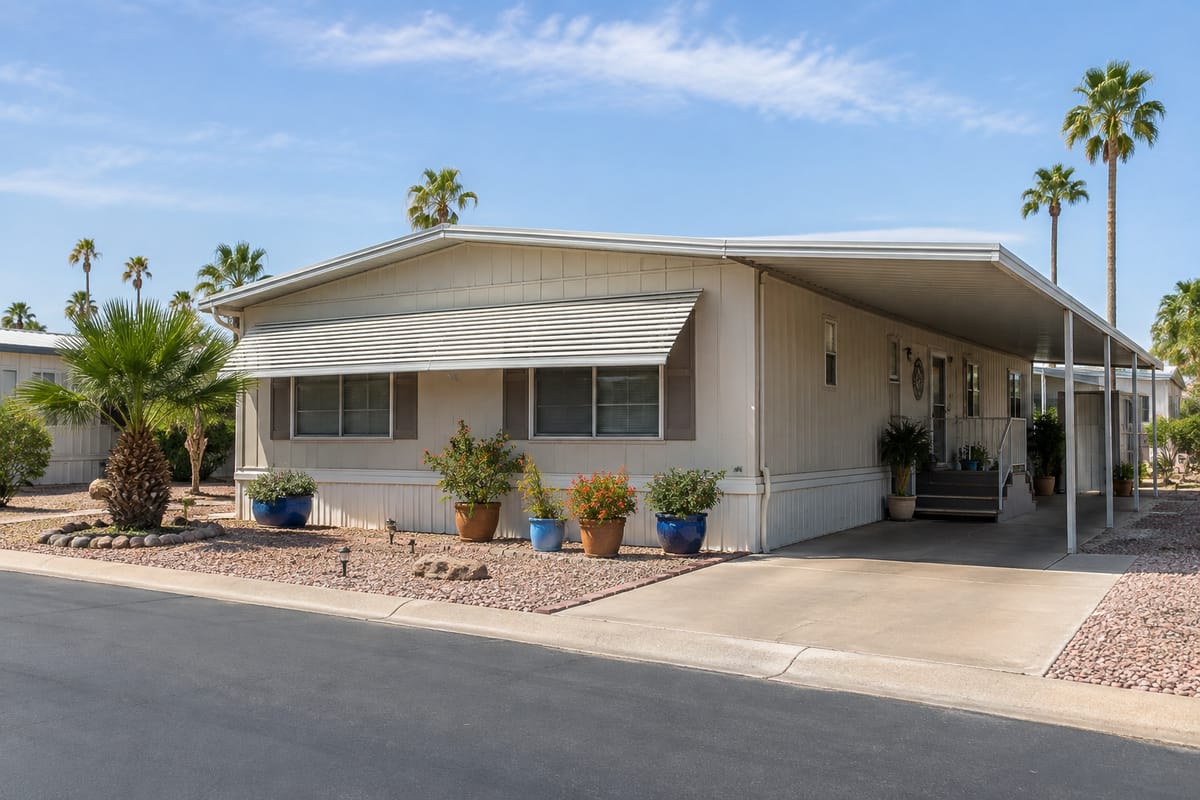
California Cities Where Manufactured Homes Are Still Affordable
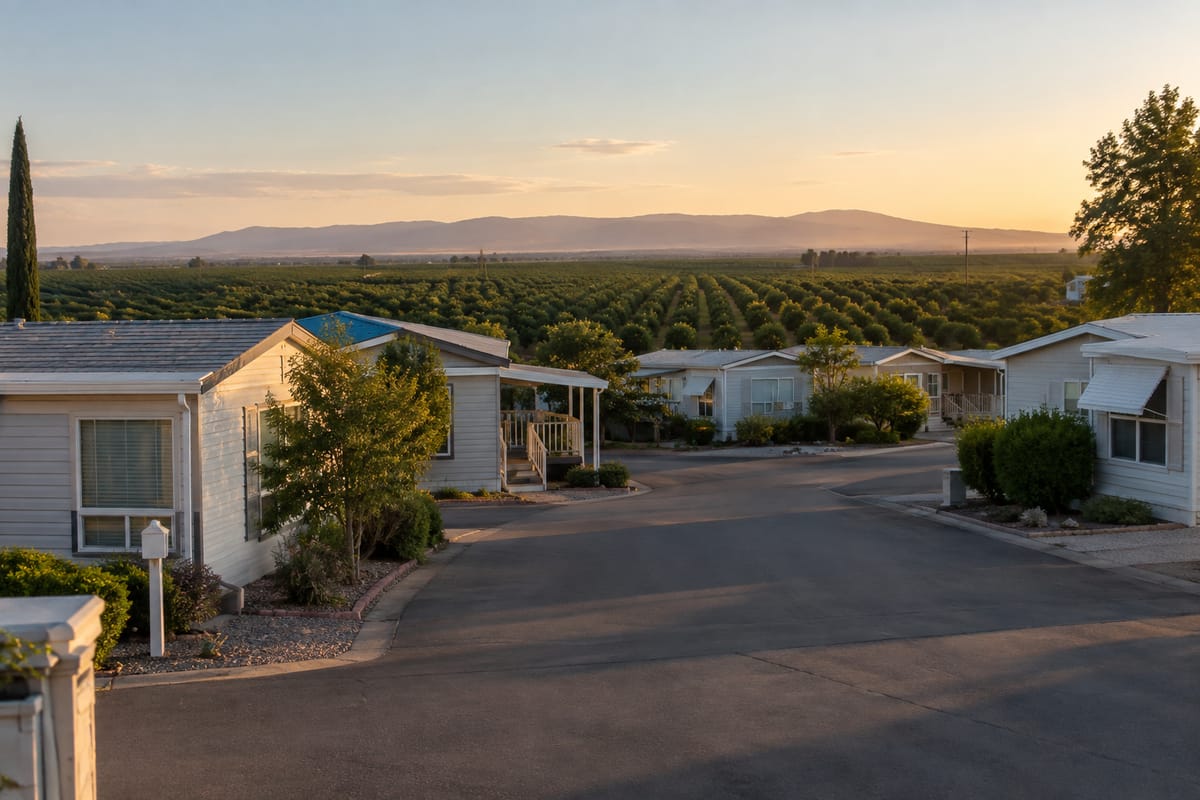
The lower-cost places to buy a manufactured home in California are inland: the Inland Empire, the High Desert, the Central Valley, the northern Sacramento Valley and the Imperial Valley. The ten cities below are a starting list drawn from those regions.
In each of them, the U.S. Census Bureau’s median value for owner-occupied homes is below the figure for California as a whole (QuickFacts, 2020–2024 American Community Survey). That number covers every kind of home, so read it as a sign of the local housing market, not as a manufactured home price.
The asking price is also only part of what you pay. What a home costs each month depends on whether it sits on a rented space or on its own land, what the space rent is, how far you drive to work, and what it costs to insure and cool. For each city, here is what differs and what to check before you rely on a low price.
Why the same home costs more in one city than another
Four things account for most of the difference.
- Who owns the land. In a land-lease community you buy the home and pay space rent for the homesite every month, on top of the loan payment. On land you own there is no rent, but the land has to be bought, taxed and maintained.
- The local housing market. Home prices and space rents tend to follow what other housing costs nearby, which is why inland cities come in lower than the coast.
- The home. Age, size and condition move the price more than the address does. What a lower price usually tells you about a home is a subject of its own.
- Living there. A long commute, summer cooling, and insurance in a flood or wildfire zone are monthly costs too.
The ten cities at a glance
Ten inland California cities and what to check in each
| City | Where it is | What to check there |
|---|---|---|
| Hemet | Inland Empire, Riverside County | Each community’s age rules; the city’s rent review commission |
| San Bernardino | Inland Empire, San Bernardino County | The city’s mobile home rent rules; wildfire zones near the foothills |
| Victorville | High Desert, San Bernardino County | Leased space or owned lot; the commute over the Cajon Pass |
| Hesperia | High Desert, San Bernardino County | Septic, propane and how a home on its own lot is titled |
| Lancaster | Antelope Valley, Los Angeles County | The city’s rent stabilization rules; the cost of the commute |
| Bakersfield | Southern Central Valley, Kern County | City community or county parcel; summer cooling |
| Fresno | Central Valley, Fresno County | The city’s rent review commission; rural utilities |
| Stockton | Northern Central Valley, San Joaquin County | Flood zone and flood insurance |
| Yuba City | Sacramento Valley, Sutter County | Flood zone; fewer recent sales to compare |
| El Centro | Imperial Valley, Imperial County | Summer cooling; earthquake bracing |
The six linked cities have their own pages with more local detail.
Hemet and San Bernardino: communities on leased land, with local rent rules
Hemet sits in the San Jacinto Valley in Riverside County. Buyers there are mostly choosing among land-lease communities, some age-restricted (55 and over) and some open to all ages, so confirm which kind a community is before you tour it. The city has a Mobile Home Rent Review Commission, so ask each community whether its spaces fall under the city’s ordinance. Nearby cities are covered in our guide to manufactured home cities in Riverside County.
San Bernardino lies at the foot of the San Bernardino Mountains. Its municipal code has a chapter on mobile home rents. The northern edge of the city runs up to the foothills, so look up any address on CAL FIRE’s fire hazard severity zone map and get an insurance quote before you make an offer. If you commute by train, Metrolink serves the downtown station.
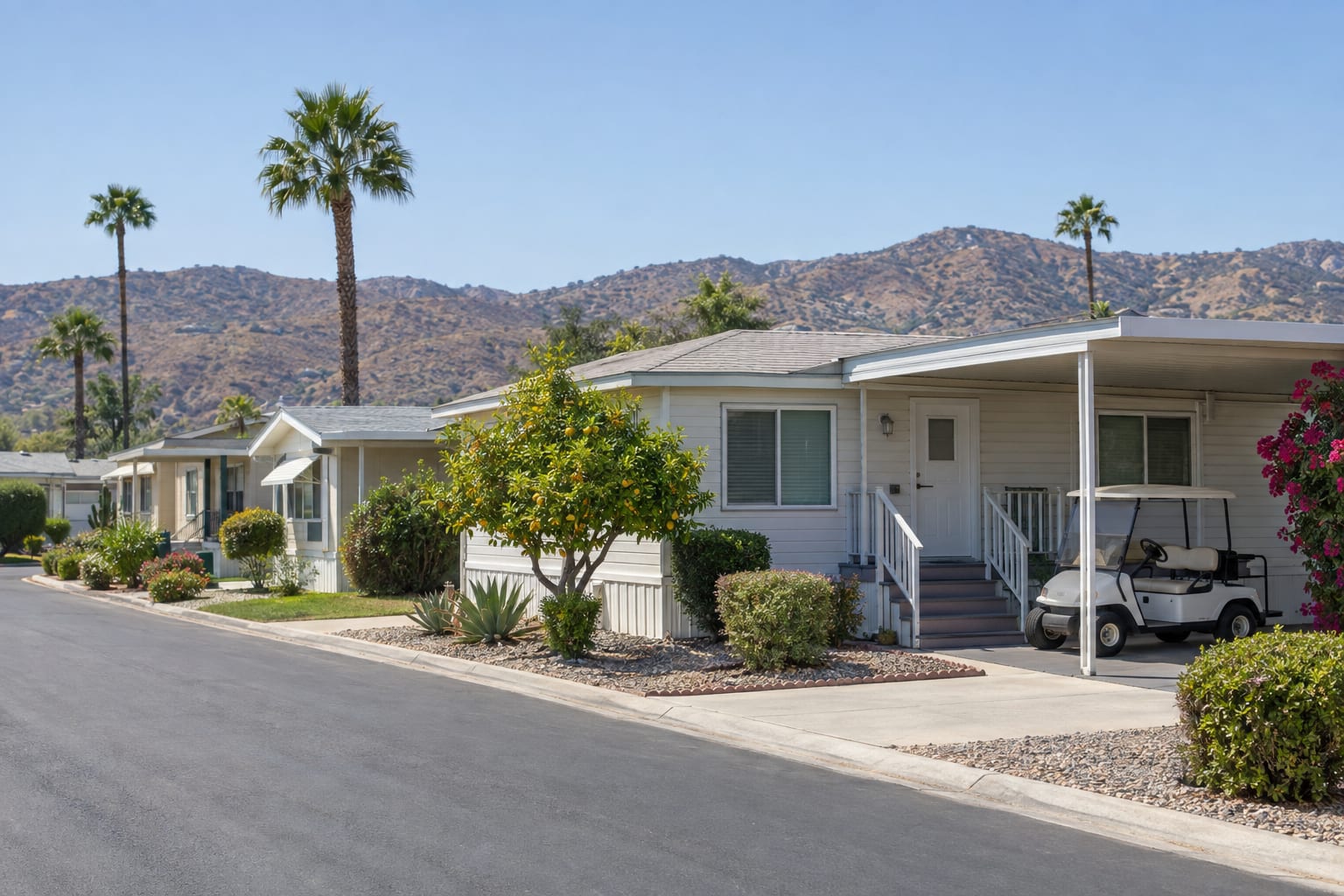
Victorville, Hesperia and Lancaster: the High Desert, where owned land is common
Victorville and Hesperia are neighbors in the Victor Valley, in San Bernardino County, above the Cajon Pass on Interstate 15. Lancaster is in the Antelope Valley in northern Los Angeles County, along State Route 14, and is served by Metrolink’s Antelope Valley Line.
What sets the High Desert apart is land. Alongside the communities in town, homes on their own lots are common, and that changes the loan. A home in a community is financed on its own as personal property. A home permanently attached to land you own can often be financed together with the land as real property, which brings land title, a foundation record and an appraisal of both into the file. Buying a manufactured home on owned land explains what that involves.
On outlying lots, expect propane, a septic system, sometimes a well and sometimes an unpaved road. None of these rules a home out, but each has to be documented, so ask about them at the start.
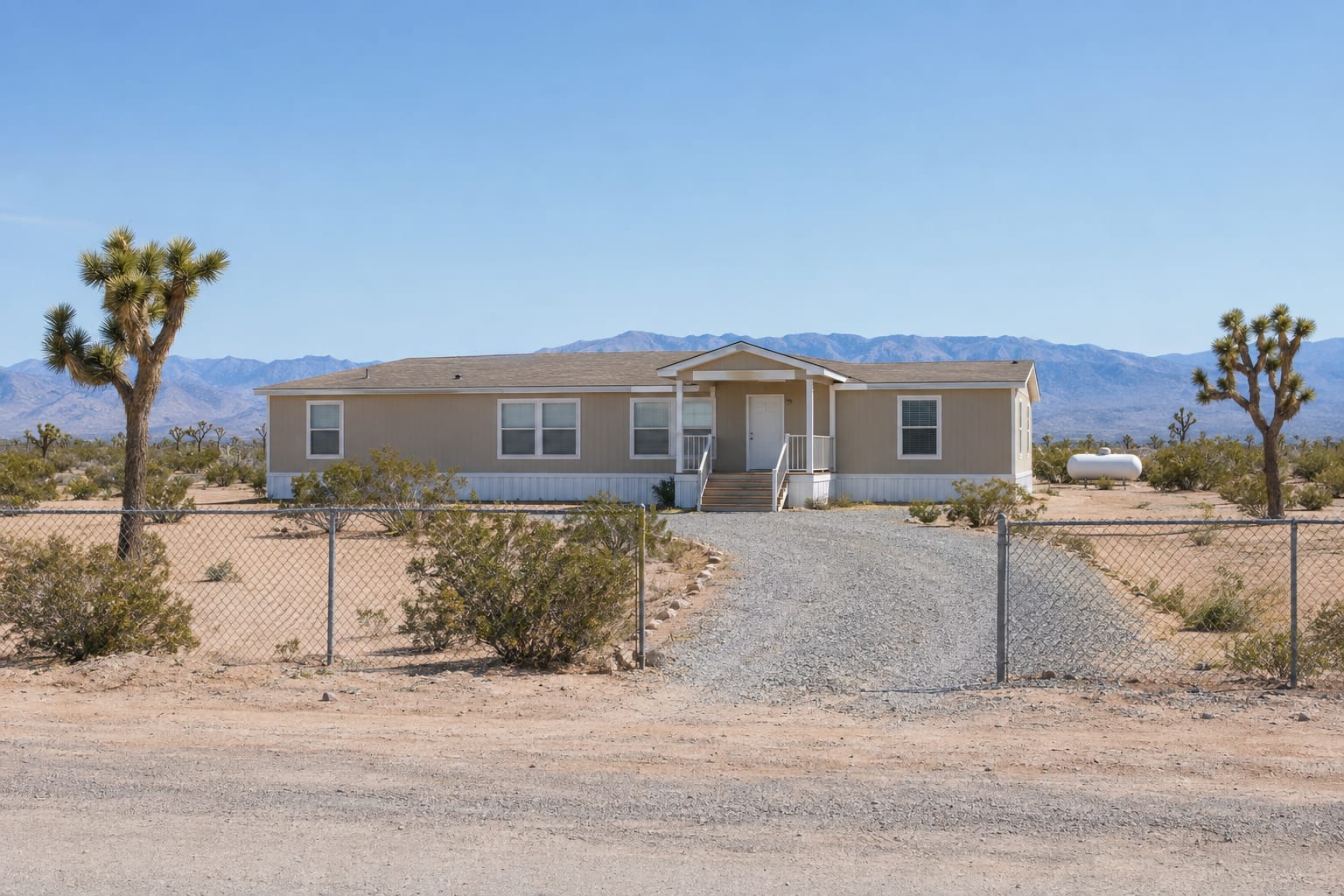
Summers are hot, winter nights drop below freezing and the wind is a regular feature, so the heating and cooling system, the roof and the skirting deserve a close look. Price the commute honestly too: fuel and hours on the road are part of what a home up here costs each month.
In Lancaster, ask whether the space is covered by the city’s mobilehome park rent stabilization chapter, which is Chapter 11.08 of the Lancaster Municipal Code.
Bakersfield, Fresno and Stockton: Central Valley cities with rural land around them
Bakersfield is at the southern end of the valley in Kern County, Fresno is in the middle, and Stockton is toward the northern end in San Joaquin County, on the edge of the Delta. Each has communities inside the city and homes on rural parcels in the surrounding county. On those parcels, wells, septic systems and private roads are ordinary, and each one needs to be documented.
Valley summers are long and hot. Ask the seller what the electric bills run in summer, and check the age of the cooling system.
Two local points are worth knowing:
- Fresno. Since July 2021 the City of Fresno, not the state, has enforced the Mobilehome Parks Act inside the city, and the city has a rent review and stabilization commission. Both are described on the city’s mobilehome parks page.
- Stockton. Low ground and waterways make flood zones matter here. Look up the address on FEMA’s flood map. If the home is in a mapped flood hazard area, flood insurance may be required and belongs in your budget. For commuters, ACE trains run on weekdays between Stockton and San Jose.
Yuba City and El Centro: smaller markets at opposite ends of the state
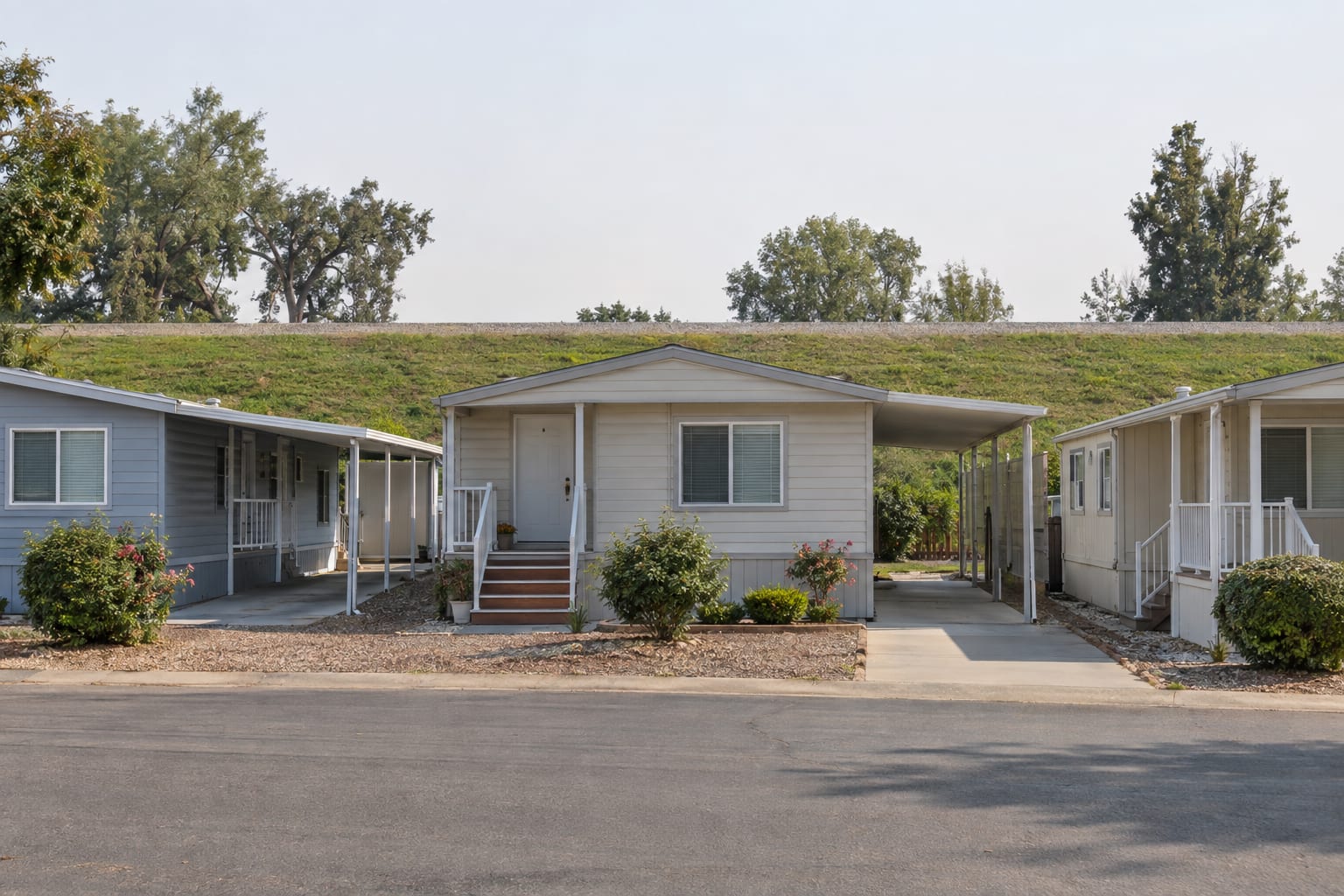
Yuba City is in Sutter County, on the Feather River north of Sacramento, and the flood map check above applies there too. El Centro is in Imperial County, in the desert near the Mexican border, where summer heat is extreme and cooling is a large part of the monthly cost. The Imperial Valley is also earthquake country, so ask how the home is braced. Are manufactured homes safe in earthquakes? covers what to look for.
Both are smaller markets. That usually means fewer homes for sale at any one time and fewer recent sales to compare a price against, so take more care over what a home is worth.
Neither city has its own page on this site, and neither do Hesperia or Lancaster. That makes no difference to financing: Santiago Financial, Inc. finances manufactured homes in every California county. Financing a manufactured home anywhere in California or Arizona explains how that works for towns without a page.
What to verify before you rely on a low asking price
To see which communities exist in a city before you depend on listings, use the Find a Park search kept by HCD, the California Department of Housing and Community Development. Then, for any home that interests you:
For homes in California communities, comparable sales reports show what homes in a specific community have sold for. They are sales data, not appraisals. To see what a given price might cost each month, enter your own figures in the payment calculator and add the space rent. The results are educational estimates, not a loan offer.
Once you have narrowed the search to a city and a kind of home, talk with a specialist about which type of loan that setup points to. All financing is subject to credit approval, and not every home or applicant qualifies.
Local ordinances, hazard maps and train service change, so confirm the current details with the city, county or agency. This article is general information, not legal advice.