
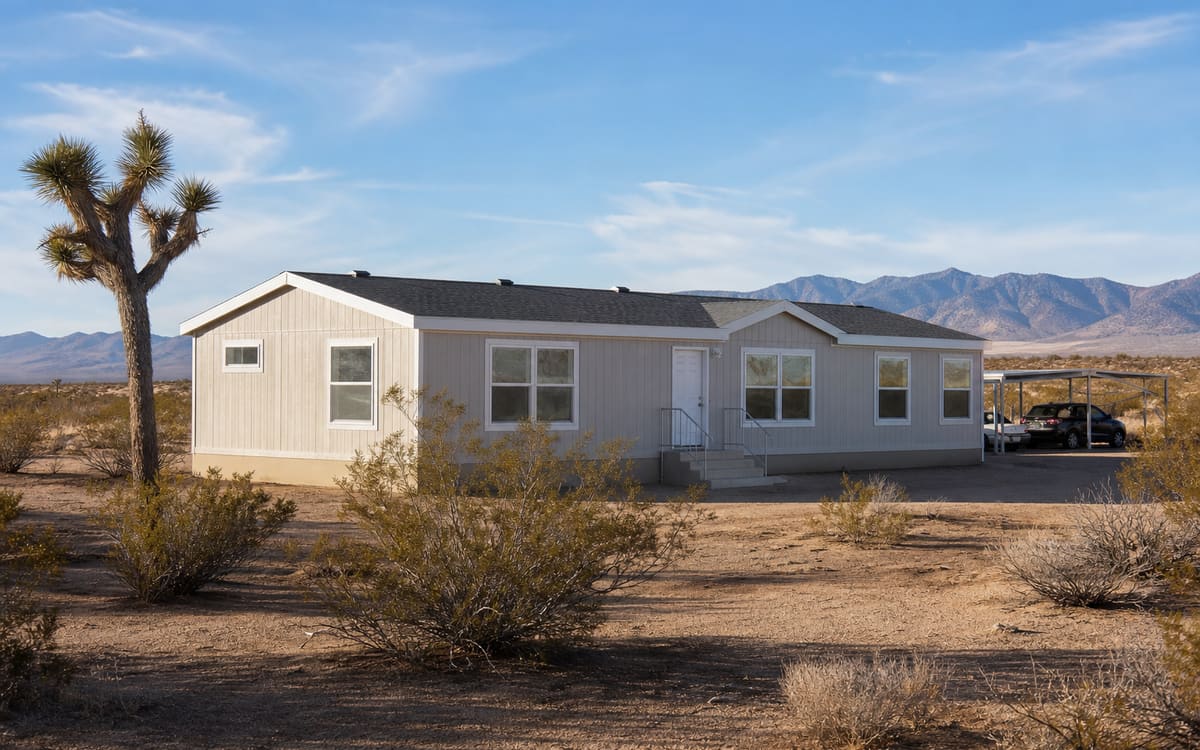
Buying a manufactured home in Victorville usually means choosing between two different purchases: a home in one of the parks in town, or a home on its own parcel out toward the edges of the Victor Valley.
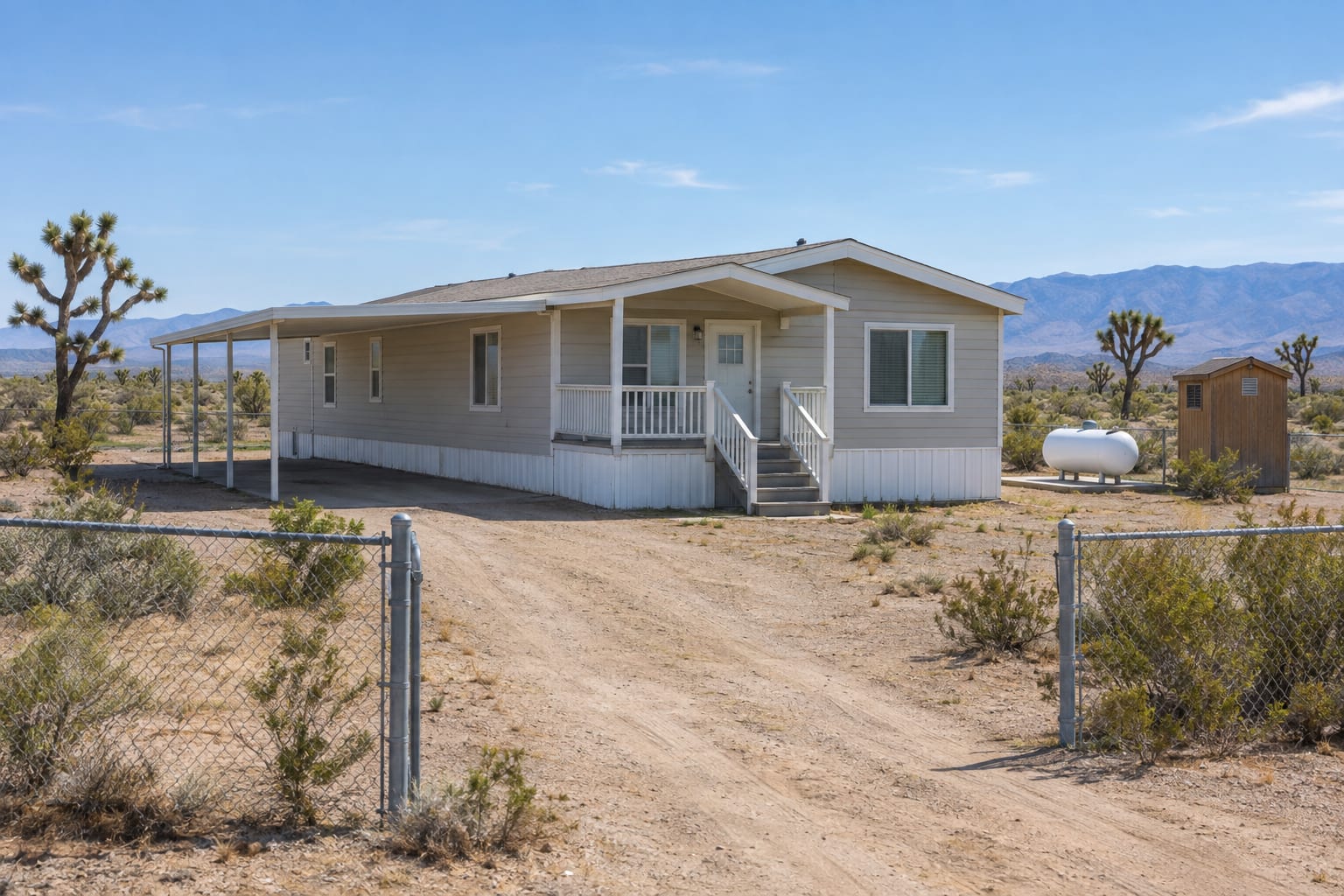
In a park you own the home, rent the space and finance the home on its own as personal property. On a parcel the home and land can often be financed together as real property, and the file grows to include the well, the septic system, the propane tank and the road in.
Santiago Financial, Inc. is based in Tustin and finances both kinds of purchase, plus refinances, throughout California. The California hub page explains the statewide basics, including HCD title and the 433A. This page covers what the High Desert adds: county permits for a home on a parcel, water and septic questions, the Mojave River flood map, and a climate that is hot, cold and windy by turns.
A park in town or a parcel outside it
For a park home the loan is a home-only or chattel loan, the park’s resident approval is a separate review, and space rent is paid on top of the loan payment.
Rent rules are set city by city in California, and we did not find a mobilehome rent ordinance published by Victorville, Hesperia or Apple Valley; ask the park for its rent increase history and ask the city what applies to that park. Statewide, park tenancies come under California’s Mobilehome Residency Law, and HCD runs a Mobilehome Residency Law Protection Program for certain disputes.
For a home on a parcel in the unincorporated county, San Bernardino County Land Use Services says a building permit is required before a manufactured home is set up, that the home goes on an approved tie-down or foundation system, that the county checks for earthquake and flood hazard zones when it decides the foundation type, and that a licensed installer does the work unless the owner builds.
Its manufactured home permitting page is the place to start; it also notes that homes over 10 years old are not allowed in the Apple Valley sphere of influence, so check the location before you buy a home to move. Land-and-home financing explains the loan side. Inside the city limits, the City of Victorville issues the permits.
Wells, septic and propane: what a rural parcel adds to the file
A parcel beyond the water and sewer lines runs on its own systems, and each one has a record the lender and the appraiser will want to see.
Groundwater across the Victor Valley is managed under a court judgment: the Mojave Water Agency acts as Watermaster for the Mojave Basin Area, monitoring water production by the parties and reporting to the court, so ask about the status of any well that serves the home. A septic system needs a county permit. Propane comes from a supplier, and the tank may be leased or owned, so ask which.
Hauled water is different from a well. Ask whether financing is available for a home served by hauled water before you make an offer; do not assume it. The same goes for a parcel reached only by an unpaved private road: ask about access and the road agreement early, because they are reviewed with the property.
Heat, freezing nights, wind and the river
Victorville is high desert, and the climate shows up in the monthly cost and in the inspection. NOAA’s 1991 to 2020 climate normals for the Victorville station put the average daily high at 97.5°F in July and the average low at 33°F in January, so a home here is cooled all summer and heated all winter. Ask the seller for a year of utility bills, including propane if the home is on it.
High Desert checks before you make an offer in Victorville
| Local factor | What to check | Where to look |
|---|---|---|
| Heat and cold | Air conditioning, furnace, ducts, insulation, skirting and the condition of water lines under the home | A year of utility bills and the inspection |
| Wind | The National Weather Service issues wind advisories for the forecast zone that covers Victorville, Hesperia, Apple Valley and Adelanto. Check tie-downs, skirting, carport and awning attachments and the roof, and the wind zone on the data plate. | NWS zone forecast for the Victor Valley |
| Flood | The Mojave River runs through the city, and the National Weather Service keeps a river gauge near Victorville. Lenders use FEMA’s maps to decide whether flood insurance is required. | FEMA Flood Map Service Center |
The data plate inside the home lists the wind, thermal and roof load zones it was built for, and HUD’s manufactured housing page says a home should never be placed in a more restrictive zone than that; for a home being moved onto a parcel, settle that with the installer and the county before the loan. Get a manufactured home insurance quote for the exact address, including flood coverage if the map calls for it, because a lender generally requires acceptable coverage before closing.
County records are in Hesperia
The San Bernardino County Assessor-Recorder-Clerk’s High Desert Government Center office in Hesperia offers document recording in the High Desert, so a Victor Valley transaction does not have to go down the hill to San Bernardino. When a home is installed on a foundation system, HCD Form 433A is recorded with the county.
The county’s manufactured homes page explains that homes purchased new after June 30, 1980, and those on permanent foundations, pay property tax, while homes built and sold before that date pay license fees through HCD. For a park home, ownership and any lienholder appear on the HCD title; California HCD title basics explains what to look for on it.
Nearby areas
Down the Cajon Pass, San Bernardino has the county’s Hall of Records and a city rent program of its own, and Yucaipa and Riverside have their own pages. Homes in Hesperia, Apple Valley and Adelanto are financed the same way as those in Victorville; they do not need a page here, and the questions above apply to them too.
Every application is reviewed individually, and all financing is subject to credit approval. Local rules change, so confirm them with the city or county; this page is general information, not legal or tax advice.