Buying a Manufactured Home on Owned Land: Financing Questions to Ask First
Before you finance a manufactured home on land you own or are buying, four things about the site need answers: whether a manufactured home is allowed there, how you reach it and where the water, sewer and power come from, what the home sits on, and whether the records tie the home to the land. A lender reviews the property as well as the borrower, and a gap in any of these surfaces later in the appraisal, the title work or the permit file.
A problem is much cheaper to find before you make an offer than during escrow. This article goes through the checks in the order they usually matter.
Which kind of project you have
Three starting points
| Your situation | What it means for the financing |
|---|---|
| An existing home already installed on land | Reviewed much like a real estate purchase: land title, foundation and affixture records, and an appraisal of home and land together. |
| You own the land and want to add a home | The land’s equity may be able to count toward the down payment (land in lieu), and the site work, permits and installation have to be planned and budgeted. |
| You are buying land and a new home together | A construction-style project with the most parties involved: seller, dealer, installer, permit office and lender. |
Land-and-home financing covers how each one is structured. Whichever is yours, the checks below are about the same piece of ground. If you are still deciding between land and a park, the ten-year cost comparison weighs tax and upkeep on land against space rent.
Confirm a manufactured home is allowed on the parcel
Start at the city or county planning department with the parcel number. Ask whether a manufactured home is permitted in that zone, what the setbacks and minimum lot size are, and whether there are conditions on the home itself, such as its age, size, roof or siding. Then read the deed for restrictions and find out whether a homeowners association has rules of its own.
Installing a home also takes permits. In California, a building permit from the local enforcement agency, generally the city or county building department, is required for a foundation system. In Arizona, the Arizona Department of Housing is the place to ask about installation and permits.
For a home that is already there, ask the seller for the final inspection sign-off. Ask the building department whether additions such as a garage, a deck or an enclosed porch were permitted, because unpermitted work can become a condition of the loan or a problem in the appraisal.
Access, water, sewer and power
What to verify on the site
| Item | What to ask for |
|---|---|
| Access | If the parcel is reached over a private road or a neighbor’s land: a recorded easement and any road maintenance agreement. |
| Water | A public connection, or for a well, the well records and a recent flow and water-quality test. Arizona wells can be looked up in the Department of Water Resources well registry. |
| Sewer | A public connection, or for a septic system, the permit on file with the county and a recent inspection or pumping report. |
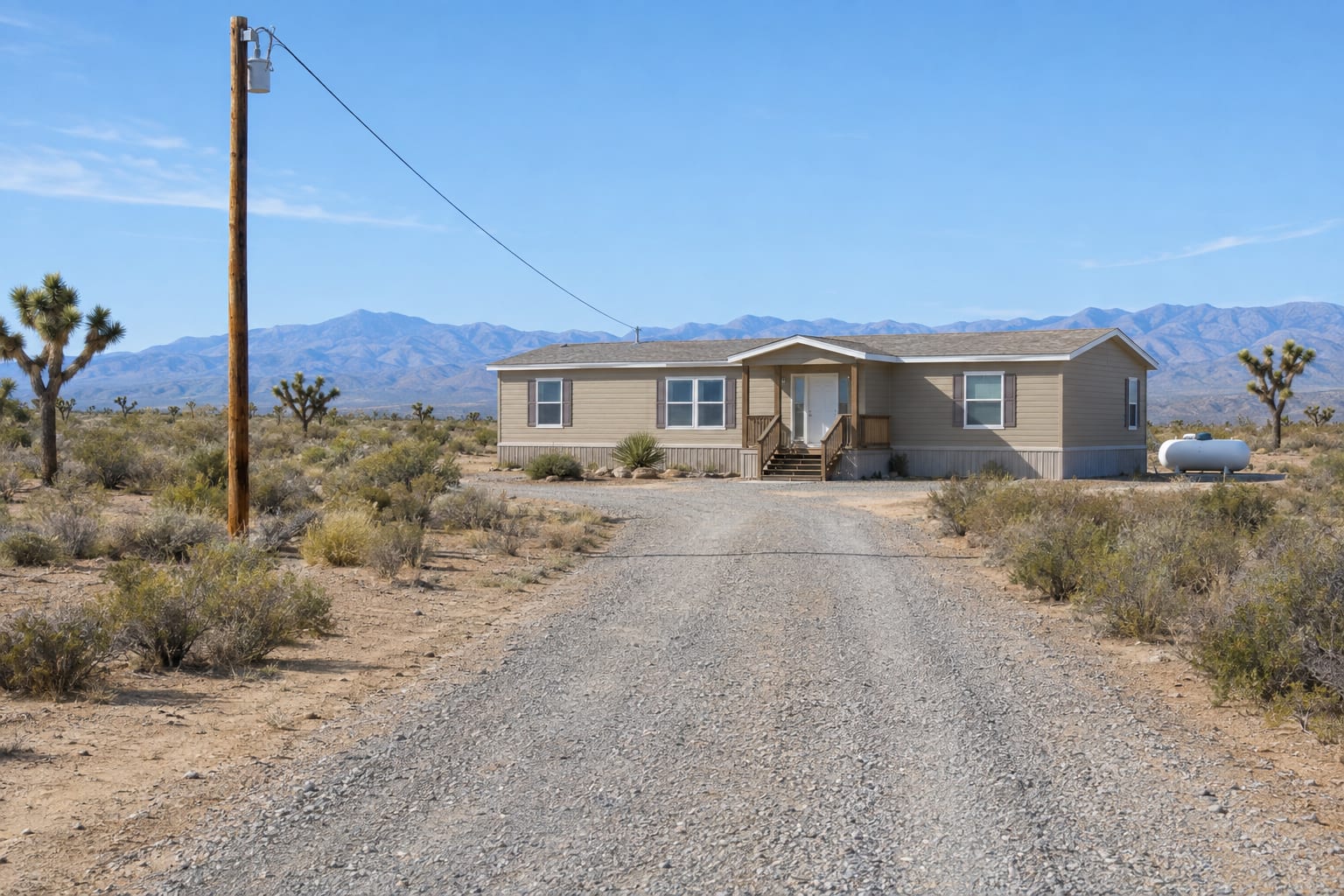
| Power and gas | Whether service already reaches the home and, if propane is used, whether the tank is owned or leased. |
| Flood and fire | The flood zone on FEMA’s flood maps and, in California, the fire hazard severity zone. Both affect insurance. |
On bare land, none of this may exist yet. Get written bids for bringing in power, drilling a well and installing a septic system before you settle on a price for the parcel, because those costs belong in the same budget as the home.
What the home sits on
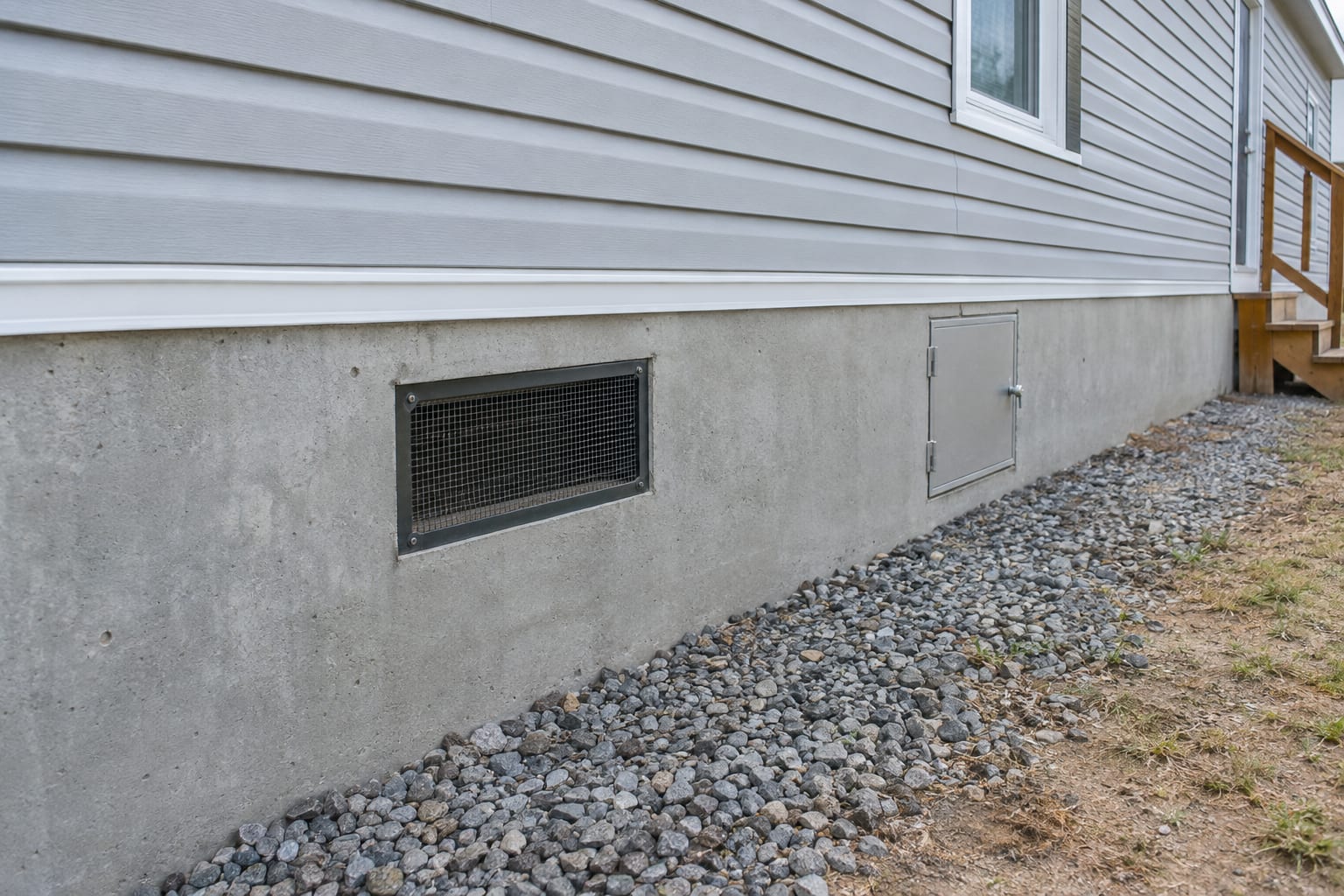
Not every home on owned land is on a permanent foundation. Many rest on piers with tie-downs and skirting around the base, the same way homes are set in a park. A permanent foundation is a foundation system built to an engineering standard that permanently attaches the home to the land.
The difference matters twice. A permanent foundation is a prerequisite for recording the home as real property, and foundation requirements depend on the loan program. For an existing home, ask what it sits on and for the paperwork that shows it. For a new one, settle the foundation type with the dealer or installer and the lender before the home is ordered.
The records that tie the home to the land
A manufactured home starts out as personal property with its own title, the way a vehicle has one. It becomes real property only when it is permanently attached to land and that is recorded. Until then the home and the land are two separate assets on paper, even when one person owns both, and that classification changes the loan.
California and Arizona paperwork
| Paperwork | California | Arizona |
|---|---|---|
| Title for a home that is not affixed | HCD, the Department of Housing and Community Development | ADOT Motor Vehicle Division (MVD), generally one title per section |
| Record that joins home and land | HCD Form 433A, recorded with the county | Affidavit of Affixture, recorded with the county; the MVD title is surrendered |
| Official information | HCD registration and titling | ADOT MVD mobile home ownership |
| More detail | What a 433A is | Arizona’s Affidavit of Affixture |
A recorded 433A or affidavit is an important property record, but it does not by itself guarantee financing. Agency procedures change, so confirm the current steps with the agency or the county recorder. This is general information, not legal advice.
How the home and land are valued together
On a land-and-home loan the appraisal covers the home and the land as one property, and the loan amount is measured against that value. The appraiser looks for recent sales of similar manufactured homes on land nearby, which can be scarce in rural areas. Condition, the foundation, permitted additions and working utilities all feed into the figure.
Title is checked for both pieces: liens, unpaid taxes and easements on the land, and the serial number and ownership record of the home. A mismatch between the home on the ground and the home on paper is far better found at the start than in the last week of escrow.
A site-readiness checklist
Bring what you have, even if it is only a parcel number and the home’s serial number, when you talk with a specialist at Santiago Financial, Inc. All financing is subject to credit approval, and not all properties qualify.