How to Compare Space Rent at Manufactured Home Parks Near Phoenix
Local financing details: Mobile Home Loans in Phoenix
No published list can tell you which Phoenix-area parks have low space rent, and you will not find one here. Rent is set park by park, the figure for a new resident can differ from what current residents pay, and it changes. What works is building your own short list: call each park office, get the same seven answers in writing, and compare the parks on the full monthly cost.
It takes an afternoon of phone calls, and it tells you more than a ranking could. For the financing side, see manufactured home loans in Phoenix.
What a low rent should mean to you
Space rent is the monthly rent you pay a community for the homesite under a home you own. It is paid on top of the loan payment, and it goes to the park, not to the lender.
A rent is low only in relation to two things: what it includes and what you earn. A park that quotes less but bills water, sewer and trash separately can cost more than one that quotes more and includes them. And a rent that sits comfortably in one household’s budget strains another’s. How space rent affects what you can afford explains the full monthly cost. This article applies it to a search around Phoenix.
How to build your own short list
From listings to a short list
- List the homes you could buy Start from homes for sale in your price range, in the parts of the Valley where you would live. Note which park each one is in.
- Call the park office The seller and the agent know the home. The office knows the rent, the rules and the application.
- Ask the same seven questions each time They are in the checklist below.
- Get the answers in writing An email from the office is enough.
- Fill in the worksheet One column for each park.
- Visit the parks that are left Walk the streets and the common areas, and look at how the homes and spaces are kept.
Amenities are part of what you are renting
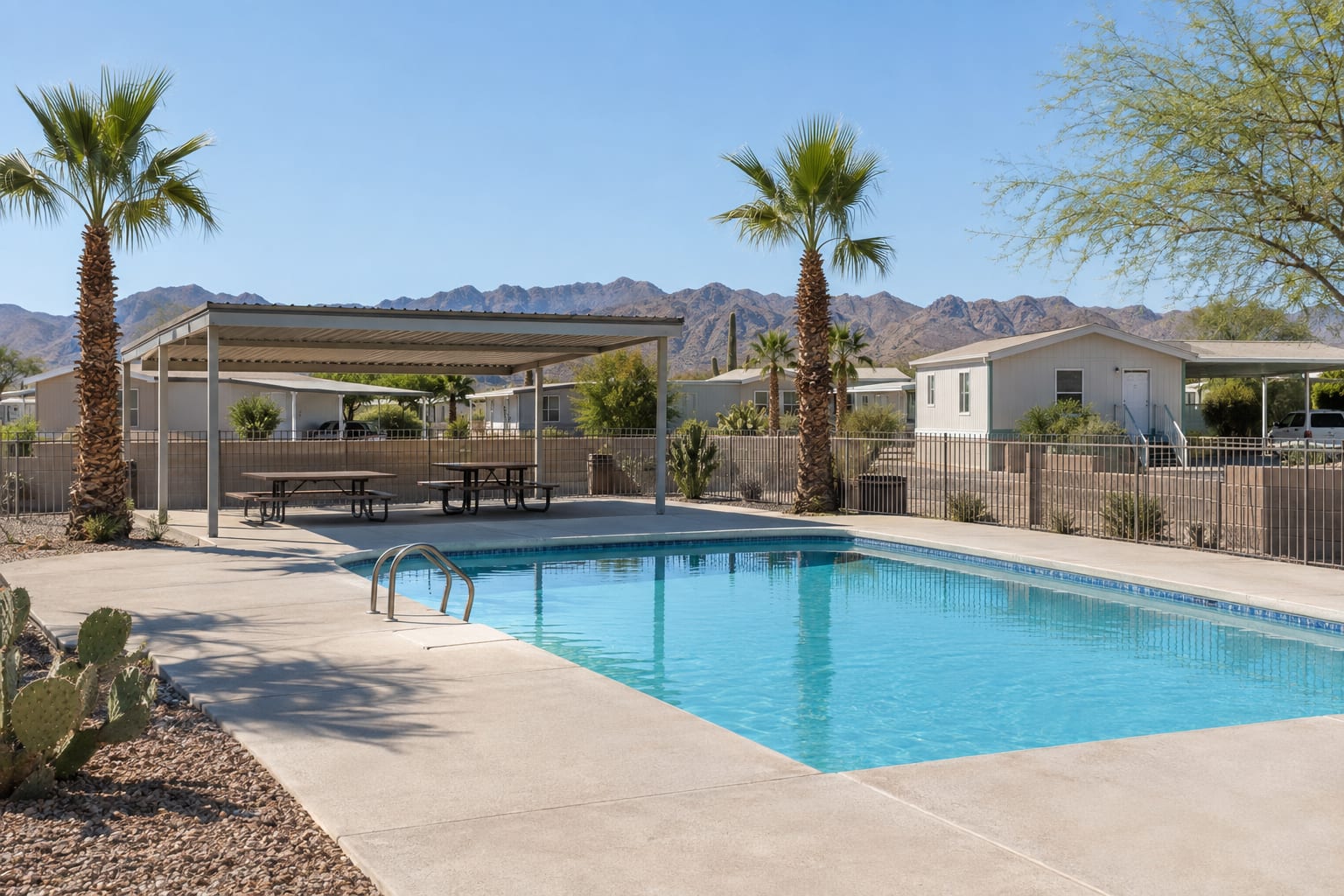
Rent pays for the space and for whatever the park maintains around it. A park with a pool, a clubhouse and organised activities has more to maintain than one with a street, a row of mailboxes and a laundry room. Whether that shows up in the rent is something to ask, not assume, and it is worth deciding whether you would use what you would be paying for.
When a rent looks unusually low, ask why. Find out what is not included, what shape the streets and utility lines are in, and whether the owner has announced a sale or a change of use.
Seven questions for every park office
The first six answers go on your worksheet. The seventh decides whether the park is an option for your household at all. The lease and the rules deserve their own conversation, and the questions to ask before buying on leased land cover it.
A park that answers plainly and in writing is telling you something about how it is run. So is one that will not.
Put the answers side by side
A worksheet for comparing parks
| What to write down | Park A | Park B |
|---|---|---|
| Rent for a new resident | ||
| Water, sewer and trash: included or billed | ||
| Electricity and gas: how they are billed | ||
| Other monthly charges | ||
| Last three rent changes: date and amount | ||
| Rental agreement offered | ||
| Age rule | ||
| Your monthly total |
Copy it onto paper and add a column for each park you call. The last line is the one to compare: the rent plus everything the rent leaves out.
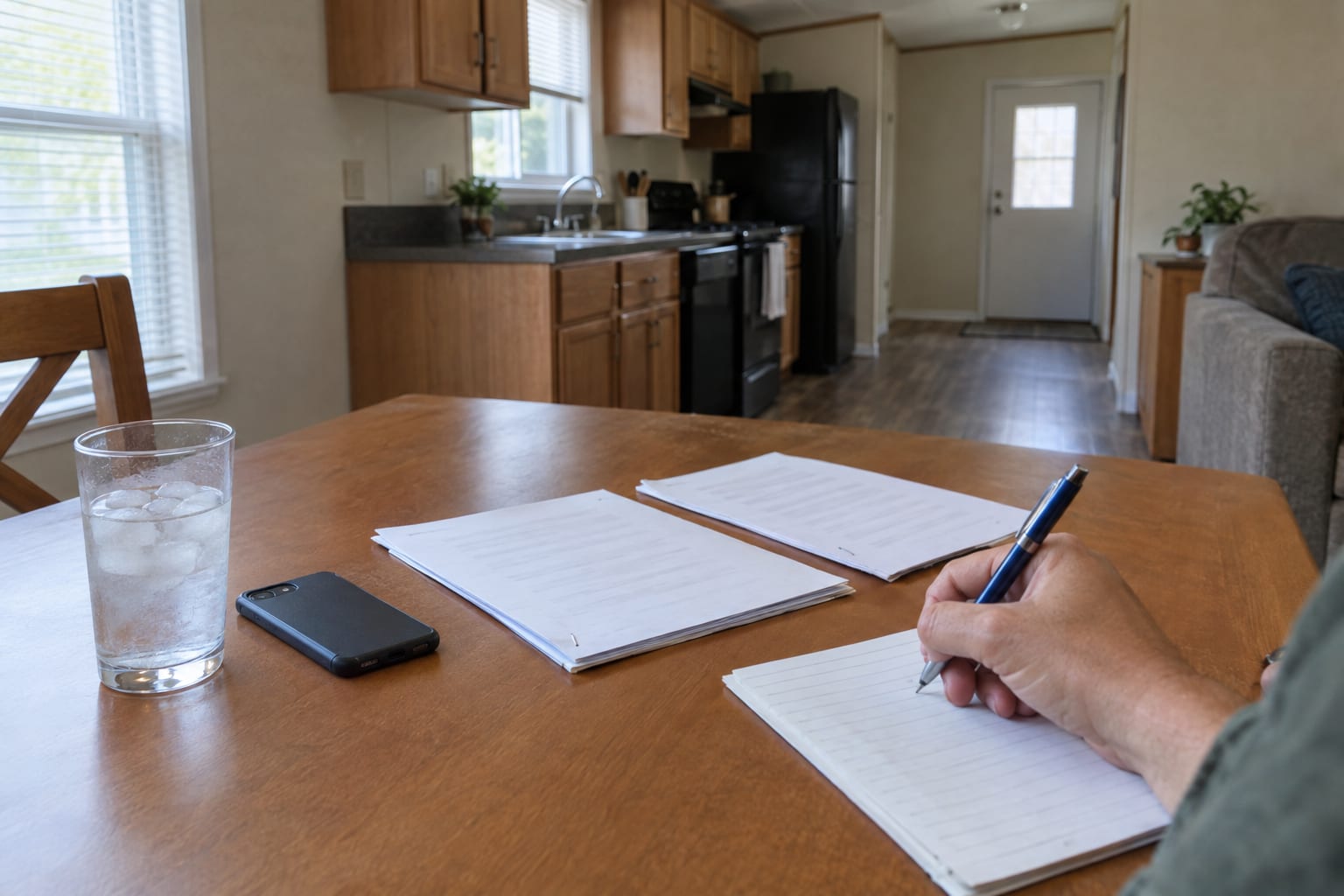
The history line matters as much as today’s figure.
What a Phoenix summer adds to the total
In the Valley, electricity for cooling is a large part of a home’s monthly cost through the hot months, and it varies with the home more than with the park. Two things to find out:
- How the park bills electricity. Some parks bill residents from a meter at each space. In others you hold your own account with the utility.
- What the bills have been. Ask the seller for last summer’s electric bills, and ask how old the cooling system is.
An older home with an aging air conditioner in a park with modest rent can cost more in July than a newer home in a park that charges more.
Rent can change after you buy
Space rent can increase over time, within the limits of your rental agreement and state law. In Arizona that law is the Arizona Mobile Home Parks Residential Landlord and Tenant Act, Title 33, Chapter 11 of the state statutes. Read it, or ask someone qualified, before you sign. This is general information, not legal advice.
Park land can also be sold or put to another use. The Arizona Department of Housing administers a Mobile Home Relocation Fund for certain situations, and its manufactured housing office is the place to ask how the fund works.
Space rent counts in the loan review
Lenders compare your monthly housing cost (payment, taxes, insurance, and any space rent) with your gross monthly income; acceptable ratios depend on the program, your other debts, and disposable income. The lender will usually confirm the rent with the park, so use the written figure from the start.
To see what a home and a rent come to together, enter your own figures in the payment calculator. The results are educational estimates, not a loan offer. The park’s approval of you as a resident is a separate review from the loan, and all financing is subject to credit approval.
If the totals do not work in any park you like, a home on its own land removes the rent and brings other costs, which park or land in Phoenix compares. When they do work, bring the worksheet to your first conversation with a lender. Santiago Financial, Inc. finances homes in communities across Arizona, and you can talk with a specialist about the parks on your list.