
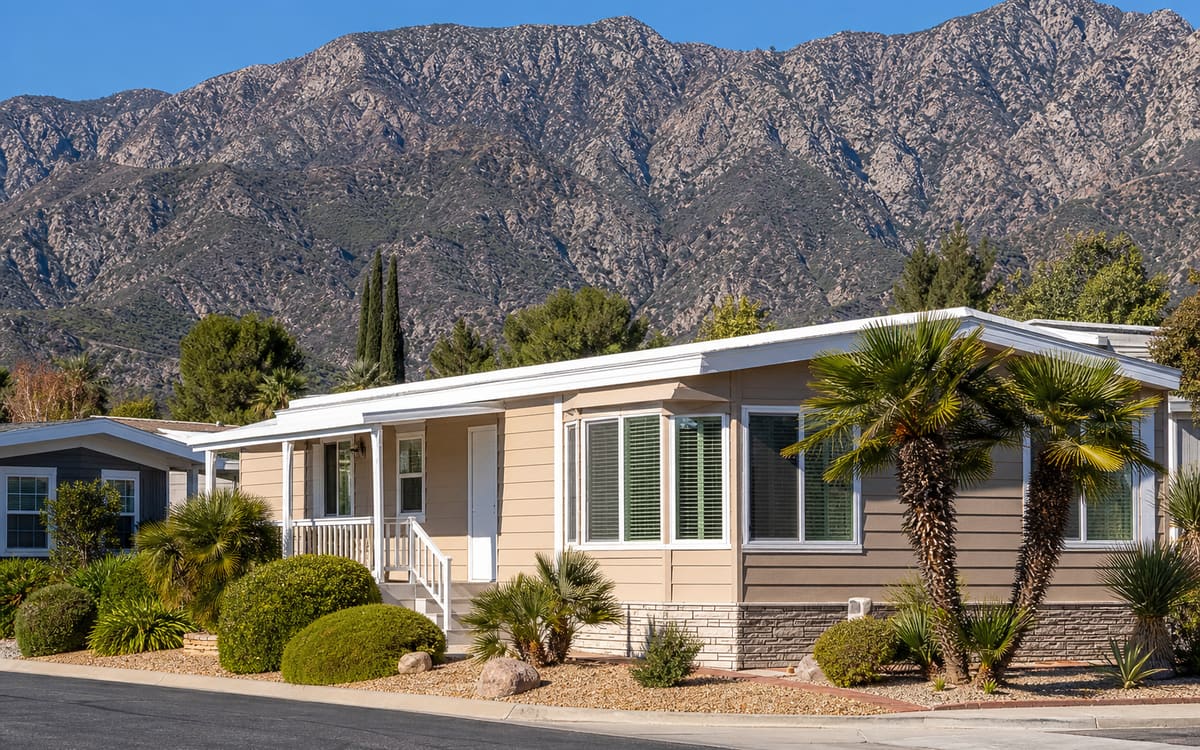
San Bernardino is the county seat of San Bernardino County and sits where the Cajon Pass opens into the valley, with the mountains directly behind the city. For a manufactured home buyer that location means three local questions on top of the usual ones: the city runs its own mobile home rent program, the ground under the valley is crossed by an active fault zone, and the wind and fire maps matter most along the foothills.
Santiago Financial, Inc. is based in Tustin, in Orange County, and finances purchases and refinances of manufactured homes in parks and on owned land throughout California. A home in a park is financed on its own as personal property with a home-only or chattel loan, and the park’s resident approval is a separate review from the loan. The California hub page covers the statewide basics; this page covers San Bernardino.
The city has its own mobile home rent program
Chapter 8.90 of the San Bernardino Municipal Code, titled Mobile Home Rents, sets out a rent program for mobile home park spaces inside the city, with registration of parks, a space rent ceiling and a petition and hearing process. It applies within the city limits only. Highland, Redlands, Colton and Rialto are separate cities that decide their own policies, and a park in unincorporated county territory is a question for the county.
The program does not tell you what a space costs. Ask the park for the current rent, what it includes and how it has changed, and ask the city which rules cover that park. Statewide, park tenancies come under California’s Mobilehome Residency Law, and HCD runs a Mobilehome Residency Law Protection Program for certain disputes between homeowners and management.
Faults, wind and fire at the foot of the mountains
None of these changes the loan rules, but each one changes what the inspection should cover and what insurance costs, and insurance is part of the monthly housing cost a lender compares with your income.
Local checks before you make an offer in San Bernardino
| Local factor | What to check | Where to look |
|---|---|---|
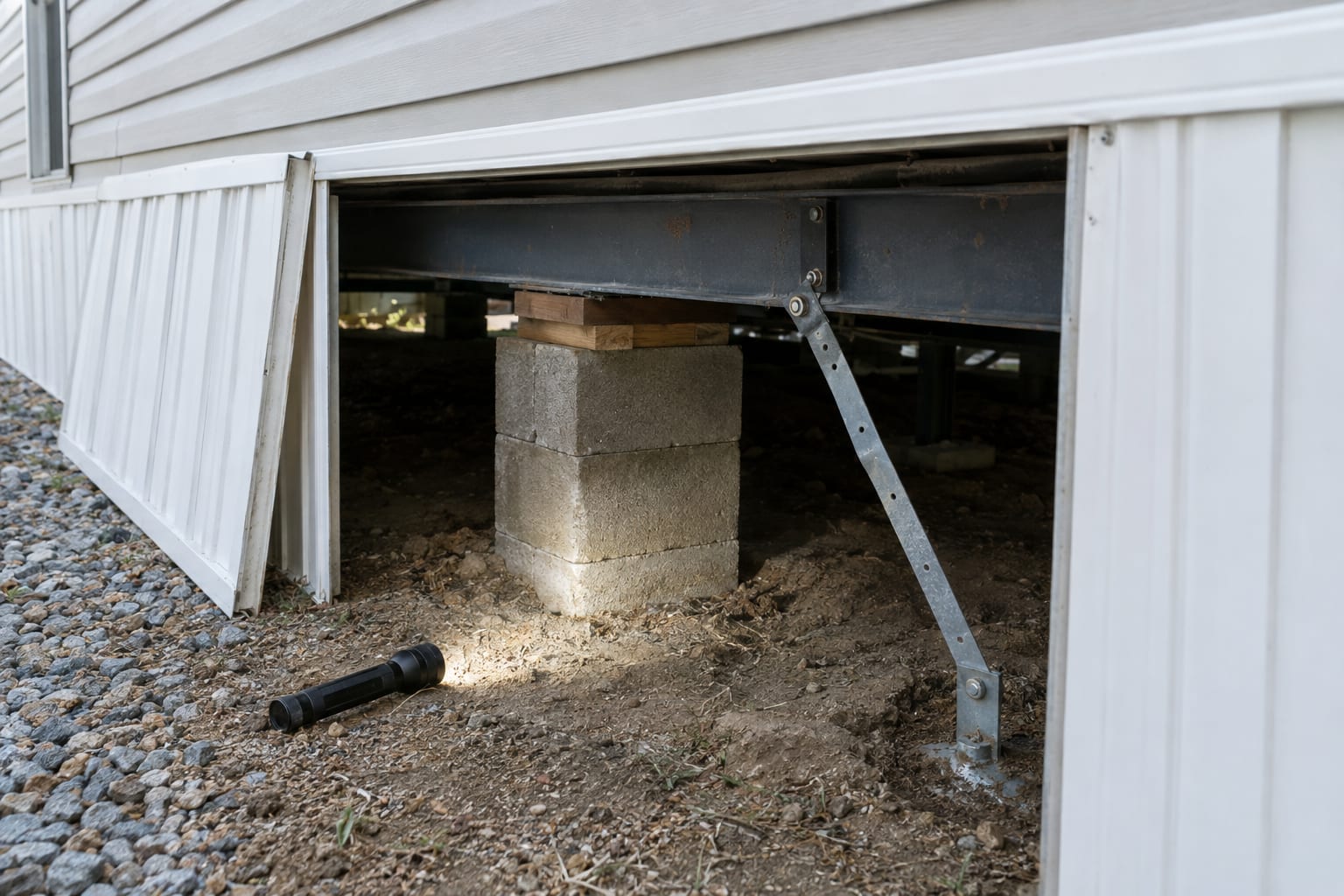
| Earthquake | The USGS describes the San Jacinto fault zone as branching off the San Andreas near Cajon Pass and running southeast through the San Bernardino Valley. Have the inspection cover the piers, tie-downs and any bracing under the home. | USGS fault report and the California Earthquake Authority |
| Santa Ana winds | The National Weather Service office in San Diego describes Santa Ana winds as often strongest in and below canyons and passes, and the city sits below the Cajon Pass. Check tie-downs, skirting, carport and awning attachments and the roof. | NWS San Diego, which forecasts for the Inland Empire, and its Santa Ana wind study |
| Wildfire | The county fire district adopted the state’s 2025 Fire Hazard Severity Zone map in June 2025. Look up the address, then get an insurance quote for it. | San Bernardino County Fire map page |
Earthquake-resistant bracing deserves a sentence of its own. In California an earthquake-resistant bracing system is a set of braces and anchors installed under a manufactured home; HCD lists the permit application for installing one in a park, and the California Earthquake Authority, which writes separate earthquake policies for mobilehomes, says a seismic retrofit can qualify for a premium discount.
If a seller says the home is braced, ask for the permit record. If it is not, ask an installer what it would cost before you make the offer rather than after.
The data plate inside the home lists the wind, thermal and roof load zones it was built for, and HUD’s manufactured housing page says a home should never be placed in a more restrictive zone than that. For a home already sited that is a check, not a change; for a home being moved to a lot near the pass it is a question for the installer and the county.
Ask for a manufactured home insurance quote for the exact address, and read what an inspection covers that an appraisal does not before you rely on either.
County records and taxes
The San Bernardino County Assessor-Recorder-Clerk’s Hall of Records in San Bernardino handles document recording. When a home is installed on a foundation system, HCD Form 433A is recorded there.
The county’s manufactured homes page explains that homes purchased new after June 30, 1980, and those on permanent foundations, are subject to property tax, while homes built and sold before that date pay license fees through HCD instead. Ask which applies, because it changes the clearance records a transfer needs and the monthly cost. For a home in a park, ownership and any lienholder appear on the HCD title, and the California HCD title basics post explains what to look for on it.
Nearby areas
Riverside and Corona each have a city rent program of their own and their own pages. East along the valley, Yucaipa and Calimesa and Beaumont have pages, and over the pass Victorville covers the High Desert. Homes in Highland, Redlands, Colton and Rialto are financed the same way; they do not need a page here.
Every application is reviewed individually, and all financing is subject to credit approval. Local rules change, so confirm them with the city or county; this page is general information, not legal or tax advice.