
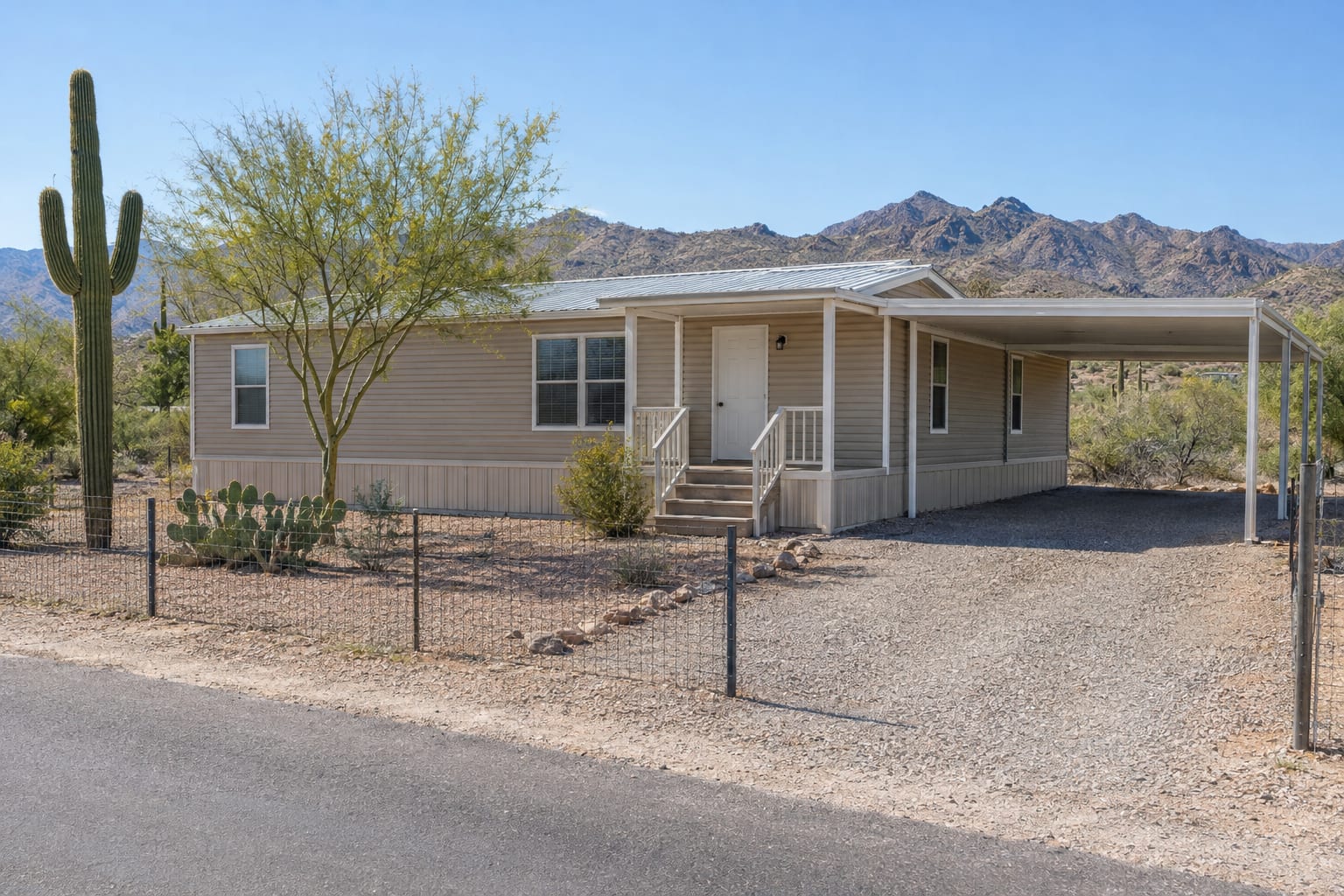
A mobile home loan is a loan secured by a manufactured or mobile home, and sometimes by the land under it as well. It works much like any home loan: you apply, the lender reviews you and the home, and you repay it monthly. What makes it different is the home itself. A home in a land-lease community is usually financed on its own, like personal property, while a home permanently attached to land you own can often be financed together with the land.
The land under the home decides the kind of loan
A manufactured home can be legally treated in two ways. As personal property, it is titled on its own, much like a vehicle, and the land under it belongs to someone else or is financed separately. As real property, the home is permanently attached to land and recorded with it, so the two are bought, sold and financed as one piece of real estate.
Most homes in land-lease communities are personal property, since you own the home and rent the space it sits on. A home on land you own can become real property once it is permanently affixed and the right documents are recorded. Personal property vs. real property explains how a home moves from one to the other, and the loan programs page compares the two setups side by side.
The main kinds of mobile home financing
Mobile home financing at a glance
| Kind of financing | What it pays for | When it is used |
|---|---|---|
| Home-only, or chattel, loan | The home on its own, as personal property | Homes in land-lease communities, and some homes on land that are titled separately |
| Land-and-home loan | The home and the land together, as real property | A home permanently attached to land you own or are buying |
| Government-insured programs | Varies by program | Some homes and borrowers; each program has its own eligibility, property, foundation and fee rules |
| Seller financing | The seller carries the loan instead of a lender | Some private sales; terms are set between buyer and seller |
A home-only loan is the one most people mean by a mobile home loan. What is a chattel loan explains when it is used. A land-and-home loan works more like a traditional mortgage; land-and-home financing covers it, including homes placed on land as a project.
Government-insured programs such as FHA, VA and USDA exist for some manufactured homes. Ask whether a government-insured program fits your situation, since their rules differ from conventional financing. If a seller offers to carry the loan, read buying from a private seller first, because the protections that come with a lender, escrow and a recorded lien are not automatic.
How a mobile home loan differs from a house mortgage
The application feels familiar. The differences are in the collateral and the paperwork around it.
- Repayment and pricing. Home-only loans generally run shorter and are priced to reflect the different collateral. Available terms depend on the program, the home’s age and type, the loan amount, and whether the land is owned.
- The title. A home financed as personal property has a title or registration with a state agency, not a deed at the county recorder.
- Value. A community home is usually valued from comparable sales of similar homes; a home and land together are appraised.
- Another approval. A home on leased land needs the community’s own resident approval as well as the lender’s.
The difference between chattel loans and mortgage loans goes through each of these in more detail.
What lenders look at in you
A lender reviews your ability to repay the full monthly housing cost, not only the loan payment.
There is no single down payment. It depends on the program, your credit, the home, and whether the land is leased or owned. Down payments explained and debt and housing ratios go further, and preparing your credit covers what to check before you apply. If your income alone falls short, the role of a co-signer explains what adding one involves.
What lenders look at in the home
The home is the collateral, so it gets its own review.
Its age and identity. The year, the manufacturer, the serial number and the HUD label show what the home is. A manufactured home is a factory-built home constructed on or after June 15, 1976 to the federal HUD Code; for a home built before that date, ask early which programs can consider it. Where to find the HUD label, data plate and serial number shows where each one is.
Its title. California titles and registers manufactured homes through HCD, the Department of Housing and Community Development, not the DMV (HCD registration and titling). Arizona titles are handled by the MVD, the ADOT Motor Vehicle Division, generally one title per section (ADOT mobile home ownership). The title has to be current and match the home.
Its setting and condition. For a community home, the lender looks at the space and the community’s approval. For a home on owned land, it looks at the land title, the foundation or affixture records, utilities and access. Condition, any additions, and whether the home has been moved also come into it. Loan programs for used manufactured homes matches common situations to the kind of loan that fits.
What a mobile home loan costs beyond the payment
The loan payment is one part of the monthly cost. In a community, space rent, insurance, utilities and any community fees are paid on top of it; on owned land, property taxes, insurance and the upkeep of any road, well or septic system. Lenders count these too, so they shape how much you can borrow as well as what you will pay.
At closing, expect costs beyond the down payment, such as escrow, title and recording fees and the first insurance premium; closing costs lists them. The lender will want a policy in place that names it, so it helps to get an insurance quote early; how insurance affects a mobile home loan explains why. To put your own figures together, use the payment calculator. Its results are educational estimates, not a loan offer.
How to choose a lender and compare offers
Not every lender finances manufactured homes, and a lender that does may not finance every setup or every age of home. Start by asking whether a lender handles homes like yours. What a specialist lender does differently explains why that matters for the title, the community and the closing.
Get pre-qualified before you shop, so you know your range. Pre-qualification is not final approval; pre-qualification and pre-approval explains the difference. When you have more than one estimate, compare them as whole loans: the amount, the term, every fee, any prepayment penalty and the total cost, not only the rate. Comparing loan offers beyond the interest rate shows how to line them up.
When you are ready to act, the buying guide takes a purchase step by step, and the refinance guide does the same for a loan you already have. All financing is subject to credit approval, and not all applicants or homes qualify.