
Manufactured & Mobile Home Loans
Purchase or refinance a manufactured or mobile home in California or Arizona — in a community or on owned land — with guidance from a lender focused on manufactured housing for over 50 years.
A manufactured home loan starts with one practical question: what exactly are you financing? A home in a land-lease community, a home already attached to land you own, and a new home-and-land project can require different documents, collateral, and closing steps. Identifying that structure early helps avoid surprises later.
Santiago Financial, Inc. works with California and Arizona buyers, homeowners, dealers, and real estate professionals on purchase loans, refinance options, and land-and-home financing. Program availability and terms depend on the borrower, property, loan amount, state, and lender guidelines. All financing is subject to credit approval. New to manufactured home financing? Read how mobile home loans work.
Three loan paths and the tools around them
Available terms depend on borrower qualifications, property type, and lender guidelines. All products are subject to credit approval.
Manufactured Home Purchase
Financing to buy a manufactured or mobile home in a community or on land you own. The down payment depends on the program, your credit, the home, and whether the land is leased or owned.
Learn moreRefinance Programs
Compare a new rate, term, or payment against your current loan, including cash-out where eligible.
Learn moreLand & Home / Construction
Combine your land and home into one loan, including any-age home and construction-style programs.
Learn moreFind Your Financing Path
Three quick questions — no personal information — to see which financing path fits your home and land situation.
Learn moreInsurance Services
Protect your investment with manufactured home insurance options through Santiago Financial Insurance Services.
Learn moreComparable Sales Reports
Understand a home’s value with a comparable sales report before you buy, sell, or refinance.
Learn moreHow the property setup changes the loan
The best starting point is the legal and physical relationship between the home and the land beneath it.
Home in a community
You buy the home and lease the homesite. The loan payment is only part of the monthly housing cost; space rent, utilities, insurance, taxes, and community fees may also apply. Lender review and community resident approval are separate processes.
Questions to ask about leased landHome on owned land
The file may involve real-property records, title or affixture documents, foundation information, utilities, access, and an appraisal of the home and land. The correct structure depends on how the home is titled and installed.
Learn about owned-land financingNew land-and-home project
Buying land, ordering a home, preparing the site, obtaining permits, installing the home, and converting to permanent financing introduces more moving pieces than purchasing an existing home.
Explore land-and-home loans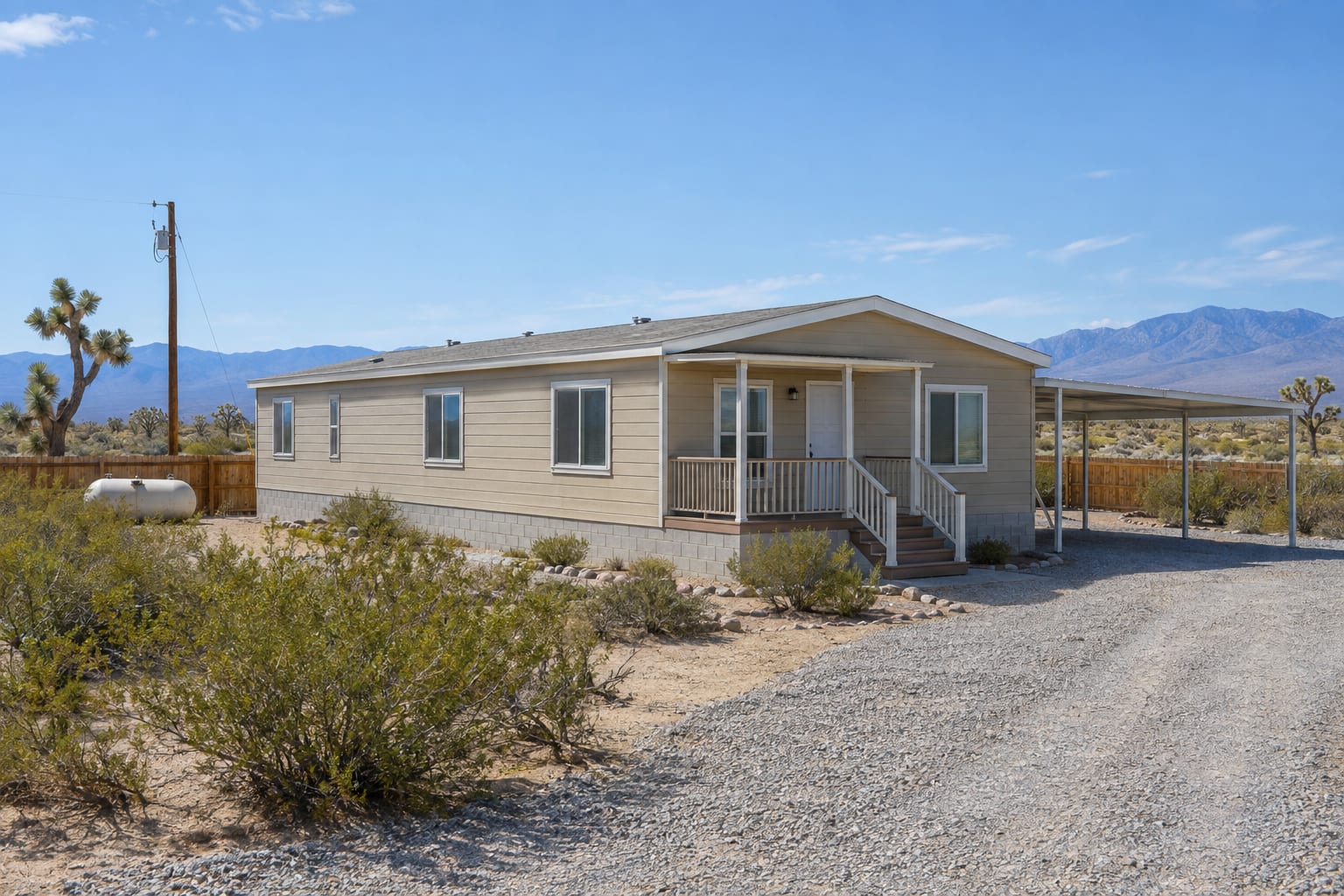
Community home vs. home on owned land
Most manufactured home questions trace back to this one difference. Here is how the two situations compare on the points that actually change your paperwork and your monthly budget.
| What differs | Home in a community | Home on owned land |
|---|---|---|
| What the loan finances | Generally the home itself. The homesite is leased from the community rather than purchased. | Often the home and the real property together, depending on how the home is titled and installed. |
| Who owns the land | The community owns it. You lease your homesite and pay space rent. | You do, either already or as part of the same purchase. |
| Monthly cost includes | Loan payment, space rent, insurance, utilities, any community fees, and applicable taxes. | Loan payment, property taxes, insurance, utilities, and any road, well, or septic upkeep. |
| Approvals involved | Two separate reviews: the lender’s, and the community’s own resident approval. | Lender review. There is no community resident approval to clear. |
| Property records typically reviewed | Home title or registration, serial and model details, lien releases, and the community’s lease terms. | Land title, home title or affixture records, foundation and installation details, permits, utilities, and access. |
| How value is supported | Comparable sales of similar homes, commonly within the same or nearby communities. | An appraisal covering the home and the land together. |
| If you want to move later | You can sell the home, but the buyer must also be approved by the community. | The home and land are sold together like other real estate. |
General comparison for planning purposes. Which structure applies to a specific transaction depends on the home, the land, how the home is titled, and current program guidelines. All financing is subject to credit approval.
What happens after you apply
-
Application
Tell us whether you are buying or refinancing, and whether the home is in a community or on owned land. You can start before every document is collected.
-
Review, decision and documents
The application is reviewed against current program guidelines. An approval comes with conditions: the documents and steps needed before the loan can fund.
-
Community approval, value, title and escrow
A home in a community also needs the community’s own resident approval. Comparable sales or an appraisal support the value, and the title, insurance and escrow work is completed.
-
Signing and funding
Once every condition is cleared, you sign the loan documents and the loan funds through escrow.
A community may review residency separately from the lender. Final steps and timing vary by transaction, property, title status, and third parties. Each stage, who is involved, and what you do at each one is on how the loan process works.
Manufactured home loan requirements depend on both the borrower and the home
Unlike a general personal loan, manufactured home financing requires a review of the collateral as well as the applicant. The left column is what gets reviewed; the right column is what helps to have ready, even if some of it comes later.
| What is reviewed | What helps to have ready |
|---|---|
| Borrower. Identity, income, employment or other qualifying income, assets, debts, credit history, and intended occupancy. | Photo ID, income and asset documents, and permission to review your credit. |
| Transaction. Purchase or refinance, requested loan amount, down payment or equity, seller and payoff information, and closing timeline. | The purchase agreement, or your current loan statement for a refinance. |
| Home. Year, manufacturer, model, size, serial or identification numbers, condition, location, and value support. | The address or community name, the home’s year and size, and the serial number or HUD label if you have it. |
| Land and title. Community lease or owned land, current title or registration, liens, affixture or foundation status where applicable, and property-tax records. | The home’s title or registration details; for owned land, the deed or parcel information and any recorded 433A or Affidavit of Affixture. |
| Other parties. Community approval, escrow, appraiser or value provider, insurer, dealer, agent, county recorder, or state titling agency as the transaction requires. | Contact details for the seller, dealer, agent, or community office. |
You do not have to solve every document question before calling. Start with the address or community name, estimated price or current balance, home year, and whether the land is leased or owned. We can help identify the next useful step.

Estimate your monthly payment
Try our manufactured & mobile home loan calculator — adjust price, down payment, term, taxes, and space rent to see an estimated monthly payment. Estimates are for educational purposes; all financing is subject to credit approval.
Frequently asked questions
Can you finance a manufactured home in a mobile home park?
Financing may be available for a manufactured or mobile home in a community where the homeowner leases the homesite. The loan generally covers the home, while space rent and community charges are separate. Approval depends on the borrower, home, community, loan amount, and current program guidelines.
Can you finance a manufactured home on owned land?
Yes, financing may be available when the home sits on land the borrower owns or is buying. The title, foundation or affixture status, utilities, access, and whether the land and home transfer together help determine the appropriate path.
What documents are commonly needed for a manufactured home loan?
The exact list varies, but borrowers are commonly asked for identification, income and asset documents, current housing information, and permission to review credit. Property documents may include the purchase agreement, home title or registration details, community information, land records, insurance, and value documentation.
What is the difference between a mobile home and a manufactured home?
In common use the terms overlap. Federally, factory-built homes constructed on or after June 15, 1976 are manufactured homes built to HUD construction and safety standards, while older factory-built homes are often called mobile homes. Age, condition, title, location, and program rules can affect financing availability.
Do you offer manufactured home loans throughout California and Arizona?
Santiago Financial, Inc. currently arranges manufactured and mobile home financing throughout California and Arizona only. You do not need to live near our Tustin office, and your city does not need a dedicated page on this website.
Does pre-qualification guarantee loan approval?
No. Pre-qualification is an early estimate based on the information reviewed at that stage. Final approval depends on verification, the property, value, title and other applicable conditions. All financing is subject to credit approval, and not all applicants will qualify.
Ready to finance your manufactured home?
Start online, by phone, or with a printable application. A specialist reviews the home, where it sits, and your situation together, then tells you what is needed next. No obligation; subject to credit approval.