Tips for Maintaining Your Manufactured Home Over the Long Term
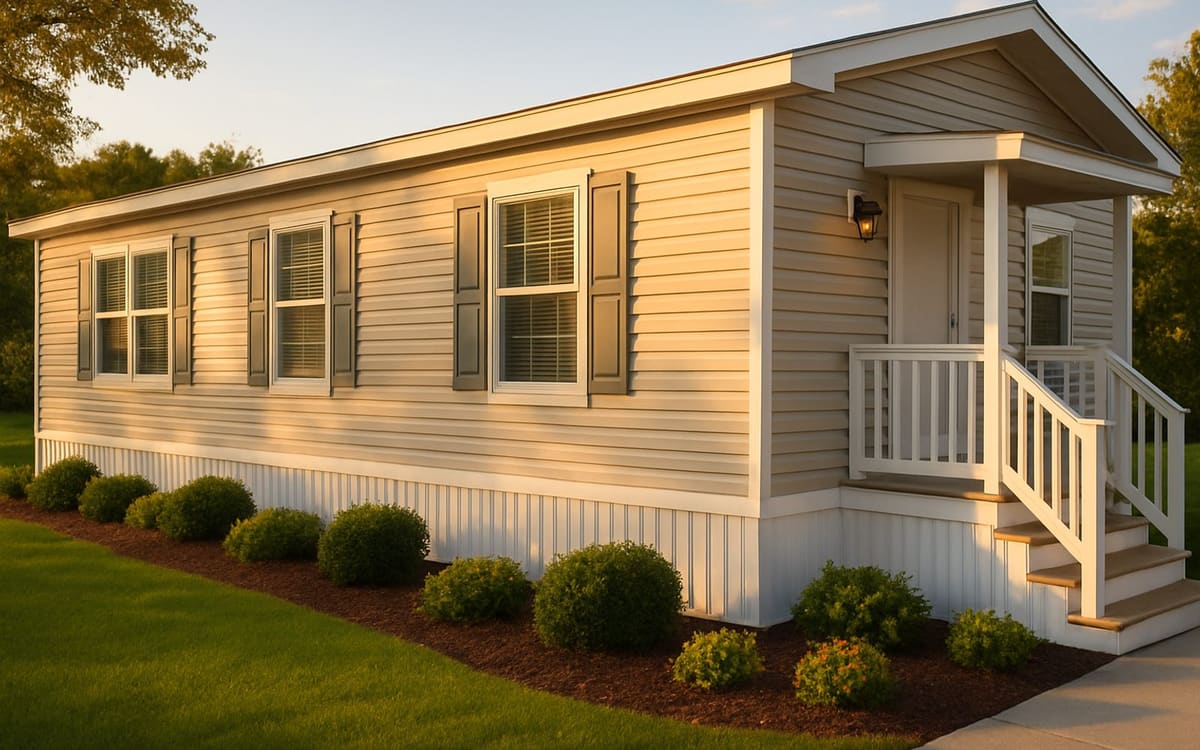
A manufactured home needs the same routine care as any house, plus a short list of jobs a site-built owner never has to think about: keeping the home level on its supports, checking the tie-downs, sealing the roof seams, and looking after the belly wrap and skirting underneath. Most of it fits into four sessions a year, timed to the weather where you live.
The calendar below shows what belongs in each season and links to the detailed checklist for it.
The year at a glance
Manufactured home maintenance by season
| Season | Main jobs | Detailed checklist |
|---|---|---|
| Spring | Walk-around inspection after the winter rains, then a deep clean | Spring inspection checklist and spring cleaning |
| Before summer | Cooling service, ducts and belly, roof coating, shade, an outage plan | Summer heat checklist |
| Fall | Heating service, gutters and drainage, door and window seals | Fall and winter checklist for California and Arizona |
| Winter | Freeze protection where it freezes, moisture control where it rains | Winterizing a manufactured home in Arizona |
Which season is the hard one depends on where the home sits. In the low desert, summer does the damage, so the pre-summer work matters most. In the mountains of either state it is winter. On the coast and in the inland valleys, the rainy season tests the roof and the drainage.
Two hazards have their own guides: earthquake bracing for California homes, and wildfire preparation for homes near brush or forest.
The jobs a site-built checklist leaves out
A manufactured home is built on a steel frame, set on piers, held down by straps, and closed underneath by a wrap and a ring of skirting. Each of those needs a look at least once a year, and none of them appears on a checklist written for a house on a slab.
Level and supports
Most homes in communities, and many on private land, rest on piers: stacks of concrete block or steel stands under the frame. Soil settles and shifts with moisture, so a home can drift out of level over the years. The signs usually show up indoors first:
- doors and windows that start to stick, or swing open on their own
- new cracks or gaps where walls meet the ceiling, especially along the marriage line, the seam where the sections of a multi-section home join
- floors that slope or bounce in places that are nowhere near plumbing
- skirting panels that bow or pull out of their track
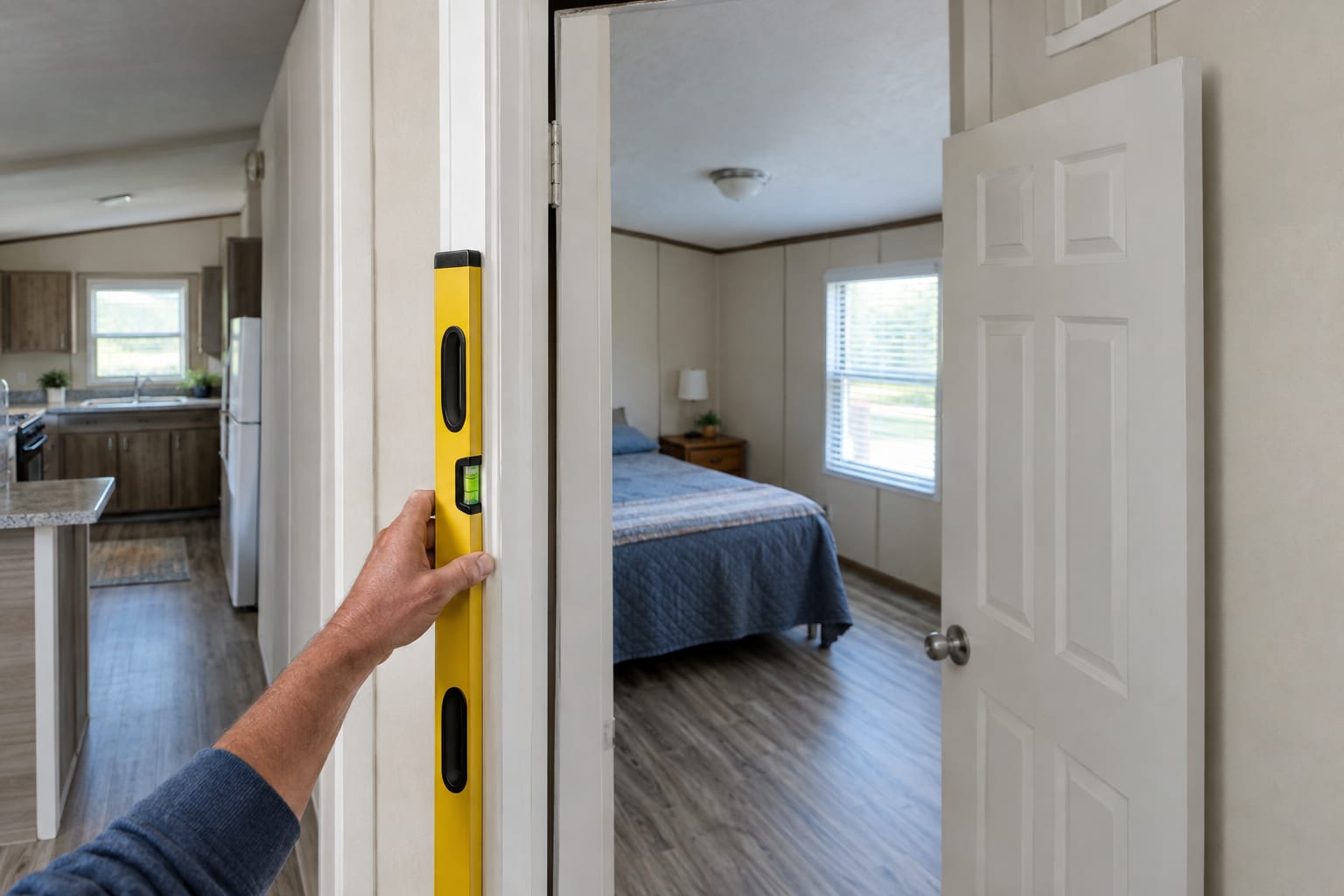
Re-leveling means jacking the frame and re-shimming the piers. That is work for a licensed manufactured housing contractor, not a job for a bottle jack from the garage. There is no fixed interval for it. Soil, drainage and the age of the set-up all matter, which is why a yearly check for these signs is the trigger.
Tie-downs and bracing
Steel straps or an engineered system anchor the frame to the ground against wind. In California, some homes also have an earthquake-resistant bracing system under them.
From the skirting access panel, with a flashlight, look for straps that hang slack, rust that has eaten into a strap or an anchor head, and piers that lean or have lost their shims. Anything loose is a call to the same kind of contractor who levels homes.
Roof seams and edges
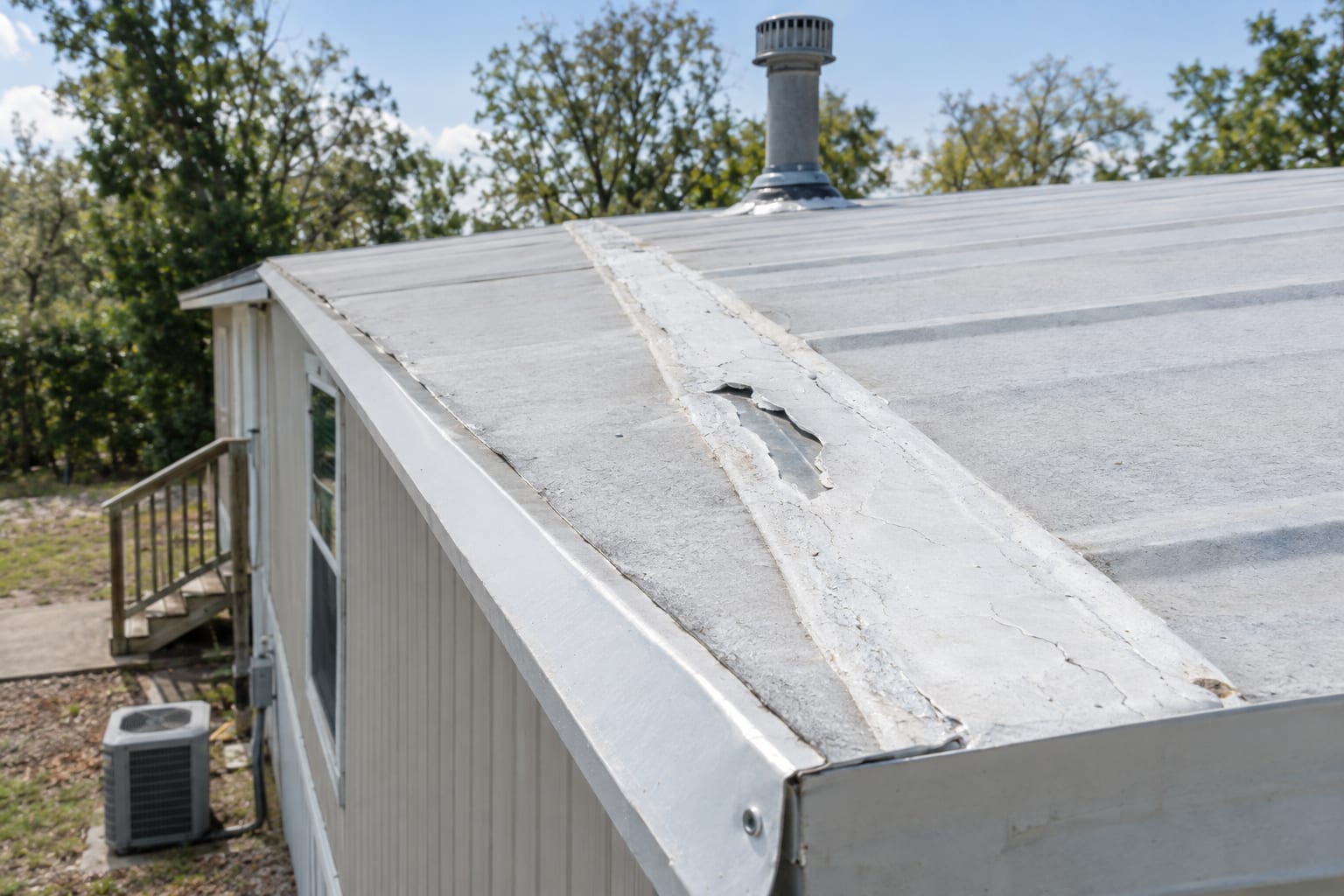
Older homes often have a low-slope metal roof whose seams, edges and vent openings are sealed with a coating. The coating weathers and has to be renewed. Newer homes usually have shingles, which fail differently: lifted tabs, bare patches, and cracked sealant at vents and flashing.
Look at either kind after the rainy season and again before the next one. Re-coat a metal roof on the schedule the coating maker gives, and deal with a small seam leak before it reaches the ceiling panels.
Belly wrap
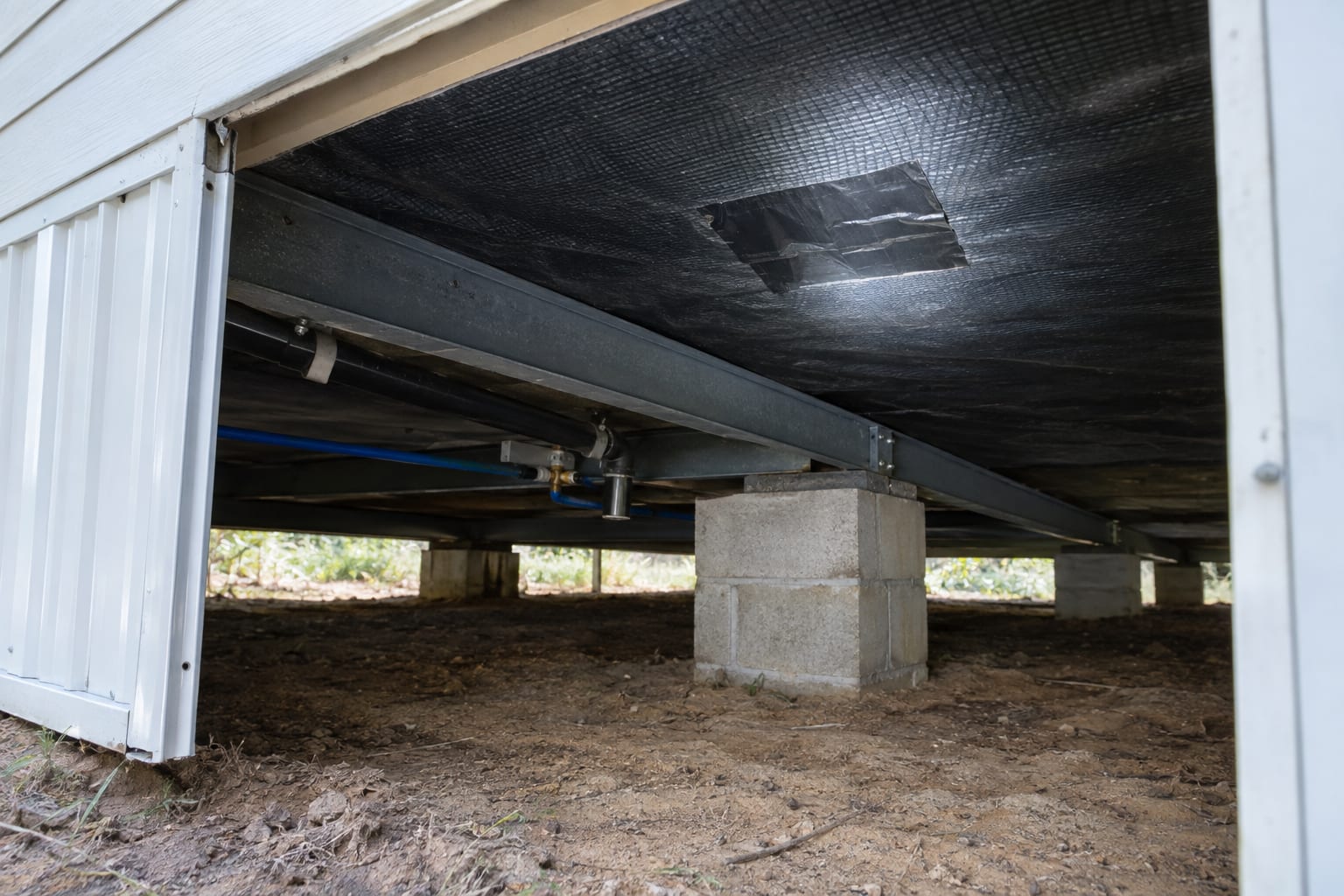
Under the floor, a sheet of tough fabric or plastic closes off the underside of the home. It is called the belly wrap, the underbelly or the bottom board. It holds the floor insulation in place and shields the ducts and water lines.
The wrap gets cut open for plumbing repairs and is not always closed properly afterward, and animals tear it. A tear lets insulation fall and lets rodents in. A section that sags like a full hammock usually means water from a leak is collecting above it. Patch small tears with tape or patch material made for the purpose. Have a wet, sagging section opened and the leak found.
Skirting and the air under the home
Skirting keeps animals and wind out from under the home, but the space behind it has to breathe. The federal installation standard for new homes calls for ventilation openings on at least two opposite sides, screened against rodents, with the dryer vent carried through the skirting to the outside (24 CFR 3285.505).
That makes a sound checklist for an older home too: vents clear of leaves and stored items, screens whole, soil dry, and the dryer exhausting outside the skirting instead of under the floor.
Small checks that repeat all year
- Heating and cooling filter. ENERGY STAR’s heating and cooling guidance is to check the filter every month during heavy use and change it when it is dirty.
- Smoke alarms. The U.S. Fire Administration says to test smoke alarms monthly and to replace the whole alarm every 10 years. Test carbon monoxide alarms at the same time.
- Water. Look under each sink, around the water heater and at the base of each toilet for drips or staining. A slow leak in a manufactured home ends up in the belly, where you cannot see it.
- A lap around the outside after any strong wind or heavy rain: skirting panels, awning and carport posts, gutters and downspouts.
Work that needs a permit or the community’s approval
Maintenance turns into a permit question sooner than many owners expect. In California, HCD (the Department of Housing and Community Development) says a permit is required before you alter a manufactured home. Its alteration guidelines (HCD MH 604) list re-roofing, and the replacement of an air conditioner, furnace or water heater, among the jobs that need one.
Applying a liquid roof coating is not counted as re-roofing, and replacing an exterior door with one of the same size is listed as not needing a permit. Start at HCD’s page on modifying a mobilehome.
In Arizona, take installation and permit questions to the Arizona Department of Housing, which oversees manufactured housing.
If you rent your space, read the community’s rules before changing anything visible from the street. Paint color, skirting material, awnings, sheds and steps are commonly covered, and written approval may be needed first. This is general information, not legal advice, and agency procedures change.
Keep a maintenance file
The file earns its place when you sell or refinance. A buyer’s inspector and an appraiser both look at the home’s condition, and a dated record of roof, level and equipment work answers their questions before they are asked. It is also useful when you ask about manufactured home insurance or have to make a claim.