Winterizing Your Manufactured Home in Arizona: A Checklist
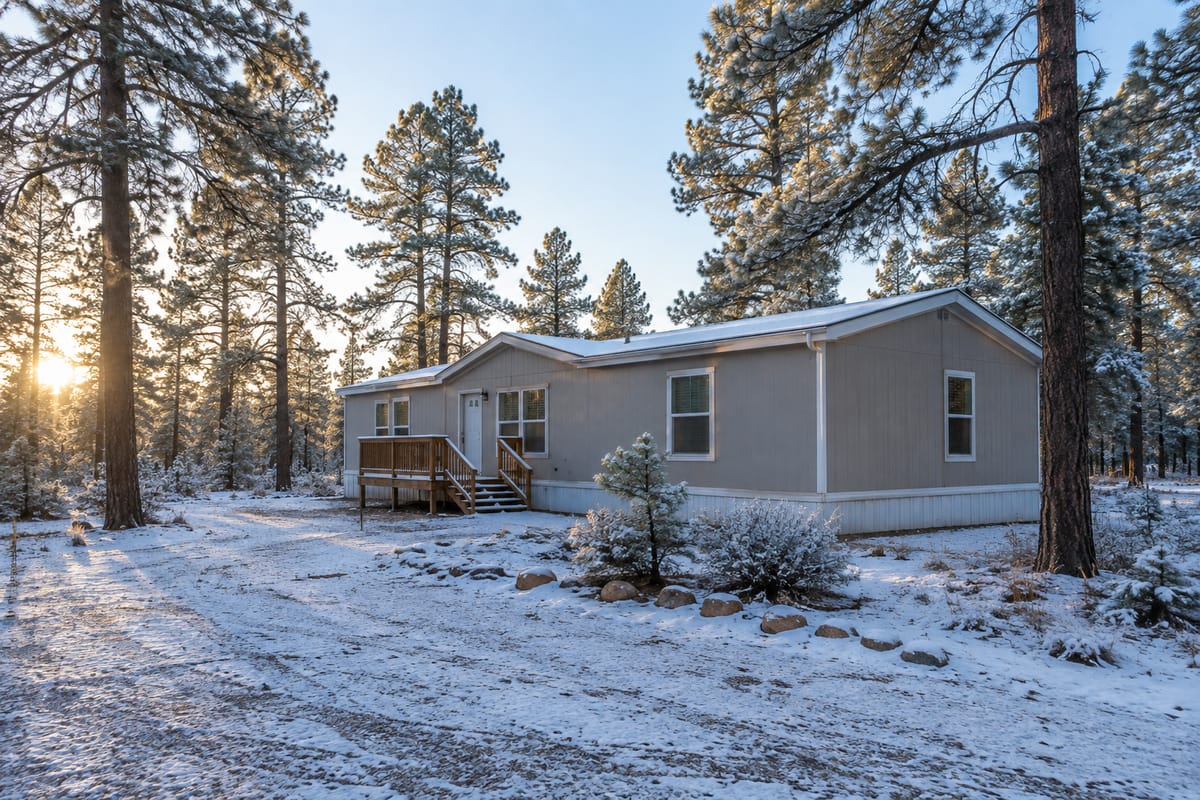
Whether an Arizona manufactured home needs winterizing depends on its elevation. In the high country, where Flagstaff, Prescott, Payson and Show Low sit between roughly 5,000 and 7,000 feet, freezing nights are a normal part of winter and the water line under the home needs protection before the first one. In the low desert a freeze is rare, and the list is short.
A home that will sit empty, in either region, needs a little more. This checklist covers all of it, plus what to do on the day a winter visitor arrives.
Elevation decides how much winterizing you need
The NWS Flagstaff office issues the freeze and winter storm warnings for northern Arizona, and its forecast page for your town is the one to watch from October on. At the other end of the state, the NWS Phoenix office’s temperature records show the official Phoenix station averaging about one day a year at or below freezing over 1991 to 2020, and Yuma averaging none.
Winter jobs by region
| Job | High country | Low desert |
|---|---|---|
| Water line under the home | Insulate it, fit listed heat cable, test before the first freeze | Insulate any exposed pipe; cover it on frost nights |
| Skirting | Close every gap so wind stays out | Check panels and vents after the monsoon season |
| Heating | Service the furnace; fill the propane tank early | Test the heat before the first cool night |
| Roof | Clear debris; know the home’s roof load; watch awnings under snow | Re-seal what the summer sun cracked |
| Outdoor faucets and irrigation | Drain and shut off | Cover on frost nights |
| Evaporative cooler | Drain, shut off the water line, cover | Same |
| Leaving the home empty | Keep it heated or have it fully winterized | Little to do for winter; summer is the season to plan for |
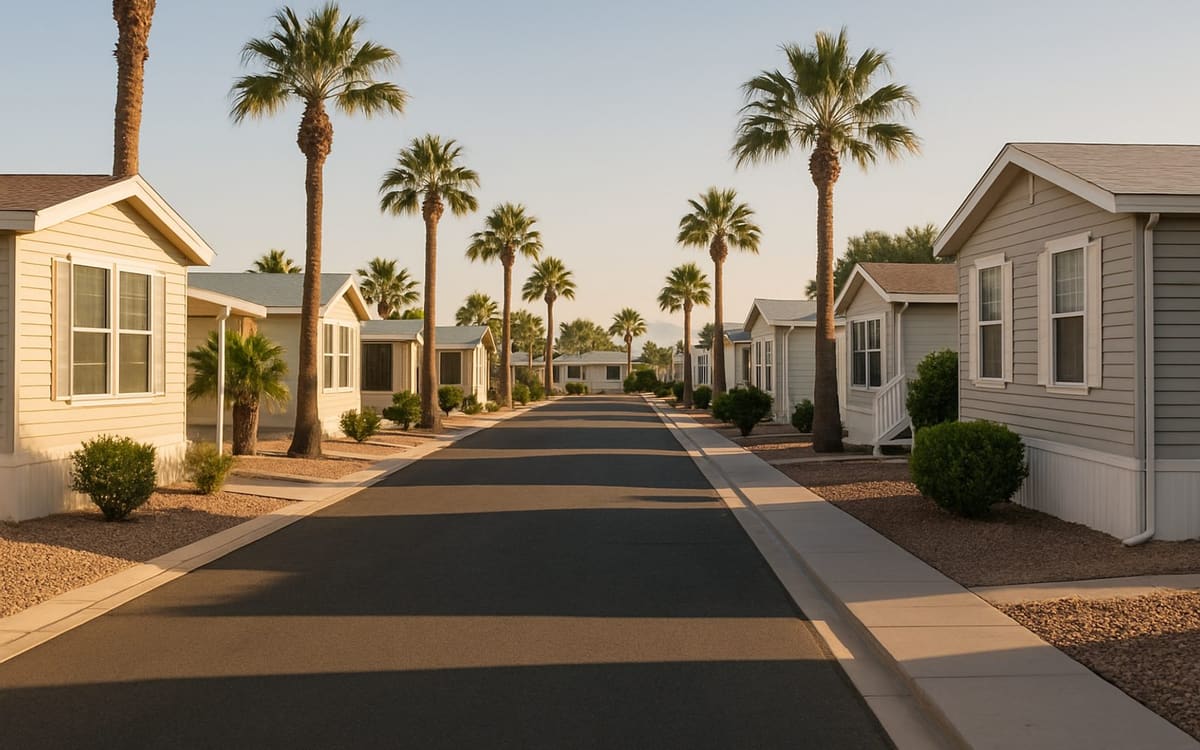
Towns at middle elevations fall in between. Follow the low-desert list, and treat any freeze warning as a high-country night.
Protect the water line first
On a manufactured home the water supply comes out of the ground and rises through open air to the floor. That short run, and any pipe hanging below the belly wrap, freezes first. The federal HUD Code requires piping exposed to freezing to be insulated or protected, says that any heat tape or heat cable used must be listed for the purpose, and provides for an outlet under the home to plug it into (24 CFR 3280.603).
Before the first hard freeze
- Look at the riser Open the skirting access panel where the water enters. The insulation should be intact and dry from the ground to the floor, with the shutoff valve and any pressure regulator covered too.
- Check the heat cable It should be plugged in, the outlet should have power, and the cable should show no cracks, brittleness or bare spots. Replace a damaged cable with one listed for your pipe material and follow its instructions for wrapping and insulating.
- Close the skirting Refit loose panels and close gaps at corners and around pipes, so wind cannot blow across the water line.
- Patch the belly wrap Tears expose pipes and ducts to the cold air under the home. Patch small ones with tape made for the purpose, and have a sagging, wet section opened and the leak found.
- Drain what is outside Disconnect hoses, drain and shut off irrigation, and cover the outdoor faucets.
- Find the main shutoff Make sure it turns, and that everyone in the home knows where it is.
Heat, fuel and alarms
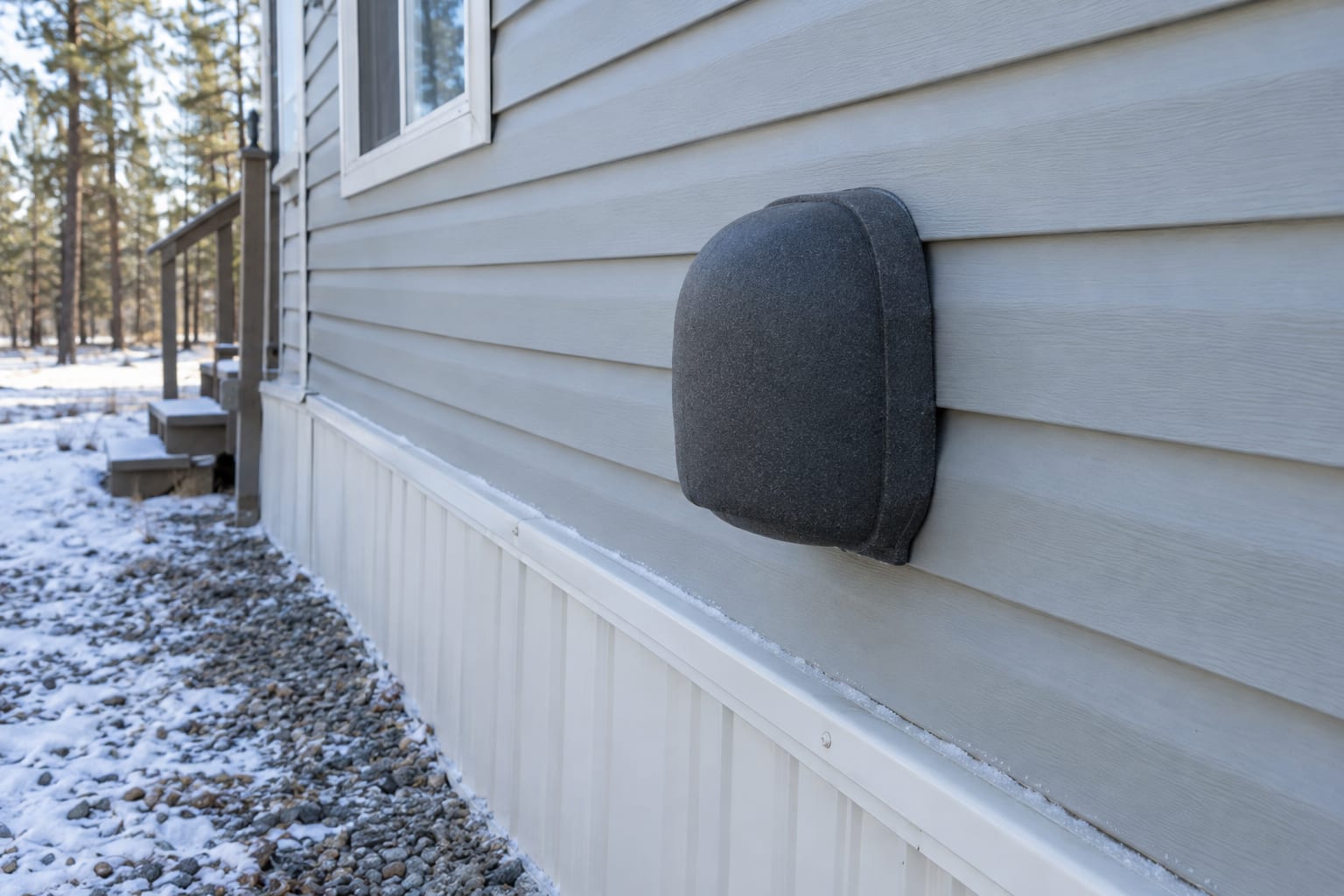
Have the furnace serviced before the season. The U.S. Fire Administration’s advice is to have heating equipment cleaned and inspected each year by a professional, to keep anything that can burn at least three feet from a space heater, to turn space heaters off when you leave the room or go to bed, and never to heat a home with the oven (heating fire safety).
Many high-country homes heat with propane. Fill the tank before the first storm, while the delivery truck can still reach it, and keep the path to the tank clear. A heated home freezes when the fuel runs out, not when the weather turns.
Ready.gov adds the rest: smoke and carbon monoxide alarms with battery backups, supplies for several days without power, and a generator run outdoors only, at least 20 feet from windows and doors.
Roof, snow and awnings
The data plate inside the home states the roof load it was designed for. The federal standard has three roof load zones and places Arizona in the lowest, so a home built to the minimum may not suit a snowy site (24 CFR 3280.305). A home can be built for more, and the data plate says what yours was. Before buying a home for the high country or moving one there, ask the Arizona Department of Housing or the local building office what applies.
Before the first snow, clear the roof and gutters. After a heavy snow, remember that carports and awnings are separate structures that carry their own load, and that a snowy roof is not a place to stand. A roof rake used from the ground is the safe tool.
The low desert list is short
- Frost nights. When the NWS Phoenix or Tucson office issues a frost advisory or freeze warning, cover the outdoor faucets and the irrigation backflow assembly, and wrap any exposed pipe. Watch the forecast for your own area rather than the city’s.
- Heat. Switch the thermostat to heat and run it before the first cool night, and change the filter. On a heat pump, that first run is when a problem shows.
- Evaporative cooler. Shut off and drain its water line, drain the pan, and cover the cooler so that cold air does not pour in through the duct.
- After the monsoon. Look at the roof coating, the sealant around vents and windows, the skirting panels and the carport fasteners, all of which the summer storms test.
If the home will be empty in winter
A high-country home that nobody lives in through the winter has two options: keep it heated, or winterize it fully.
Kept heated, it needs the thermostat set low but well above freezing, the cabinet doors under the sinks open so warm air reaches the pipes, the water shut off at the main, a fuel supply that will not run out, and someone who checks it after storms and during power outages.
Fully winterized means the water is off at the main, the lines are drained, the water heater is drained and switched off, and the drain traps are protected with a non-toxic plumbing antifreeze. It is worth paying a plumber or a manufactured home service company to do it the first time and to show you the sequence. Either way, tell your insurer the home will be unoccupied and ask what the policy requires.
Arriving for the season
For a winter visitor in the low desert the problem runs the other way: the home has sat closed through a summer. Before you unpack, give it an hour.
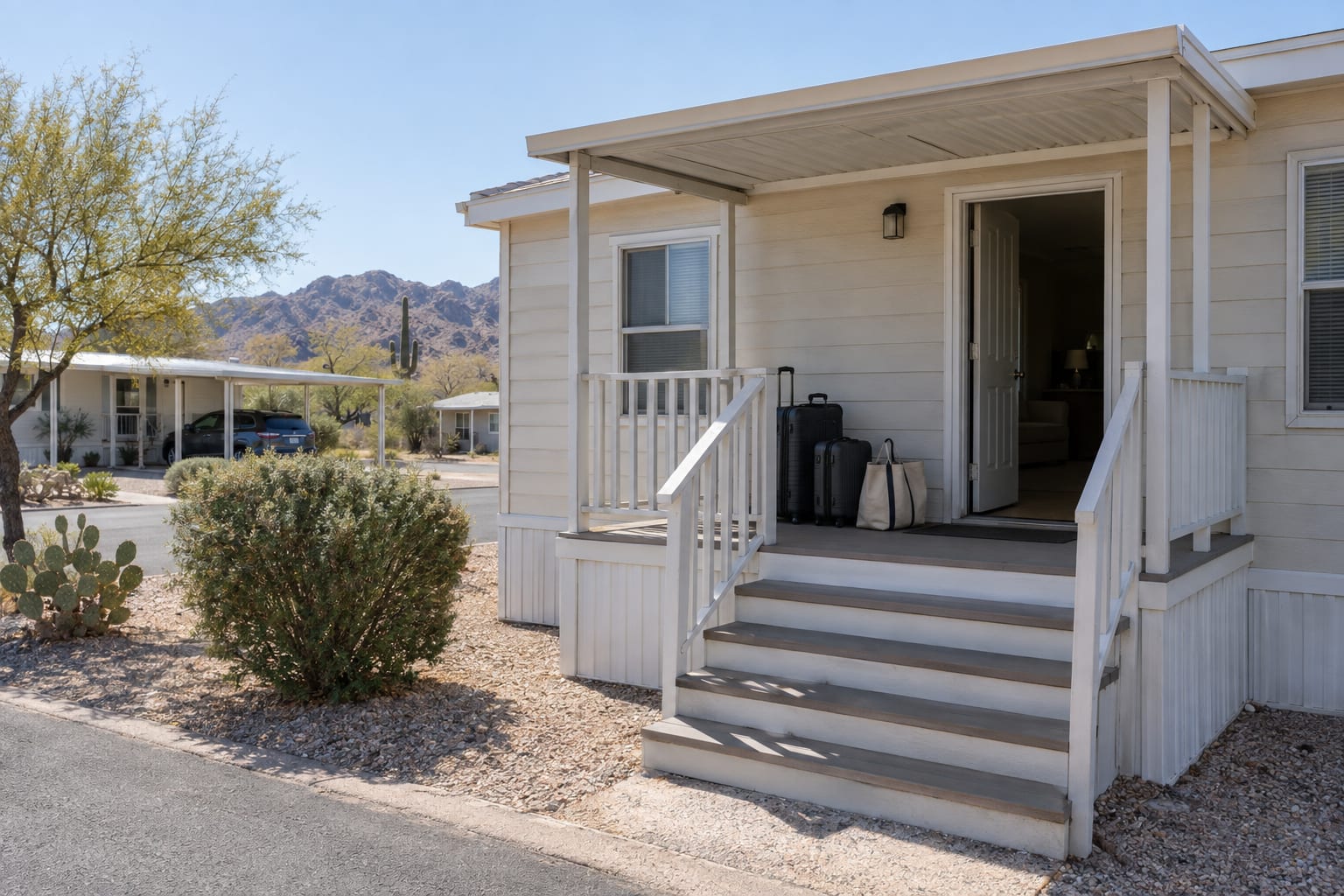
The other half of the routine, closing the home for the summer, is in buying a manufactured home as a snowbird in Arizona. The two-state fall list, organized by climate, is in fall and winter maintenance for manufactured homes in California and Arizona.
This article is general information. Your home’s own manuals and the local building office come first, and the standards cited here change.