Wildfire Preparedness for Manufactured Home Communities: Steps to Protect Your Investment
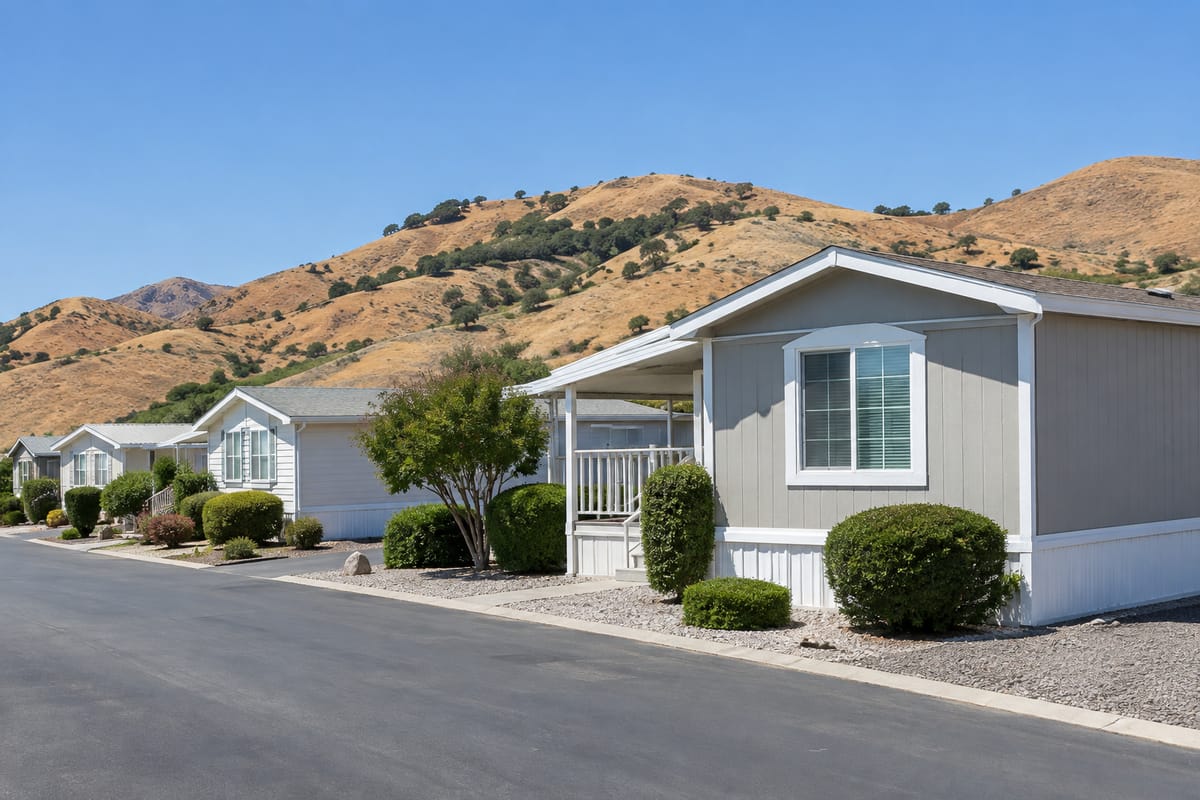
Wildfire preparation for a manufactured home starts in the five feet closest to it. That is where wind-blown embers land, and on a manufactured home it is also where the most exposed parts are: the skirting and its vents, the steps and deck, and whatever is stored under the carport. Clearing and hardening that strip is the work you control.
The rest depends on other people. On a space in a community your lot may be only a few yards deep, so the brush that matters is on your neighbors’ spaces and along the park’s edges. So there are three parts to it: what to do on your own space, what to ask of the community, and the plan for the day you have to leave.
How defensible space is measured, and what a small lot changes
California’s defensible space law works outward from the structure in three bands (Public Resources Code 4291).
Defensible space around a home under California law
| Distance from the home | What the law asks for |
|---|---|
| 0 to 5 feet, the ember-resistant zone (often called Zone 0) | Nothing that embers are likely to ignite |
| 5 to 30 feet | More intense fuel reduction than the outer band |
| 30 to 100 feet, or to the property line | Fuels spaced so that a wildfire would be unlikely to ignite the home |
Three things about how it applies:
- The statute covers the state responsibility area. Elsewhere, local fire codes may apply, so ask your fire department. To see how your address is mapped, use the State Fire Marshal’s Fire Hazard Severity Zone maps.
- The five-foot zone is in the statute, but its detailed rules come from the Board of Forestry and Fire Protection, and the law phases them in: new structures first, existing structures three years after that. CAL FIRE’s defensible space page has the current requirements.
- Defensible space stops at the property line. On a community space, the outer bands are your neighbors’ spaces, the streets and the park’s perimeter, which is why the community section below matters as much as your own yard.
In Arizona, ask the Arizona Department of Forestry and Fire Management, which is the state’s liaison for the Firewise USA program, and your local fire district what applies to your address. The five-feet-first approach below is sound in either state.
The first five feet on a manufactured home
A manufactured home sits a few feet off the ground, closed in by skirting that has to breathe. That makes its weak points different from a house on a slab.
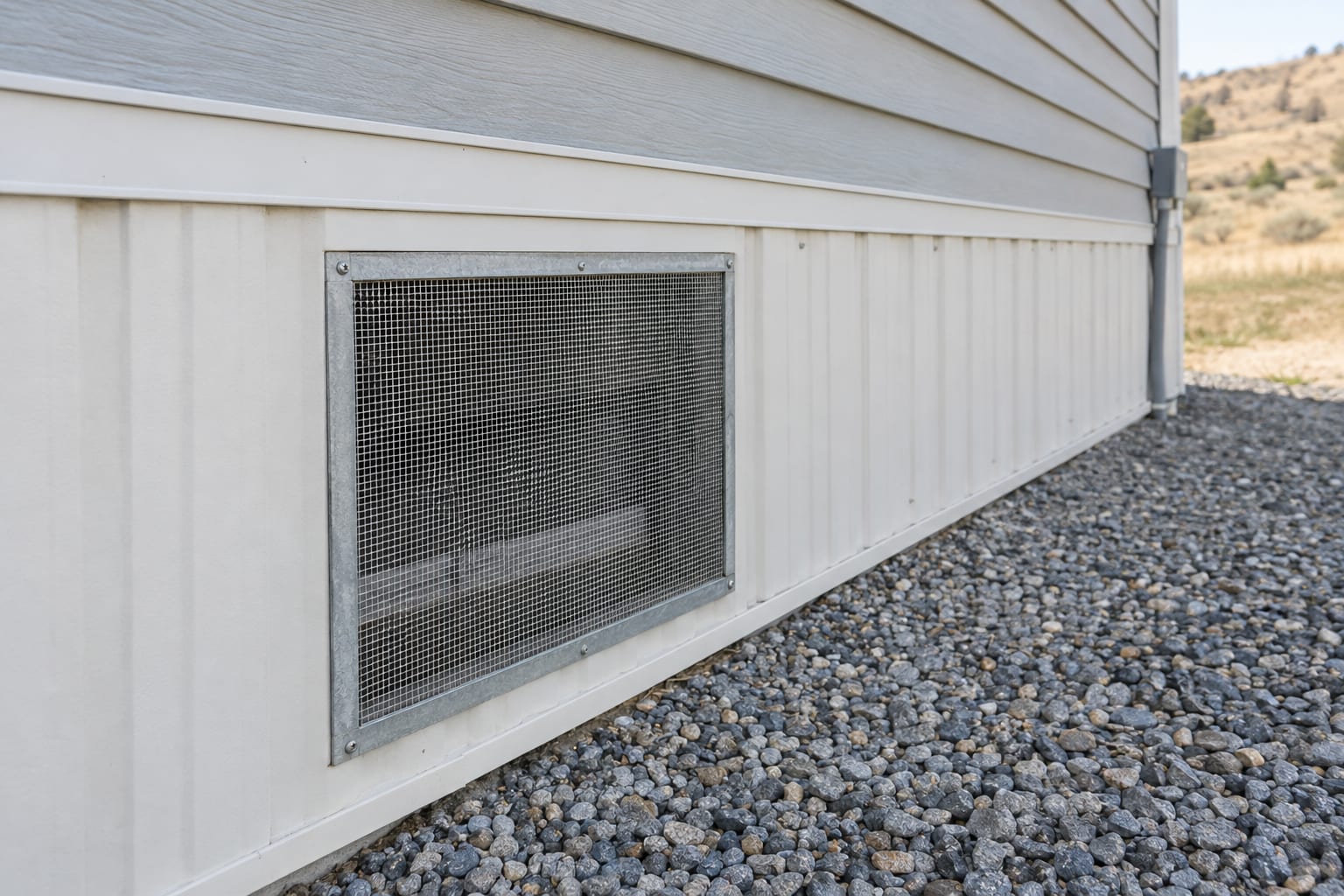
- Skirting. Wood lattice or wood panels at ground level are fuel. Solid, noncombustible skirting with no gaps keeps embers from blowing under the home. California’s Safer from Wildfires list calls for a noncombustible six inches at the bottom of exterior walls; on a manufactured home, the skirting is that bottom edge.
- Skirting vents. The space under the home must stay ventilated, so do not block the vents. Cover them with fine metal mesh, the ember-resistant vent on the same state list.
- Under the home. Store nothing combustible there: no lumber, cardboard, fuel cans or furniture.
- Steps, decks and ramps. Clear leaves, needles and stored items from underneath them. A deck with debris under it is on the state’s list of things to fix.
- Carports, awnings and sheds. The state list recommends moving combustible outbuildings at least 30 feet from the home. On a community space that is rarely possible, so keep the shed closed, keep fuel and firewood out of it, and keep the carport clear of stored boxes and bags.
- Plants and mulch. Rock or gravel against the skirting instead of bark mulch, and no shrubs under the windows or against the walls.
- Propane, firewood and furniture. CAL FIRE’s guidance moves firewood and lumber out to the 30-foot band, limits combustible furniture and planters on a deck, and asks for ten feet of clearance down to bare soil around a propane tank. On a small space, do what the lot allows and keep the woodpile as far from every home as you can.
- Roof and gutters. The law requires the roof kept free of leaves and needles, and tree limbs cut back at least 10 feet from a chimney or stovepipe outlet. Gutter cleaning is on the fall maintenance checklist.
Changes to the home need a permit, and the community’s approval
Replacing skirting, siding, windows or a deck is where preparation turns into an alteration. In California, HCD requires a permit before a manufactured home is altered. Its guidelines list new exterior siding as permit work, while swapping a single-pane window for a dual-pane window of the same size is not. HCD also keeps a directory of wildland-urban interface products for manufactured homes that points to State Fire Marshal-listed decking, windows, siding, doors and eave materials. Ask HCD or a licensed contractor what your home needs before you buy materials.
In a community, exterior changes generally also need written approval from management. In Arizona, take installation and permit questions to the Arizona Department of Housing.
What to ask the community
HCD requires California park management to have an emergency preparedness plan that tells residents what to do before and during an emergency (HCD park operation). Ask the office for a copy, then ask about the gaps.
Firewise USA recognition is itself one of the measures on California’s insurance list, and it is the only one a single owner cannot do alone. A community that organizes for it is also doing the perimeter and common-area work that no individual space can.
Plan to leave early
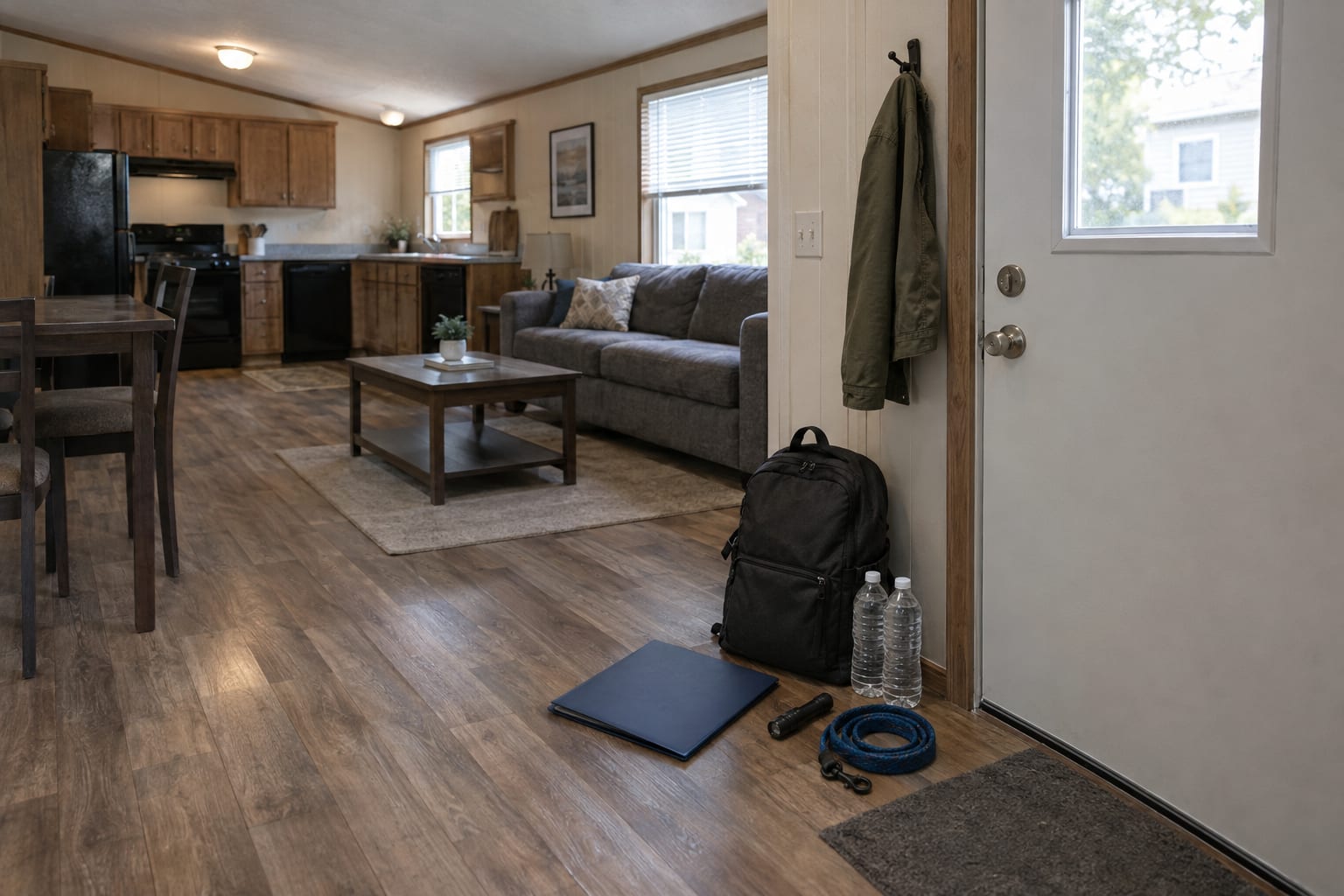
Ready.gov advises having several ways to receive alerts, learning your evacuation routes and practicing them, including with pets, and keeping supplies in a go-bag or the car. Sign up for your county’s emergency alerts now, not during a fire.
For a manufactured home owner the paperwork deserves its own folder, because identifying the home afterward is what a title or insurance claim turns on.
Check the insurance before fire season, not during it
Read the policy once a year with three questions in mind: would the dwelling limit replace the home at today’s cost, including delivery, set-up, skirting and the carport; what does the policy pay for living elsewhere while the home is replaced; and does it cover smoke damage as well as fire.
Location affects whether a quote comes back at all. In higher hazard zones an insurer may decline a home or decline to renew, and if you have a loan the policy has to stay in force. How insurance costs affect a manufactured home loan explains where the premium enters a loan review and what to do if the regular market turns you down. Santiago Financial’s insurance team can quote manufactured home insurance.
Wildfire is not the only hazard to plan for in California. Earthquake preparation is covered in are manufactured homes safe in earthquakes.
This article is general information, not legal or insurance advice. Defensible space rules and the agencies that enforce them change, so check the official pages linked above for the current requirements.