Spring Home Inspection Checklist for Manufactured Homes
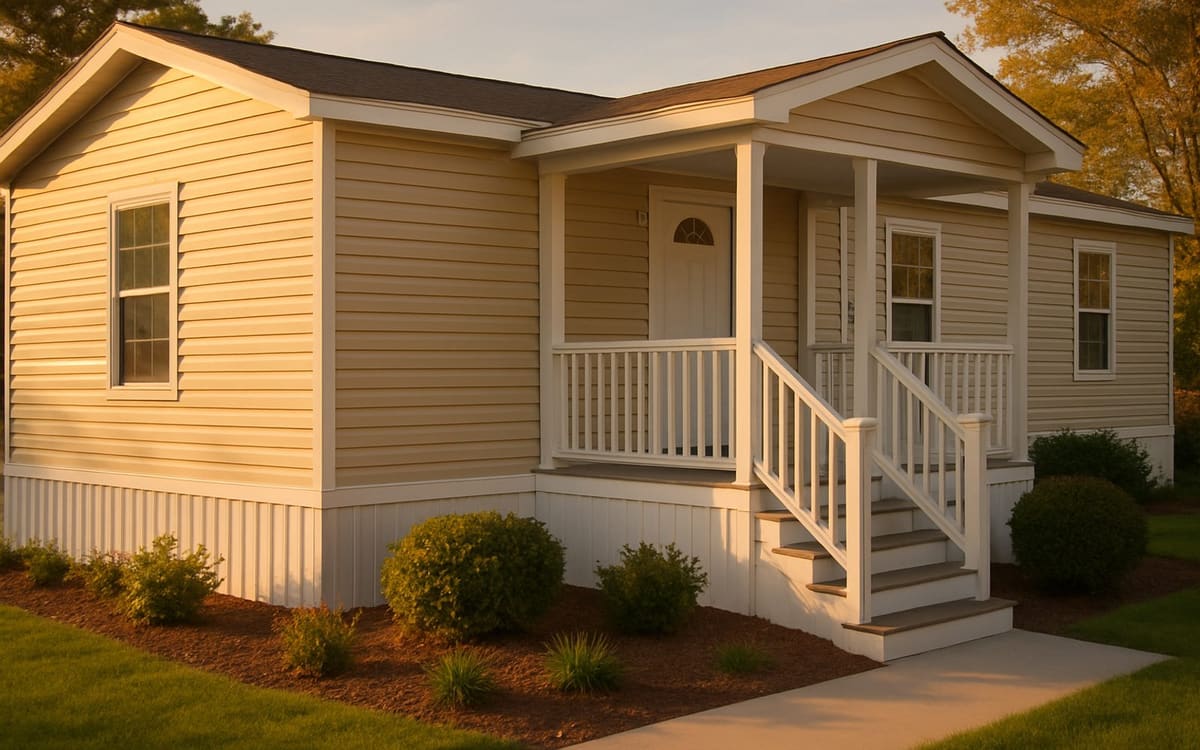
A spring inspection is one slow lap around the outside of the home, a look underneath from the skirting access panel, and a pass through the rooms. Do it after the winter rains and before the heat arrives. You are looking for three things: places where water got in, signs the home has moved on its supports, and openings that let animals under the floor.
You need a flashlight, a ladder, a screwdriver and your phone’s camera. Most of what you find will be small. A few findings mean you should stop and call a professional, and those are in the table near the end.
Start on a ladder at the roof edge
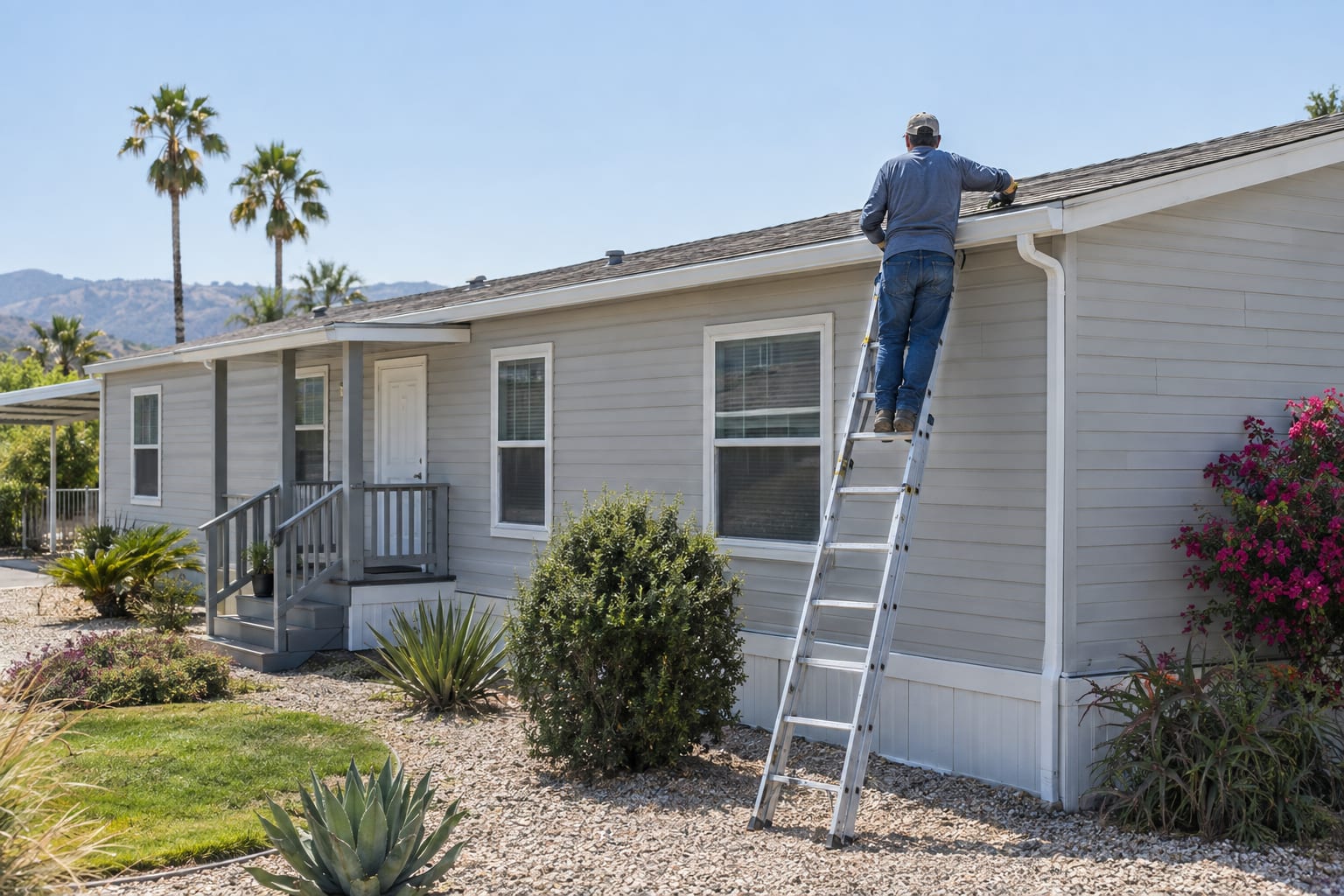
Look at the roof from a ladder at the eave instead of walking on it. A low-slope metal roof can dent and its seams can open under foot, and any roof is a fall risk. Set the ladder in two or three places, and use binoculars from the yard for the rest.
- Seams and edges on a metal roof: coating that is cracked, peeling or missing, and rust starting along a seam
- Shingles on a pitched roof: tabs that are lifted, curled or missing, and bare patches
- Every opening in the roof: the sealant around plumbing vents, the furnace flue, skylights and any roof-mounted cooler
- Low spots: standing water after rain, or the ring of dirt it leaves behind
- Gutters and downspouts: clear, firmly attached, and sending water away from the home instead of against the skirting
- Tree limbs: anything touching or hanging over the roof
Walk the outside walls
Go around once close to the wall, then once from farther back, where bows and sags show up.
- Siding: cracked, loose or warped panels, dents in metal siding, and gaps at corners and trim
- Caulk: cracked or missing sealant around windows, doors, and the places where pipes and cables enter the wall
- Windows: torn screens, cracked glass, fogging between the panes
- Steps, handrails, decks and porches: anything that wobbles, and wood that gives when you press a screwdriver into it
- Awnings and carports: posts that lean, bases that are rusting through, sagging panels, and loose fasteners where the structure meets the home
- The ground: soil that slopes toward the home, and places where water pools near the skirting
Look under the home from the access panel
Take off the skirting access panel and look in with the flashlight. You do not need to crawl under. What you can see from the opening tells you most of what you need to know.
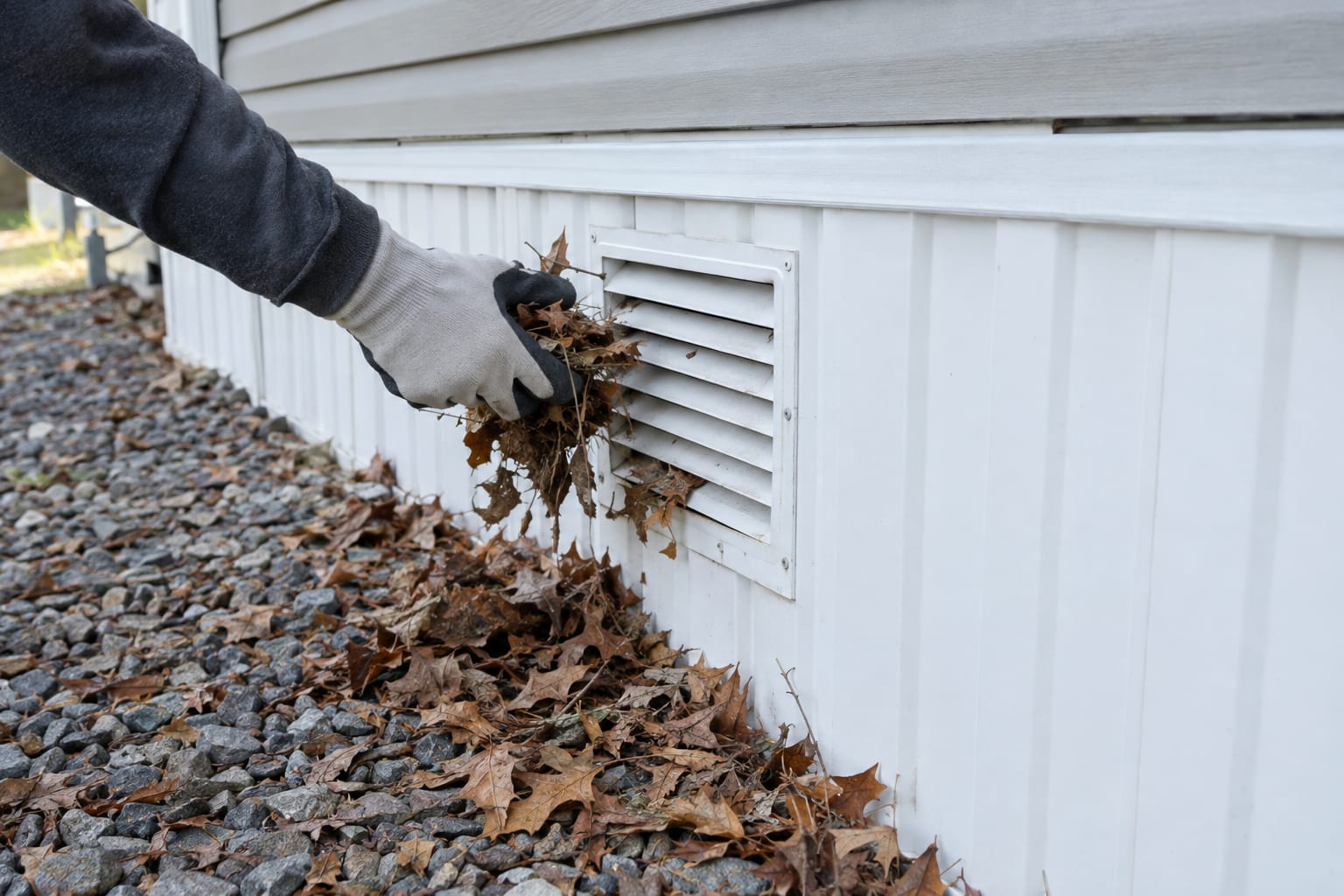
If any of these terms are new to you, the year-round maintenance guide explains what the piers, tie-downs, belly wrap and skirting vents each do.
Finish inside the home
Indoors you are looking for the same three things, plus the safety devices.
- Ceilings: stains or rings, especially below roof vents and along the marriage line, the seam where the sections of a multi-section home join
- Floors: soft or spongy spots around tubs, toilets, the water heater, the washing machine and the exterior doors
- Doors and windows: any that have started to stick, will not latch, or swing on their own since last year
- Plumbing: drips, corrosion or staining under every sink and in the water heater compartment
- Electrical: scorch marks on an outlet, a switch plate that feels warm, a breaker that trips again and again
- Smoke and carbon monoxide alarms: press the test button on each. The U.S. Fire Administration says to replace the whole smoke alarm every 10 years, so check the date on the back.
- Furnace closet: a clean filter, and nothing stored against the furnace
When to stop and call a professional
One sticking door or a hairline crack is worth a photo and a note. The combinations below are different: each points to a problem that grows if it is left alone.
Findings that need a professional
| What you find | What it can mean | Who to call |
|---|---|---|
| Several doors sticking, new gaps at the ceiling, a floor that slopes | The home has settled out of level | A licensed manufactured housing contractor |
| A slack or broken strap, a leaning pier | The supports or anchors need resetting | The same kind of contractor |
| Sagging or wet belly wrap, damp soil under the home | A plumbing leak under the floor | A plumber who works on manufactured homes |
| A ceiling stain that grows, a soft spot in the roof | An active roof leak | A roofer who works on manufactured homes |
| Scorch marks, a warm outlet, a breaker that keeps tripping | An electrical fault | A licensed electrician; stop using that circuit |
| The smell of gas, or soot at the furnace or water heater | A gas leak or a burner problem | Leave the home, then call the gas utility or 911 from outside |
| Rotted wood at steps, a deck or an awning post | The structure may not carry weight | A contractor; keep people off it until then |
Turn the list into a plan
Write down each finding with a photo and the date. Then sort the list. Cleared vents, fresh caulk, a patched screen and clean gutters are jobs for this weekend. The rest needs quotes.
Before you hire anyone for larger work, check the permit rules. In California, HCD (the Department of Housing and Community Development) says a permit is required before you alter a manufactured home, and its guidelines list re-roofing and the replacement of a water heater, furnace or air conditioner among the jobs that need one. Start at HCD’s page on modifying a mobilehome.
In Arizona, ask the Arizona Department of Housing. If you rent your space, ask the community office whether exterior work needs its approval too. This is general information, not legal advice.
Two jobs follow this one. The scrubbing and washing are covered in spring cleaning for a manufactured home, and the cooling system has its own summer heat checklist.