What Is a Chattel Loan and When Is It Used?

A chattel loan is a loan secured by a manufactured home alone, with no land in the collateral. It is the standard way to finance a home on a rented space in a community, and it can also apply to a home on private land that has never been recorded as real estate. You will also hear it called a home-only loan or a personal property loan.
Whether the home you are looking at needs one comes down to three things: who owns the land, how the home is titled, and whether it has been permanently attached to the land and recorded with it. Those answers settle the loan type before your credit or income come into it.
What “chattel” means
Chattel is an old legal word for movable personal property: something you own that is not land and not permanently part of land. A manufactured home starts out that way. It is built on its own steel frame, delivered to its site, and owned through a title of its own, similar in concept to a vehicle title. It stays personal property until someone takes formal steps to make it part of a parcel of land.
A chattel loan follows from that. The home itself secures the loan, and the lender’s lien is noted on the home’s title record instead of being recorded against real estate.
The agency that keeps that record surprises people. California titles and registers manufactured homes through HCD, the Department of Housing and Community Development, not the DMV. Arizona titles are handled by the MVD, the ADOT Motor Vehicle Division, generally one title per section, so a double-wide usually has two.
California and Arizona are the two states where Santiago Financial, Inc. works, and the only two described here. Titling rules in other states differ. Treat what follows as general information, not legal or tax advice.
Three questions that tell you which loan applies
Ask them in this order. Each one either settles the matter or sends you on to the next.
Who owns the land under the home?
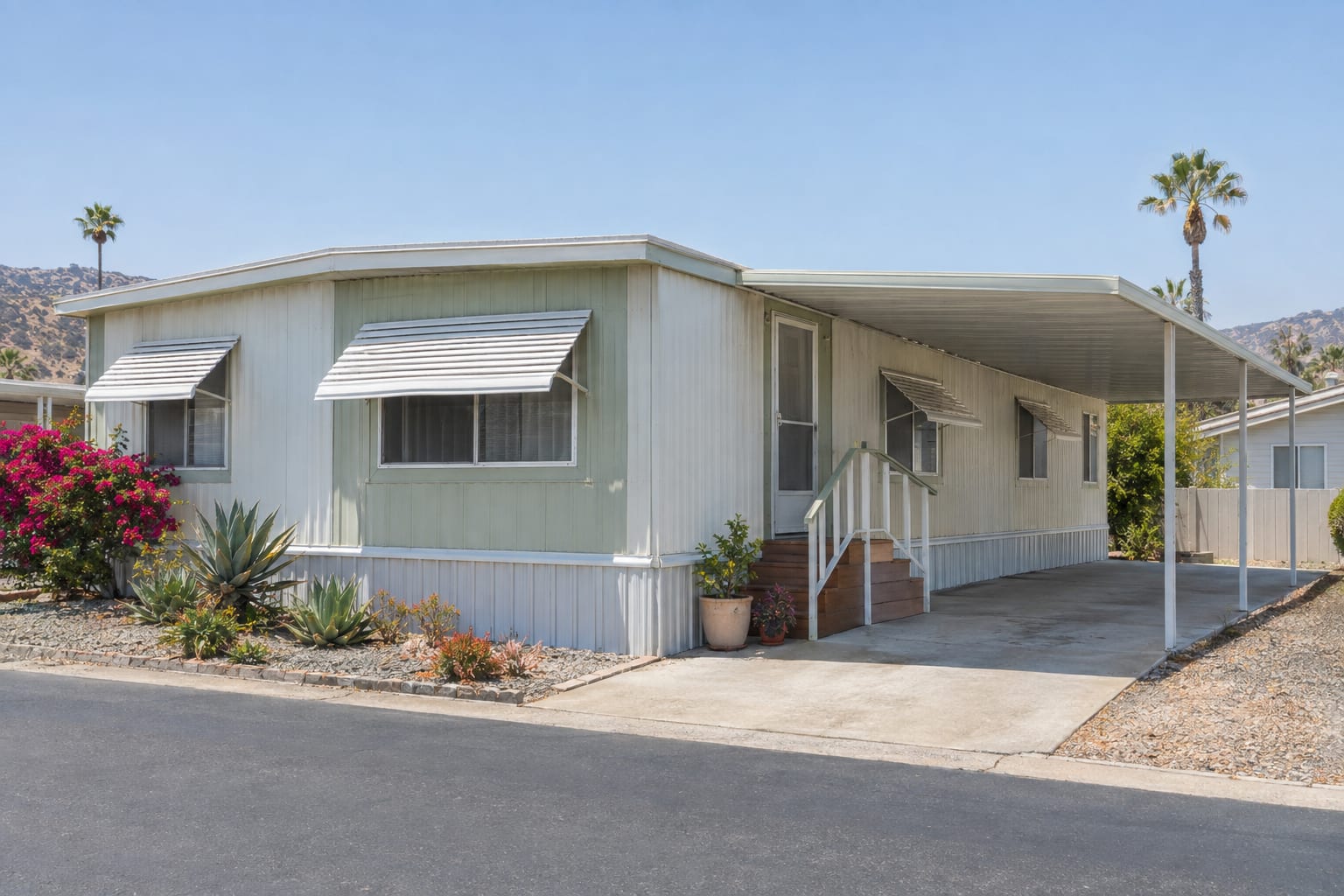
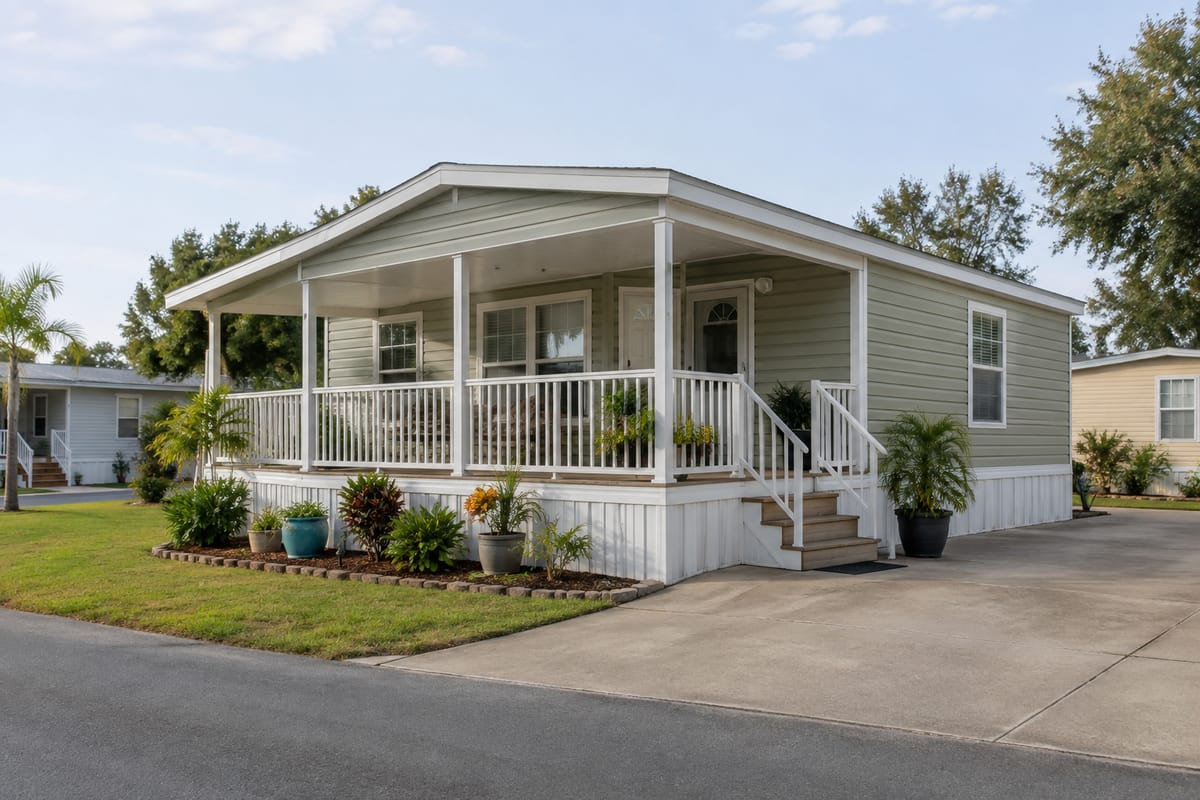
If the home sits in a land-lease community, you own the home and rent the space it stands on. There is no land for a lender to take as security, so the purchase is financed home-only. Space rent goes to the community and is paid separately from the loan payment.
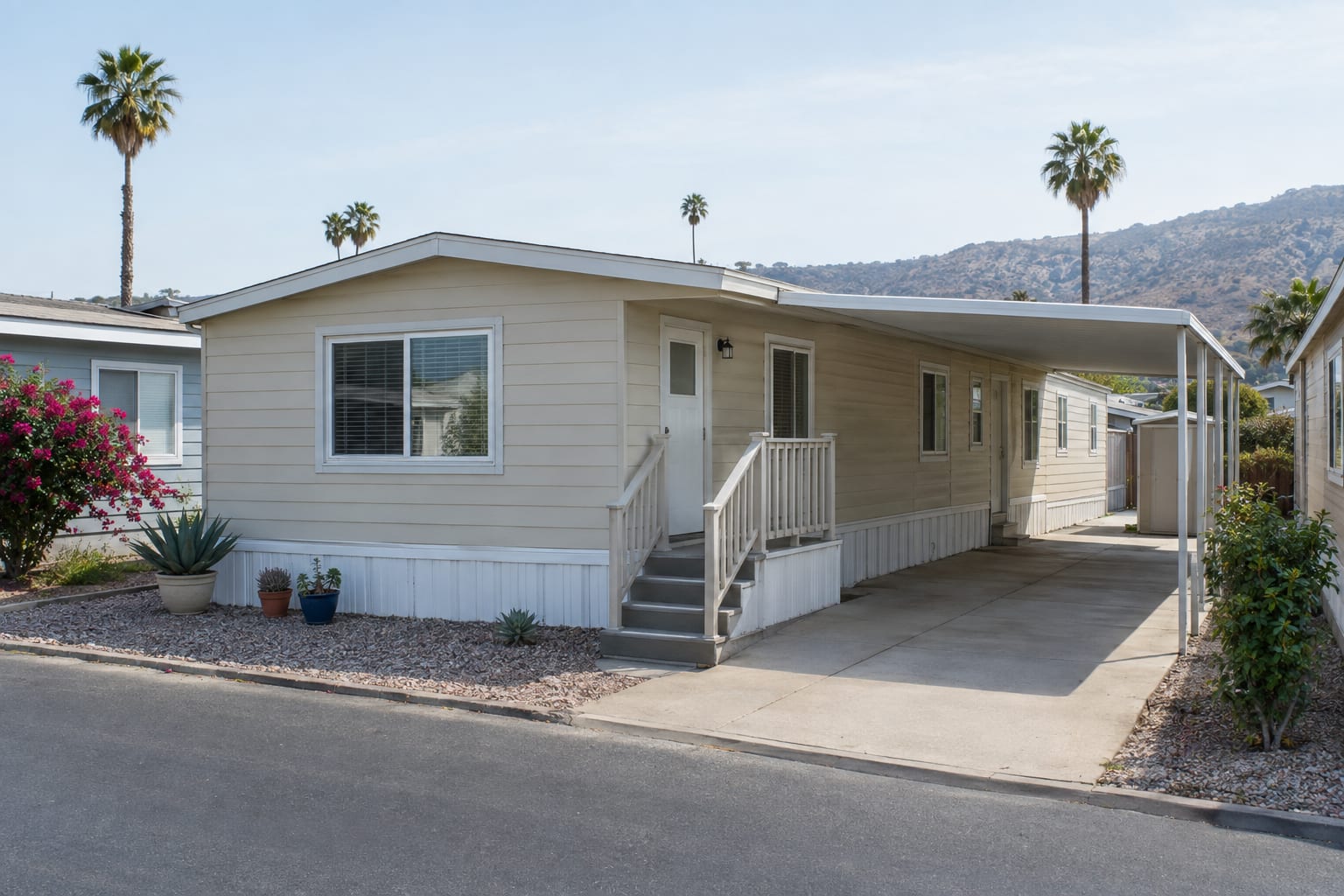
If you already own the land, or you are buying it together with the home, a land-and-home loan becomes possible. It is not automatic. Go on to the next question.
How is the home titled today?
A home that still carries an HCD registration and title in California, or MVD titles in Arizona, is personal property, whatever it is sitting on.
A home that has been converted to real property looks different on paper. It is recorded with the land at the county, and the separate state title has been given up: HCD no longer registers a home once it is installed on a foundation system, and in Arizona the MVD title is surrendered.
Ask the seller or agent which of the two applies, and ask to see the paperwork. Our guide to personal property and real property explains how a home’s status is checked.
Is the home on a permanent foundation and recorded with the land?
Conversion takes a physical step and a paper step. The physical step is a permanent foundation: a foundation system built to an engineering standard that permanently attaches the home to the land.
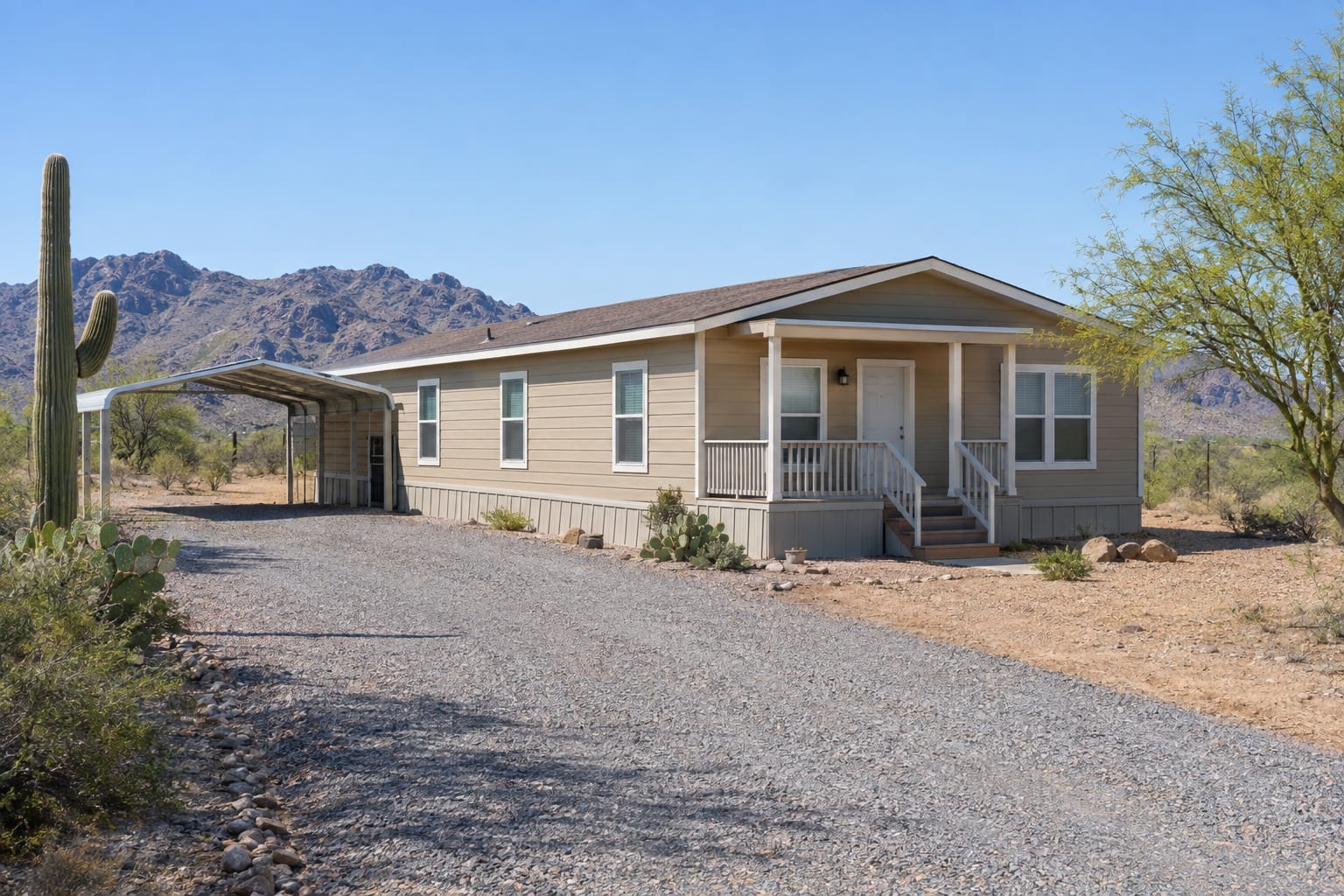
The paper step is the recording, and it has a different name in each state.
- California. HCD Form 433A is used to report the installation of a manufactured home on a foundation system and is recorded with the county when applicable. It is an important property record, but it does not by itself guarantee financing. See what a 433A is and why it matters.
- Arizona. For an eligible mobile home permanently attached to real property owned by the homeowner, the Affidavit of Affixture process generally involves surrendering the MVD title and recording the affidavit with the county. Current MVD and county procedures should be confirmed.
When both steps are done, the home and the land can be financed together as real estate. When either one is missing, the home is still personal property.
Which loan usually applies
| Where the home sits | How it is classified | Loan that usually applies |
|---|---|---|
| On a rented space in a community | Personal property | Home-only (chattel) |
| On land you own, still titled through HCD or MVD | Personal property | Home-only, unless the home is converted |
| On land you own, on a permanent foundation and recorded with the land | Real property | Land-and-home mortgage |
| A new home going onto land you own or are buying | Depends on the foundation and the recording | Often land-and-home or construction-style financing |
The Consumer Financial Protection Bureau’s research on manufactured housing finance draws the same line: whether the homeowner owns the land underneath plays a key part in whether the home is titled as personal property or real property.
Situations where the answer is less obvious
Most homes fit one row of that table. These four are where buyers are most often caught out.
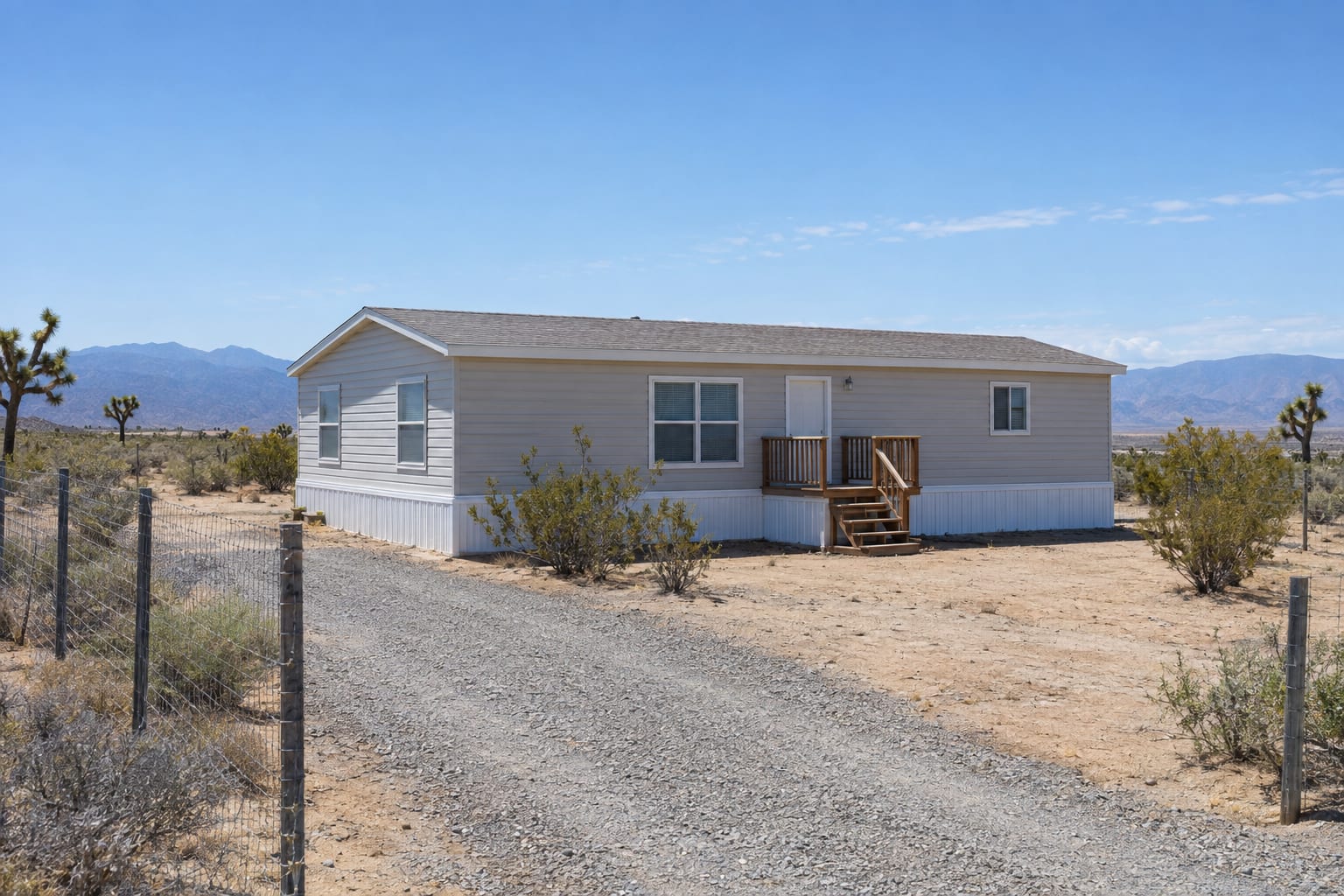
- A home on private land that was never converted. Plenty of homes sit on land their owner holds and still carry an HCD or MVD title. Such a home is personal property. It may be financed home-only, or it may be possible to convert it so that home and land are financed together. That depends on the foundation, the home and the program.
- A home on land that belongs to someone else. A home on a relative’s parcel is in much the same position as a home in a community. The land is not yours to pledge, so the home is generally treated on its own. Say who owns the parcel at the start.
- A home built before June 15, 1976. It predates the federal HUD Code and is, technically, a mobile home. Age does not change whether it is personal property, but it does affect which programs may be available, so give the year in your first conversation.
- A park model. Park models are a different product class from manufactured homes, and financing for them follows different rules. If you are looking at one, say so early.
What a home-only loan changes for you
The loan type is set by the property, but it shapes both the cost and the process. It helps to know how before you settle on a budget.
What comes with a home-only loan
| What is different | What it means for you |
|---|---|
| The home alone secures the loan | Chattel loans generally run shorter than real-property loans and are priced to reflect the different collateral. |
| Space rent sits on top of the payment | The lender counts it in your monthly housing cost, and so should you. |
| Two approvals are needed | The community approves you as a resident; the lender approves the loan. They are separate reviews. |
| You own the home, not the ground | Your ownership stake is in the home alone. The land stays with the community. |
| Insurance is part of the file | A homeowners policy naming the lender is arranged before closing. |
Your own rate and term depend on the program, your credit, the home and the loan amount.
To see the two structures next to each other, read the difference between chattel loans and mortgage loans. For what a lender reviews and asks you to send, read what to expect when you apply for a chattel loan.
Refinancing, selling and converting later
A home-only loan is not permanent. Three things can change it.
Refinancing. A home-only loan can be replaced with a new one. Refinancing may be available depending on the home, the land status and current guidelines. Ask whether a refinance could lower your monthly payment or shorten your loan term.
Selling. The loan is paid off at closing, from the buyer’s funds or your sale proceeds, and the lien comes off the title. In a community, your buyer also needs the community’s resident approval, which is separate from any loan approval.
Converting. If the home ends up on land you own, on a permanent foundation and recorded with that land, it becomes real property. From then on, home and land may be financed together.
Confirm it before you make an offer
With those answers, a lender can tell you which structure applies before you commit to a price. If you would like to see the options first, find your financing path asks three short questions about your state, your goal and the land, then points you to the path to read about. It is educational, not an application.