How Rising Insurance Costs Affect Manufactured Home Loans (And What You Can Do)
An insurance premium reaches into a manufactured home loan in three places. A lender will not close without proof of an acceptable policy on the home. The premium is counted in your monthly housing cost when your income is reviewed, on a purchase and again on a refinance. And a home that is hard to insure because of its age, condition or location can stall a purchase at the last stage.
One habit takes care of all three: get a quote on the specific home before you make an offer, not after.
Proof of insurance is a condition of closing
Lenders generally require acceptable insurance on the home before closing and for as long as the loan is outstanding. The coverage, limits, deductible, lender wording and effective date that are required depend on the loan and the property, so ask your loan processor for them in writing and pass them to the insurer.
Insurance is arranged alongside title and escrow, late in the file. How the loan process works shows where that stage sits. If the first quote arrives then and it is a decline, there is little room left to solve the problem.
The premium is part of the monthly cost a lender reviews
Lenders compare your monthly housing cost (payment, taxes, insurance, and any space rent) with your gross monthly income, and acceptable ratios depend on the program, your other debts, and disposable income. The insurance line in that sum is the actual premium, not the figure you guessed while shopping.
You can test this yourself. The payment calculator has an annual insurance field under Detailed Estimate. Enter the quoted premium in place of the placeholder and watch the total. The results are educational estimates, not a loan offer.
What an insurer asks about a manufactured home
A general agent who rarely sees manufactured homes may not know which questions to ask. These are the details that shape a quote, and where you will find each one.
Details to have ready for a quote
| What the insurer asks | Where you find it |
|---|---|
| Year, manufacturer, size and number of sections | The data plate inside the home, or the title or registration |
| Address or community, and whether the land is leased or owned | The listing and the community office |
| How the home will be occupied | Your own plans: full-time, seasonal, or other |
| Roof, and additions such as porches, carports and sheds | The inspection report and your own photos |
| How the home is installed: piers, tie-downs, bracing or a foundation | The inspection report and any installation records |
| Purchase price or estimated value, and the limits you want | The purchase agreement |
| Prior coverage and claims | Your own records |
| The lender’s name and required wording | Your loan processor |
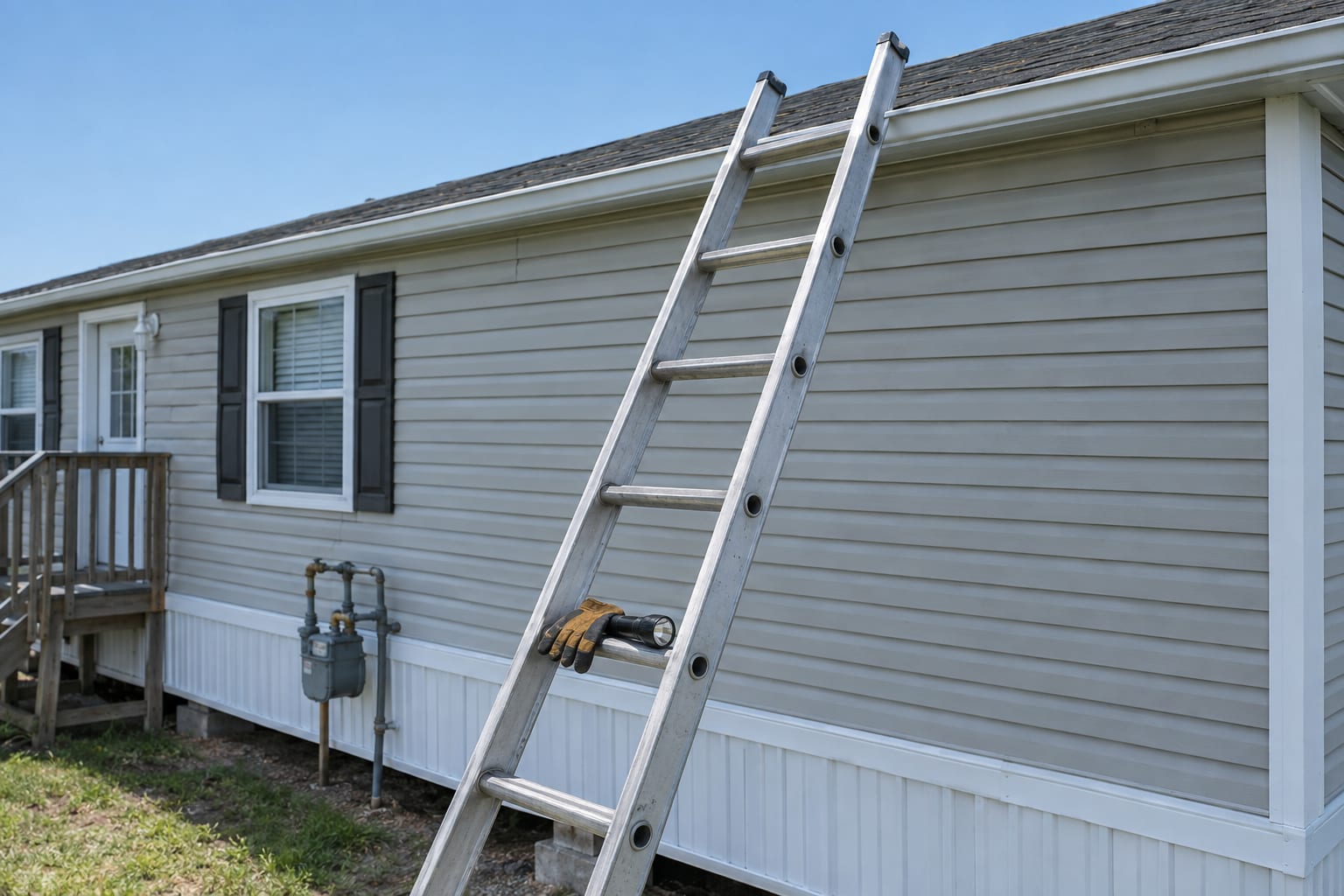
On an older home, expect more questions about condition. If an inspection turns up a worn roof or missing tie-downs, tell the insurer and ask whether a repair would change the answer.
Location can decide whether a quote comes back
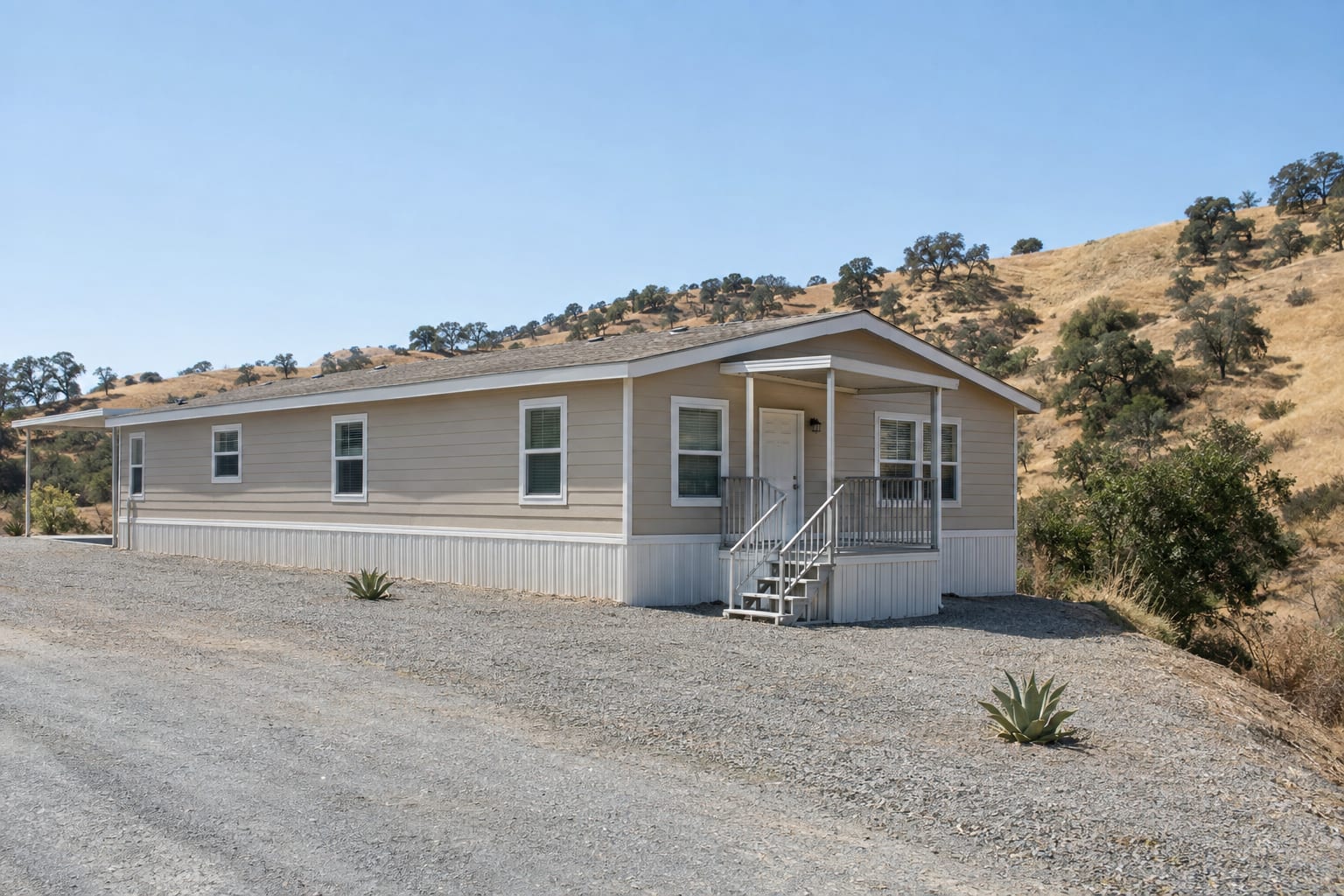
Where a home sits can matter as much as the home. In California, the Department of Insurance reported in 2023 that several insurers had paused new homeowners policies or declined to renew existing ones, and that more owners were relying on the FAIR Plan, the state’s insurer of last resort. The department named inflation and higher rebuilding costs among the pressures on insurers.
Three hazards are worth checking by address before you commit to a home.
- Wildfire. California’s State Fire Marshal publishes Fire Hazard Severity Zone maps with an address search. Insurers use their own wildfire risk models, not these maps, so treat the map as a prompt to ask for a quote early, not as a forecast of the premium.
- Flood. Most homeowners insurance does not cover flood damage. Look up the address at the FEMA Flood Map Service Center. In a high-risk flood area, a separate flood policy may be required.
- Earthquake. Earthquake damage is usually excluded from a base policy and offered separately. Are manufactured homes safe in earthquakes? covers bracing and installation.
For shopping help, the California Department of Insurance has residential insurance guides and comparison tools, and Arizona’s Department of Insurance and Financial Institutions keeps a homeowners insurance page for consumers. If the home is in a wildfire-prone area, wildfire preparedness for manufactured home communities covers what owners can do on the ground.
When to get the quote
Insurance alongside a purchase
- Before you make an offer Request a quote using the home’s year, manufacturer, size and address. If a carrier declines, or the premium changes your budget, you learn it before money is committed.
- When you apply for the loan Use the quoted premium in your budget, and ask your loan processor what coverage, deductible and lender wording the loan requires.
- After the inspection Tell the insurer about anything the inspection found that it asked about, and confirm that the quote still stands.
- Before closing Start the policy on the date escrow needs and have evidence of insurance sent to the lender.
- At each renewal Read the renewal notice, update your budget if the premium has changed, and keep the policy in force while the loan is outstanding.
A refinance looks at the premium again
On a refinance, the lender reviews the policy that is in force now. If your premium has gone up since you bought the home, the monthly housing cost under review is higher than it was, and any monthly difference the refinance would make is smaller. Read your latest renewal notice before you apply, so that the figure is not a surprise halfway through.
What you can do about the premium
You cannot change the home’s age or its address. These are the things you can do.
- Compare like with like. Get more than one quote on the same limits and deductible. The lowest premium is not automatically the strongest value, so compare what each policy pays, what it excludes, and how a loss is settled.
- Ask about the deductible. A higher deductible usually lowers the premium. Check that it is one you could pay after a loss and that the lender accepts it.
- Ask what condition items matter. If the roof, the tie-downs or an addition affects the quote, find out before you negotiate the price of the home.
- Use someone who knows manufactured homes. Santiago Financial Insurance Services helps homeowners compare available options and coordinates evidence of insurance for an eligible purchase or refinance. Request a quote through manufactured home insurance or call (800) 232-3908 ext. 112.
Coverage, limits, exclusions and premiums depend on the actual quote and policy. This article is general information, not insurance or legal advice.