
Can I Get a Mobile Home Loan with Self-Employed Income?

Yes. Self-employed buyers can finance a manufactured home, and the loan is the same one a salaried buyer applies for. What changes is how your income is proven. No employer can confirm a salary, so the lender reads your income from your tax returns: what was left after business expenses, not what came in, usually averaged across more than one year.
That one difference explains most of the surprises self-employed borrowers run into. If you know what your returns will show before you make an offer, you can gather the right documents and shop in a price range your paperwork supports. All financing is subject to credit approval, and not all applicants qualify.
Who counts as self-employed
You are generally treated as self-employed when your income comes from a business you own, or from contract work, rather than from an employer’s payroll. That covers sole proprietors, independent contractors paid on a 1099, partners, and owners with a significant share of an LLC or S corporation.
Plenty of files are mixed. If you hold a W-2 job and run a side business, the wages are documented with pay stubs and W-2s, and the side income counts only as far as your tax returns show it. A co-borrower with a regular paycheck is documented the usual way too.
Your income is read from your tax returns
For a W-2 employee, a lender looks at pay stubs and W-2s and confirms the job with the employer. For you, the evidence is the federal tax returns you filed, and the figure that matters is net profit: what the business earned after its expenses.
A sole proprietor or 1099 contractor reports that on Schedule C, the IRS form titled “Profit or Loss from Business”. A partner or S corporation owner reports it through a Schedule K-1 and the business’s own return, sometimes along with W-2 wages the business paid.
Gross receipts are not income for this purpose. A contractor who bills a large amount but spends most of it on materials, subcontractors and a truck qualifies on what remains.
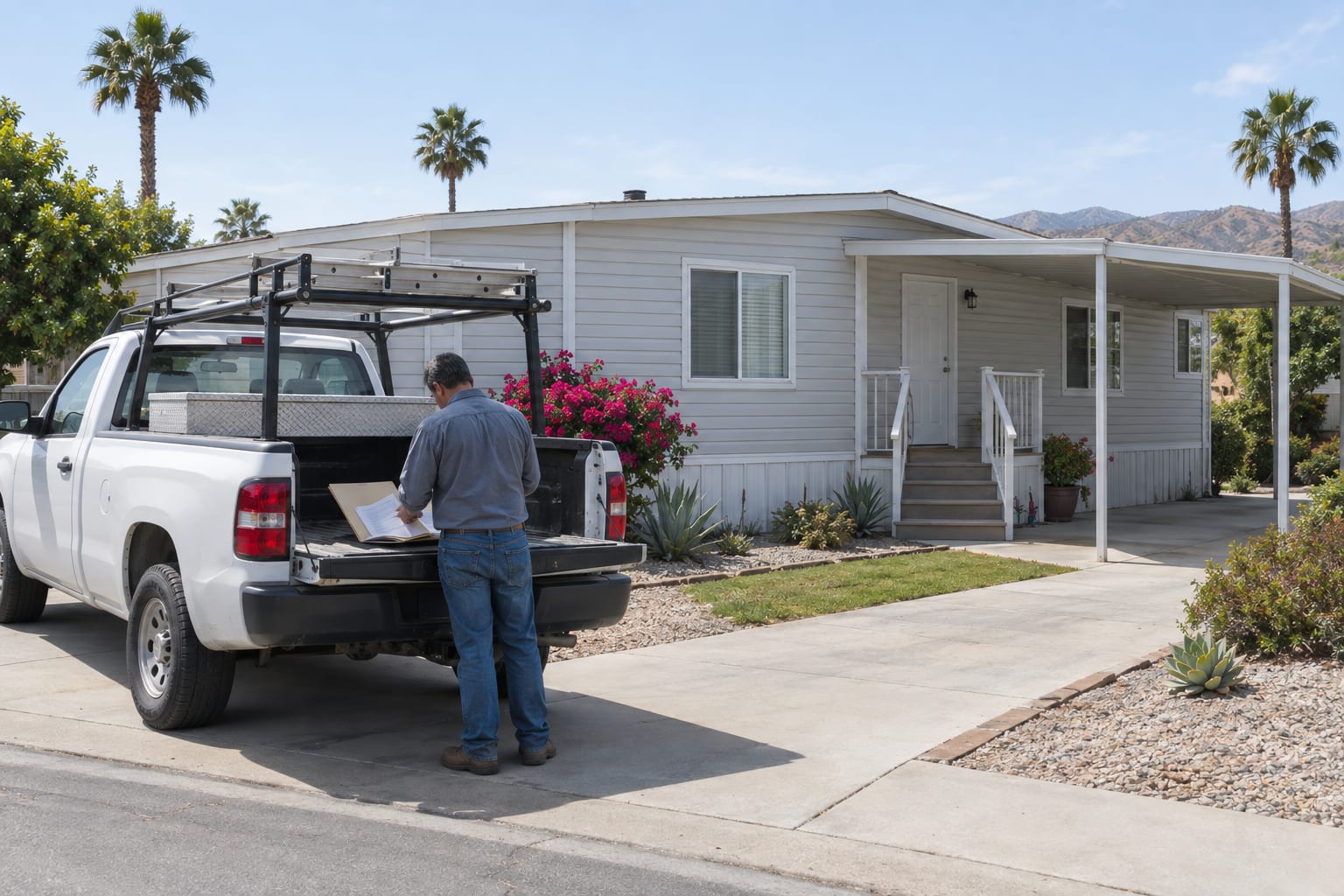
What gets verified: a W-2 file compared with a self-employed file
| What the lender checks | W-2 employee | Self-employed borrower |
|---|---|---|
| Proof of income | Recent pay stubs and W-2s | Federal tax returns with every schedule |
| Figure used | Gross pay | Net profit after expenses, with adjustments |
| This year so far | Year-to-date total on the pay stub | Year-to-date profit and loss statement, often with bank statements |
| That the work is ongoing | The employer confirms the job | Business license, registration or similar proof |
| Stability | Time on the job | The trend from one year’s return to the next |
How net profit becomes qualifying income
A lender does not simply take the last line of one return. The usual method works like this.
From tax return to monthly income
- Start with net profit The lender takes the net profit or loss reported on each year’s return.
- Add back certain paper expenses Some deductions lower taxable profit without cash leaving the business. Depreciation is the common example. Which add-backs are allowed depends on the program.
- Leave out what will not repeat One-time income, such as the sale of a piece of equipment, is set aside because it cannot be counted on again.
- Average the years The adjusted figures are averaged across the years reviewed, then divided by twelve to get a monthly income.
- Check the direction Steady or rising income supports the average. If the most recent year is clearly lower, expect questions, and the lender may rely on the lower year.
That monthly income then goes into your housing and total-debt ratios. For a home in a community, the space rent is part of the housing cost it has to cover.
Documents to gather before you apply
The exact list depends on the program and on how your business is set up, and you do not need every item in hand to start a conversation. These are the documents self-employed borrowers are most often asked for.
Santiago Financial, Inc. keeps a profit and loss form and the IRS transcript request with its other printable forms. The IRS releases transcripts to a lender only with your consent; its page on the Income Verification Express Service explains how that works.
A year-to-date profit and loss statement shows where the business stands now, but it generally supports your returns rather than replacing them.

Write-offs lower your taxes and your qualifying income
Every deduction that reduces your taxable profit also reduces the income a lender can count, apart from the expenses a program adds back. A return prepared to show as little profit as the rules allow will support a smaller loan than the business’s cash flow might suggest.
That is a tradeoff to understand, not a reason to change how you file. Your returns have to be accurate, and a lender can check them against IRS transcripts. If you expect to buy in the next year or two, tell your tax preparer early, before a return is filed. They can show you what your net profit and add-backs will look like, and a specialist can tell you how a lender would read them.
If your income is new, uneven or mixed
- Recently self-employed. With fewer returns there is less to average. How much history a file needs depends on the program, and earlier work in the same trade can matter. Ask before you shop.
- Seasonal or uneven income. This is what averaging is for. A slow quarter matters less than the full-year figures, and a year-to-date profit and loss statement shows how the current year compares.
- One down year. Be ready to explain it in writing: a one-time expense, an injury, a lost contract, and what has changed since.
- A side business that shows a loss. Some lenders subtract a loss on your return from your other income. Ask how it would be treated.
- Bank statements instead of returns. Some lenders in the wider market qualify borrowers from bank deposits, under their own rules. Ask whether anything like that is available for your situation rather than counting on it.
What stays the same for every borrower
Everything else in the file is reviewed as it would be for any buyer: your credit, your down payment, and the home’s age and condition. If the land is leased, the community also runs its own resident approval, which is separate from the loan. How much you can borrow covers how those pieces set the amount, and it helps to know what a pre-qualification does and does not prove before you make an offer.
If you are not sure how your returns will read, talk with a specialist before you commit to a home, and ask which documents your file would need.


