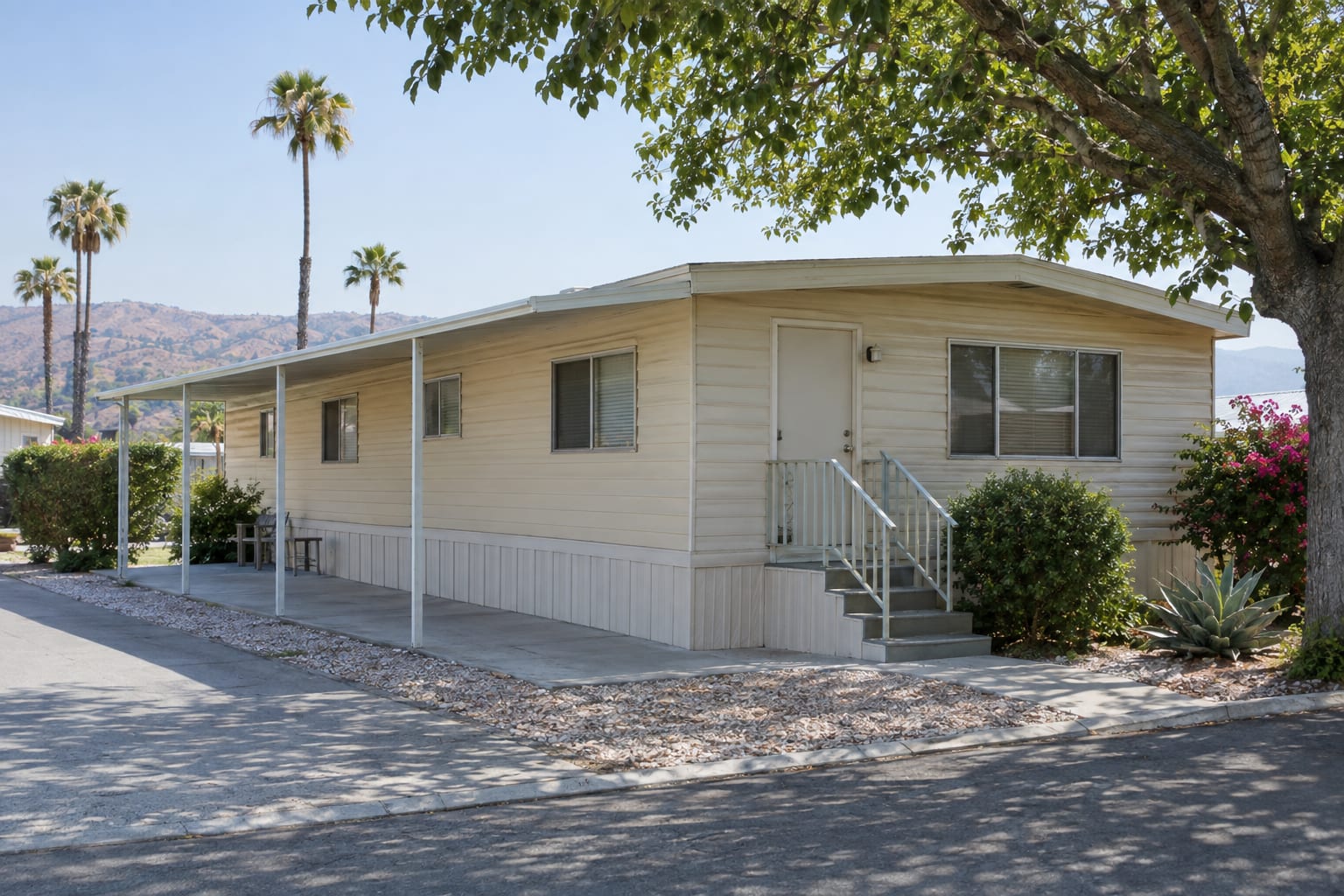
Applying for a Manufactured Home Loan With Social Security or Pension Income

If your income comes from Social Security, a pension, an annuity or retirement savings, your manufactured home loan file is organised one source at a time: for each, the letter that says what you receive and the bank statement that shows it arriving. That is the whole difference from a file built on pay stubs. The review that follows compares the income with the full monthly cost of the home, and it looks at the same things for everyone: credit, the home, the land and the title.
Choosing a community, downsizing and budgeting for retirement are covered in preparing for retirement in a community. This article is about the application itself.
Retirement income is income
Under the federal Equal Credit Opportunity Act, a lender generally may not take an applicant’s age into account, and may not discount or exclude income because it comes from a pension, an annuity or a public benefit. It may consider the amount and how likely it is to continue. The Consumer Financial Protection Bureau publishes the rule as Regulation B.
In practice that means paperwork, because “likely to continue” is answered by documents. A benefit letter shows what you receive; a statement shows that it arrives; for a benefit with an end date, the lender wants to know when.
Document each source separately
Put each income source in its own group, with its letter and its deposit together.
Retirement income sources and the file for each
| Source | Document that shows the amount | Document that shows it arriving | What the reviewer is checking |
|---|---|---|---|
| Social Security retirement | Current benefit letter | Bank statement with the deposit | The amount and that it is being paid |
| Pension | Award letter or current payer statement | Bank statement with the deposit | Whether it continues for life or ends on a date |
| Annuity | Contract or payer statement | Bank statement with the deposit | The payment schedule and any end date |
| Withdrawals from an IRA or 401(k) | Account statements | The withdrawal record | Whether the pattern is regular and the balance supports it |
| Survivor or disability benefit | Award letter | Bank statement with the deposit | Any review date or end date |
| Part-time work | Pay stubs | Bank statement | The same as any employed income |
The exact list depends on the program. A benefit with an end date, such as one that stops at a certain birthday or when a child reaches an age, is not excluded, but the lender will ask what replaces it.

The full housing cost is what the income is measured against
Lenders compare your monthly housing cost with your gross monthly income. On a manufactured home that cost has more parts than a loan payment, and the one most often left out is space rent.
Acceptable ratios depend on the program, your other debts and disposable income. The payment calculator lets you add space rent and insurance to a loan payment to see the full figure. Its results are educational estimates, not a loan offer.
Assets, co-borrowers and timing
Three things come up often in a retirement-income file, and each is better raised in the first conversation than discovered later.
- Savings that are not income. A balance in a bank or investment account is an asset. It shows your funds to close and your reserves, and some programs consider it in other ways, but it is not monthly income unless you draw on it regularly.
- A spouse or co-borrower. Each borrower’s income is documented the same way, source by source. If one of you is still working and plans to retire soon, say when, because the lender needs to know which income will be paying the loan.
- A home you are selling. If the down payment comes from selling your current house, the order of the two closings matters. Describe where the sale stands.
The general list of what every applicant gathers is in what to gather before you apply. All financing is subject to credit approval, and not all applicants or homes qualify.