
Preparing Your Credit for a Mobile Home Loan Application

Getting your credit ready for a manufactured home loan comes down to three jobs: find out what your credit reports say, correct anything that is wrong, and then keep your accounts steady until the loan closes. Three months is enough time for most of it, because a dispute generally takes about a month to investigate and card balances are reported about once a month.
No single score decides an application. Credit requirements vary by program and investor, and a lender reads the whole report alongside your income, the home, and whether the land is leased or owned. So the useful preparation is a report that is accurate and that you can explain, not a number you are chasing.
What a lender reads in your credit report
A credit report is the record of how you have handled borrowed money. A credit score is a number calculated from that record; the Consumer Financial Protection Bureau describes it as a prediction of how likely you are to pay a loan back on time. You have more than one score, because each scoring model and each credit bureau can produce a different one. The number in your banking app may not be the number a lender sees.
The report itself has five parts, and each one answers a different question.
What is on a credit report and why a lender reads it
| Part of the report | What it shows | Why a lender reads it |
|---|---|---|
| Personal information | Names you have used, current and former addresses, date of birth | To confirm the report is yours and matches your application |
| Accounts | Every loan and card: balance, limit, monthly payment, date opened | The monthly payments are counted against your income |
| Payment history | On-time and late payments on each account, month by month | Recent or repeated late payments generally raise more questions than one old one |
| Collections and public records | Debts sent to collection, bankruptcies, judgments | The lender will ask what happened and whether it is resolved |
| Inquiries | Companies that pulled your report after you applied for credit | Several recent applications can mean new debt that is not showing yet |

What carries extra weight in a manufactured home application
The report is read the same way for any loan. Three parts of it tend to matter more when the loan is for a manufactured home.
Your housing payment history. How you have paid rent, space rent or a mortgage is the closest evidence of how you will pay for this home. Rent is not always reported to the credit bureaus, so a lender may ask you to document it another way: bank statements, canceled checks, or a payment record from your landlord or community. Find those records before you apply.
Your existing monthly payments. A lender adds the payments on your report to the cost of the new home and compares the total with your gross monthly income. That comparison is your debt-to-income ratio, and acceptable ratios depend on the program, your other debts and your disposable income.
If the home is in a land-lease community, where you own the home and rent the space under it, the space rent counts toward the housing cost. A car payment that fit comfortably in your current budget can be what makes the ratio tight.
Whether the report matches the application. A manufactured home purchase ties you to a title record and, in a community, to a separate resident application. A name spelled two ways, an old address you left off, or an account you do not recognize each mean a question someone has to stop and resolve.
A 90-day timeline before you apply
Work backward from the month you expect to apply. The order matters, because the slow items have to start first.
Three months of credit preparation
- About 90 days out: get all three reports Request your reports from Equifax, Experian and TransUnion at annualcreditreport.com. They are free, and checking your own report does not affect your scores. Read every account, not only the summary page.
- The same week: dispute anything that is wrong Look for an account that is not yours, an on-time payment marked late, or a paid debt still showing a balance. File the dispute with the credit bureau and with the company that reported the item, and keep copies. The CFPB explains how to dispute an error; the company generally has 30 days to investigate, which is why this step comes first.
- About 60 days out: catch up, then bring card balances down Bring any past-due account current, then pay down the cards closest to their limits. Balances are usually reported once a month, so a payment made now can show before you apply. The step-by-step credit checklist covers what to do first and what to avoid.
- About 30 days out: stop making changes Open no new cards, finance no furniture or vehicle, close no old accounts, and do not co-sign for anyone else. Pull your reports again to confirm the corrections went through.
- The week you apply: put the paperwork together Gather the documents in the checklist below and write a short explanation for any item a lender is likely to ask about.
- From application to closing: keep everything as it is A lender can check your credit again before closing. A new account or a missed payment in those weeks can reopen a file that was nearly finished.
Documents to gather alongside your credit
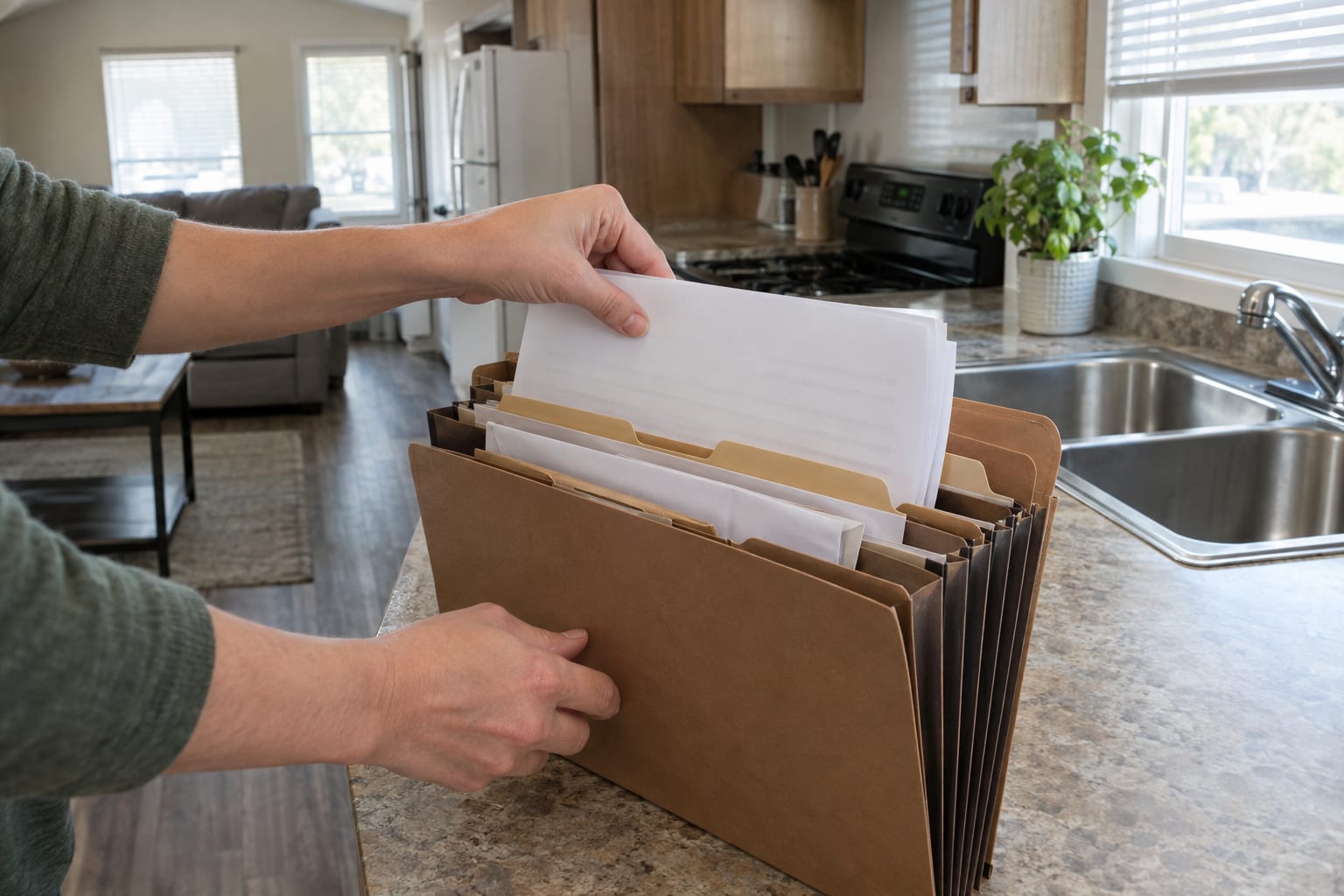
Credit is one part of the file. When the rest is ready, the person reviewing your application can read your report in context instead of sending questions back to you one at a time.
The exact list depends on the program and your situation. You can apply with the basics and be told what else is needed after the first review; what to have handy lists the home and land details that are most often missing.
If 90 days is not enough
Some things do not clear in three months. The CFPB notes that most negative information can be reported for seven years, and a bankruptcy for longer. That does not mean waiting until the report is spotless. It means choosing the right next step for what is on it.
- Late payments, collections or a past bankruptcy. Read how to prepare an application when your credit has problems, including how to write a letter of explanation.
- Credit or income that falls short on its own. A co-signer is one option, and it is a serious commitment for the person who signs. See what a co-signer takes on.
- Not sure where you stand. Ask for a pre-qualification, an early and informal read on what may be realistic based on the information you provide. It is not final approval; here is how pre-qualification and pre-approval differ.
Santiago Financial, Inc. reviews each application individually. All financing is subject to credit approval, and not all applicants will qualify.