Where to Retire in Arizona in a Manufactured Home: Comparing the Regions

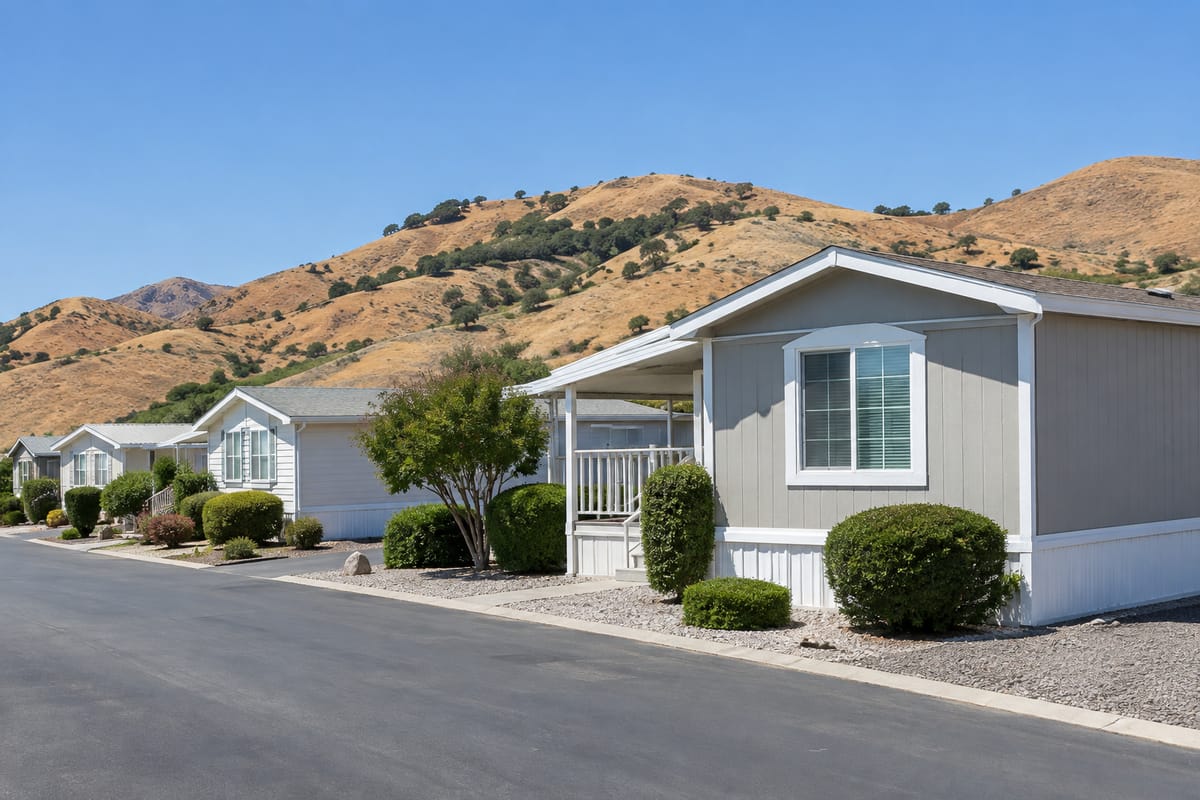
Choosing where in Arizona to retire is mostly a choice of elevation. The low desert, which takes in Phoenix, Tucson, Yuma and the Colorado River cities, has mild winters and long, very hot summers. The high country around Prescott, Payson, the White Mountains and Flagstaff has cooler summers and winters with freezing nights and snow.
After climate, three questions sort the regions: how far you would be from the medical care you use, how much the place changes between winter and summer, and whether homes there sit mostly in communities or on their own land. Each one affects what a manufactured home costs to own. Choosing a specific community comes later, and what to check on a community visit covers that step.
Elevation sets the climate
The table runs from the lowest region to the highest. The pattern is the point: the higher the ground, the cooler the summer and the colder the winter.
Arizona’s retirement regions by elevation
| Region | Elevation | Summer | Winter |
|---|---|---|---|
| Yuma | About 200 feet | Very hot | Mild |
| Colorado River cities | About 700 feet at Lake Havasu City | Very hot | Mild |
| Phoenix metro and the East Valley | About 1,100 feet at Phoenix | Very hot | Mild |
| Tucson and southern Arizona | About 2,400 feet at Tucson | Hot | Mild days, cool nights |
| Central high country | About 5,000 feet at Payson, 5,400 at Prescott | Warm days, cool nights | Cold nights, some snow |
| White Mountains and Flagstaff | About 6,400 feet at Show Low, 7,000 at Flagstaff | Mild | Cold, with regular snow |
The elevations are rounded from National Weather Service point forecasts for each city. For monthly temperature and rainfall averages, the NWS climate pages let you pick the nearest city.
The low desert: mild winters and long, hot summers
For a manufactured home, the low desert is about the cooling system and shade. Ask how old the air conditioner or heat pump is, look at the carport, the awnings and the sun screens, and ask the seller for 12 months of electric bills. The National Weather Service office in Phoenix calls excessive heat the number-one weather-related killer, so a cooling failure in July is a safety problem, not only a comfort one.
Summer also brings monsoon storms. The same office’s monsoon safety page lists dust storms, damaging winds and flash floods among the hazards. On a manufactured home, wind finds the awnings, the carport, the skirting and anything loose in the yard, so look at how each is attached.
Phoenix metro and the East Valley
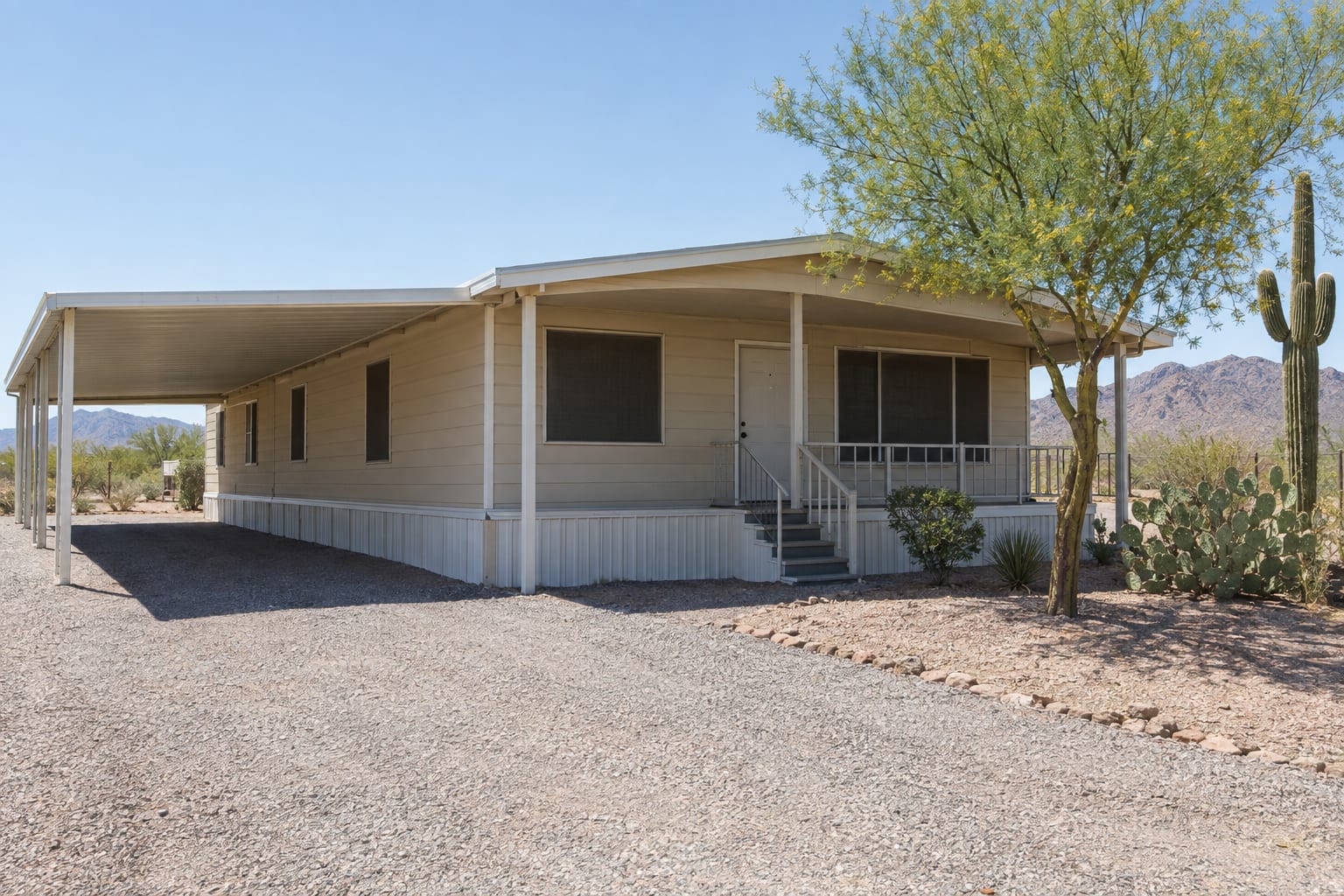
This is the state’s largest metro area, with the widest choice of hospitals and specialists and a large number of communities to compare, many of them age-qualified. You will mostly be looking at homes in land-lease communities, where you own the home and rent the space, so space rent is central to the budget. Local notes are on the pages for Phoenix, Mesa, Chandler and Gilbert.
Tucson and southern Arizona
Tucson sits roughly 1,300 feet higher than Phoenix. It is a smaller metro with its own hospitals, and you will find both communities and homes on owned lots at the edges of the city. See the page for Tucson.
Yuma and the Colorado River
Yuma, Lake Havasu City and Bullhead City sit lower than Phoenix, with summers to match, and they are known for part-year residents. Two things follow. First, a community that is full and busy in January can be largely closed up in July. Second, many of the places marketed to winter visitors are RV and park-model resorts, and a park model is a different kind of unit from a manufactured home, with different financing rules.
Near the river and along desert washes, check the flood map for the address. Local notes are on the pages for Yuma and Lake Havasu City.
The high country: cooler summers and real winters
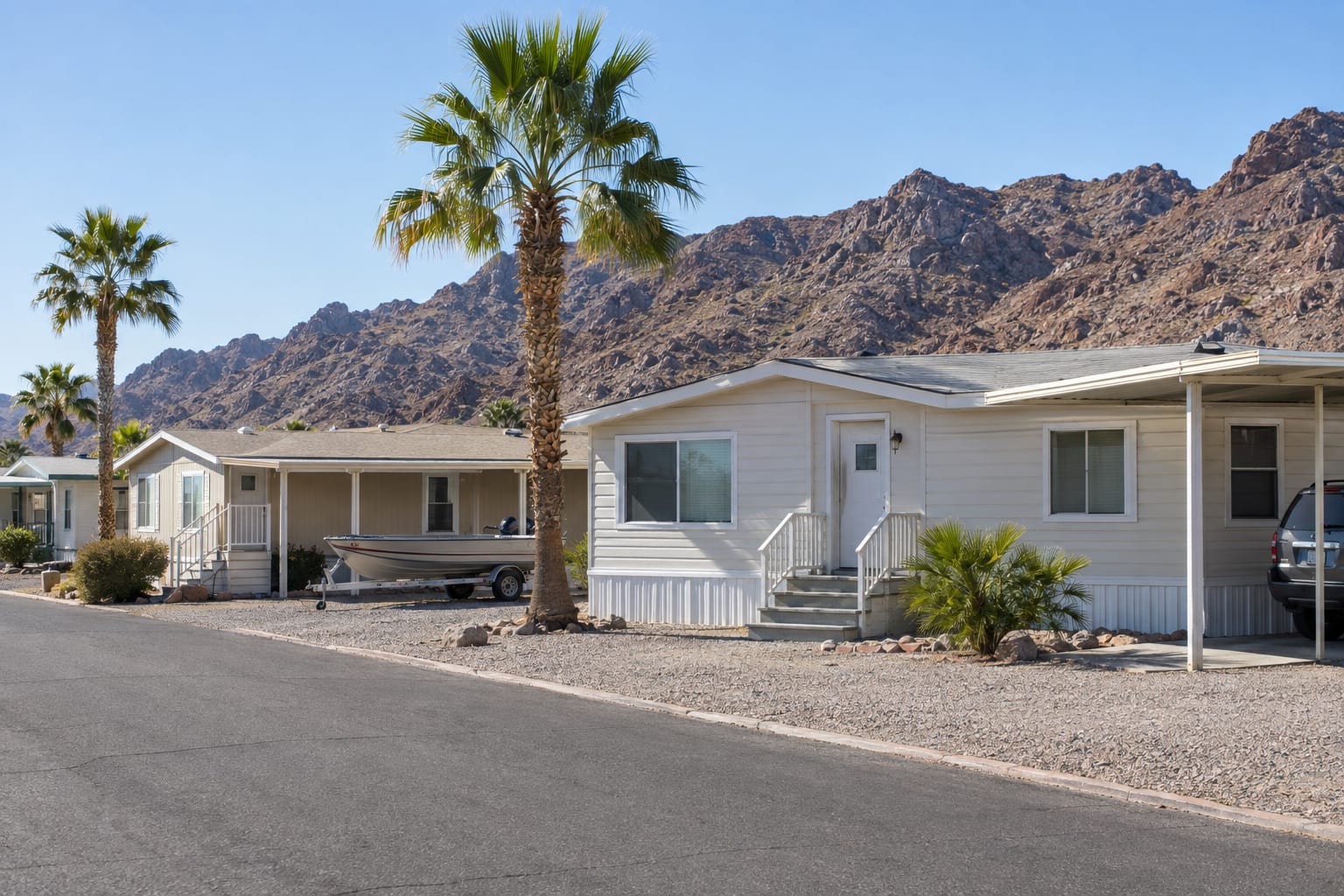
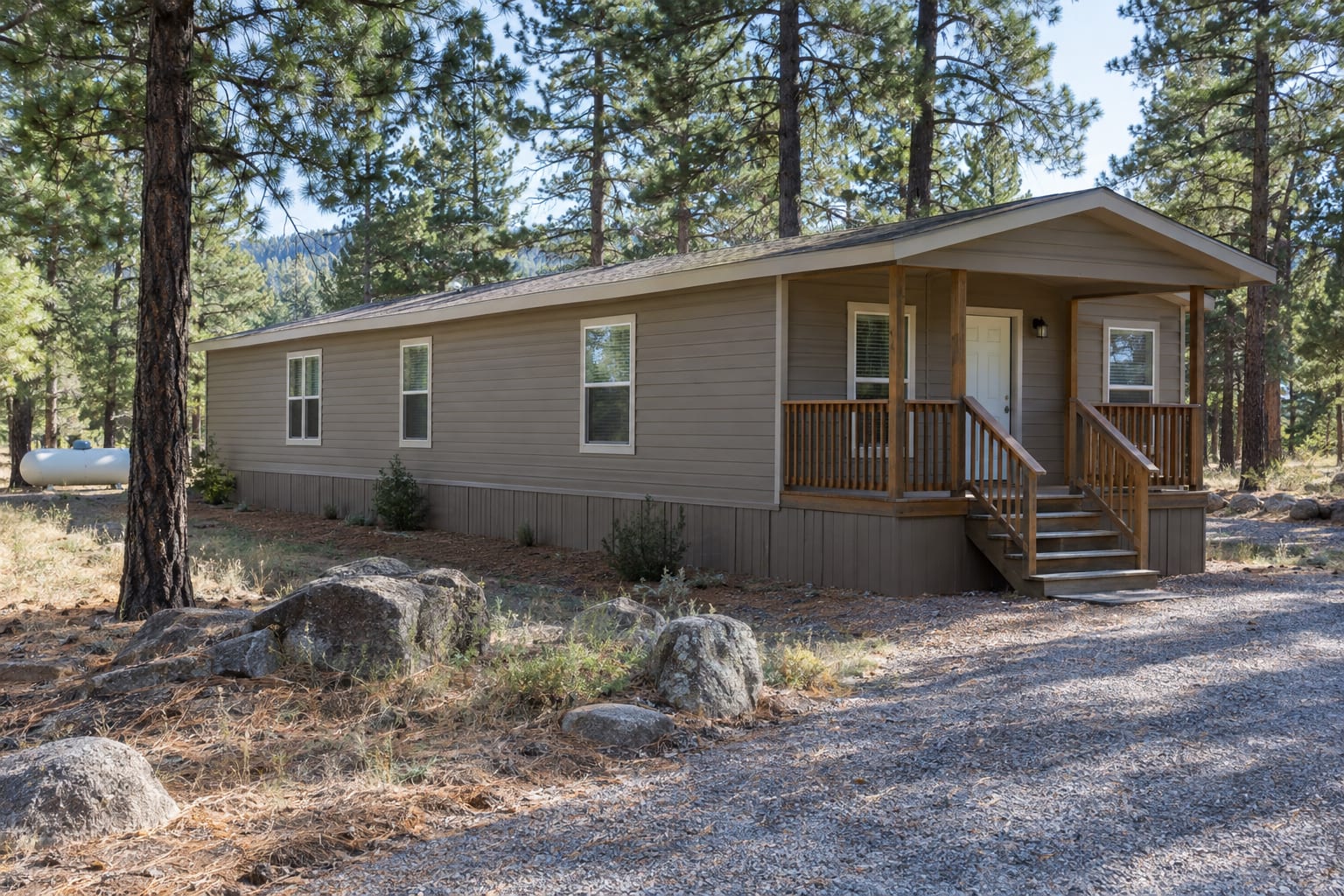
Prescott, Prescott Valley, Payson, Show Low and Flagstaff trade summer heat for a real winter. On a manufactured home, that moves your attention from the cooling system to four other things.
- The roof. The data plate, the paper sheet inside the home, carries maps showing the wind zone and the roof load the home was built for, as HUD explains on its labels and data plate page. In snow country, ask a home inspector or the local building office whether that rating suits the site.
- Heating and freezing. Find out what the home heats with. On rural lots it is often propane, which means a tank and deliveries. Ask how the water lines under the home are protected from freezing and whether the skirting is intact.
- Access. On a private or unpaved road, ask who clears snow and who maintains the road.
- Wildfire. In forested areas, get an insurance quote for the address before you make an offer. Santiago Financial, Inc. can help with manufactured home insurance quotes.
You will also see more homes on their own land here, often with a well and a septic system, and fewer large communities than in the metro areas. Local notes are on the page for Prescott.
How far you would be from medical care
Phoenix and Tucson have the widest choice of hospitals and specialists. Smaller cities have hospitals and routine care, and some specialist care can mean a drive to one of the metros. A general description only goes so far, so check your own situation:
- List the doctors and specialists you see now, and find out where the equivalent care is in each region you are considering.
- Ask whether your Medicare plan or other health coverage is accepted in that county, since plan networks vary by area.
- Time the drive from the community to the nearest hospital, in the season you would be making it.
- If you will live there part of the year, confirm how your coverage works in both places.
Winter and summer are different places
Part-year residents change how a place feels and what is open. Low-desert communities popular with winter visitors are at their busiest in winter. In summer, activities can stop, office hours can shorten, and many homes are closed. The high country tends to run the other way, with its busy season in summer.
If you plan to live in the home all year, visit in the off season before you commit. If you plan to live there only in winter, the lender, the insurer and the community each need to know. Buying as a snowbird in Arizona covers what changes.
Communities or your own land
The region matters less to a loan than the land does.
Two setups and what each means for financing
| Question | Home in a land-lease community | Home on land you own |
|---|---|---|
| Where it is common | Metro areas and winter-visitor towns | Rural areas, the high country, the edges of cities |
| What you pay each month | Any loan payment, plus space rent | Any loan payment, plus property tax and your own utilities |
| How it is usually financed | The home on its own, with a home-only loan | Home and land together, when the home is permanently attached |
| Extra reviews | The community’s approval of you as a resident | The land, access, and any well or septic system |
Programs for Arizona manufactured home loans vary with the home, the land and your application. All financing is subject to credit approval, and not all applicants or homes qualify.
Check these for any address
The flood maps are at the FEMA Flood Map Service Center. This article is general information, and conditions vary from one address to the next.