
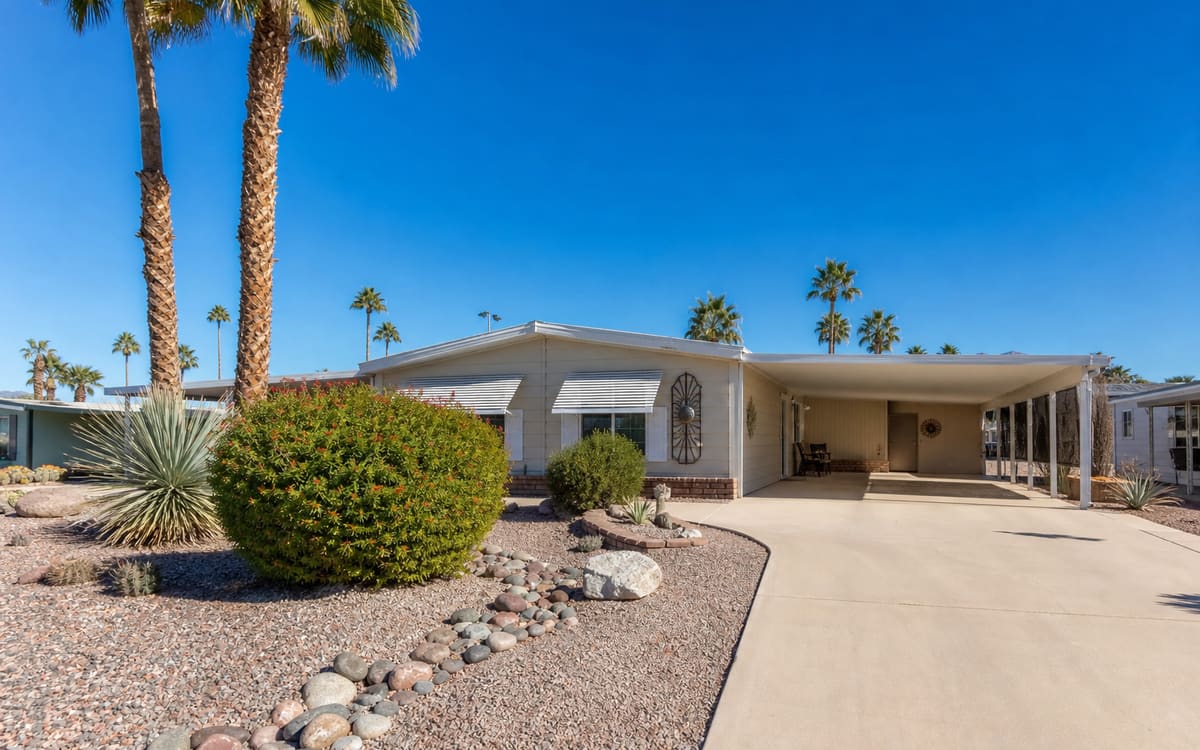
Buying or refinancing a manufactured home in Yuma starts with a map question, because the Yuma area is three jurisdictions under one name. The City of Yuma is one. The Foothills, east of the city, is a census-designated place called Fortuna Foothills: unincorporated Yuma County, where the county rather than the city handles permits and floodplain questions. Somerton and San Luis, down the valley, are cities of their own.
The home’s title and the county records work the same way in all of them; who you call about a permit does not.
Yuma also raises two questions more often than most Arizona cities: whether you will live in the home all year or only in winter, and whether the home you are looking at is a manufactured home at all or a park model. Santiago Financial, Inc. finances manufactured homes anywhere in Arizona, and the Arizona hub page covers ADOT MVD titles and the Affidavit of Affixture in general; this page covers Yuma.
Inside the city, in the Foothills, or down the valley
Where a Yuma-area home stands, and who you ask about permits
| Place | Status | Permits and floodplain questions | Title and land records |
|---|---|---|---|
| Yuma | Incorporated city | City of Yuma | ADOT MVD; Yuma County Assessor and Recorder |
| Fortuna Foothills (the Foothills) | Census-designated place, unincorporated | Yuma County | Same |
| Somerton, San Luis | Incorporated cities | Each city | Same |
In a community anywhere on that map you own the home, rent the space and finance the home alone with a home-only or chattel loan, with space rent due every month on top of the loan and the community’s resident approval as a separate review. On an owned lot, the home and land can often be financed together through land-and-home financing once an Affidavit of Affixture is recorded.
Arizona law bars counties, cities and towns from controlling rents on mobile home spaces (A.R.S. 33-1416), so there is no local rent ordinance; park tenancies come under the state’s Mobile Home Parks Residential Landlord and Tenant Act.
Title, taxes and Yuma County records
ADOT MVD issues one title per section, so a double-wide has two, and a home that still has its titles is personal property on the Yuma County Assessor’s roll even when it sits on land the seller owns. Arizona’s affixture statute (A.R.S. 42-15203) lets the owner of a permanently affixed home file the Affidavit of Affixture with the recorder of the county where the land is: for any Yuma-area lot, the Yuma County Recorder. After that the home and land are one piece of real estate.
Before closing, ask the seller for the Yuma County Treasurer’s statement that taxes are current, because Arizona law makes it unlawful to sell or move a mobile home with delinquent taxes (A.R.S. 42-19155). ADOT’s mobile home ownership page describes the title transfer and affixture steps, and Arizona manufactured home title basics walks through what to check on the titles themselves.
Winter residents, park models and how you will use the home
Many loan programs require the home to be your primary residence. If you will be in Yuma from fall to spring and somewhere else in summer, say so at the start, ask whether financing is available for your intended use before you make an offer, and expect the cost of your other home to count in the review. Seasonal use also affects insurance and the community’s rules on unoccupied homes; buying as a snowbird in Arizona covers all three.
If the home you are looking at is a park model rather than a manufactured home, it is built to a different standard and follows different rules. Check for the HUD label and the data plate before you assume which one you are looking at, and ask whether financing is available for a park model before you make an offer.
If you have military service behind you (the Army’s Yuma Proving Ground describes itself as Yuma County’s top civilian employer), ask whether a VA loan program fits the home. VA loans have their own eligibility, property and foundation rules.
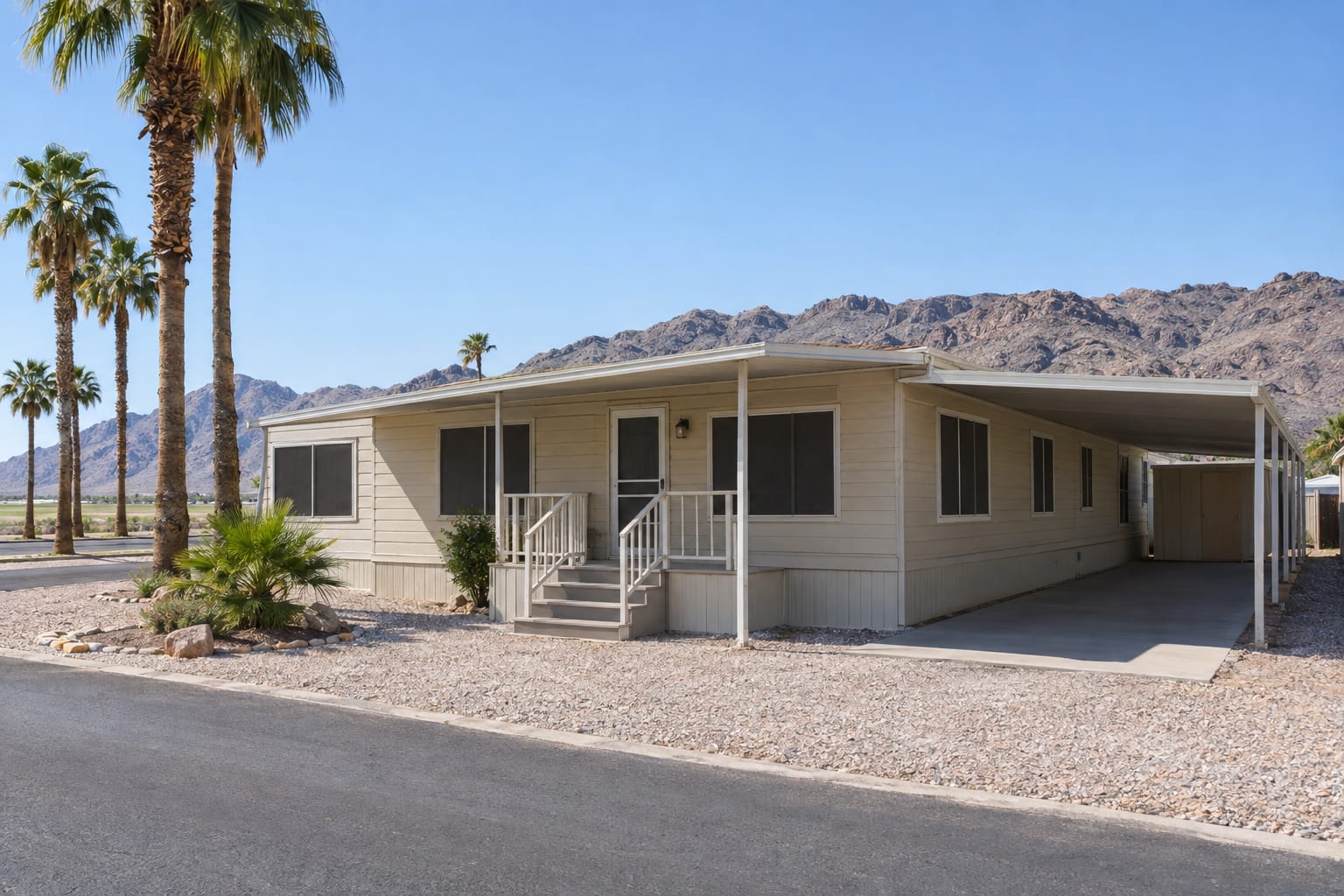
Heat is a budget line the lender usually does not count
NOAA’s 1991 to 2020 climate normals for the Yuma Marine Corps Air Station put the average high at about 103°F in June, 107°F in July and 106°F in August, with an average July low near 83°F, and about three inches of rain a year. A lender compares the loan payment, taxes, insurance and any space rent with your income; the electric bill is usually not part of that comparison, so put a summer month’s bill in your own budget before deciding what you can carry.
Have the air conditioner, the ducts under the home and the roof coating inspected, check for sun screens and shade on the west side, and ask the seller for a year of electricity bills.
The National Weather Service office in Phoenix, which covers Yuma, runs a heat warning program for the low desert, and its monsoon safety page lists flash floods among the summer hazards. Look the address up in FEMA’s Flood Map Service Center: FEMA states that homes in high-risk flood areas with mortgages from government-backed lenders are required to have flood insurance.
Nearby areas
Yuma is the far corner of the river corridor. Upriver, Lake Havasu City and Bullhead City share the heat and the seasonal questions; Somerton, San Luis and the Foothills are covered on this page. Homes across the river are California homes, titled through HCD; see California manufactured home loans.
Every application is reviewed individually, and all financing is subject to credit approval. City, county and state procedures change, so confirm them with the offices named above; this page is general information, not legal, tax or insurance advice.