
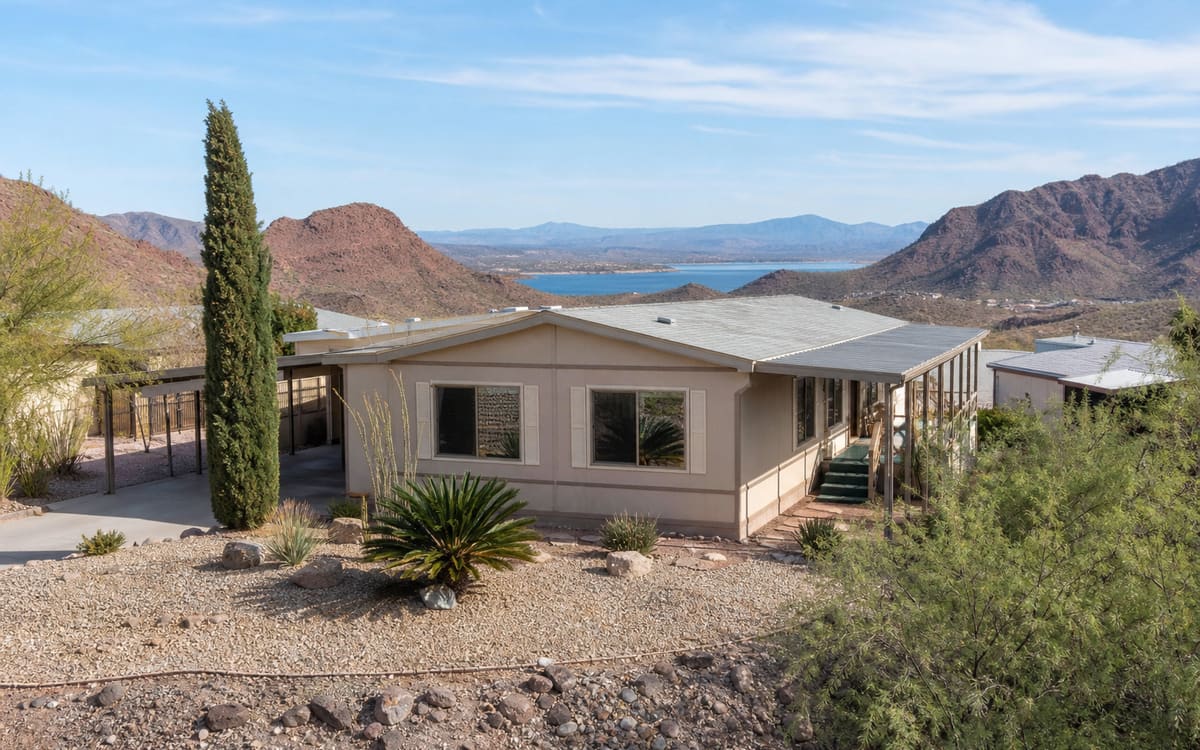
The first question a lender asks about a Lake Havasu City manufactured home is how you will use it. Some buyers here want a year-round home, some a winter home, and some a place to rent out when they are not using it, and those are three different financing conversations. Many loan programs require the home to be your primary residence, so settle the answer before you shop, not after you find the home.
The second question is where the home sits: in a land-lease community, on an owned lot inside the city, or down the river toward Parker, which is in a different county. Santiago Financial, Inc. finances homes anywhere in Arizona, and the Arizona hub page explains ADOT MVD titles and the Affidavit of Affixture in general. This page covers what is specific to Lake Havasu City and the river south of it.
How you will use the home comes first
Three ways to use a Havasu home, and what each one raises
| Intended use | Ask the lender | Ask the community or the city |
|---|---|---|
| Year-round primary residence | Which programs fit the home and the land setup | The community’s resident approval, which is separate from the loan |
| Winter residence | Whether financing is available for seasonal use, and how the cost of your other home counts | Rules on how long a home may sit unoccupied, and on guests |
| Short-term or vacation rental | Whether financing is available for a rental; many programs and communities require owner-occupancy | Whether renting is allowed at all; the city requires a permit for each short-term rental |
Lake Havasu City’s vacation rental page states that state law and the city code require short-term rental owners to register and obtain a permit for each property before offering it for rent. Some buyers use manufactured homes as rentals, but many programs and communities require owner-occupancy, so ask whether financing is available for your intended use before you buy.
For winter-only ownership, buying as a snowbird in Arizona covers what to tell the lender, the insurer and the community.
Communities and owned lots inside the city
In a community you own the home and rent the space, finance the home alone with a home-only or chattel loan, and pay space rent every month on top of the loan.
Arizona’s Mobile Home Parks Residential Landlord and Tenant Act governs park tenancies statewide, and state law preempts county and city rent control on mobile home spaces, so there is no city rent ordinance to look up. Get the current space rent and its recent changes in writing from the community instead.
On an owned lot, a recorded Affidavit of Affixture is the usual step before the home and land can be financed together through land-and-home financing. The city’s building permits page lists a mobile and manufactured home building permit application and a flood plain development permit, so a home being placed on a lot goes through the city, and a lot near a wash may need the floodplain review as well.
Title, taxes and records: Mohave County, with offices in town
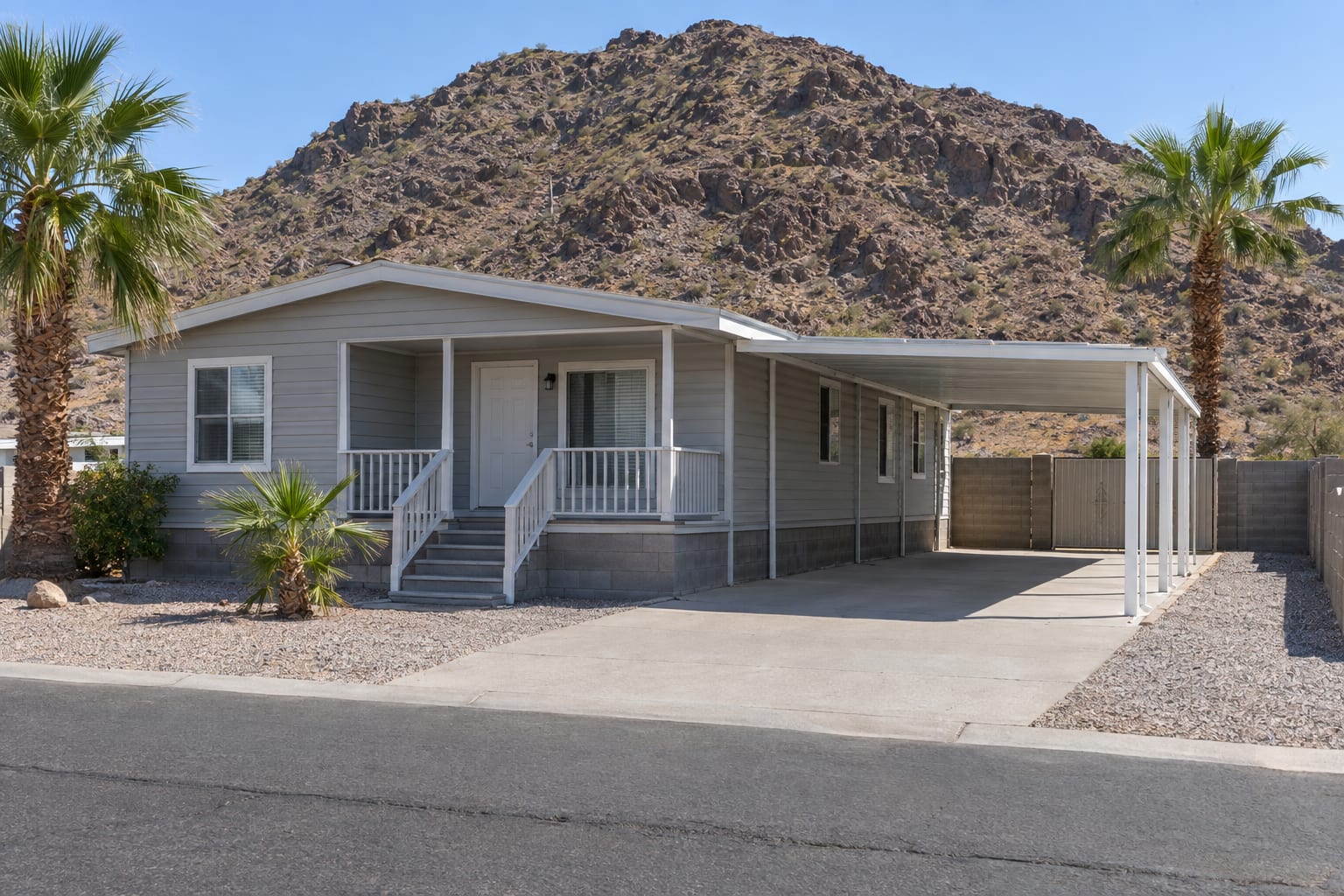
ADOT MVD issues one title per section. A home that still has its titles sits on the Mohave County Assessor’s personal-property roll; once an Affidavit of Affixture is recorded with the Mohave County Recorder, the home and lot are assessed together. The Assessor and the Recorder both have a Lake Havasu City office, so the county side of a purchase does not mean a trip to Kingman.
Ask the seller for the Treasurer’s statement that taxes are current before closing: Arizona law (A.R.S. 42-19155) bars knowingly selling or moving a mobile home whose taxes are delinquent. Affidavit of Affixture in Arizona explains how the record changes the loan.
Summer heat is the main thing the home has to handle
NOAA’s 1991 to 2020 climate normals for the Lake Havasu City station put the average high at about 105°F in June, 109°F in July and 108°F in August, with an average July low near 83°F, and only about four inches of rain a year.
The air conditioner runs day and night for months. Have it, the ducts under the home and the roof coating inspected, check for sun screens and shade on the west side, and ask the seller for a year of electricity bills; a lender’s housing ratio leaves the power bill out, so your budget has to carry it.
Low rainfall still leaves mapped flood zones along the washes. Check the address in FEMA’s Flood Map Service Center; a home in a high-risk zone with a government-backed mortgage must carry flood insurance, which a regular homeowners policy does not include.
Parker and the river south of the city are a different county
Lake Havasu City is in Mohave County, but Parker is a town in La Paz County, so a home there is recorded with La Paz County’s offices, not Mohave County’s.
Parker is also home to the Colorado River Indian Tribes and to the Bureau of Indian Affairs’ Colorado River Agency, which serves that tribe, the Fort Mojave Indian Tribe upriver and the Chemehuevi Indian Tribe on the California side of the lake. Some land along this stretch of river is tribal land that is leased, not sold.
That ground works differently from a community space or an owned lot: the lease sets the terms and the end date. Before you go further with a river-corridor home, find out who owns the land under it, read any lease, and ask whether financing is available for that arrangement.
Nearby areas
Upriver, Bullhead City shares the heat and the state-line questions, and Kingman, higher and cooler, is where Mohave County’s main offices are. Far downriver, Yuma has its own page. Parker and the river communities between are covered here.
Each application is reviewed on its own, and all financing is subject to credit approval. Procedures at the city, the county and the state change, so confirm them with each office; this page is general information, not legal, tax or insurance advice.