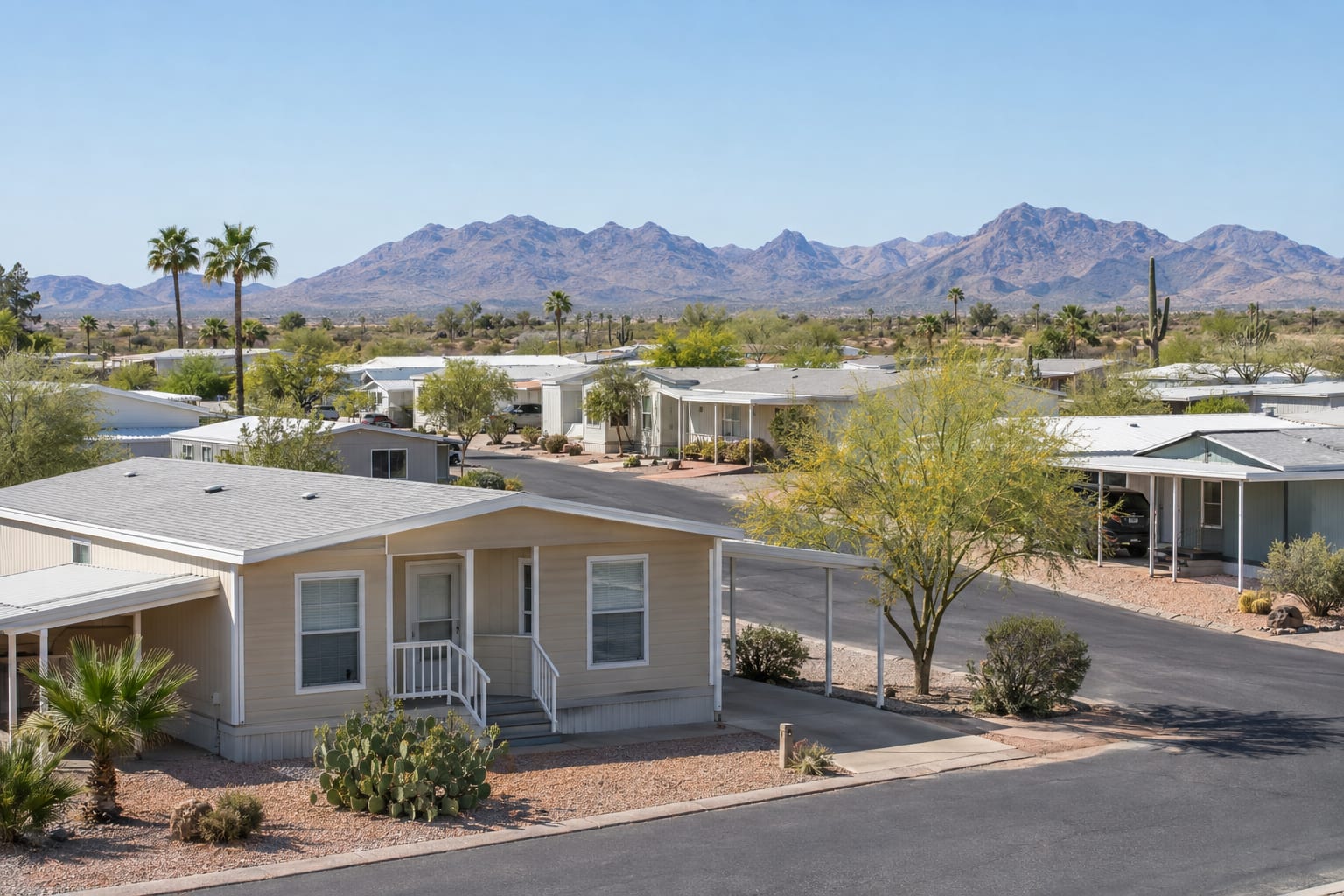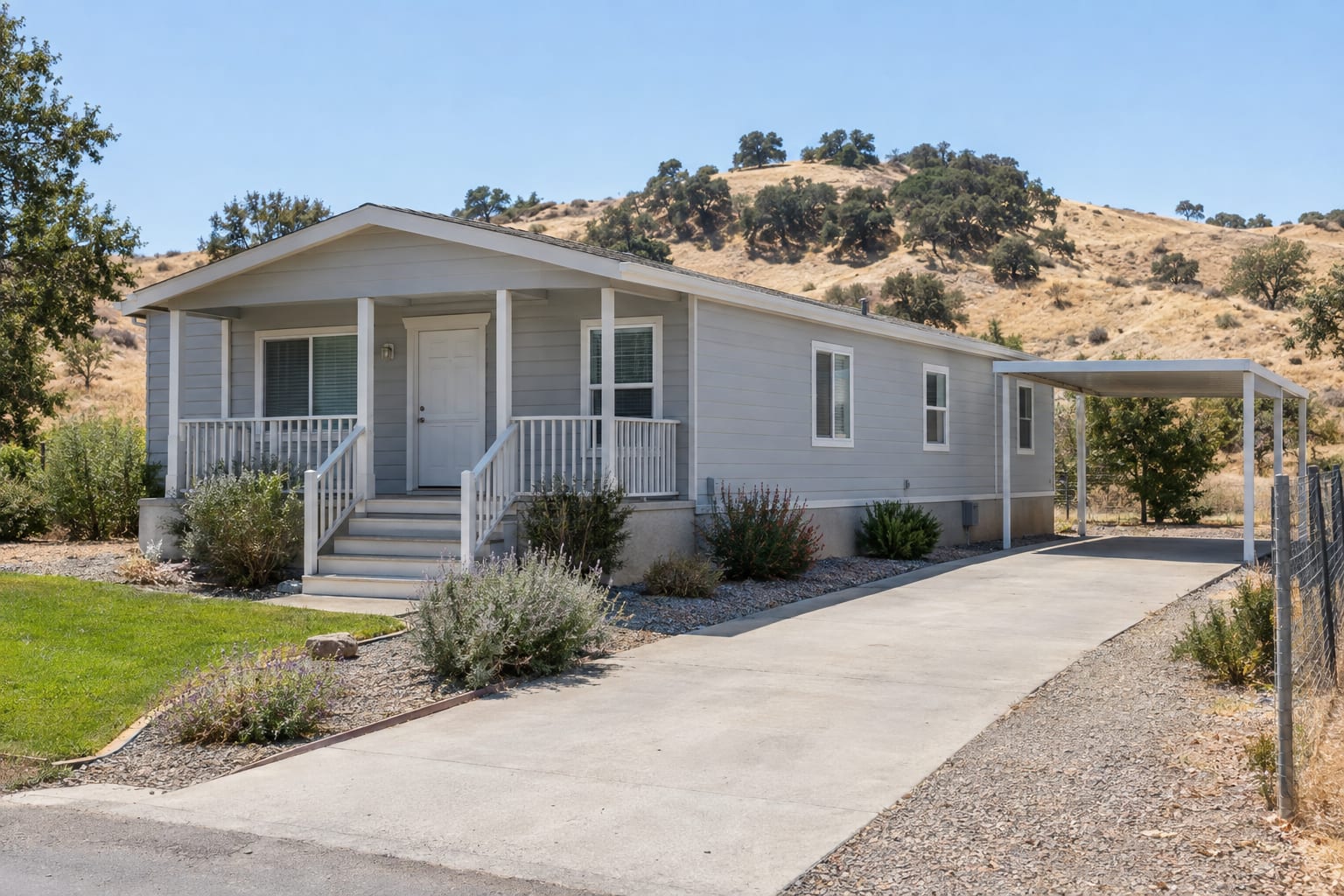
Manufactured Home Communities for Retirees in Arizona: What to Check on a Visit
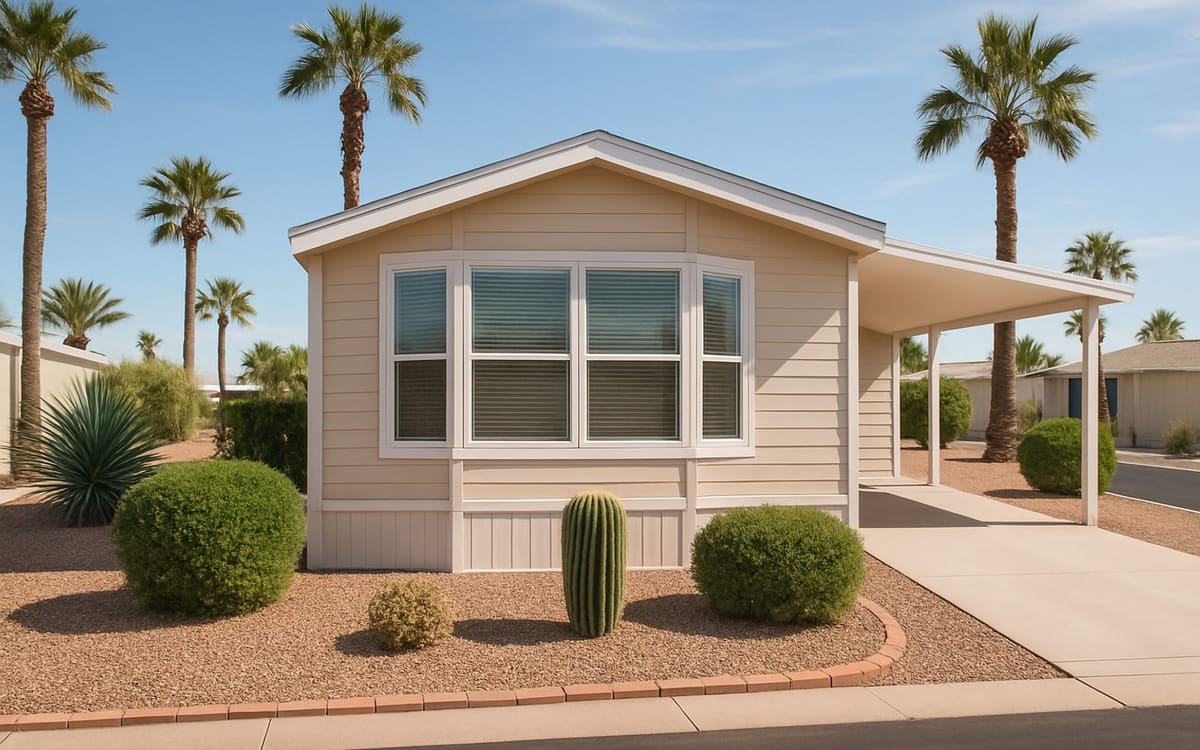
The Arizona communities worth visiting are the ones that pass three tests before you travel: the place is the kind of community you think it is, the monthly cost fits your budget, and the age policy fits your household. No published list can settle those for you, because space rent, rules and the homes for sale keep changing. What works is a short list built from current information, and the same questions asked at every stop.
Know what kind of place you are looking at
Listings for retirement living in Arizona mix together four different kinds of place. They are owned, regulated and financed differently, so settle which one you are looking at first.
Four kinds of place that are marketed to retirees
| Kind of place | What you own | What to know |
|---|---|---|
| Age-qualified manufactured home community | The home; the space is rented | The home is financed on its own, and space rent is part of the monthly cost |
| Resident-owned community | The home, plus a share or a deeded lot | Confirm who owns the land in the public record |
| RV or park-model resort | A park model or RV on a rented site | A park model is not a manufactured home, and financing follows different rules |
| Master-planned retirement community | A site-built house and its lot | Not a manufactured home community |
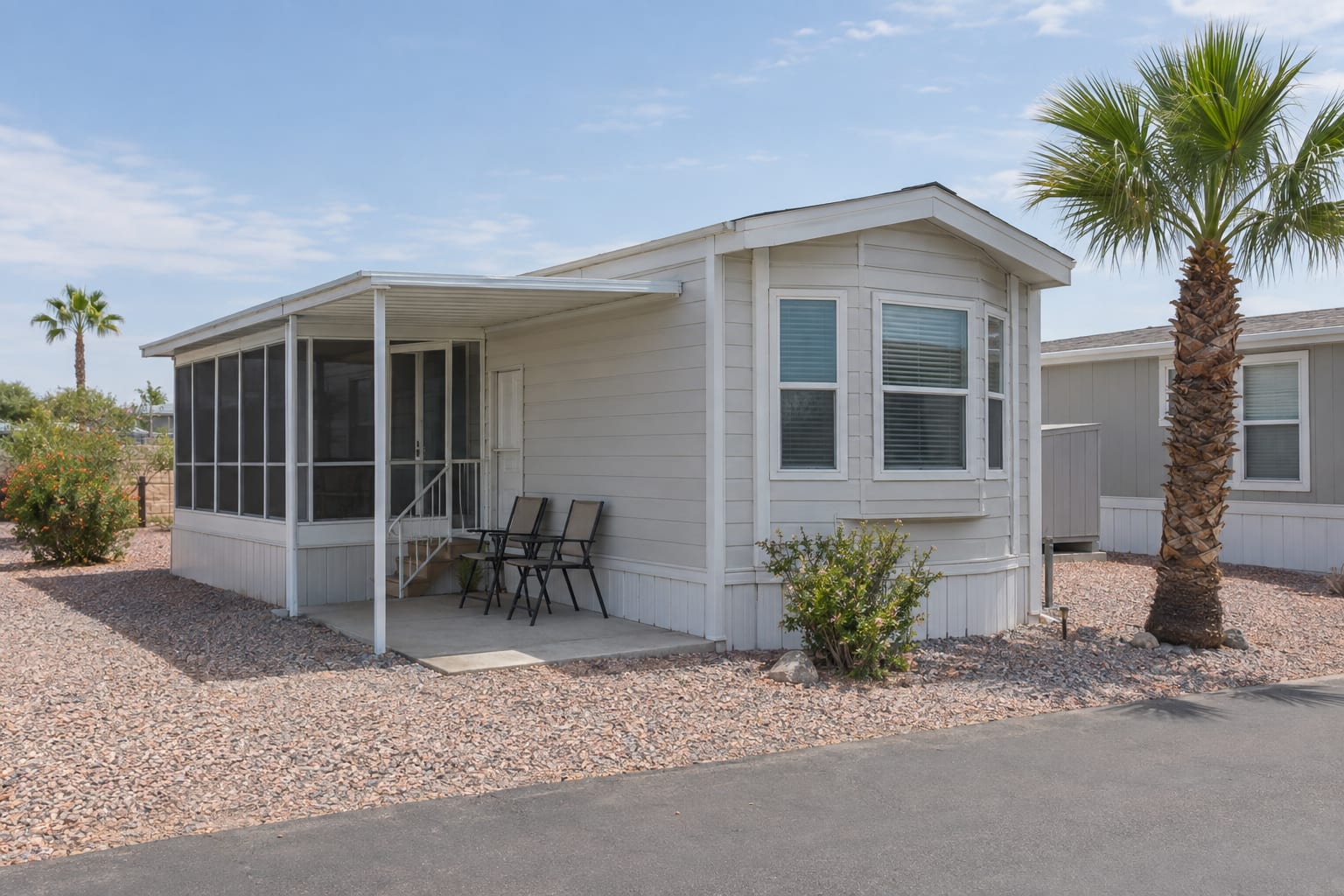
The third row causes the most confusion. A park model is a small recreational unit, typically 400 square feet or less, built to a recreational vehicle standard and not to the HUD Code. Winter resorts are often made up of park models and RV sites, and their listings can read much like those for manufactured home communities. If the home you like is a park model, say so early, because the financing question is different.
State law draws the same line. Title 33 of the Arizona Revised Statutes contains the Arizona Mobile Home Parks Residential Landlord and Tenant Act and, separately, the Recreational Vehicle Long-Term Rental Space Act. Which one applies depends on the kind of park and the kind of unit. This article is general information, not legal advice.
For the second row, resident-owned communities in Arizona shows how to check land ownership with the county assessor.
Build a short list before you travel
Most of the sorting can be done by phone and email.
Narrowing the list from home
- Pick the region first Climate, distance to medical care and seasonal crowding differ widely between the low desert and the high country. Comparing Arizona’s regions covers that choice.
- Call each community office Ask whether it is a manufactured home community, whether the spaces are rented or owned, what the age policy is, and what the space rent is for the homes now on the market.
- Ask for the documents by email The rules and regulations, the rental agreement and the resident application tell you more than a brochure does.
- Send the home’s details to a lender The year built, the number of sections and whether the space is rented or owned are enough to learn whether a home may fit a loan program before you book a trip.
- Keep three or four That is enough to compare and few enough to visit properly.
Local notes for Phoenix, Mesa, Casa Grande, Prescott, Bullhead City, Yuma and other cities are on the Arizona city pages.
Visit in season and again in summer
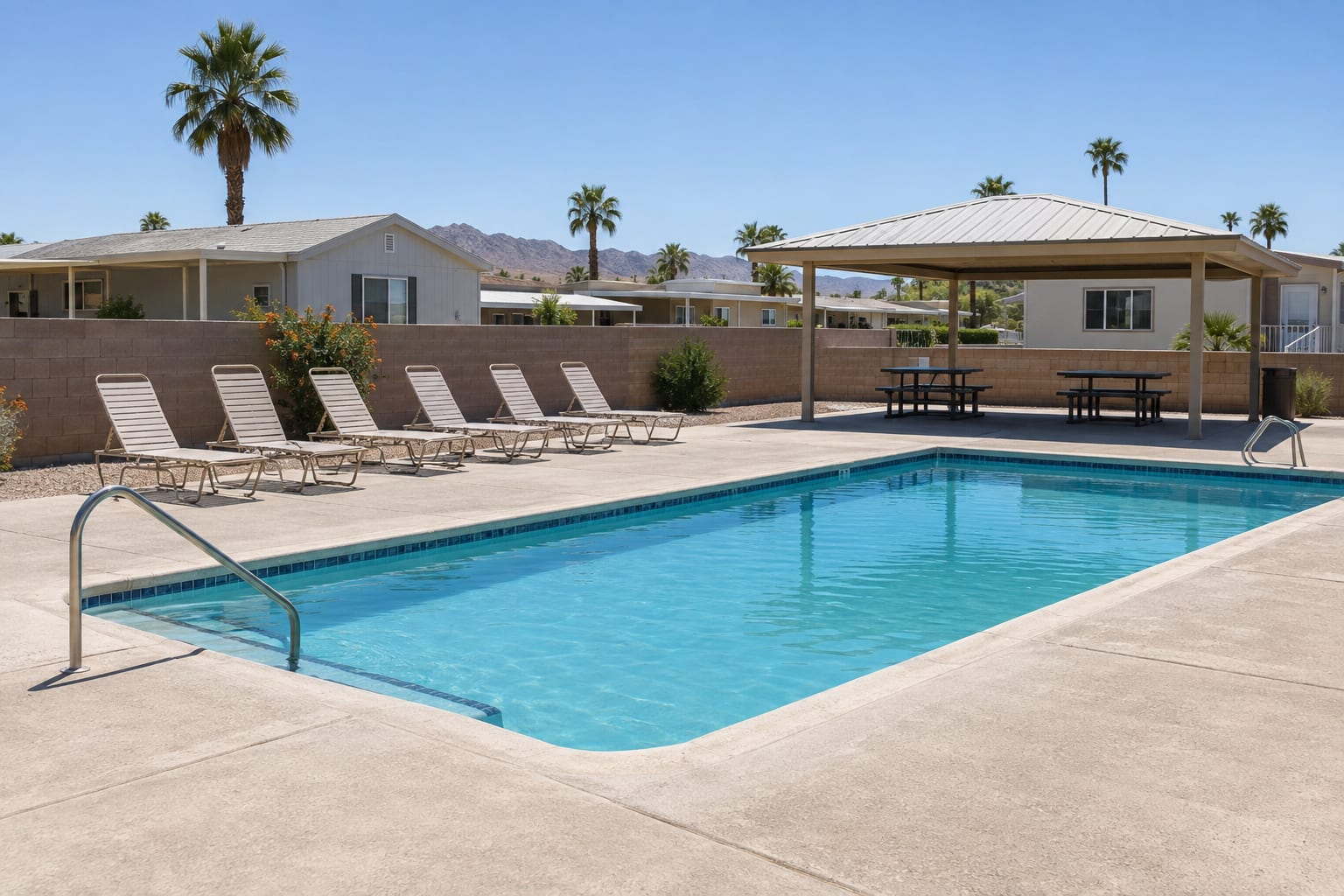
Age-qualified communities in the low desert change with the calendar. In winter, part-year residents are in town, the activity calendar is full and the pool is busy. In summer, many homes are closed up, some activities stop, and the heat shows you what the home and its electric bill are like in the months a brochure leaves out.
If you plan to live there all year, the summer visit is the more important of the two. Notice how many homes are occupied, what stays open, and how the home you like holds its temperature in the afternoon. If you can make only one trip, ask residents what the other season is like.
What to ask at the office
Take the same questions to every community, and write the answers down while you are there.
Ask for the answers that matter most to you in writing. The community’s approval of you as a resident is a separate review from loan approval, and both have to be in place before closing. How park rules can affect your purchase takes the rules one at a time.
What to look at on the street
Walk or drive every street, not only the one with the home for sale.
- Streets, drainage and lighting. Low spots and washes matter in summer storms. Look the address up at the FEMA Flood Map Service Center as well.
- Empty spaces and for-sale signs. A few are normal. Many in one section is a question for the office.
- Neighboring homes and yards. Their condition shows how the rules are enforced.
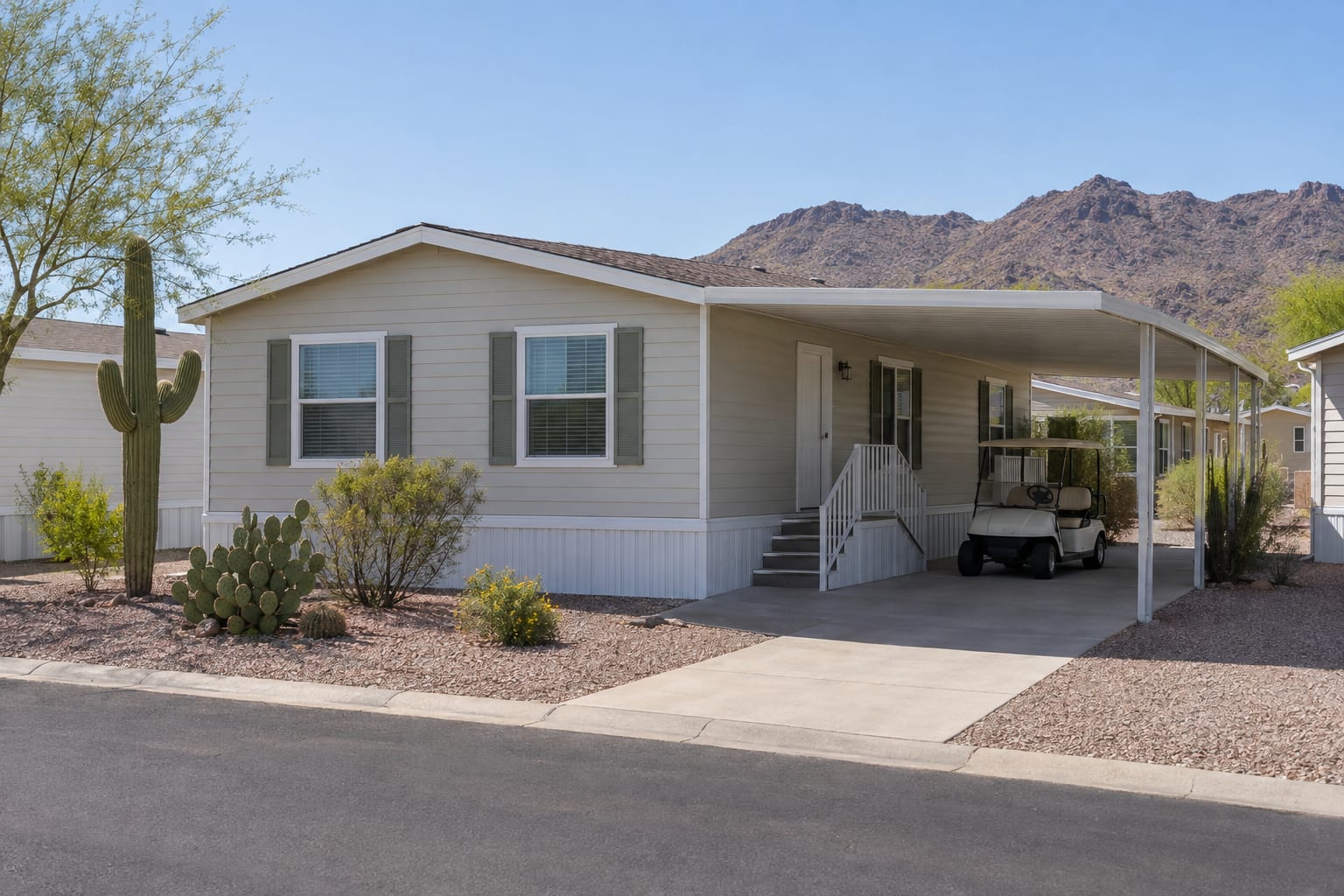
- Shade and distances. Check for covered parking, and for how far it is to the mailboxes, the clubhouse and the gate.
- Residents. Ask how long they have lived there, how management handles repairs, and how the rent has changed.
What to check in the home itself
A community visit is also a first look at the home. These are the points that affect cost, insurance and financing.
- The data plate. This paper sheet inside the home, often in a kitchen cabinet or a closet, lists the manufacturer, the date of manufacture and the serial number. Photograph it. A lender, an insurer and the title record all start from it.
- Cooling. Ask the age of the air conditioner or heat pump, and ask to see the summer electric bills.
- Roof and awnings. Look for sun wear, patched seams and the way the awnings and carport are attached.
- Skirting, steps and handrails. Damage here is cheap to see and tells you about upkeep.
- Additions. For an enclosed patio, a shed or a carport, ask whether the community approved it and whether it was permitted. The Arizona Department of Housing is the place to ask about manufactured housing permits.
- Titles. Arizona titles are handled by the MVD (the ADOT Motor Vehicle Division), generally one title per section, as the ADOT mobile home ownership page describes. Ask the seller to show that the serial numbers on the titles match the home.
On a pre-owned home, a professional inspection is worth arranging before you commit.
Record the same facts for every community
Memory blurs after the third visit. A one-page record for each community keeps the comparison honest.
What to write down at each community
| What to record | Why it matters |
|---|---|
| Space rent and what it includes | The basis for comparing monthly cost |
| Rent history | Shows how the cost has moved |
| Age policy and the rules that affect you | Decides whether your household fits |
| Who owns the land | Tells you whether it is a rental park, a co-op or deeded lots |
| The home’s year, size and condition | Affects loan programs, insurance and repairs |
| Summer electric bills | What the home costs to run in the hottest months |
| Drive to your doctor and a hospital | Matters more every year you live there |
When one home stands out, talk with a specialist before you make an offer. With the year built, the size and the land setup, we can tell you which programs may fit. All financing is subject to credit approval.