Guide to Growing a Vegetable Garden at Your Manufactured Home
You can grow vegetables on a small manufactured home lot, and most of it can be done in containers on a patio, a porch or the sunny edge of a carport. Three things differ from gardening at a site-built house. In a community, the park’s rules decide what you may build or dig. The home needs dry, open ground along its skirting. And in the low desert, the planting calendar runs close to the opposite of the one on a seed packet.
Ask the community before you build anything
In a land-lease community you own the home and rent the space it sits on, so the yard is yours to use but not always yours to change. Pots on the patio are the least likely thing to raise a question. A raised bed, a trellis fixed to the carport or a compost bin may need approval first.
If you plan to build something, get the answer in writing. How park rules can affect your purchase explains why exterior changes usually need approval first.
Choose the spot by sun and by distance from the home
Fruiting vegetables such as tomatoes and peppers need six to eight hours of full sun, while leafy and root vegetables tolerate partial shade, according to the University of Arizona Cooperative Extension’s Ten Steps to a Successful Vegetable Garden. The carport, the awning and the neighboring home all throw shade that moves through the day, so watch the lot before you decide.
Then place the garden with the home in mind:
- Leave the skirting clear. Skirting has vents that let air move under the home, and usually an access panel. Soil, mulch or planters pushed against it block both and hold moisture against the home.
- Send water away from the home. The ground around a manufactured home should drain away from it. Set drip lines and pots so runoff does not collect along the skirting or run underneath.
- Ask before you dig. Utility lines can run under a lot, and in a community some may belong to the park and not to a utility. Contact 811, the free national before-you-dig service, before you set posts or dig a bed. Its locators mark the lines the utility companies own; lines that belong to the park, or that run from the meter to the home, generally are not marked, which is why you ask the office as well.
Start with containers
Containers suit a rented space. They need no digging, they sit on a patio or the edge of the carport slab, and they go with you if you sell the home.
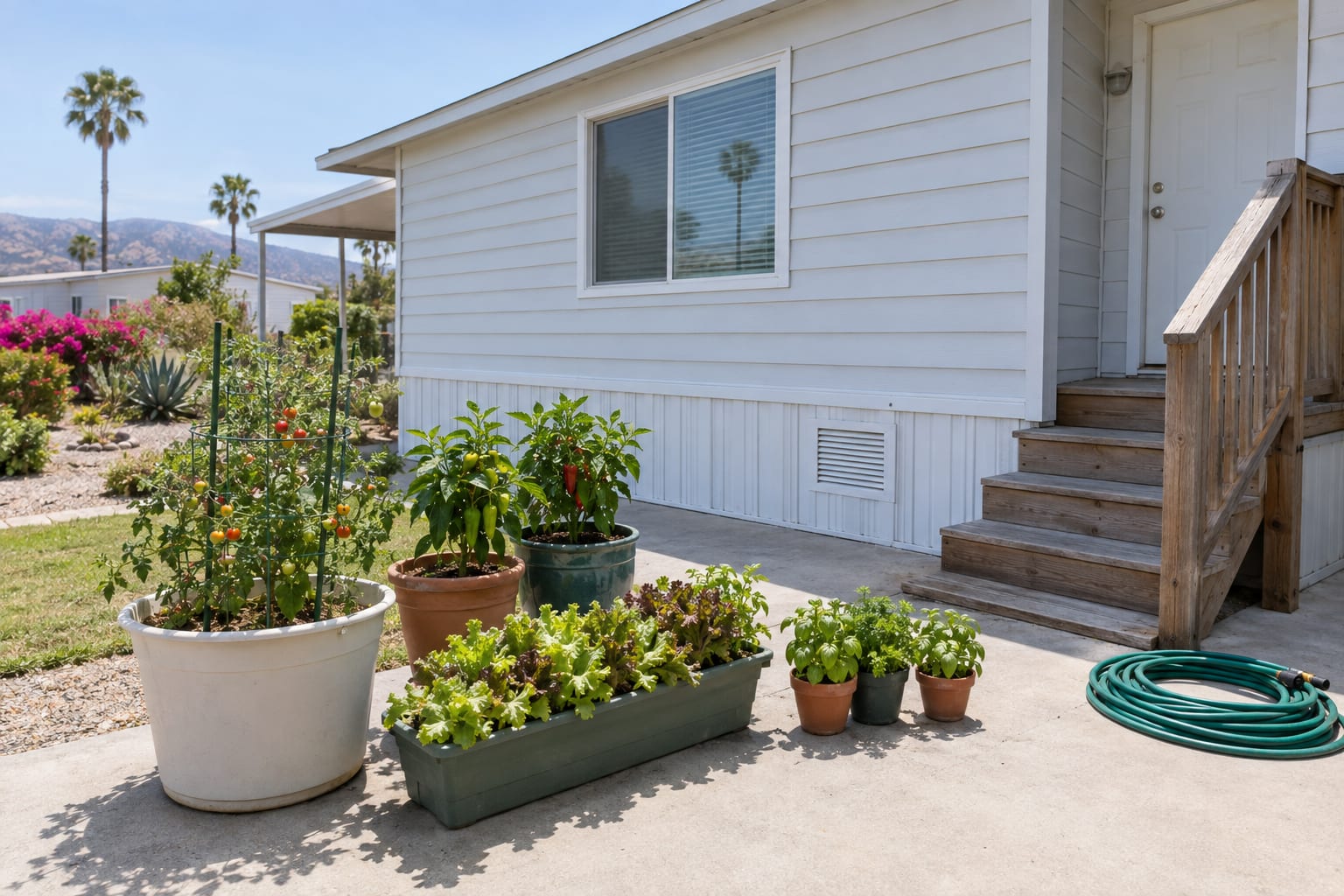
- Size. A bigger pot holds more soil, dries out more slowly and stays cooler. Tomatoes and peppers need a large tub; lettuce and herbs manage in something shallower. Keep the heavy ones on the ground or the slab, not on a small raised porch.
- Drainage. Every container needs holes in the bottom. On a wood deck or porch, raise pots on feet so the boards underneath can dry.
- Potting mix. Use bagged potting mix. Soil dug from the yard packs down in a pot and drains badly.
- Heat. In desert sun, a dark pot on gravel or concrete gets hot enough to damage roots. Light-colored pots, grouped together and shaded in the afternoon, cope better.
Beans, peas and cucumbers climb, so on a freestanding trellis they give a lot of harvest for the floor space they take.
Add a raised bed if the park allows one
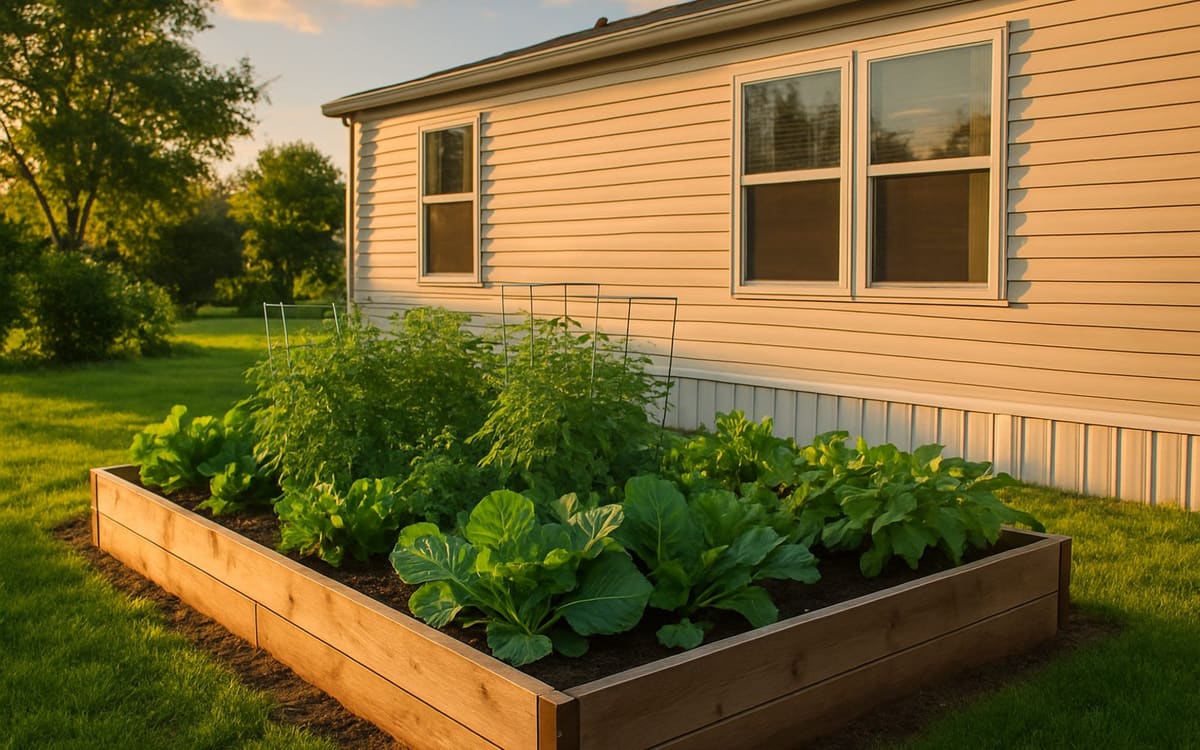
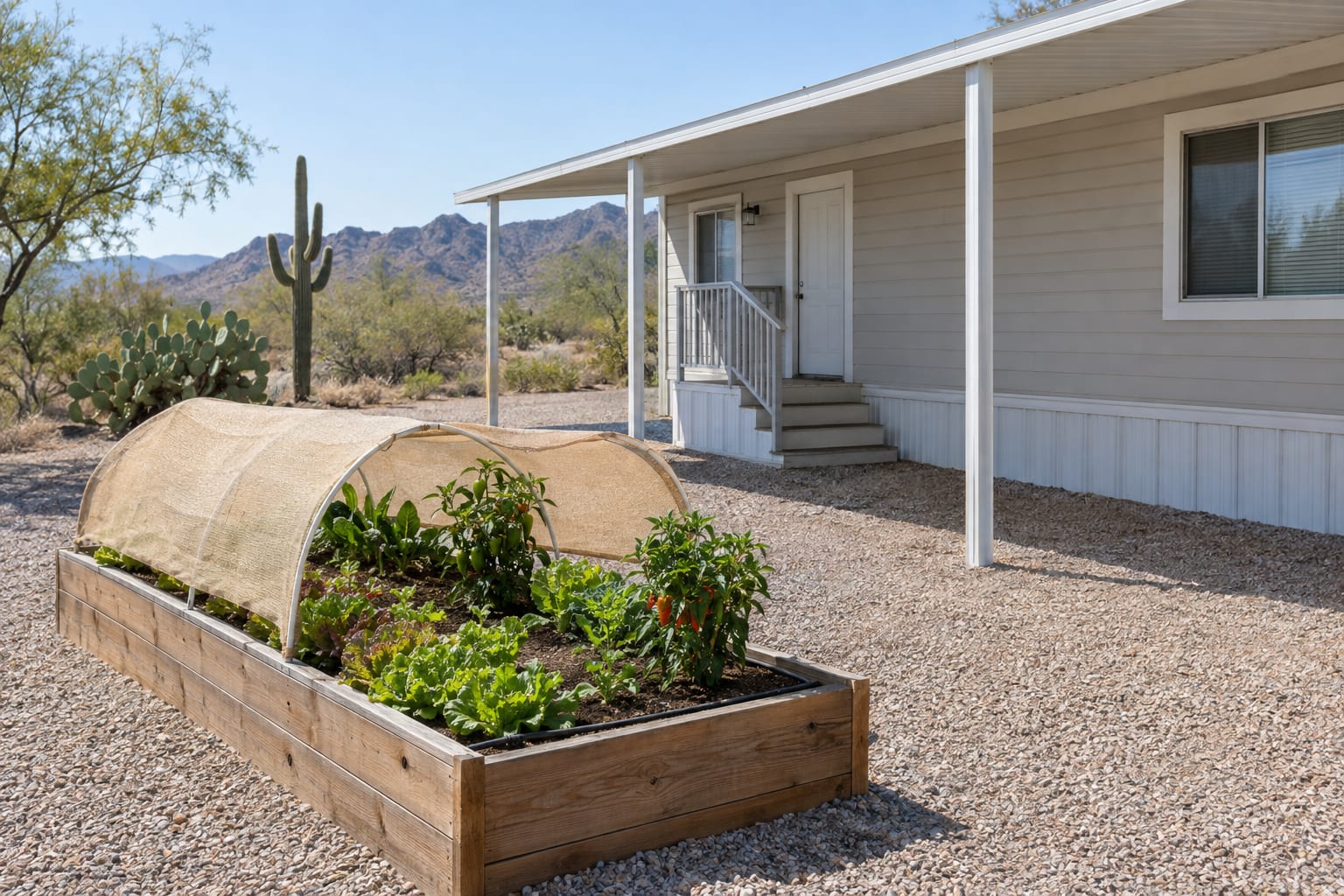
A raised bed gives roots more room than a pot and needs watering less often. It is also a small structure on the lot, which is why the office comes first.
Make it narrow enough to reach the middle from either side, set it well out from the skirting, and leave the access panel, the utility pedestal and the meters within reach. A freestanding frame filled with bagged soil mix sits on top of the ground and can be taken apart later if the space has to be restored.
Plant by your own region’s calendar
Cool-season crops such as lettuce, spinach, kale, peas and carrots grow in mild weather and go to seed in heat. Warm-season crops such as tomatoes, peppers, beans, cucumbers and squash need warmth and cannot take frost. Where you live decides which months suit each group.
When each group is planted
| Arizona low desert | Southern California coast | |
|---|---|---|
| Cool-season crops | Late summer through early spring, the long season | Late summer through spring |
| Warm-season crops | Two short windows: late winter into spring, then mid to late summer for a fall harvest | Spring into midsummer |
| What works against you | Summer heat: tomatoes stop setting fruit in a run of very hot days, and small pots dry out by afternoon | Cool, damp marine air, which favors leaf diseases |
| What helps | Afternoon shade, larger pots, a drip line on a timer | The sunniest spot on the lot and disease-resistant varieties |
For month-by-month dates, use a local calendar. The University of Arizona Cooperative Extension publishes a vegetable planting calendar for Maricopa County, which describes two planting seasons, one in spring and one in fall. For the coast, the UC Master Gardener Program’s time of planting table gives crop-by-crop dates for the South Coast region, from San Luis Obispo County south. Inland valleys, the high desert and Arizona’s high country have colder winters and their own dates.
Water by feel and keep the bed tidy
Push a finger into the soil before you water. The aim is soil that stays moist, not wet, around the roots. In summer heat a pot can need water every day; in mild weather it needs far less.
When a crop finishes, pull it and plant the next season’s crop in its place. Clear away spent plants, fallen fruit and empty pots, which attract pests. A community’s rules on yard upkeep apply to a vegetable bed as much as to a lawn.
The patio or carport that holds your pots can also be where you sit with company: see making a small patio or carport work for guests. If the skirting beside your planned bed is damaged, fix that first. DIY exterior upgrades covers skirting along with other small projects.