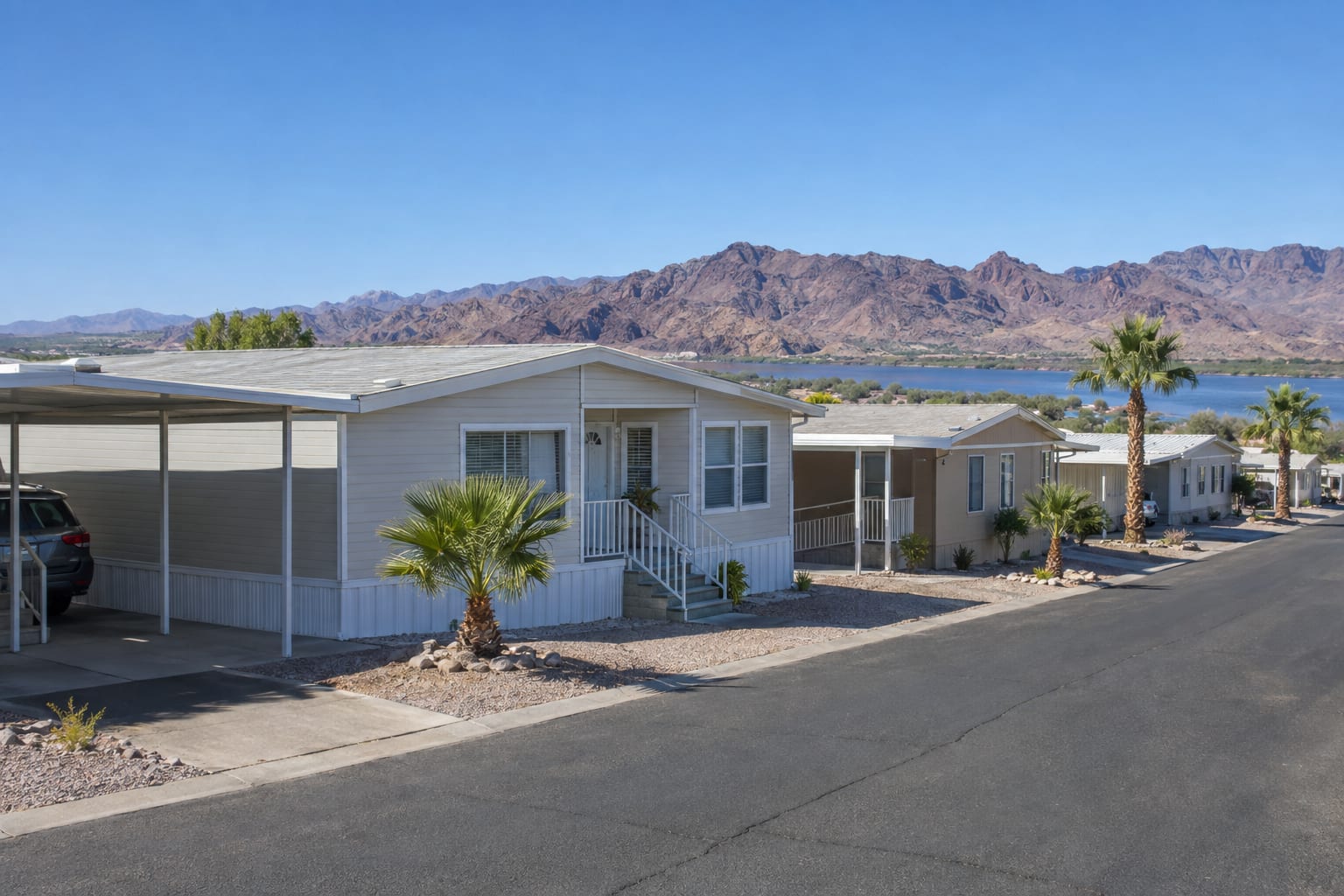
Preparing for Retirement in a Mobile Home Community: Downsizing and Budget-Friendly Living
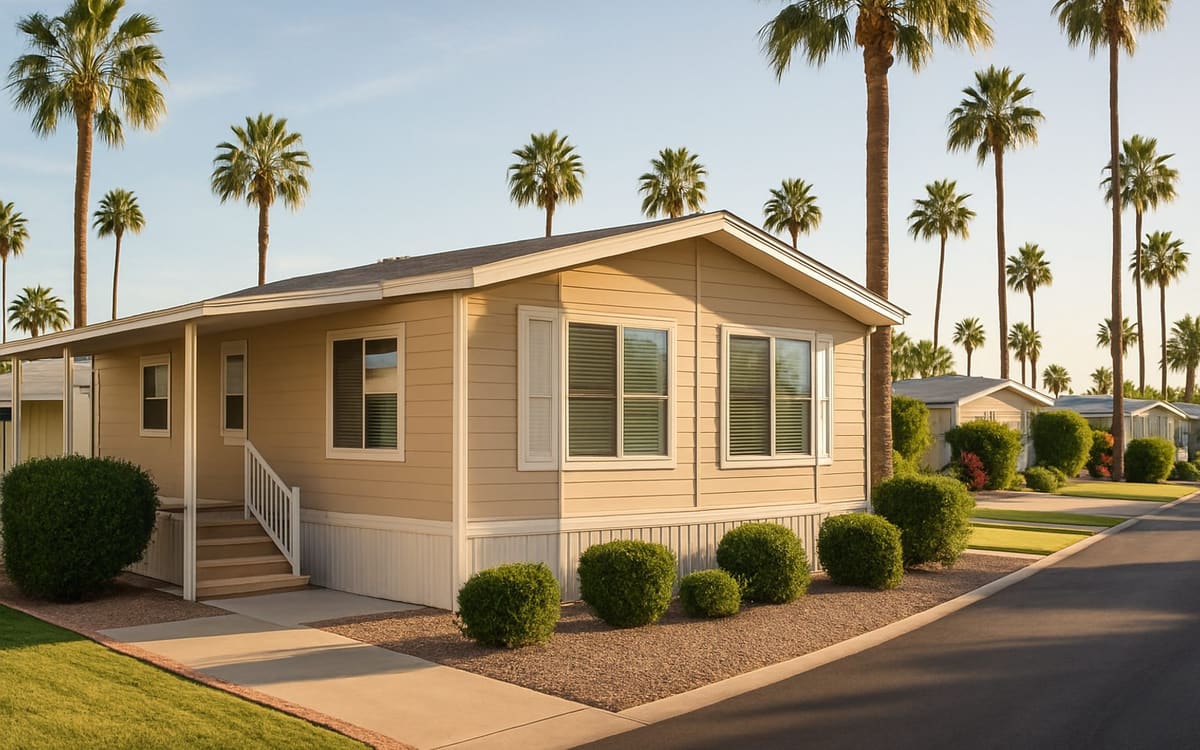
Retiring to a manufactured home community works when three things hold: the full monthly cost fits your retirement income with room to spare, the community’s rules suit the way you live, and the home is one you can manage as you get older. In most communities you own the home and rent the space under it. So you are trading a larger house and its upkeep for a smaller home plus a monthly space rent, and that rent can rise.
The planning comes down to a handful of decisions. Take them roughly in the order below, and start well before you want to move.
What downsizing changes and what it leaves the same
Selling a house and buying a manufactured home in a community changes more than the square footage. The table shows the usual trade when the new home sits on a rented space. If you buy a manufactured home on land you own instead, the land, rules and resale rows look more like the house column.
Before and after a move to a community
| What changes | A house on land you own | A manufactured home on a rented space |
|---|---|---|
| The land | Yours | Rented from the community under a rental agreement |
| Monthly housing cost | Any mortgage, property tax, insurance, utilities, upkeep | Any loan payment, space rent, insurance, taxes or fees on the home, utilities, upkeep |
| Upkeep | The whole property | The home and your space; the community keeps up streets and shared areas |
| Rules | Local ordinances, perhaps an association | The community’s rules on age, pets, guests, vehicles and exterior changes |
| Selling later | To any buyer | To a buyer the community also approves |
Two points get missed. Maintenance shrinks but does not disappear: the roof, the air conditioning, the skirting and the steps are still yours. And paying cash for the home removes the loan payment, not the space rent, so the monthly cost never drops to zero.
If the sale of your house leaves money after the purchase, decide before you shop how much goes into the home and how much stays in savings. A larger down payment means a smaller loan. A larger reserve means more room when rent, insurance or a repair costs more than you planned.
Build the budget on the income you will have
Work from your retirement income, not your working income, and count every housing line: any loan payment, space rent, insurance, taxes or fees on the home, utilities and a set-aside for repairs. The article on lowering housing costs in retirement has a worksheet for comparing your current home with the one you are considering, line by line.
Then test the result. Retirement income rises slowly, if at all, and space rent, insurance and electricity can outpace it.
Couples should also run the numbers on one income. Ask how your Social Security and pension income would change if one of you were widowed, and check that the survivor could still carry the home.
Property tax relief for older homeowners, where it exists, is run by county or state offices, not by lenders or communities. In Arizona, for example, county assessors administer a Senior Valuation Protection program, which the Maricopa County Assessor describes for that county. Whether a manufactured home on a rented space qualifies is a question for the assessor where you are buying. This article is general information, not legal or tax advice.
How a lender looks at retirement income
You do not need a paycheck to apply for a loan. Under federal Equal Credit Opportunity Act rules, a creditor generally may not take an applicant’s age into account, and may not discount or exclude income because it comes from a pension, an annuity or another retirement benefit. It may consider the amount of the income and how likely it is to continue. The Consumer Financial Protection Bureau publishes the rule as Regulation B.
In practice that means paperwork. A lender wants to see each income source in writing, along with some sign that it will keep arriving.
Retirement income and how it is commonly documented
| Income source | What is commonly requested |
|---|---|
| Social Security | Your current benefit letter and a bank statement showing the deposit |
| Pension or annuity | A statement or award letter from the payer |
| Withdrawals from an IRA or 401(k) | Recent account statements and a record of the withdrawals |
| Part-time work or self-employment | Pay stubs or tax returns |
| Interest, dividends or rent you receive | Tax returns and account statements |
The exact list depends on the program, and your specialist will tell you which documents your file needs.

Three situations are worth raising in the first conversation:
- You are still working and plan to retire soon. Say when. The lender needs to know which income will be paying the loan.
- The down payment will come from selling your house. The order of the two closings matters, so describe where the sale stands.
- Most of your money is in savings, not monthly income. Ask how assets are treated, because programs differ.
Lenders compare your monthly housing cost (payment, taxes, insurance, and any space rent) with your gross monthly income; acceptable ratios depend on the program, your other debts, and disposable income. All financing is subject to credit approval, and not all applicants or homes qualify.
55+ or all-age: read the age policy, not the sign
Many communities in California and Arizona are age-qualified, usually described as 55+. Federal law allows senior housing that meets the standards of the Housing for Older Persons Act, as the U.S. Department of Justice explains on its Fair Housing Act page. What the label means for your household is in each community’s written age policy.
Age-qualified and all-age communities compared
| Question | Age-qualified (55+) | All-age |
|---|---|---|
| Who may live in the home | Set by the age policy; ask about a younger spouse, an adult child or a caregiver | Anyone the community approves as a resident |
| Long visits from grandchildren | Often limited by the guest rules | The guest rules still apply |
| Who can buy the home from you | Only buyers who meet the age policy | A wider group of buyers |
Neither kind is the better choice in general. A couple with an age gap, or a household that expects a relative to move in, should get the age policy in writing before making an offer. Either way, the community reviews you as a resident, and that review is separate from loan approval. How park rules can affect your purchase goes through pets, guests, vehicles and resale as well.

Choose a home you can manage as you get older
A manufactured home is on one level, which helps, but look at it as the place you may live at 80 or 85.
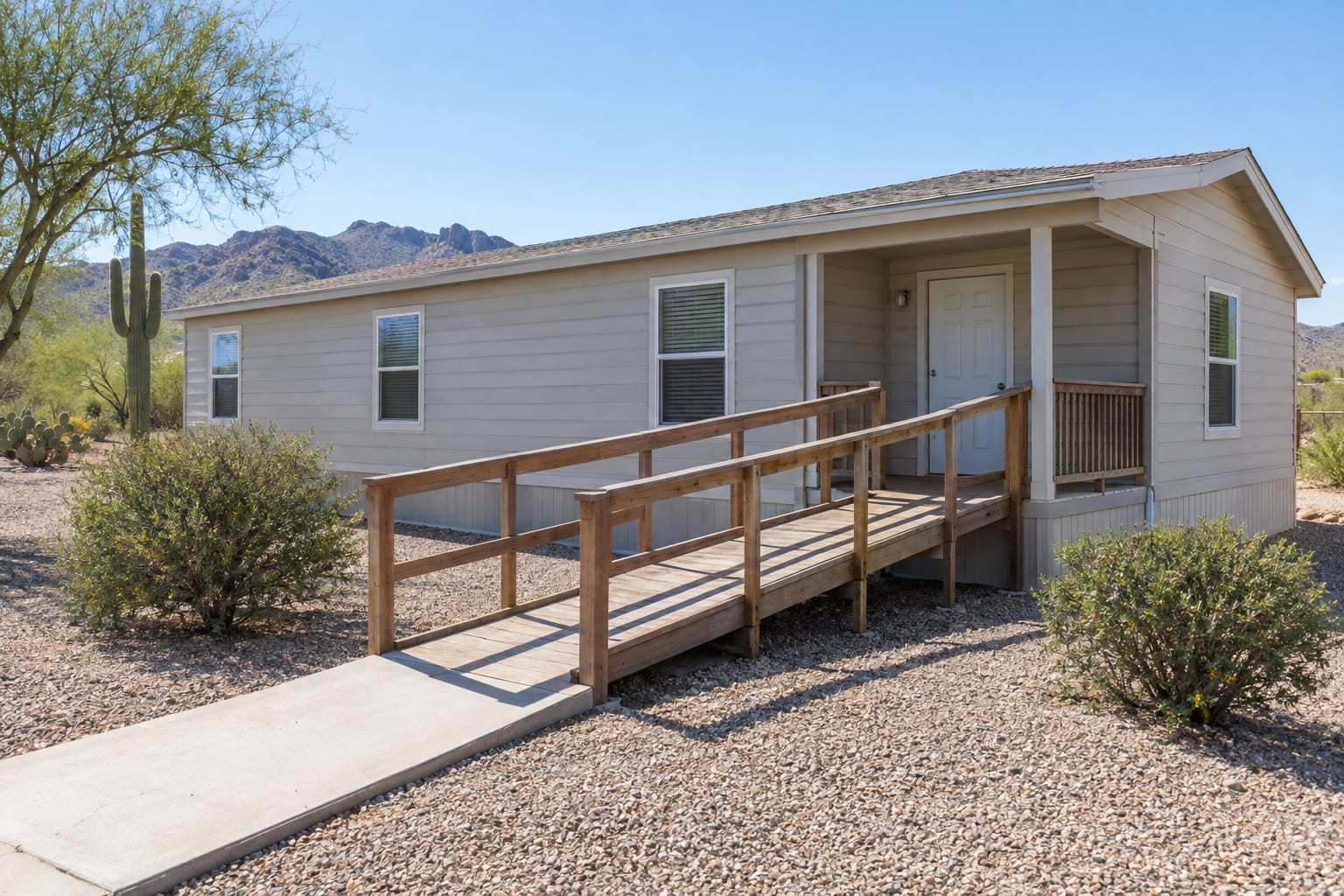
- The entry. Most homes sit a few steps above the ground. Count the steps, check the handrails, and ask the office whether a ramp would be approved. Exterior changes usually need written approval.
- Inside. Check door and hallway widths, the step into the tub or shower, and any raised threshold where the sections of a multi-section home join.
- Outside. Find out who looks after the yard, whether parking is covered, and how far it is to the mailboxes and the clubhouse.
- Nearby. Time the drive to your doctor, a pharmacy, a hospital and a grocery store, and ask yourself how you would manage if you stopped driving.
- The home’s age and systems. Note the year built from the data plate, the paper sheet fixed inside the home, and ask how old the roof and the air conditioning are. Age and condition affect insurance and which loan programs can apply.
The move, in order
From first budget to moving day
- Set the budget Use the income you will have in retirement, and test it against a higher space rent.
- Talk with a lender early A pre-qualification, based on what you tell the lender, gives you a working price range. Pre-qualification is not final approval.
- Visit communities and collect the documents Get the rules, the rental agreement, the age policy and the rent history from the office.
- Decide the order of selling and buying If the purchase depends on your sale, both timelines have to fit, so keep the lender up to date on the sale.
- Apply twice The community and the lender each review you. Both approvals have to be in place before closing.
- Sort your belongings to the floor plan Measure the rooms and the storage in the new home first, and ask about a shed before you count on one.
Where you retire shapes the cost and the climate as much as the home does. If Arizona is on your list, start with comparing Arizona’s regions, then use the guide to visiting Arizona communities. If you plan to live there only in winter, buying as a snowbird covers what changes.