
Top 8 Ways Retirees Can Lower Housing Costs with Manufactured Homes
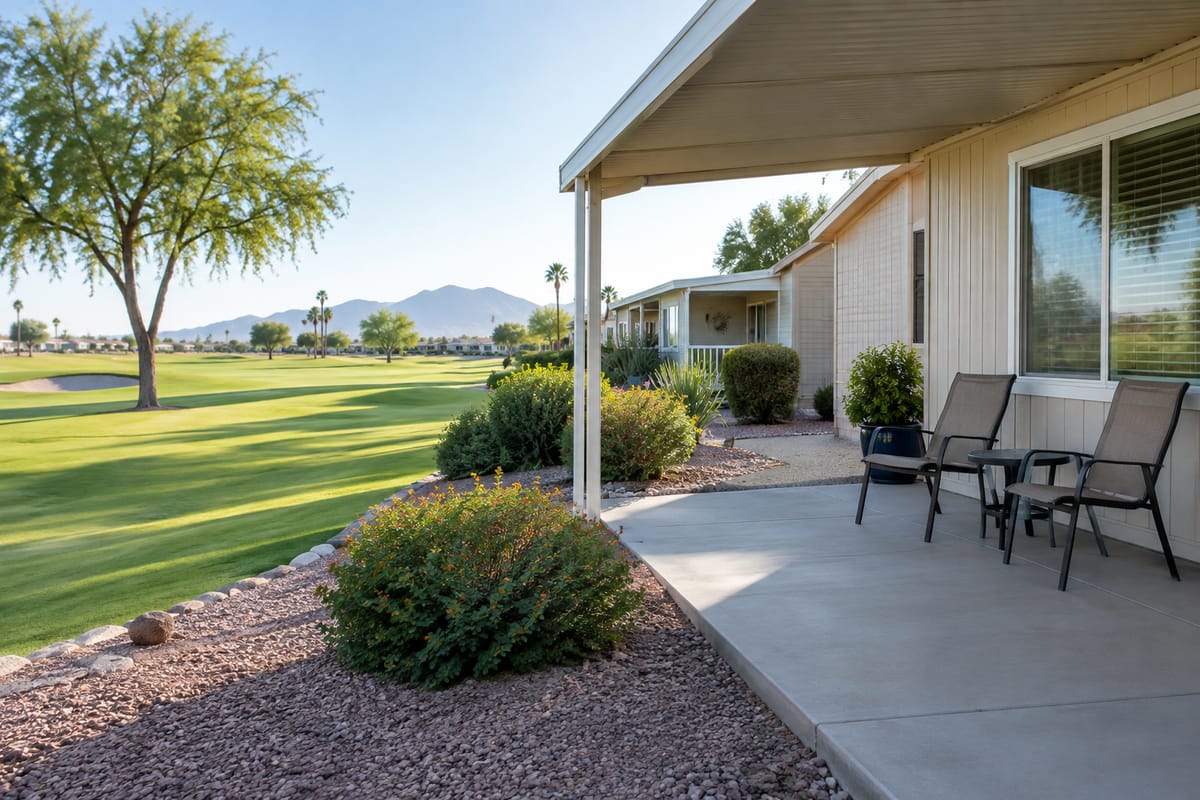
A manufactured home can lower what you spend on housing in retirement in a few specific places: the amount you borrow, the cost of heating and cooling, upkeep, and sometimes insurance. A home in a community also adds a cost that a paid-off house does not have, the monthly space rent, and that rent can rise. So the test is the whole monthly total before and after the move, not any single line.
The eight ways below each change one line of that total. Start by writing the total down.
Start with a before-and-after budget
Put your current home in one column and the manufactured home you are considering in the other. Use monthly figures, and divide anything billed yearly by 12.
A monthly housing budget, before and after
| Budget line | Your home now | The manufactured home |
|---|---|---|
| Loan payment | Your mortgage payment, if you have one | An estimate for the amount you would finance, or zero if you pay cash |
| Space rent or dues | Any association dues | The community’s current space rent and anything billed with it |
| Taxes and fees on the home | Your property tax | What the current owner pays each year |
| Insurance | Your current premium | A quote for this home at this address |
| Utilities | Your average over the past 12 months | The seller’s average over the past 12 months |
| Upkeep | What you spent on repairs and the yard last year | An amount you set aside each month for the roof, cooling and repairs |
Add up each column. The difference between the two totals is what the move saves or costs you each month.
For the loan line, the payment calculator gives educational estimates, not a loan offer. This worksheet covers the monthly costs only. Moving, setup, deposits and other one-time costs are covered in how to budget for a manufactured home.

The loan payment: buy for less and borrow less
Two of the eight ways work on this line, and they are the ones retirees usually start with.
Buy a home that costs less than the one you sell
If the manufactured home costs less than your current house sells for, the gap can pay off your mortgage, reduce what you borrow, or both. This can be the largest change in the budget, and it only shows up if you resist buying more home than you need.
Decide how much of the sale goes into the home
More cash into the purchase means a smaller loan or none. Less cash in means a larger reserve for the years ahead. Both are reasonable, and the budget shows what each one costs per month.
There is no single down payment. It depends on the program, your credit, the home, and whether the land is leased or owned.
Space rent: compare communities and land setups
Space rent is the line that is new for most people leaving a house, so it deserves the most attention. Two more of the eight ways work here.
Compare communities on rent and on what it covers
Two communities with similar homes can charge different rents and include different things: water, sewer, trash, or use of the pool and clubhouse. Compare them on the full monthly figure. How space rent affects what you can afford shows how to line two communities up like for like.
Choose the land setup deliberately
A home on a rented space has no land cost up front and a rent every month. A home on land you own has no space rent, but you pay for the land, the property tax on it, and any well, septic or private road. In a resident-owned community, the residents own the land together and pay monthly dues instead of rent to a landlord. The cheapest setup on paper is not always the cheapest over the years you plan to stay.
A change of community owner can also bring changes to rent and rules. What happens when a park is sold covers what a new owner can change.
Insurance and taxes: get real figures before the offer
The fifth way is to shop this line before you commit to a home, not after. Premiums vary with the home’s age, its condition, its location and how it is anchored, and some homes are harder to insure than others. A quote for the actual home at the actual address belongs in your budget before you make an offer. Santiago Financial, Inc. can help with manufactured home insurance quotes.
Taxes and fees work differently from a site-built house, and they differ between California and Arizona and between a home on a rented space and one attached to land you own. Do not assume the bill will be lower. Ask the seller what was paid last year, and confirm it with the county.
Utilities: choose a home that is cheap to cool and heat
A smaller home has less space to cool and heat, which is the sixth way the total can come down. The size of the saving depends on the home. An older home with thin insulation, single-pane windows and a tired air conditioner can cost more to run than its size suggests.
Ask the seller for 12 months of electric and gas bills, and find out how the community bills water, sewer and trash. On a visit, look at the age of the cooling system and at the shading on the sunny side of the home.
Upkeep: take on less to maintain
The seventh way is the one people feel soonest. A manufactured home in a community usually has a smaller roof, a smaller yard and no pool or long driveway of its own, and the community looks after the streets and shared areas.
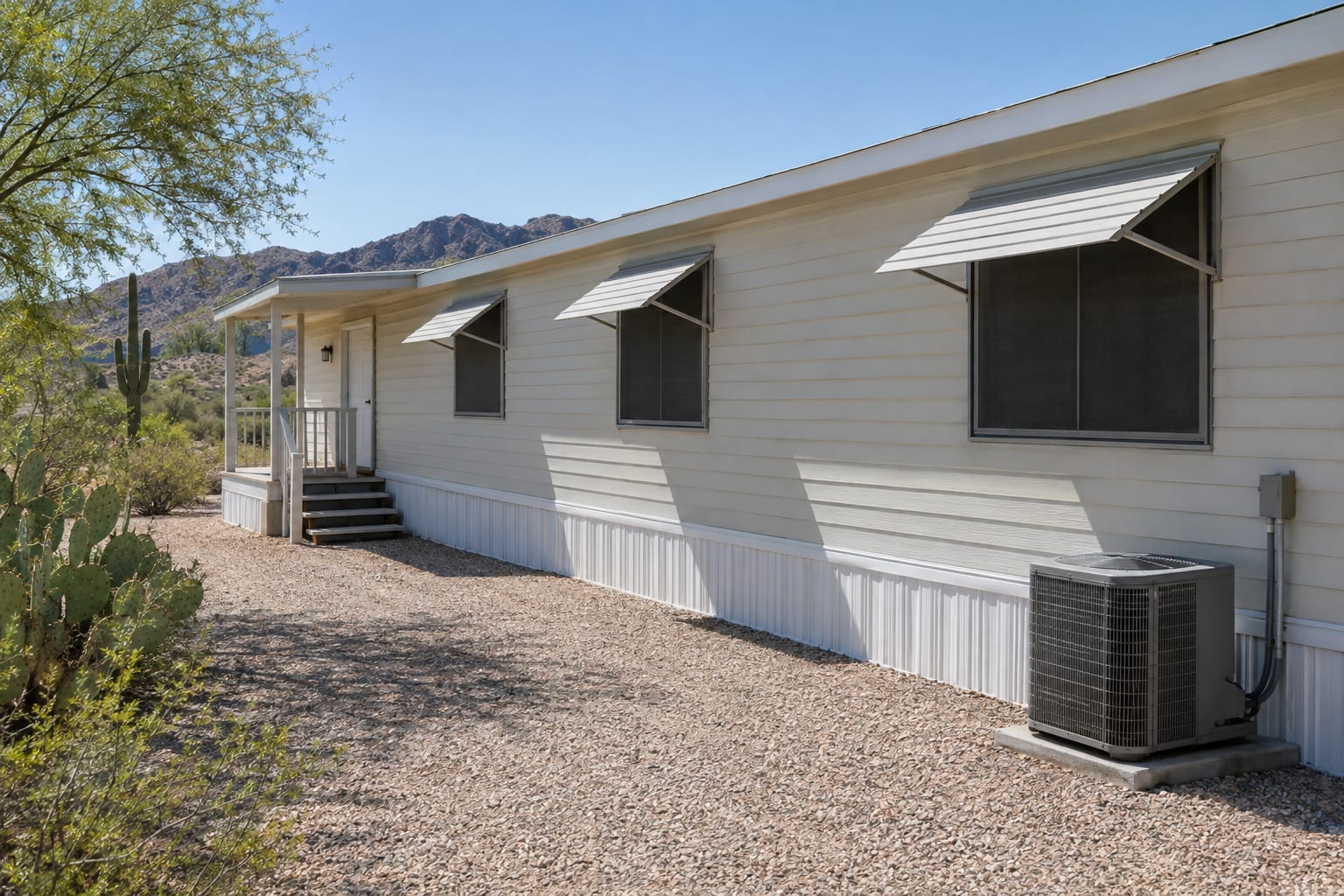
The home is still yours to maintain. The roof, the cooling and heating system, the water heater, the skirting, the steps and any awnings or sheds are your cost, and an older home needs more of it. Keep the upkeep line in the budget, and ask a home inspector what is likely to need replacing in the next few years.
Everyday spending: use what the rent already pays for
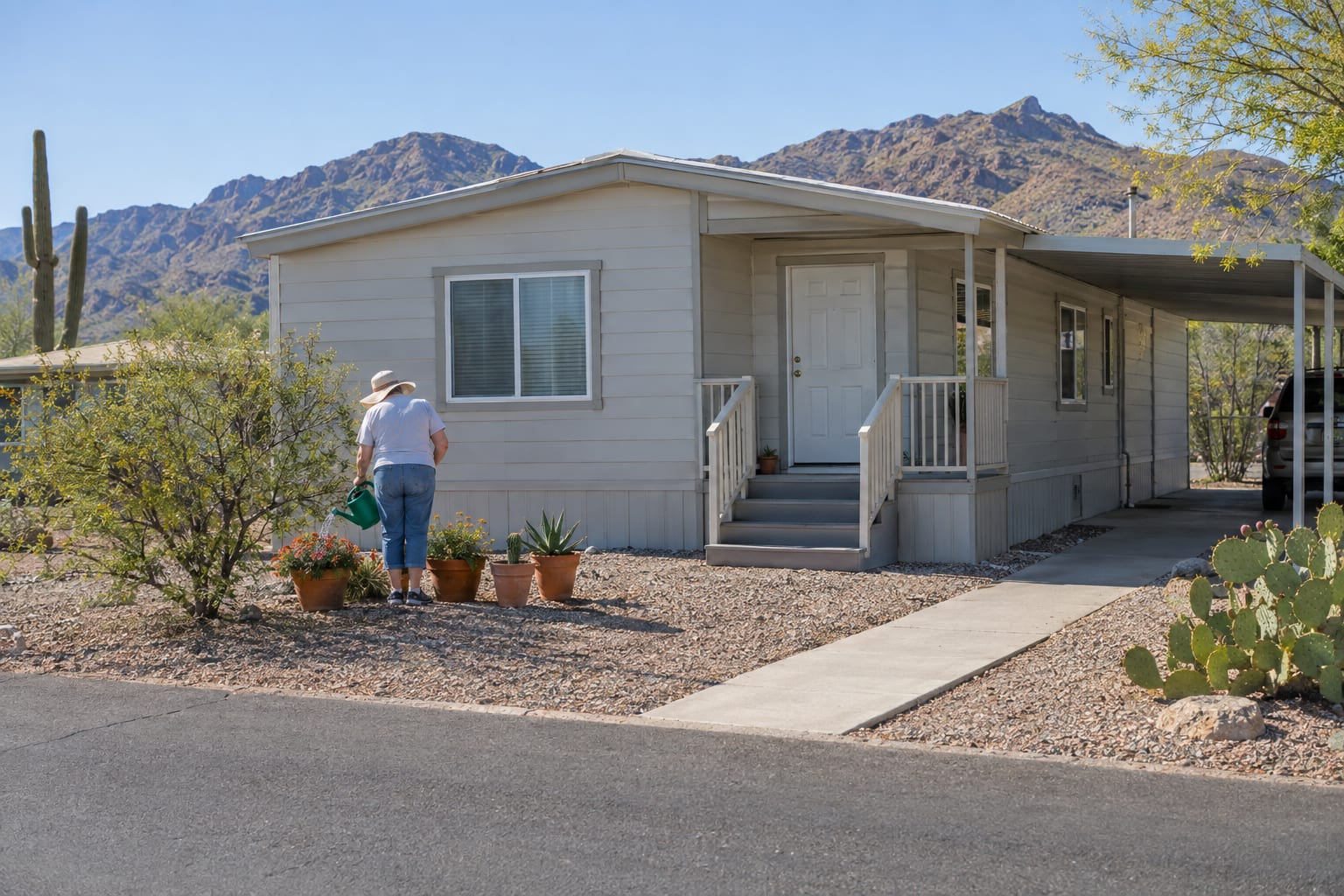
The eighth way sits outside the housing budget. Where space rent covers a pool, a fitness room, a clubhouse or organized activities, those can replace things you pay for separately now, such as a gym membership.
Count this only if you would use them. An amenity you never visit is a cost, not a saving, and a community with fewer amenities and a lower rent may suit you better.
What can undo the savings
A lower total on moving day is the starting point. Four things can push it back up over time:
- Rising space rent. It is the line you control least once you have bought.
- Insurance. Premiums can rise, and an insurer can change what it will cover as a home ages.
- A large repair. A roof or a cooling system on an older home can use up a year of what the move saves you.
- Buying at the top of your budget. A plan with no room in it fails at the first increase.
If the total still works with each of those tested, the move is doing what you wanted it to do. Housing cost is one part of a retirement move, and preparing for retirement in a manufactured home community covers the rest: how retirement income is documented for a loan, age-qualified communities and the order of the move.


