Outdoor Entertaining on a Budget: Making the Most of Your Manufactured Home’s Space
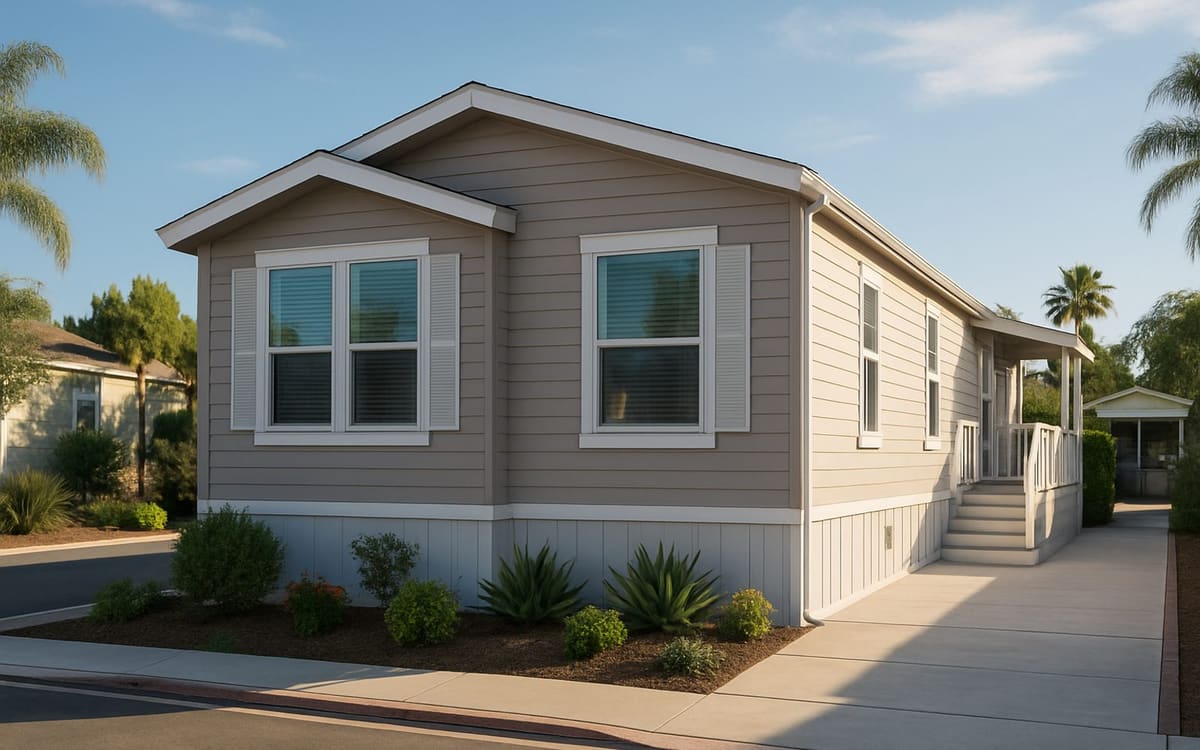
At many manufactured homes, the place to have people over is the carport. It already has a roof and a level slab, so once the car is moved out you have a covered room that costs nothing to build. Add seating, shade on the open side and some light, and a small lot can hold a family dinner or a birthday. In a community, the real limits are the rules you agreed to when you moved in: quiet hours, guest parking, and what you may attach or build.
Check the community’s rules before you invite people
Homes in a community sit close together, so a gathering at your home is partly your neighbors’ evening too. The rules and regulations that came with your rental agreement usually cover it, and the office can give you the current copy.
Parking needs the most planning. Community streets are narrow, and a car left across a neighbor’s driveway or in a fire lane gets noticed. Tell guests where to park before they arrive, let the neighbors on either side know, and wind things down before quiet hours begin. How park rules can affect your purchase goes through guest, parking and exterior rules one at a time.
Turn the carport into the patio
Move the car to a permitted space for the day and sweep the slab. You now have the largest flat, shaded area on the lot.
- Cover the floor. An outdoor rug hides oil stains and marks out where people sit. It costs little and changes the space more than new furniture would.
- Keep the steps and landing clear. The side door is how everyone reaches the kitchen and the bathroom. Guests do not know your steps, so check that the handrail is firm and the treads are lit.
- Hang nothing heavy from the carport. Many carports and awnings at manufactured homes are light aluminum structures built to carry their own roof and little else. Clip string lights to the beam. Do not hang a swing, a heavy planter or a shade sail from its beams or posts.
- Borrow before you buy. Folding chairs and a folding table from a neighbor or a secondhand shop do the job, and they store flat in a shed afterward.
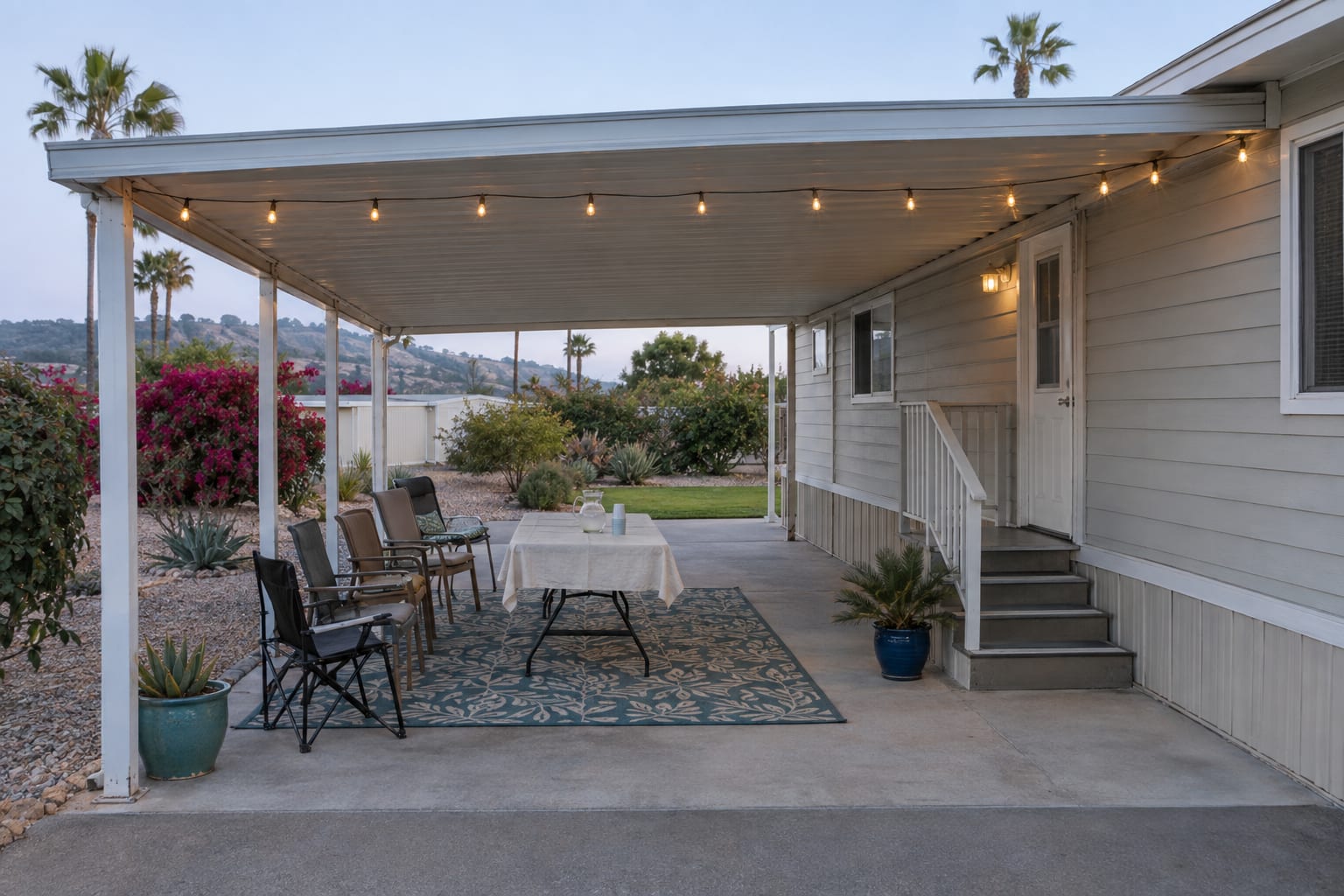
If the home has a small raised deck or porch, use it for the food table and let the carport take the crowd. If the carport sags or a post has worked loose, fix that before you load it with anything: DIY exterior upgrades covers awnings and carports along with skirting and steps.
Plan around shade, heat and evening chill
In the low desert, shade decides when you can have people over at all. A carport roof blocks the midday sun, but its open west side takes the low afternoon sun straight in. On the coast the problem reverses: evenings turn cool and damp, so a windbreak and a few blankets do more than extra shade.
Shade for a small lot, from least to most work
| Option | Effort | What to check |
|---|---|---|
| The carport or awning you already have | None | Which side the late sun comes from |
| A freestanding umbrella | Low; nothing to install | A weighted base, and take it down in wind |
| A roll-down shade or outdoor curtain on the carport’s open side | Low; clips or ties | Ask the office if you want to leave it up |
| A shade sail on its own posts | Moderate; posts are set in the ground | Park approval, buried utility lines and wind |
| A built patio cover or deck | The most | Park approval and, for some work, a permit |
A shade sail pulls hard on whatever holds it when the wind gets under it. That is why it belongs on its own posts and not on the home’s fascia or the awning. In the Arizona monsoon season, take sails and umbrellas down before a storm arrives.
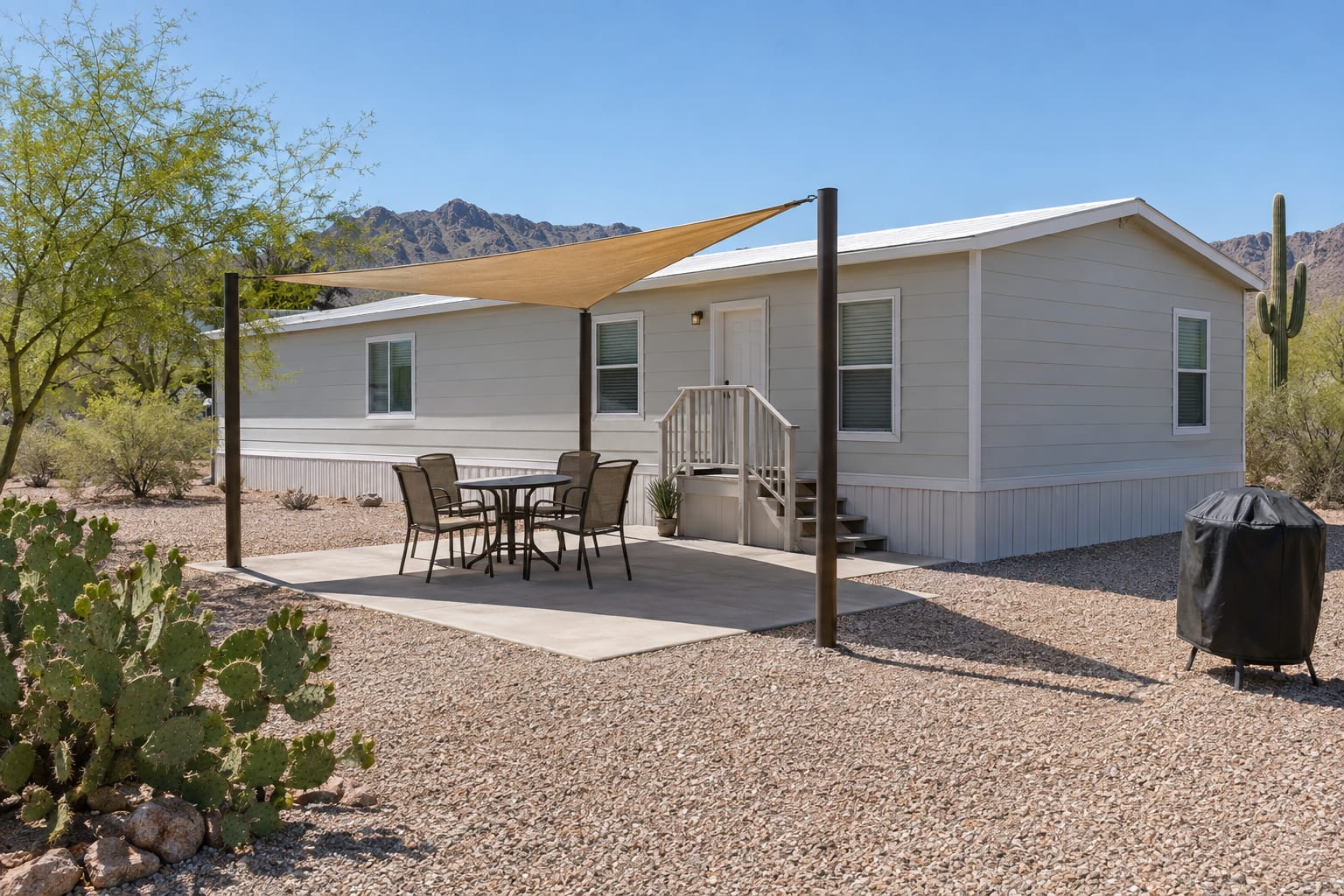
In hot months, the cheapest fix is the clock. Invite people for after sundown, set a fan at each end of the carport, and keep the drinks in a cooler outside so the door stays shut.
Light it, power it and keep the grill in the open
String lights along the carport beam and a few solar stake lights at the steps are enough for an evening. Aim lights down and away from the neighbors’ windows. For power, use cords rated for outdoor use, plugged into an exterior outlet, and keep them out of the path people walk.
Keep the food as low-cost as the furniture: ask guests to bring a dish, grill one main item and set everything out on one table. For decoration, a few pots of herbs and vegetables along the edge of the slab do more than anything bought for the day.
Get approval and permits for anything permanent
A deck, a built patio cover or a new concrete pad is a different kind of project. In a community it usually needs management’s written approval before work starts, and some work needs a permit as well.
In a California park, permits generally come from the agency that enforces park regulations there. That is the state’s Department of Housing and Community Development (HCD), unless the city or county has taken on the role, as HCD’s page on local enforcement agencies explains. In Arizona, the Arizona Department of Housing is the place to ask about manufactured housing permits. Requirements vary, so treat this as general information and confirm before you build.
Keep the approval and the permit with your home records. The before-you-shop checklist tells buyers to ask whether additions were permitted, so you will want that paperwork when you sell.