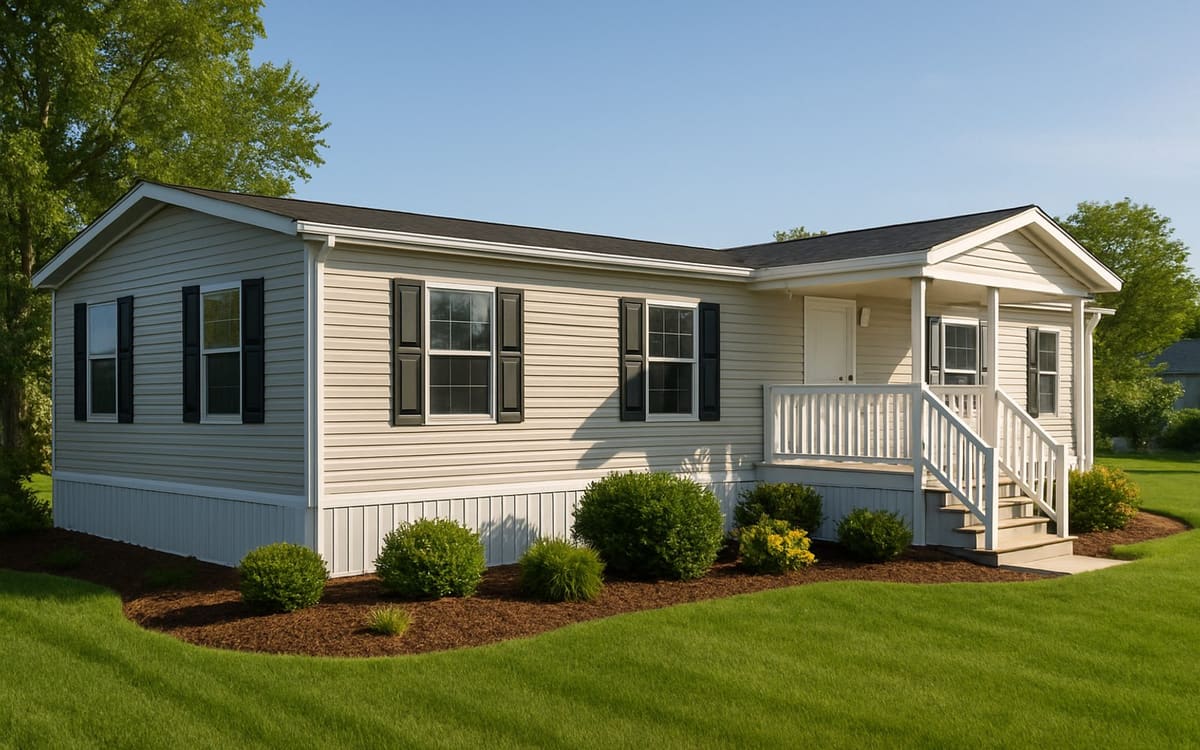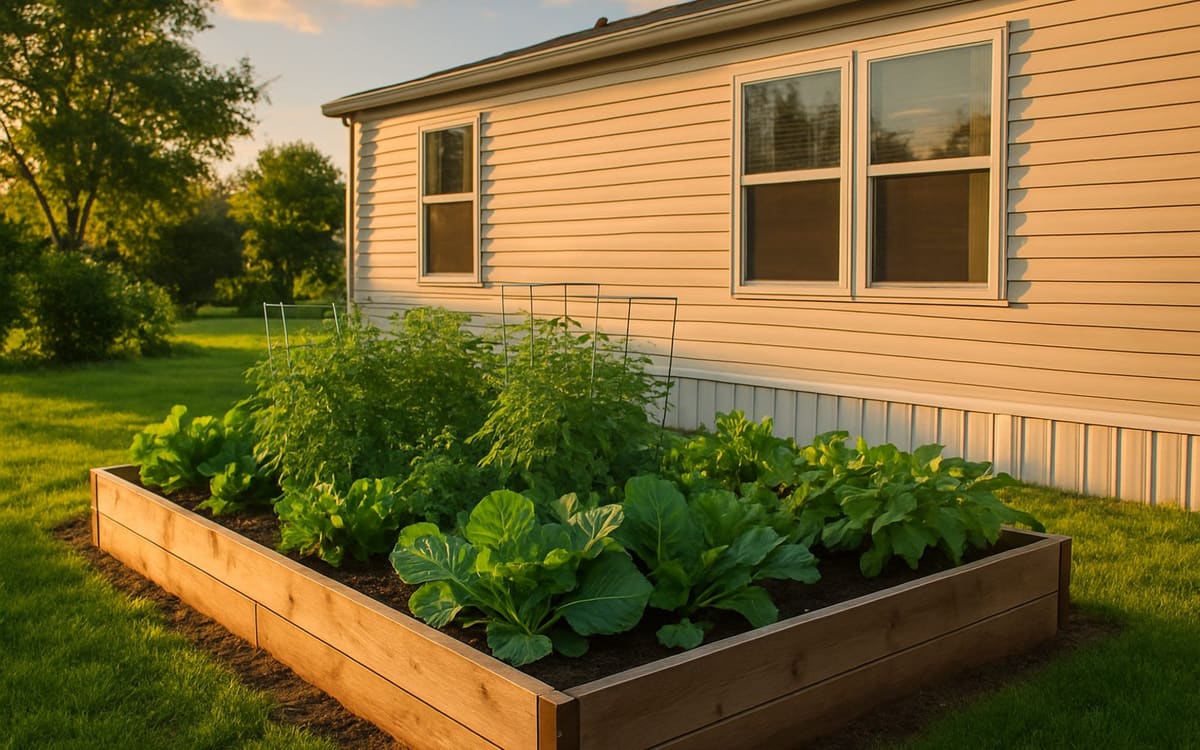
Affordable DIY Exterior Upgrades for Mobile and Manufactured Homes
Most of the exterior work an owner can do on a manufactured home comes down to five jobs: washing and painting the siding, replacing skirting panels, repairing steps and handrails, adding lighting, and tidying the ground around the home. Before any of them, settle two things. In a community, exterior changes usually need the management’s approval. And anything structural, such as a new awning, deck, porch or carport, is permit work and not a do-it-yourself project.
Get approval before you buy materials
In a land-lease community you own the home and rent the space, and the community’s rules usually cover what the outside of the home looks like: paint colors, skirting material, awnings, sheds, fences and planting. How park rules affect a purchase explains where those rules come from. Get the approval in writing and keep it.
Permits are a separate question from the community’s approval. In California, HCD requires a permit before work that alters a manufactured home, and its guidelines on modifications and alterations list new siding and re-roofing among that work. The same guidelines list structures attached to the home, such as a porch, a garage or a wood awning, as needing a permit from the enforcement agency for the location: HCD or a local agency inside a park, the city or county outside one.
In Arizona, take permit questions to the Arizona Department of Housing. This is general information, not legal advice.
Know your siding before you buy paint
The preparation depends on what the siding is made of, and older homes often have a different material from newer ones.
Three common siding types and how to paint each
| Siding | How to recognize it | Preparation and paint |
|---|---|---|
| Aluminum or steel | Ribbed metal panels; rub it and a chalky powder comes off on your hand | Wash off the chalk, prime bare metal and rust spots, finish with exterior acrylic paint |
| Hardboard or wood composite | Looks like wood, in grooved panels or lap boards; bottom edges swell or flake when wet | Replace soft sections, caulk the joints, prime every cut edge and bare patch, then paint |
| Vinyl | Lap panels that flex and sound hollow when tapped | Often a wash is enough; if you paint, use a paint labelled for vinyl in a color no darker than the original |
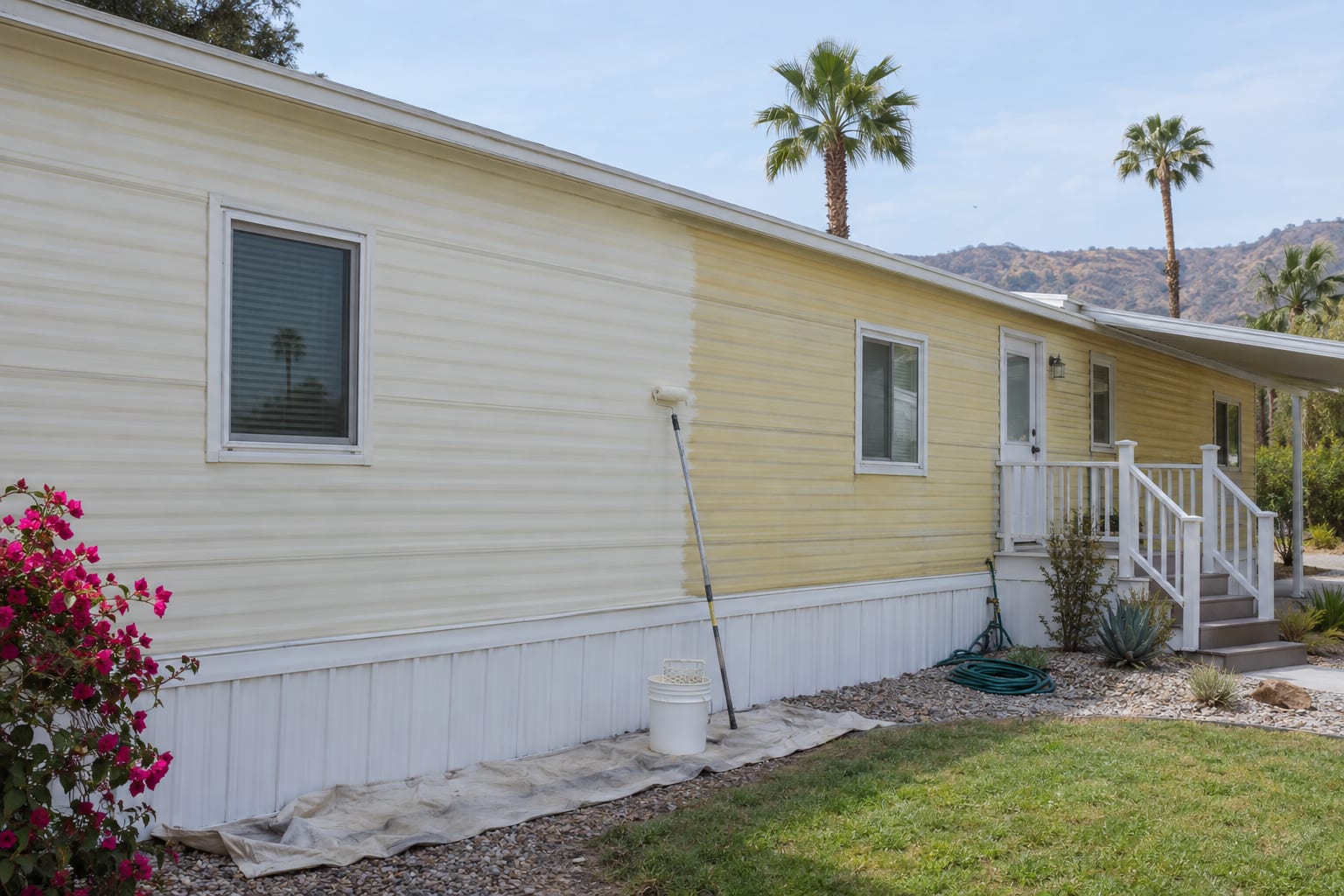
Wash with a garden hose, a soft brush and mild detergent. A pressure washer held close can dent metal panels and drive water behind the laps. Let the siding dry fully, and paint the shaded side of the home. Paint rolled onto metal that is hot from direct sun dries before it can bond.
Skirting keeps animals out and lets the underside breathe
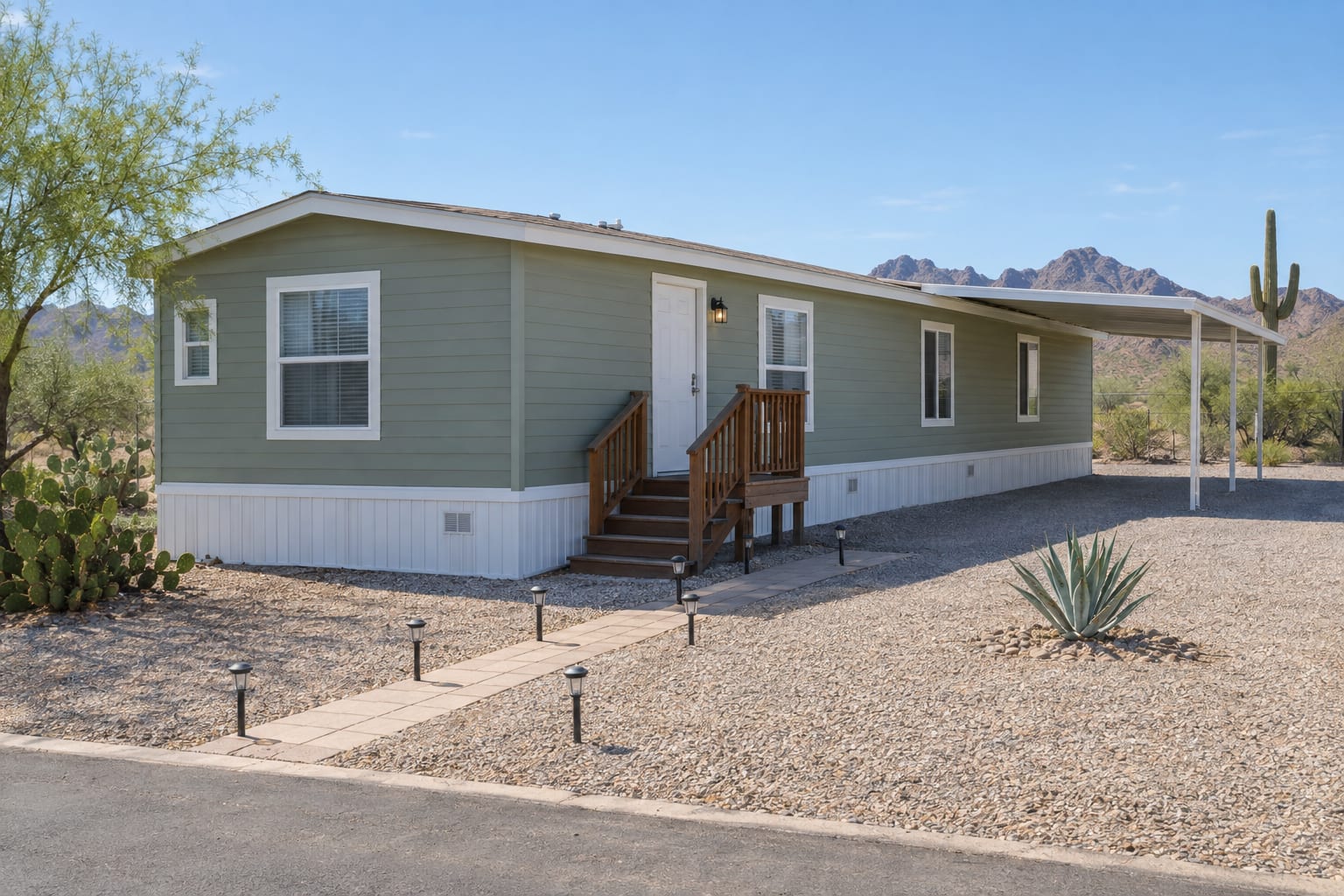
Skirting is the panel system that closes the gap between the bottom of the home and the ground. It keeps animals and wind out from under the floor and protects the insulation, ducts and pipes there.
Vinyl skirting panels sit in a rail at the top and a track at the bottom, so a cracked panel can be slid out and a new one cut to height and fitted. Take a piece of the old panel with you so that the profile and color match. Three things to keep as you work:
- The vents. Skirting is ventilated on purpose so that moisture does not build up under the home. Do not replace a vented panel with a solid one.
- The access panel. Someone will need to get under the home for a repair or an inspection.
- Clearance at the bottom. Keep soil, gravel and mulch from piling against the track, and keep the string trimmer away from it.
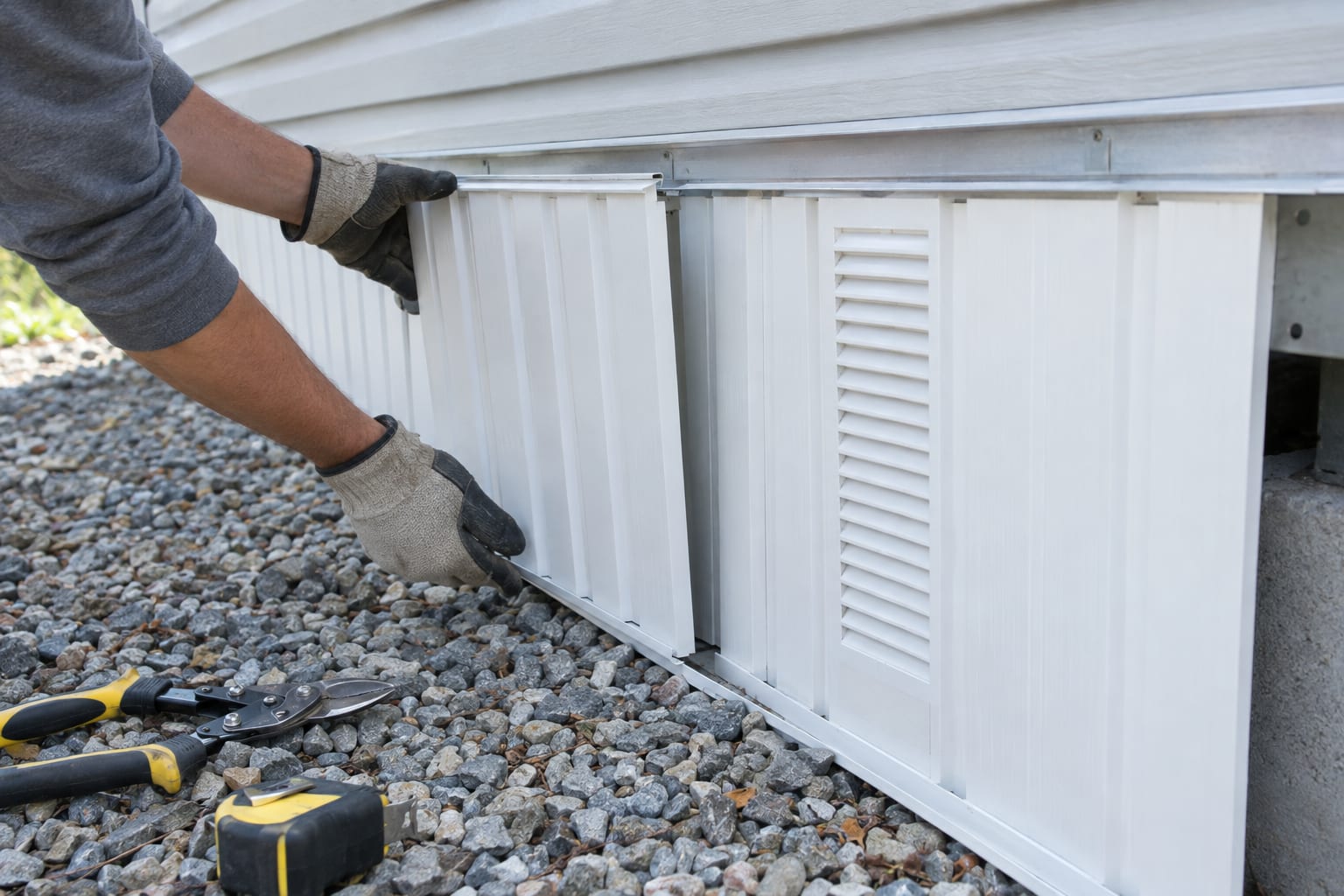
While a panel is off, shine a flashlight underneath. Hanging insulation, a duct lying on the ground or damp soil are worth knowing about, and energy efficiency in a manufactured home explains what each one means.
Steps, landings and handrails
Put your full weight on every tread and pull on every handrail. Replace cracked or soft treads, swap rusted screws for exterior-rated fasteners, and add non-slip strips where the surface is slippery. On metal railings, rust starts at the post bases: wire-brush it, prime with a rust-inhibiting primer, and paint.
Repairing the steps you have is maintenance. Building a larger landing, deck or porch is a new structure, which brings you back to the community’s approval and a permit.
Awnings and carports: maintain what is there
A new awning or carport is contractor and permit work, but keeping an existing one sound is not. Clear leaves from the awning’s gutter and downspout, tighten loose fasteners, wash the panels, and treat rust at the post bases the same way as on railings. Check the seam where the awning meets the home after rain, since it is a common place for a leak to start.
Lighting and the ground around the home
Solar path lights need no wiring, and replacing a porch light with a similar fixture is a small job with the breaker off. New wired lighting is electrical work for a licensed electrician.
For the yard, three habits protect the home:
- Slope the ground so that water runs away from the home, not under it.
- Use gravel or drought-tolerant plants, and aim irrigation away from the skirting and siding.
- Keep plants trimmed back from the skirting so that the vents stay clear and you can see damage. In fire-prone areas, keep bark mulch, firewood and dense shrubs away from the home; see wildfire preparedness for manufactured home communities.
For the patio and seating, see outdoor entertaining on a budget; for inside the home, the remodeling overview. When the work is finished, put the community’s approval and any permit with your home records. They answer questions when you insure or sell the home.