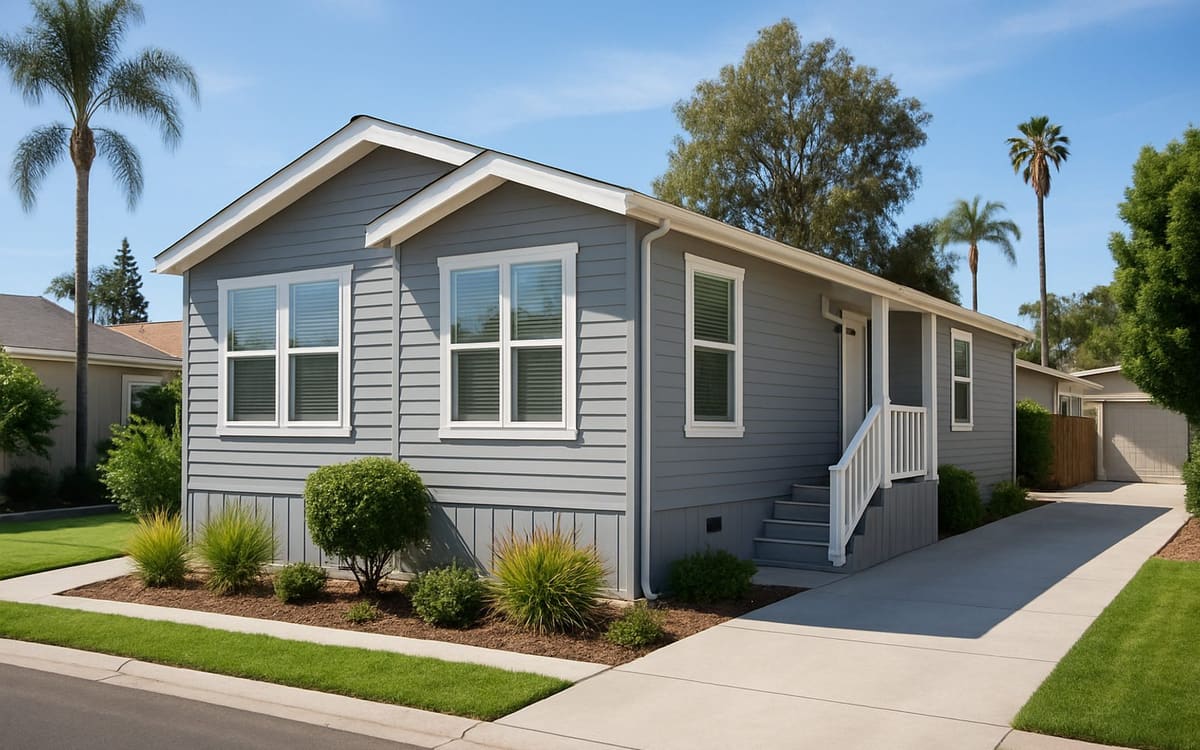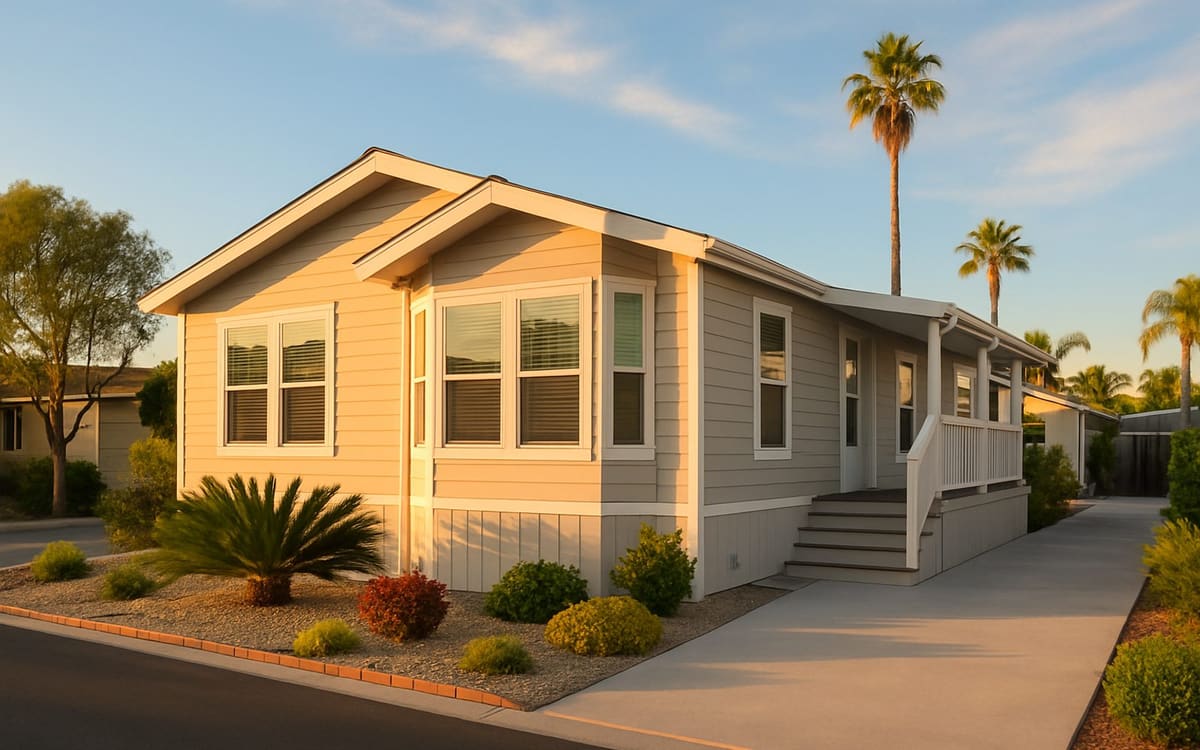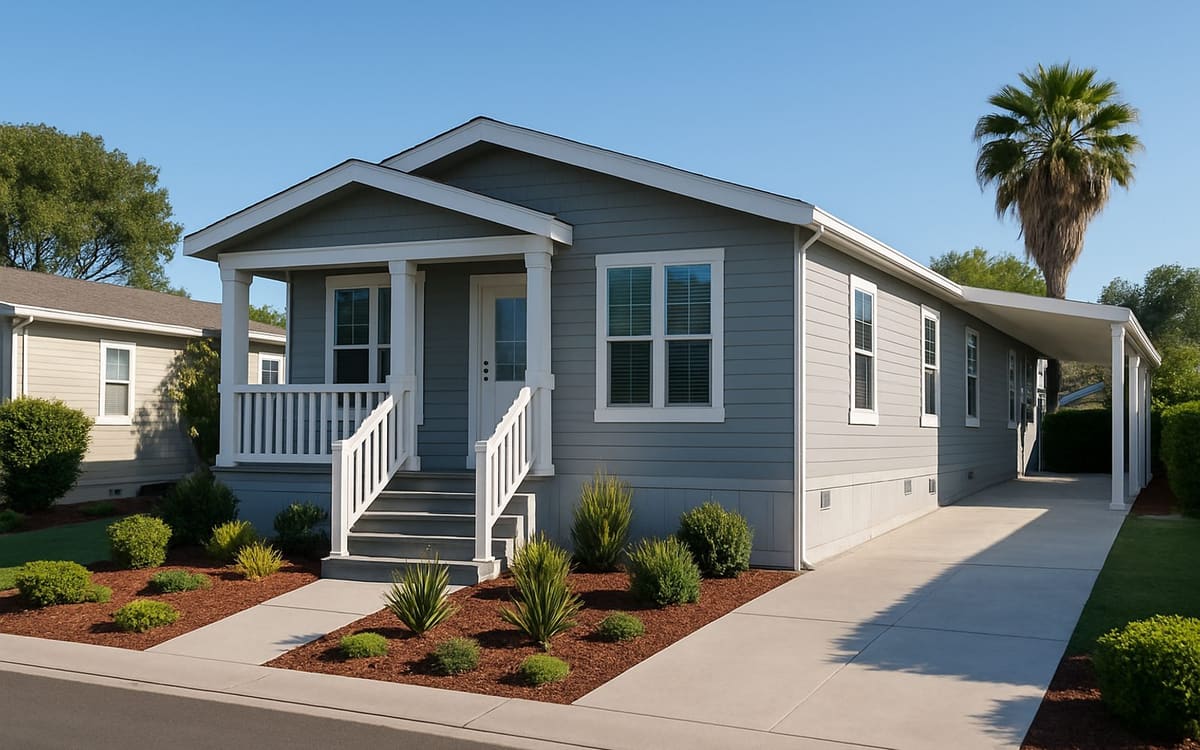
Manufactured Home Advantages

The practical advantages of a manufactured home are a lower purchase price than a site-built house, more room than an apartment, a choice between community living and your own land, and a home that belongs to you. Each one comes with a trade-off. Most of the trade-offs trace back to the land: in a community you own the home and rent the space under it.
Whether the balance works for you depends on the space rent, how long you plan to stay, and how much say you want over your surroundings.
Each advantage and its trade-off
| Advantage | The trade-off |
|---|---|
| A lower purchase price than a site-built house | In a community, space rent is due every month on top of the loan |
| More room than an apartment, with no shared walls | The roof, the systems and the upkeep are yours |
| A choice of floor plans and finishes | Later changes need permits, and a community may limit exterior work |
| Shared facilities and neighbors close by | Community rules, and approval of every new resident |
| A choice of a community space or private land | Each has its own costs, paperwork and kind of loan |
| You own the home | Without the land, its value depends heavily on the community and the space rent |
A lower price, with space rent on top
A manufactured home costs less to build than a site-built house because it is built indoors on a production line. In a community you are also not buying land, which takes the cost of a lot out of the price.
The trade-off is space rent: the monthly rent paid to the community for the homesite. It is separate from the loan payment and on top of it, and it can rise over time. Ask for the current amount and the history of recent increases in writing before you make an offer.
Whether owning comes out below renting an apartment depends on the whole cost of owning, not the price. Renting vs. buying a mobile home has a worksheet for that comparison.
More room than an apartment, and more to look after
Space is where a manufactured home most clearly differs from an apartment. New single-section homes averaged about 1,070 square feet in 2025 and new double-section homes about 1,770, according to the U.S. Census Bureau’s Manufactured Housing Survey. You also get no shared walls, usually a carport or driveway, and some outdoor space of your own.
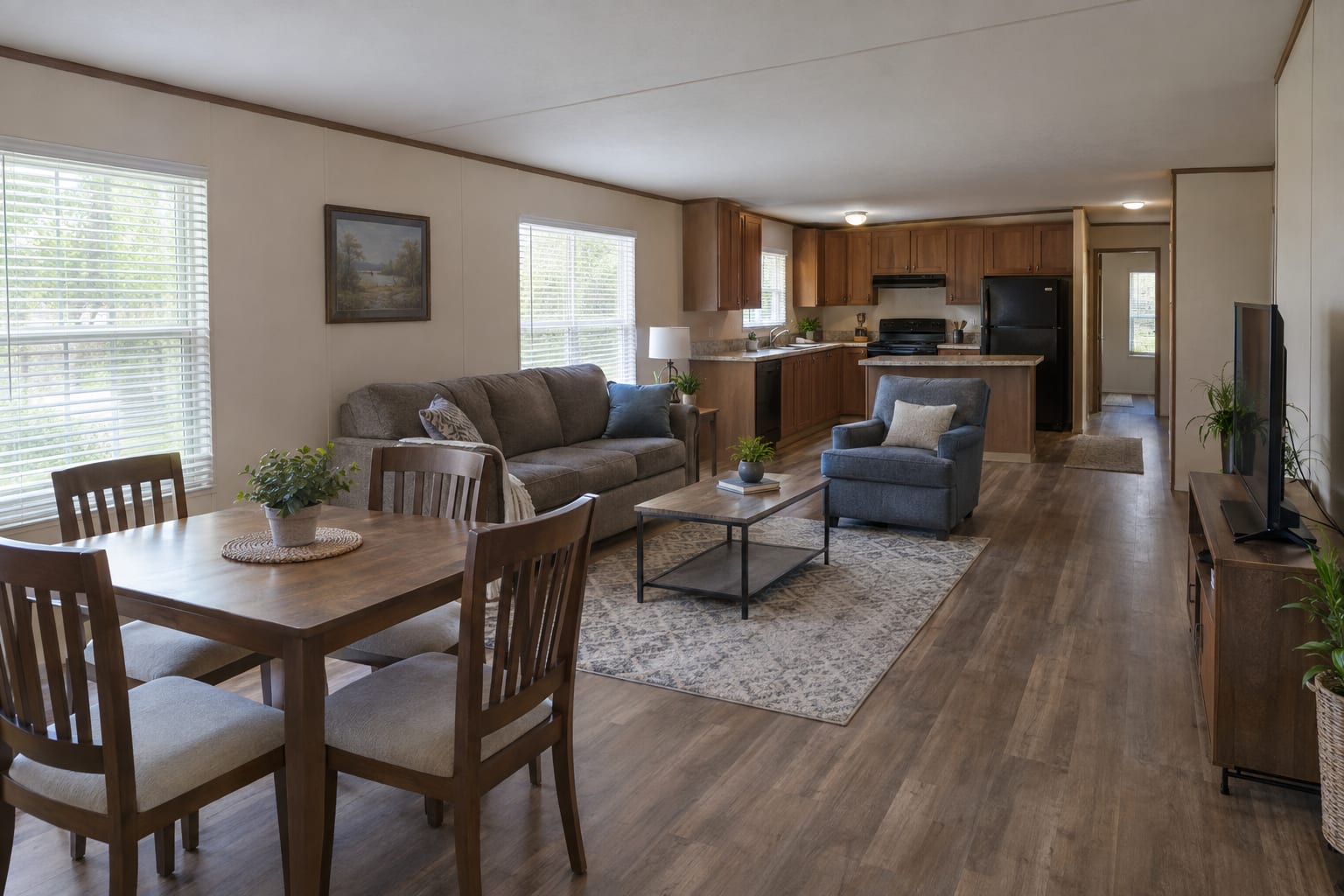
The trade-off is that the upkeep is yours. The roof, the heating and cooling, the skirting and whatever is under the floor are your responsibility, as with any house. Budget for maintenance as well as for the monthly payment. Single-section or multi-section compares the two sizes in more detail.
Choices in layout and finish, within limits
If you buy new, the manufacturer offers a range of floor plans, and within a plan you can usually choose finishes and options. If you buy an existing home, an earlier owner may have updated the kitchen, baths or floors. Ask what was done and whether permits were obtained.
The trade-off is that changing the home later is regulated. In California, you need a permit before you alter a manufactured home, as HCD’s modifications and alterations page explains. In Arizona, the Department of Housing’s manufactured housing office is the place to ask about permits. Communities also commonly have rules about exterior changes such as additions, awnings and paint. Check both before you plan a remodel.
Community living, with rules and an approval process
Many communities have shared facilities such as a clubhouse or pool, on-site management, and neighbors close by. Some are limited to residents 55 and older. You pay for the shared facilities through space rent whether you use them or not.
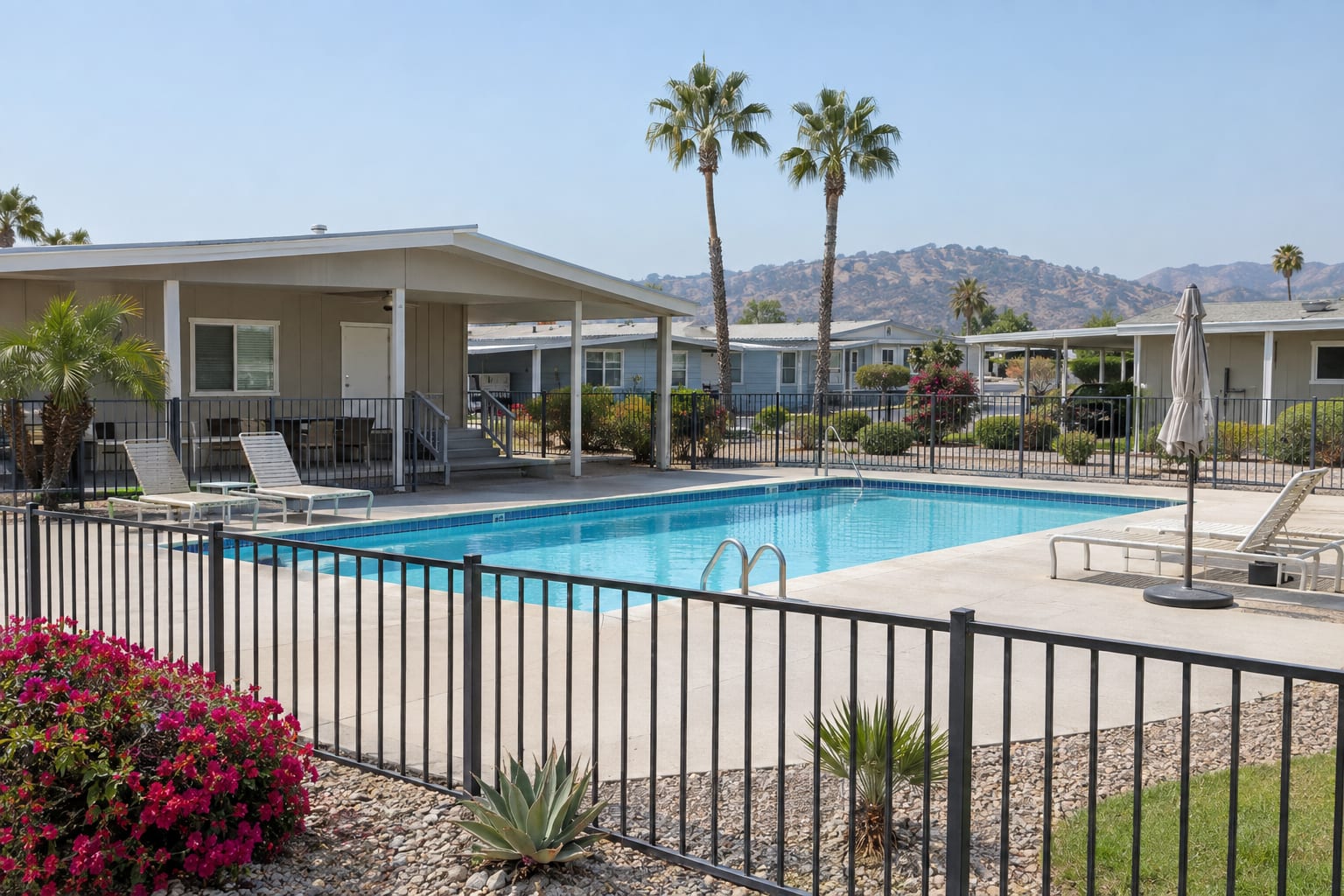
The trade-offs are rules and approval. A community has written rules on matters such as pets, vehicles, age and exterior upkeep, and it reviews every new resident. That review is separate from the lender’s. Being approved for a loan does not mean the community has accepted you, and the reverse is also true. Read the rules before you make an offer; how park rules affect a purchase covers what to look for.
A choice of where to live, with different costs each way
A manufactured home can sit on a rented space in a community or on land you own. On owned land there is no space rent and there are no community rules, but you buy and maintain the land, and in rural areas that can include a well, a septic system or a private road. In a community the site is ready and the price is lower, but you rent the space.
Either way, zoning and permits decide where a home can go, and a home is rarely moved once it has been installed. The primer on manufactured homes in California explains both arrangements.
Owning the home, and what ownership is worth later
A manufactured home is yours to update, sell or leave to someone, within the community’s rules where they apply. What it is worth later depends on things you only partly control. With land, the home and the lot are valued together. In a community you own the home alone, so its value depends on its age and condition, the community, and the space rent a buyer would take on. Nobody can promise how a home’s value will move.
If the balance looks right for you, the next question is which loan fits the home and the land arrangement. You can compare loan programs to see how home-only and land-and-home financing differ. Financing is subject to credit approval, and not every applicant or home qualifies.