Renting vs. Buying a Mobile Home: A Cost Comparison
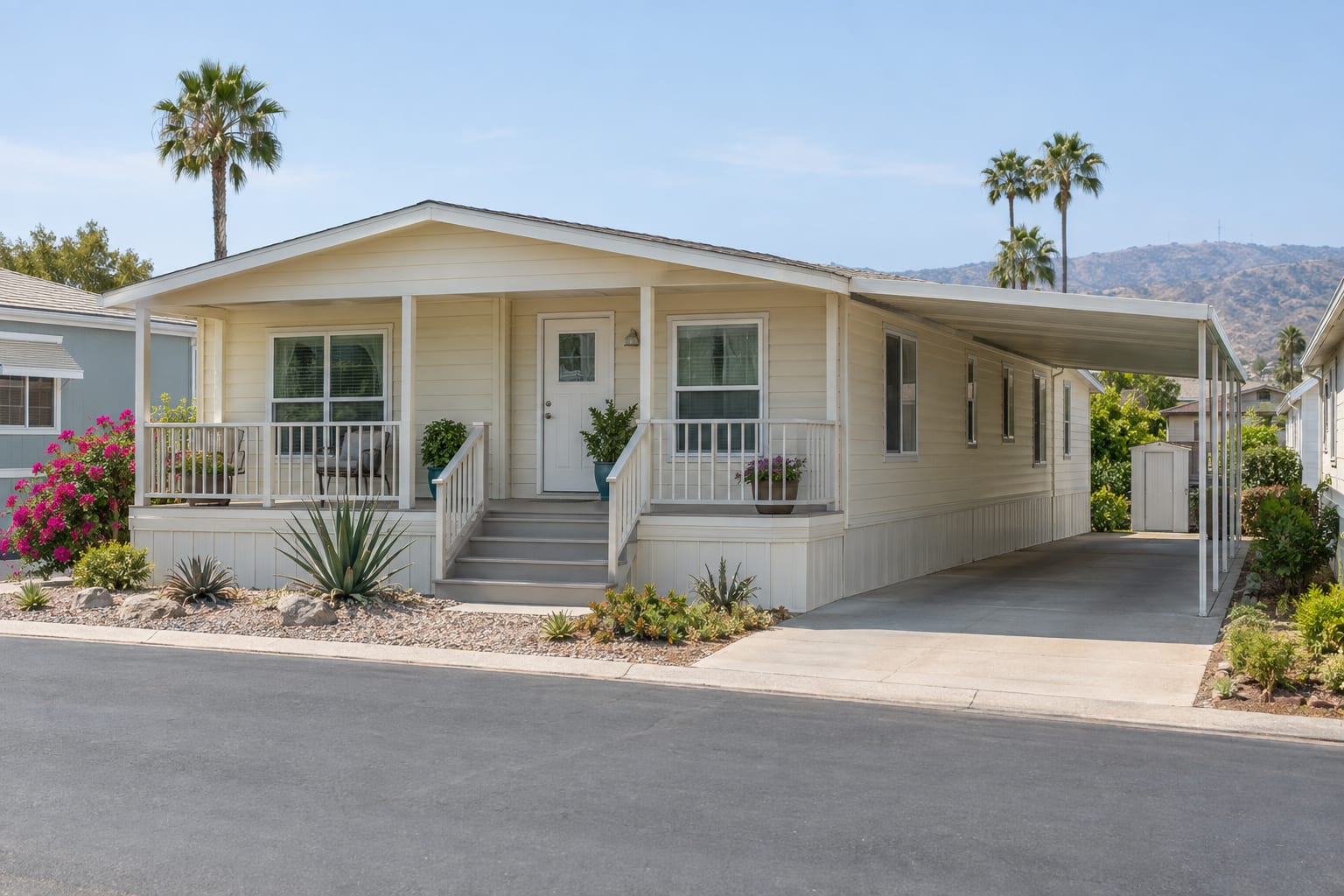
Buying a manufactured home costs less each month than renting only when the whole owner’s column comes in under your rent: the loan payment, space rent, insurance, taxes and upkeep together. Whether it is the better decision also depends on the cash you need up front and how long you expect to stay. The price of the home answers neither question.
The method below works whether you now rent an apartment, a house, or a manufactured home from a landlord. Fill in the worksheet with your own figures. No averages are given here, because rents, space rents and home prices differ too much from one community to the next for an average to mean anything.
Compare your rent with the whole owner’s column, not with a loan payment
The usual mistake is to set the monthly rent beside an estimated loan payment and stop. In a land-lease community you own the home and rent the land under it, so an owner still pays rent. It is called space rent, it is paid to the community on top of the loan, and it can change over time.
Monthly worksheet: renting compared with owning in a community
| Monthly line | If you rent | If you own a home in a community |
|---|---|---|
| Rent | Rent for the whole home | Space rent for the land under the home |
| Loan payment | None | Principal and interest on the home loan |
| Insurance | Renter’s policy on your belongings | Homeowner’s policy on the home and belongings |
| Tax or license fee on the home | The landlord’s | Yours |
| Repairs and upkeep | Mostly the landlord’s | Yours |
| Utilities | Check what the rent includes | Check what the space rent includes |
To fill in the owner’s column, get the space rent from the community office in writing, then enter it with the home price and your down payment in the payment calculator. The results are educational estimates, not a loan offer. How space rent affects what you can afford covers what to ask the community about that figure.
A home on land you own changes the column: there is no space rent, and the tax bill covers the land as well as the home.
What buying costs before the first month
Renting usually takes a deposit and the first month’s rent. Buying takes more, and the money is committed for longer.
- Down payment. There is no single down payment. It depends on the program, your credit, the home, and whether the land is leased or owned.
- Closing costs. Escrow, title and registration, and lender fees.
- Community move-in costs. An application fee, and often a deposit and the first month’s space rent.
- Insurance. Proof of a policy on the home is needed before a loan closes.
- Moving, and a reserve. Keep money back for the first repair.
The budget worksheet for a manufactured home lists the one-time costs line by line. If this would be your first purchase, buying a mobile home as a first-time buyer explains what a lender asks for.
How long you will stay changes the answer
Buying has costs at the start and at the end that renting does not. The longer you stay, the more months those costs are spread over.
Leaving is different too. A renter gives notice and goes. An owner in a community normally sells the home where it stands, because moving a manufactured home is costly and needs a community or a site willing to take it. The buyer has to be accepted by the community before the sale can close.
On the other side of the ledger, each loan payment reduces what you owe, and when the loan is paid off that line disappears while the space rent continues. What the home is worth when you sell depends on its condition, the community, the space rent and whether land is included. Nobody can promise that figure.
What stays fixed and what can rise
Neither side is free of increases. They arrive in different places.
Where increases show up
| Question | If you rent | If you own in a community |
|---|---|---|
| What can rise | The whole rent, at renewal | Space rent, insurance and taxes |
| What stays put | Nothing beyond the lease term | The loan payment, if the rate is fixed for the life of the loan |
| Changes to the home | Need the landlord’s consent | Yours to make, within community rules and permits |
Ask a community for its rent history before you buy, the same way you would ask a landlord about renewals.
Buying in a community takes two approvals
A landlord screens a renter once. A buyer in a community goes through two reviews by two different parties. The community decides whether to accept you as a resident, and the lender reviews your application and the home. Community approval and loan approval are separate, and a purchase needs both. Passing community resident approval explains what communities usually look at.
If you already rent a manufactured home in a community, buying a home there changes your position from tenant of the home to owner of the home and tenant of the space. Ask the office whether a new residency application is needed.
Signs that each choice fits
Renting is probably the better fit if you may move within a couple of years, if buying would use up all your savings, or if you want repairs to be someone else’s job.
Buying is worth pricing out properly if you expect to stay, the full owner’s column fits your income with room left for upkeep, and you have found a community whose rent and rules you are comfortable with.
If the numbers point toward buying and you are unsure which kind of loan applies to the home you have in mind, find your financing path asks three questions and points you to the most relevant page. All financing is subject to credit approval.