Financing Options for Pre-Owned Manufactured Homes
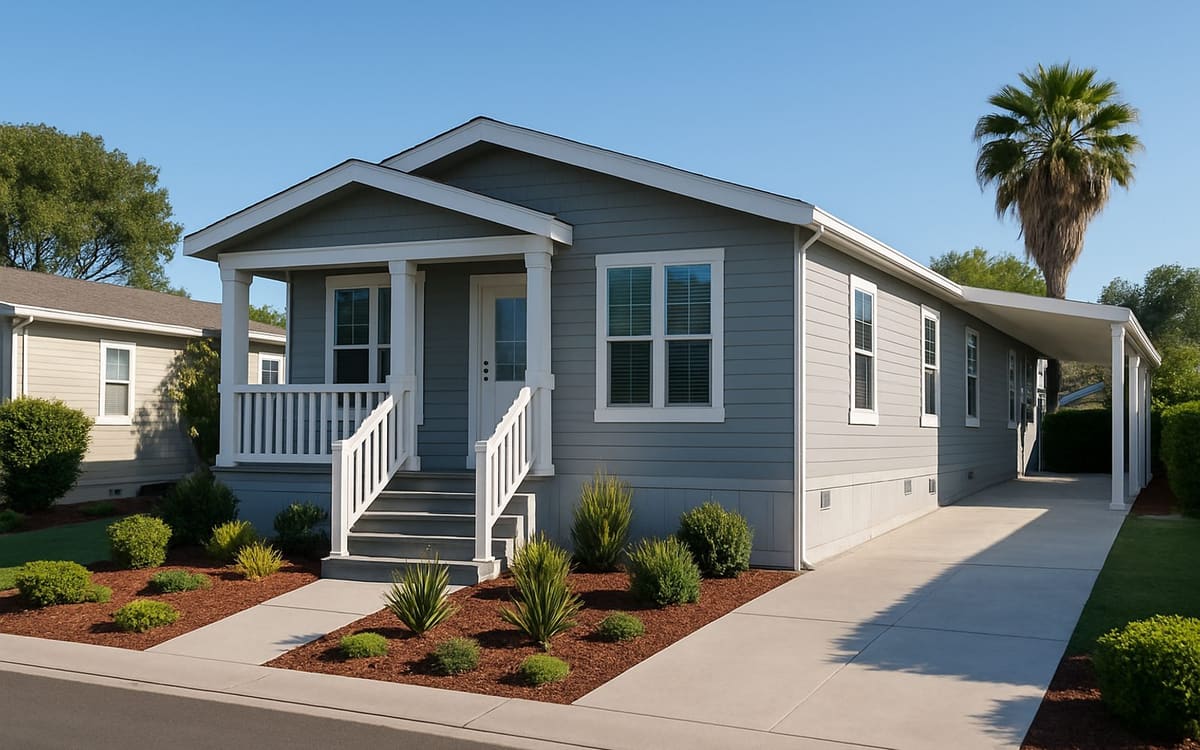
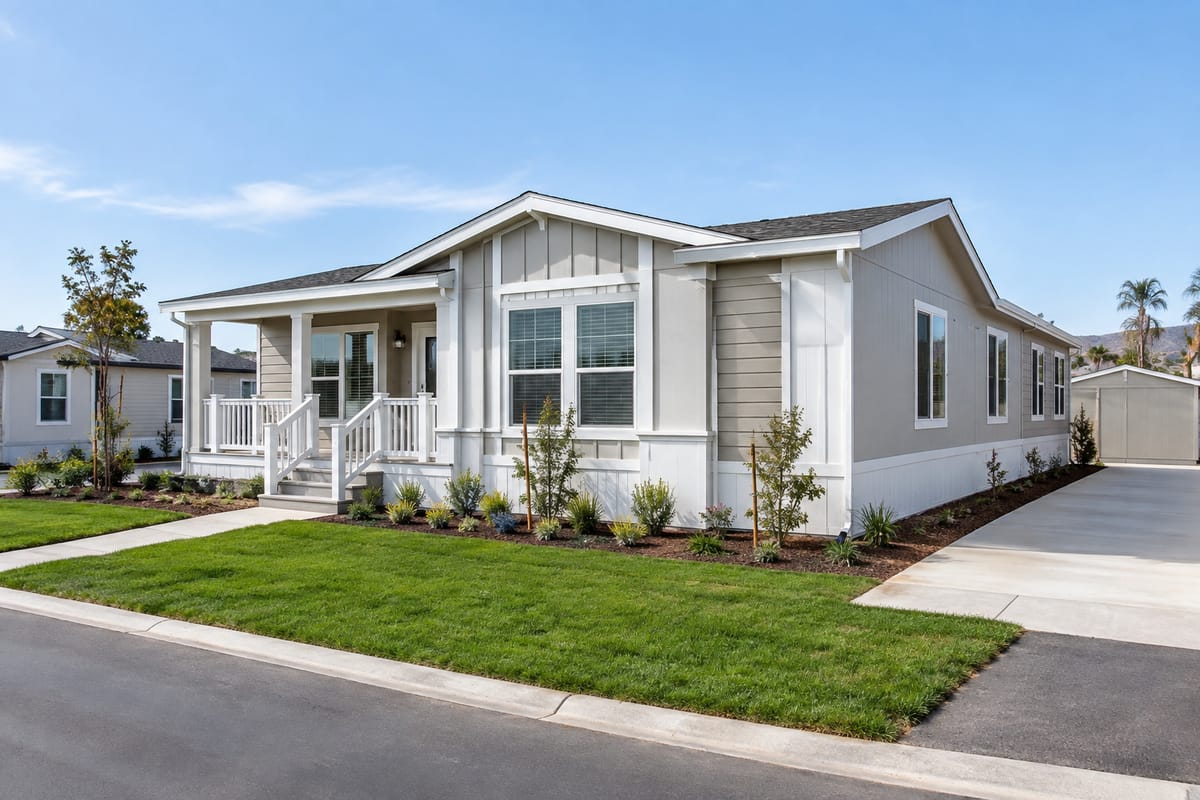
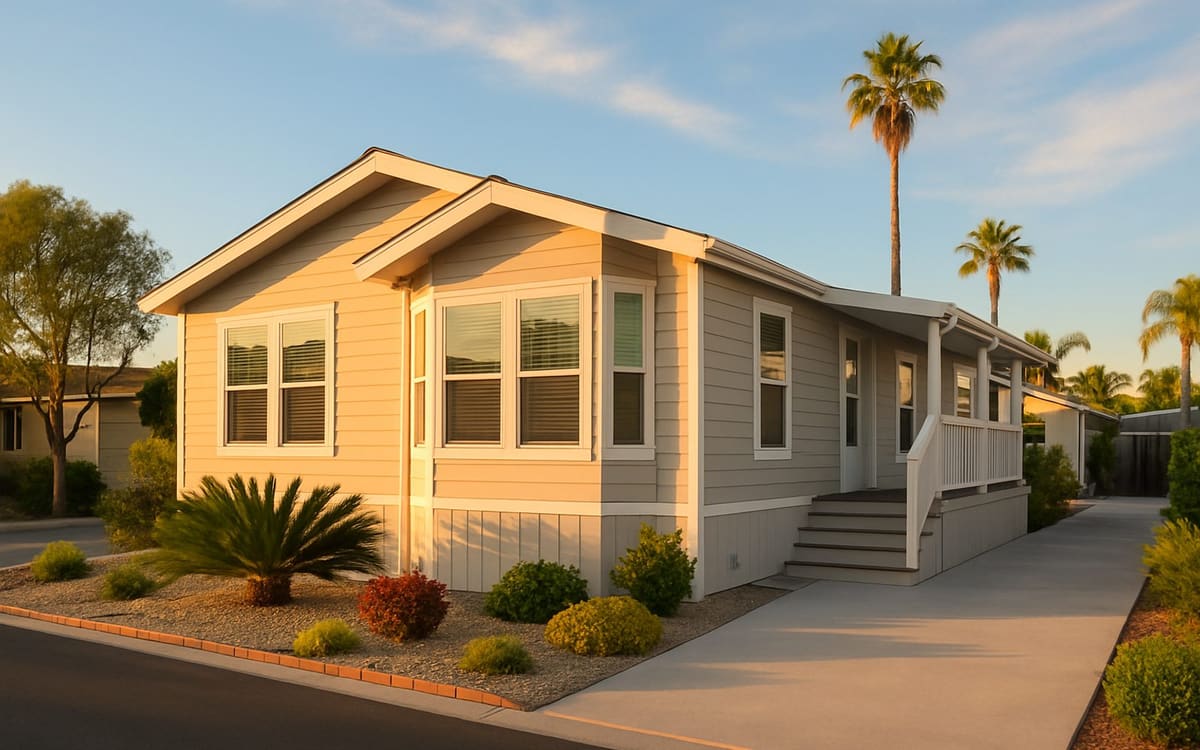
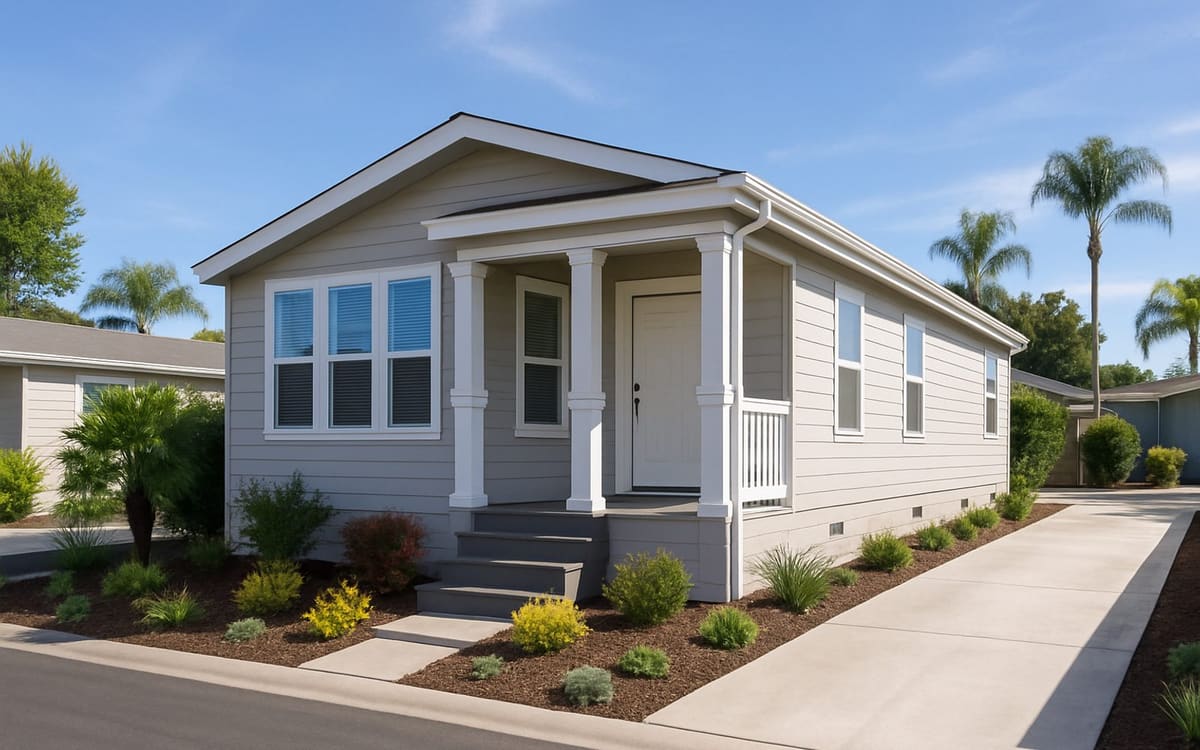
A pre-owned manufactured home is financed in one of two ways, and the land decides which. If the home sits on a rented space in a community, it is financed on its own with a home-only loan. If it is permanently attached to land you own or are buying, the home and land can often be financed together.
What sets a pre-owned home apart from a new one is that the home itself gets reviewed: its age, its identifying records, its condition, where it sits and the state of its title. Those five items decide whether a particular home can be financed and which programs may apply. Most of them can be checked before you make an offer. All financing is subject to credit approval, and not every home or applicant qualifies.
The land decides which of two loans applies
Home-only financing. In a land-lease community you own the home and rent the space under it. The home is titled on its own as personal property, and the loan that finances it is called a home-only or chattel loan. The community keeps the land, charges space rent, and runs its own resident approval, which is a separate review from the lender’s.
Land-and-home financing. When a home is permanently attached to land you own and recorded as part of the real estate, the home and the land can be financed together as real property. The file then includes the land title, the foundation or affixture record, and an appraisal of the home and land together.
Government-insured programs also exist, each with its own eligibility, property and foundation rules. Ask whether one fits your situation instead of assuming it does. If you are not sure which path a home is on, our guide to which type of loan fits a used home sorts it out by situation.
What gets reviewed on a pre-owned home
Five things a lender checks on the home itself
| What is reviewed | The question behind it | Where you can check it |
|---|---|---|
| Age | Was it built on or after June 15, 1976, and does its age fit the program and the community’s rules? | Data plate, title or registration |
| Identity | Do the HUD label, data plate and serial number match the title records? | On the home itself |
| Condition | Is the home sound, insurable and worth the price as it stands? | Inspection and value review |
| Location | Is it on a leased space or owned land, and has it ever been moved? | Community office, seller, county records |
| Title | Is the title current, in the seller’s name and clear of unpaid liens? | HCD in California, MVD in Arizona |
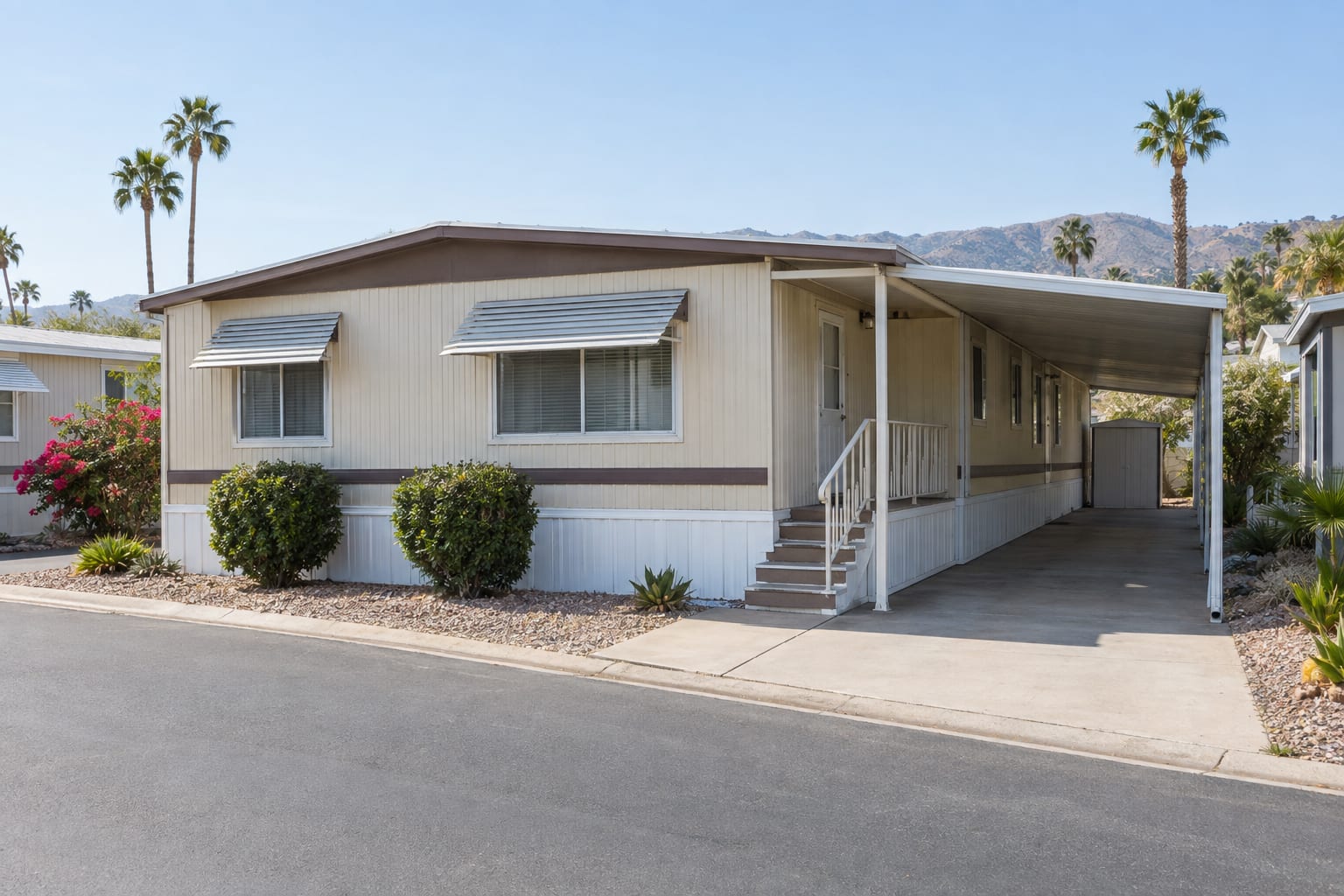
Age: the 1976 line, and limits set by programs and communities
A manufactured home is a factory-built home constructed on or after June 15, 1976 to the federal HUD Code. A factory-built home from before that date is, technically, a mobile home. A lender establishes which one it is looking at early, because homes that predate the federal standard are treated differently.
Past that line there is no single cut-off year. Age limits come from the individual program. Separately, ask the community office whether it has rules about the age or appearance of a home when it changes hands. An older home that has been kept up can be a sound purchase. The trouble comes from learning about an age rule in the middle of escrow.
Identity: the label, data plate and serial number have to match the paperwork
Every manufactured home carries three identifiers. The HUD label is a small metal plate on the outside of each section. The data plate is a paper sheet inside the home. The serial number is stamped into the steel frame and printed on the data plate. Our guide to the HUD label, data plate and serial number shows where to find each one.
Title records, insurance and the loan all identify the home by its serial number, so the numbers on the home have to match the numbers on the title. On older homes, labels get painted over or removed and data plates disappear during remodels. HUD does not reissue labels, but a Letter of Label Verification can be requested through the Institute for Building Technology and Safety (IBTS) when the records can be located. Mention a missing label at the start, not during escrow.
Condition, additions and whether the home was moved
The loan is measured against what the home is worth as it stands, so condition feeds directly into value. The items that matter most are the roof, soft spots in the floor, plumbing and electrical systems, heating and cooling, and what sits under the home: the piers, the tie-downs and the skirting.
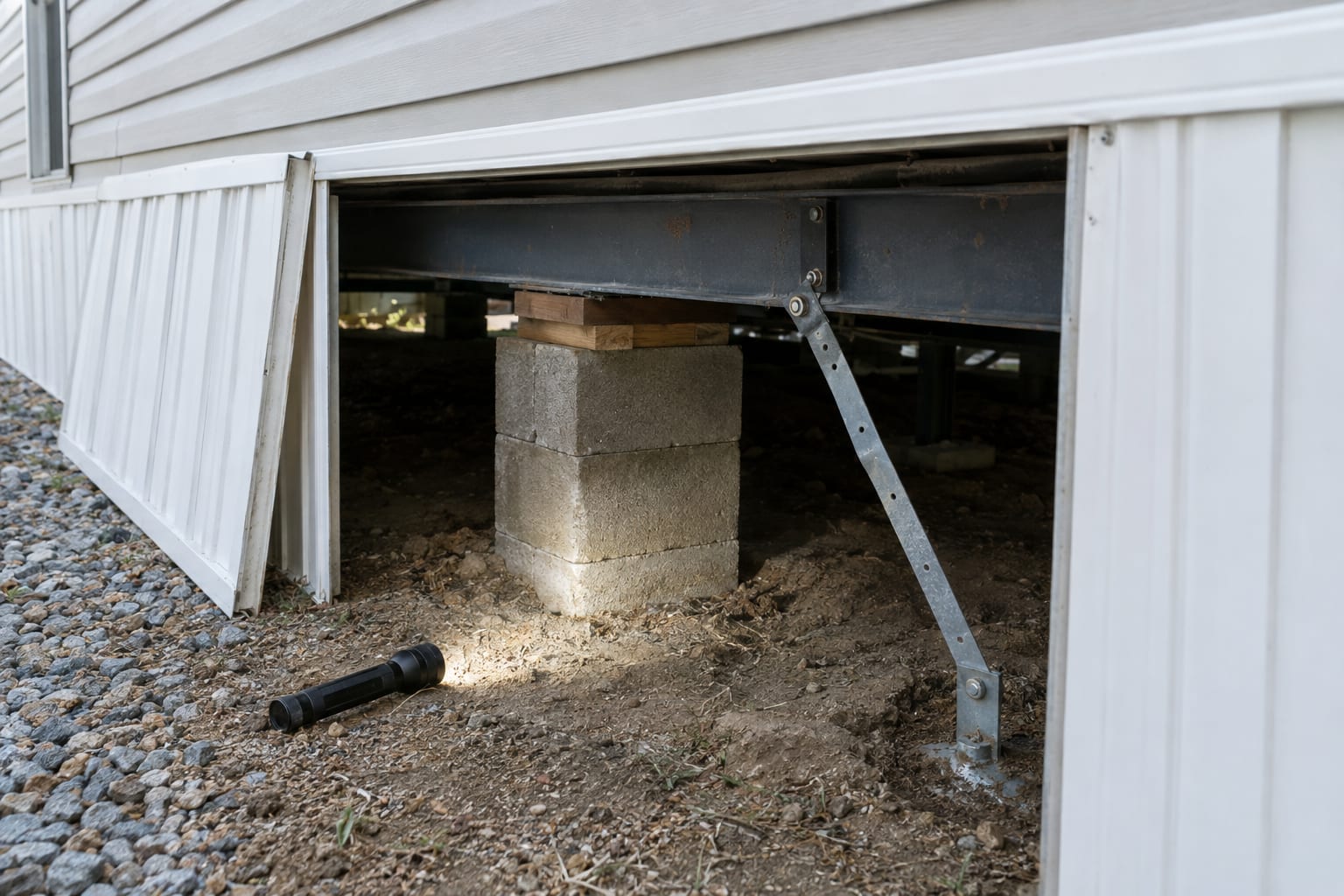
Two other things come up on pre-owned homes:
- Additions. Porches, enclosed patios and extra rooms built after delivery raise the question of whether they were permitted. HUD notes that a significant change, such as an addition or structural alteration, may require permits and could take the home out of compliance with the HUD Code. In California, alterations to a manufactured home’s structural, fire safety, plumbing, mechanical or electrical systems generally require a permit from HCD.
- A move. A home relocated from its original site raises questions about how it was transported, reinstalled and documented. A moved home is not automatically a problem, but a lender will ask about the history, so learn it early.
Title: current, in the seller’s name, and clear of liens
A manufactured home held as personal property has a title, similar in concept to a vehicle title. California titles and registers manufactured homes through HCD (the Department of Housing and Community Development), not the DMV. Arizona titles are handled by the MVD, generally one title per section.
On a resale, three things have to be true before the home can change hands with a loan on it:
- the person selling is the registered owner on the title;
- any existing loan on the home will be paid off and its lien released at closing;
- registration fees or property taxes on the home are paid up.
The usual snags are a title still in a previous owner’s name, an owner who has died, an old lien that was paid but never released, or a serial number that is one digit off. All of these can generally be fixed, but fixing them takes time, which is why the title is worth checking before you make an offer. This is general information, not legal advice.
Value: the asking price is not the number the loan is based on
A resale has no factory invoice, so its value has to be supported another way. Homes in communities are often valued against comparable sales of similar homes, ideally in the same community. Homes recorded as real property get an appraisal of the home and land together.
If the supported value comes in below the agreed price, the gap is something you and the seller have to settle: a lower price, more cash from you, or no sale. For homes in California communities, comparable sales reports show what homes in a specific park have sold for. They are sales data, not appraisals.
What to capture at the showing
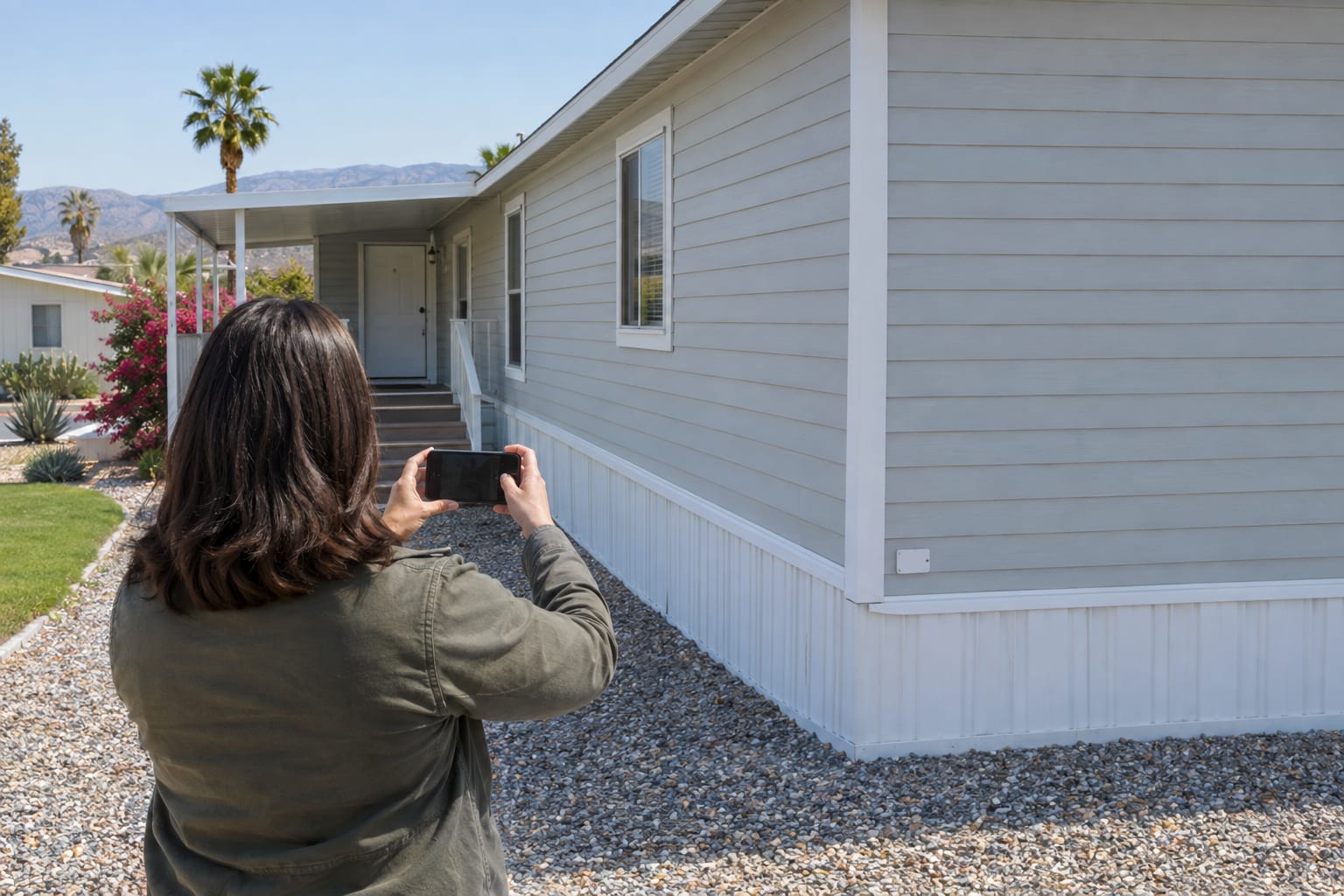
The before-you-shop checklist has a one-page worksheet you can print and carry to each home.
From the showing to closing
The usual order for a pre-owned purchase
- Get pre-qualified Do this before you tour, so you look at homes in a realistic range. Pre-qualification is not final approval.
- Tour and capture the details Use the checklist above at every home.
- Check the title and the community’s rules Do both before you make an offer, while walking away costs nothing.
- Sign a written purchase agreement Who prepares it depends on the seller, as dealer vs. private-party purchases explains. In a private-seller purchase, more of the paperwork falls to you and the seller.
- Apply and clear conditions The value review, title work, insurance and the community’s resident approval run alongside the loan file.
- Close through escrow Escrow pays off any existing loan, transfers the title and releases the funds.
Timelines vary with each transaction. Appraisal scheduling, community approval, title questions and missing documents are the usual reasons a file waits.