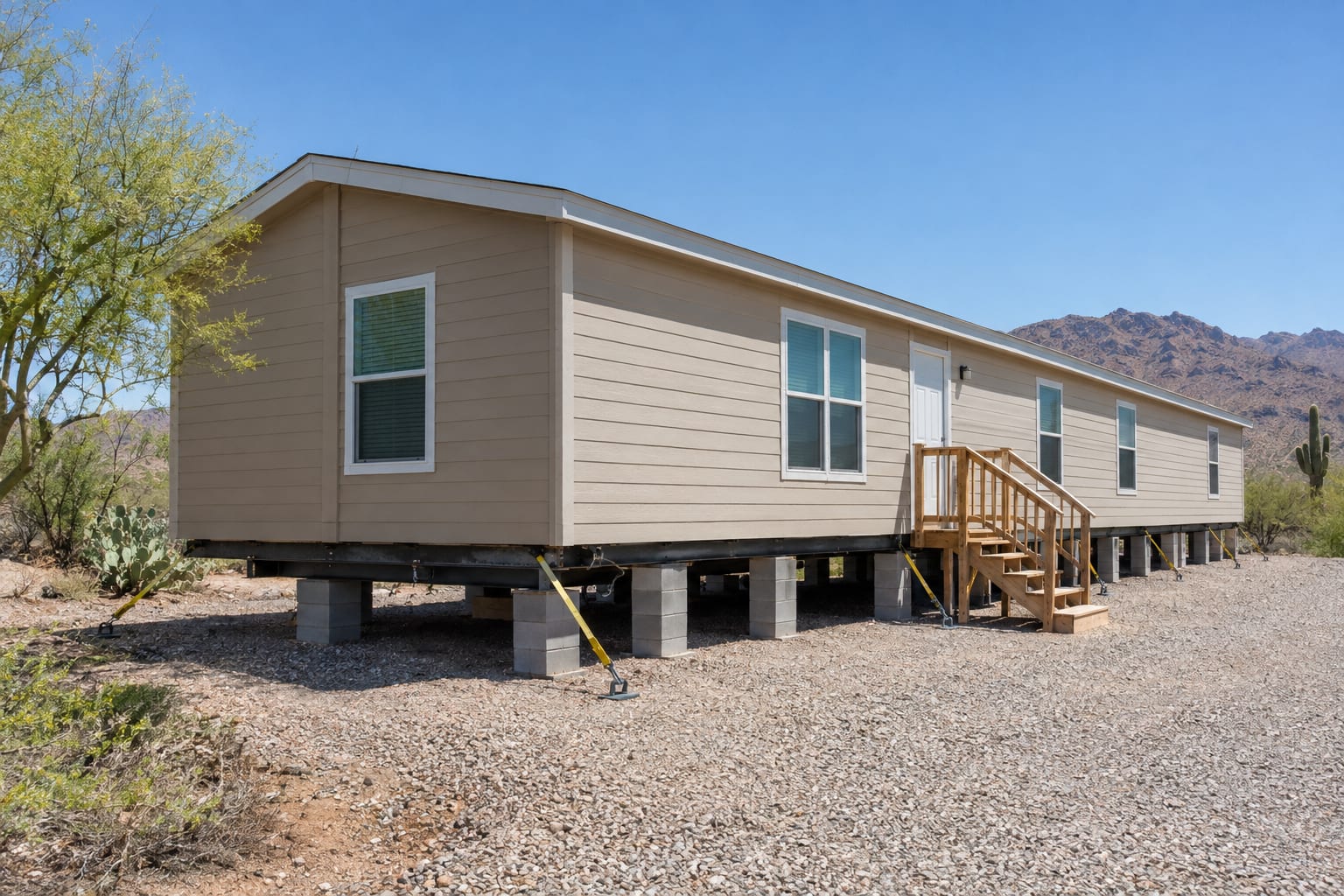
Buying a Manufactured Home With an Added Room, Deck or Carport
An added room, an enclosed porch, a deck or a carport on a manufactured home is a separate thing from the home, built by someone else, at another time, under rules of its own. Before you rely on that added space, ask for three records: the permit for the construction, the final inspection that closed it, and the community’s written approval if the home sits on leased land.
A pre-owned home with an addition is reviewed on the home first and the addition second, and the second review is where surprises come from.
How a pre-owned home is reviewed in general is covered in financing options for pre-owned homes. This article is the due diligence on what was added.
An addition is reviewed on its own
The home itself was built in a factory to a federal standard, with the HUD label to prove it. Anything attached afterwards was built on site to whatever rules applied where the home stood, and those rules differ by state, by whether the home is in a park, and by the kind of structure.
Common additions, the record to ask for, and who reviews each
| Addition | Record to ask for | Who reviews it |
|---|---|---|
| Room addition or enclosed porch | Permit and final inspection; how it ties into the home’s roof and frame | Permitting agency, community, inspector, appraiser, insurer |
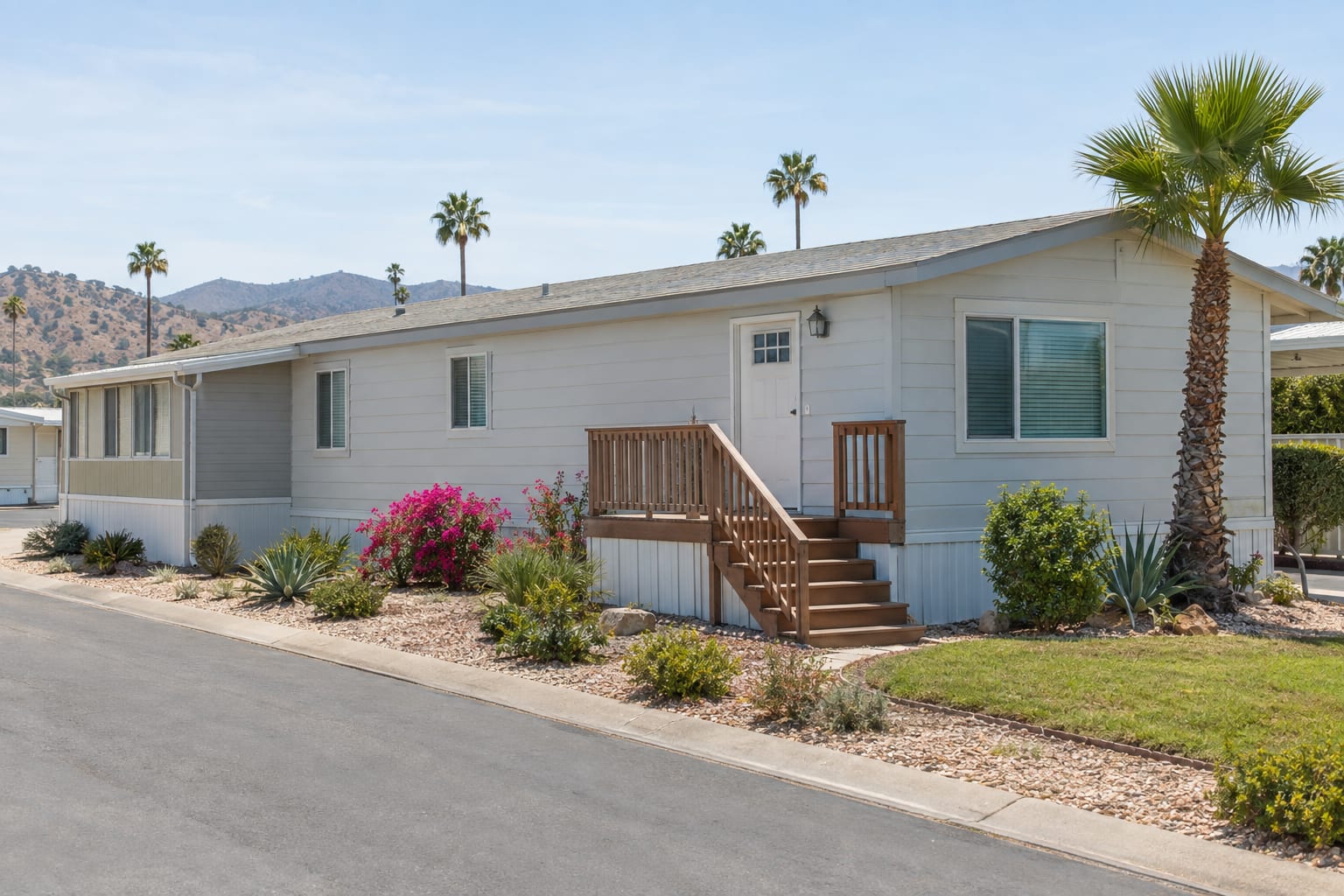
| Deck, steps or ramp | Permit where required; footings and attachment | Permitting agency, community, inspector |
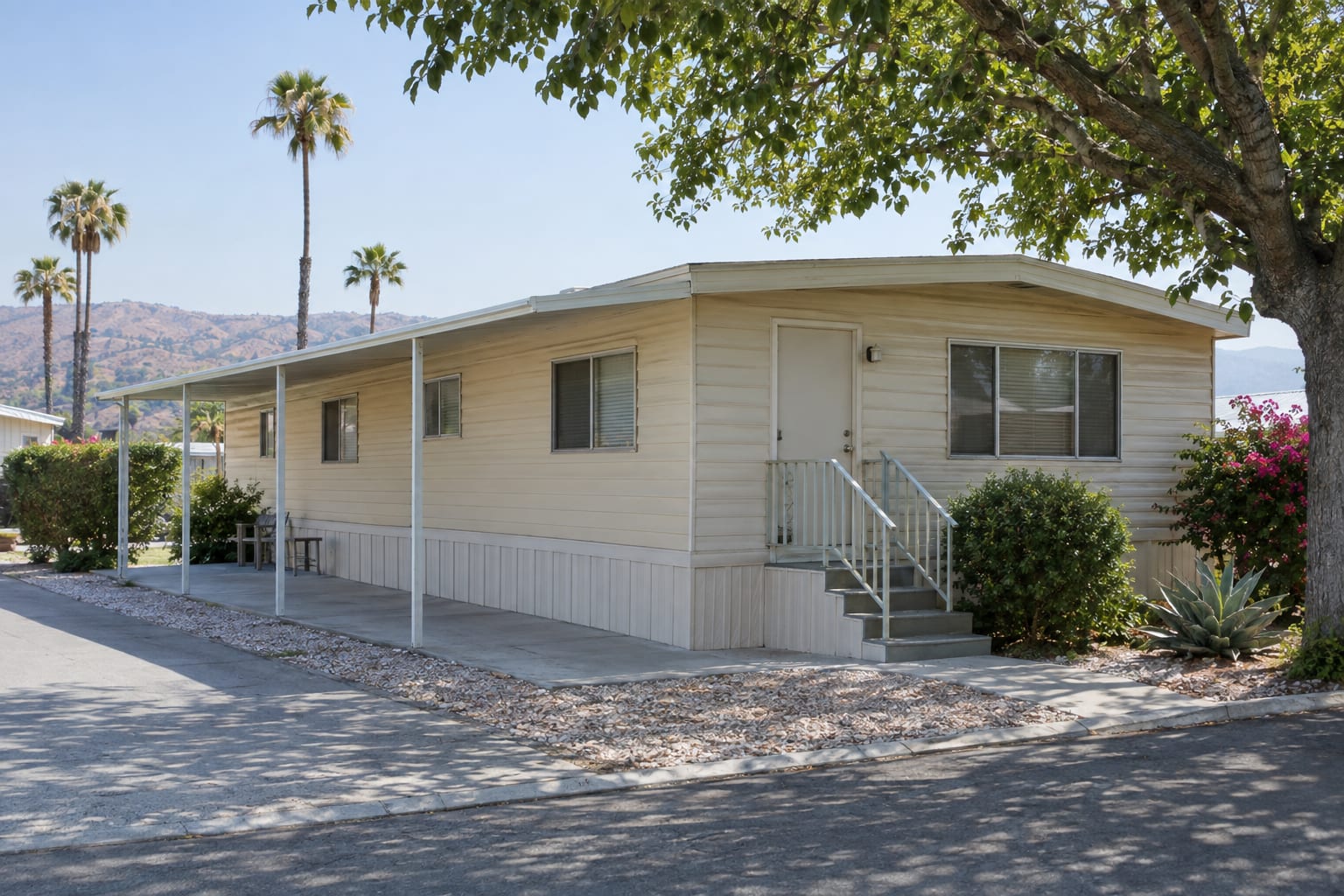
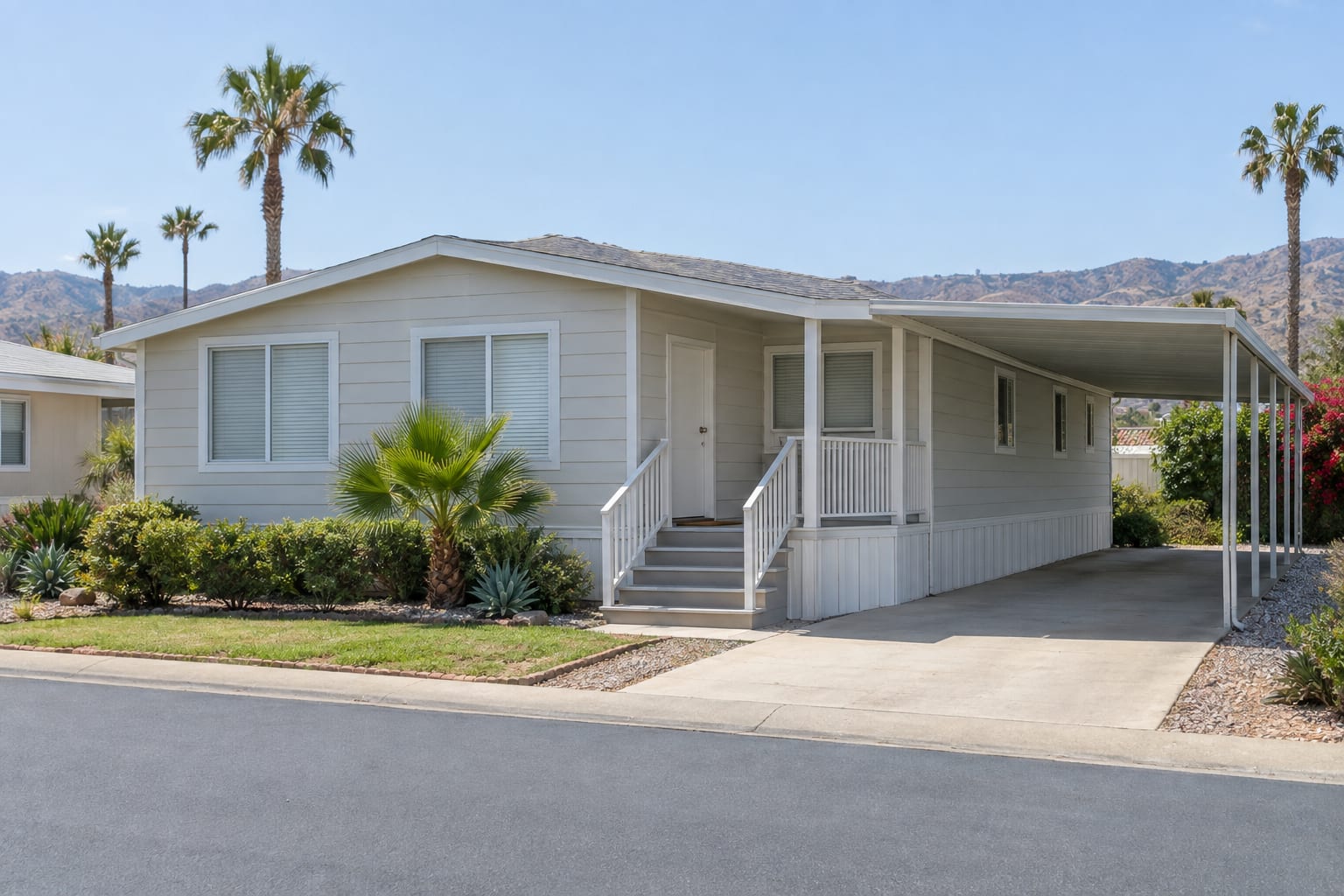
| Carport or awning | Permit; engineering for the posts and roof in many places | Permitting agency, community, inspector |
| Storage shed or cabana | Permit where size requires; placement on the space | Community, permitting agency |
| Skirting or a replaced roof | Usually a repair rather than an addition; ask anyway | Inspector, community |
Permits are a matter of the jurisdiction. In California, alterations to a manufactured home’s structural, fire safety, plumbing, mechanical or electrical systems generally require a permit from HCD, and structures in a mobilehome park are generally permitted by HCD or by the local jurisdiction that has taken over enforcement there. In Arizona, the Arizona Department of Housing handles manufactured housing installation and permit questions. Ask which agency covers the home’s location, and ask it what is on file.
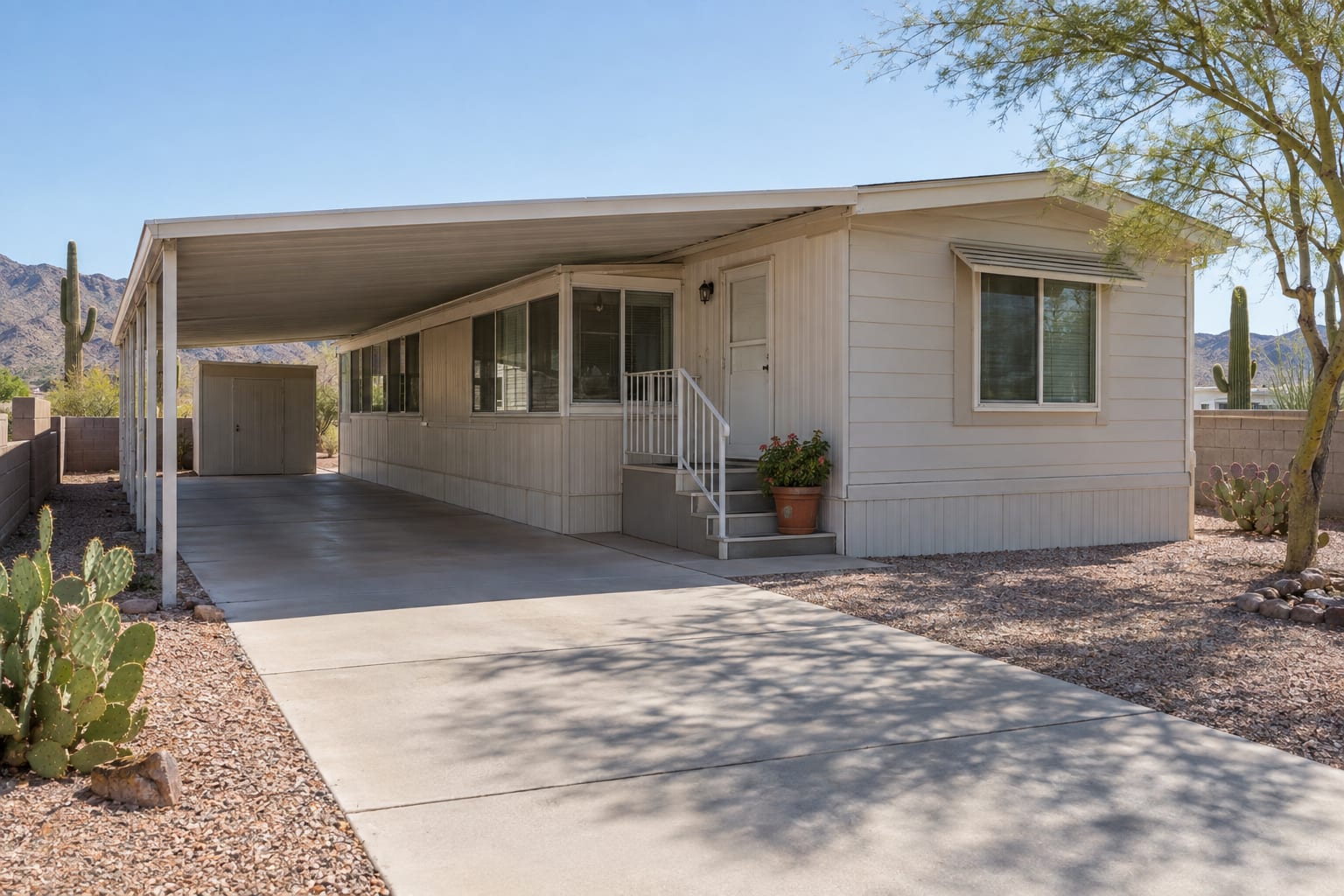
The community has its own approval
In a land-lease community, the owner of the home does not own the ground it sits on, so the community generally approves what may be built on the space, where, and how it looks. That approval is separate from the permit and separate from the resident approval you will apply for yourself.
Ask the office two questions in writing: did it approve this addition, and does it require anything of the addition when the home changes hands. How community rules affect a purchase explains the other rules that travel with the space.
What the inspector, appraiser and insurer each look at
Three professionals see the addition during a financed purchase, and they ask different questions.
- The inspector looks at how it is attached: whether the roof tie-in sheds water, whether the floor is supported on its own footings rather than hung from the home, whether the electrical work is sound, and whether the addition has pulled the home’s wall or roofline out of true.
- The appraiser decides what it contributes to value. Unpermitted space may be left out of the figure, which can leave you paying for square footage the loan is not based on. What happens when the value comes in below the price is covered in inspection versus appraisal.
- The insurer asks what the addition is, when it was built and whether it was permitted, because it is part of what the policy covers.
When no record exists
Sellers often have nothing: the addition came with the home when they bought it. In that case:
Chasing an addition with no paperwork
- Ask the agency The permitting agency can tell you whether a permit exists for the address or the home’s serial number.
- Ask the community Its file on the space may hold an approval the seller never saw.
- Have it inspected If no record turns up, ask the inspector to look at the addition specifically and write up how it is built.
- Ask your specialist Describe the addition, the inspector’s findings and the lack of record, and ask what the program needs.
- Decide with your eyes open Price the home as if the addition may not count, or ask the seller to pursue a record before closing.
None of this is legal advice, and permit procedures change. Confirm current requirements with HCD, the local jurisdiction or the Arizona Department of Housing, and with the community in writing. All financing is subject to credit approval, and not every home qualifies.