Buying a Manufactured Home From an Estate: Questions About Authority and Title
When the owner of a manufactured home has died and the family or the estate is selling it, two questions come before any deposit: who has the legal authority to sell the home, and what the title record says today. Both are answered by documents, not by the family’s account, and both have to be settled before a lender can finance the purchase. Everything else about the sale, the condition, the value, the community, follows the same path as any pre-owned home.
A sale from a living relative is a different situation, covered in buying from a family member. This article is about an estate. It is general information, not legal or tax advice; the estate’s own professional, escrow and the state agency decide what applies.
Who may sell depends on how the home was held
The person showing you the home is often not the person who can sign the title. Find out which situation applies before you talk about price.
Common estate situations and who generally has authority to sell
| How the home was held | Who generally signs | What to ask for |
|---|---|---|
| Jointly with a surviving owner named on the title | The surviving owner, after the agency’s procedure for the deceased owner’s interest | The current title and the agency’s requirements |
| In the deceased owner’s name alone | The person authorized to act for the estate | The document that gives that authority, and what the agency accepts |
| In a trust | The trustee | The trust’s authority to sell, in the form escrow and the agency accept |
| On land the owner also owned, as real property | Whoever has authority over the real estate | The recorded deed and the affixture record; the sale goes by deed |
Which documents prove authority, and what the state agency needs to transfer a deceased owner’s interest, is a question for escrow and for HCD or ADOT MVD directly. HCD publishes forms for removing a deceased co-owner and for transfers from a trust with its registration and titling information; ADOT MVD describes Arizona transfers on its mobile home ownership page. The estate’s own side is for its lawyer or representative, not for you or your lender.
The records to request before a deposit
Pay your deposit into escrow under written instructions, never to the family. Deposits and contingencies explains how a title contingency protects you if the estate cannot deliver.
The home itself, and the arrears that follow an estate
An estate home has often sat for a while, and the costs that accrue while it sits attach to the home or to its space.
- Property taxes. In California, HCD generally asks for a county tax clearance before transferring a home on local property tax; an estate that has missed a bill has to clear it first. In Arizona, a county clearance is needed if taxes are delinquent.
- Space rent. In a land-lease community, unpaid rent is a matter between the estate and the community, but it can affect whether the home may stay on the space and whether the office will process your application until it is settled.
- A loan on the home. A lienholder on the title still has to be paid from the sale. Escrow requests the payoff; the estate covers any shortfall.
- Condition. A home that has been empty needs the same inspection as any other, with attention to water, pests and systems that have not run.
The community has two questions, not one
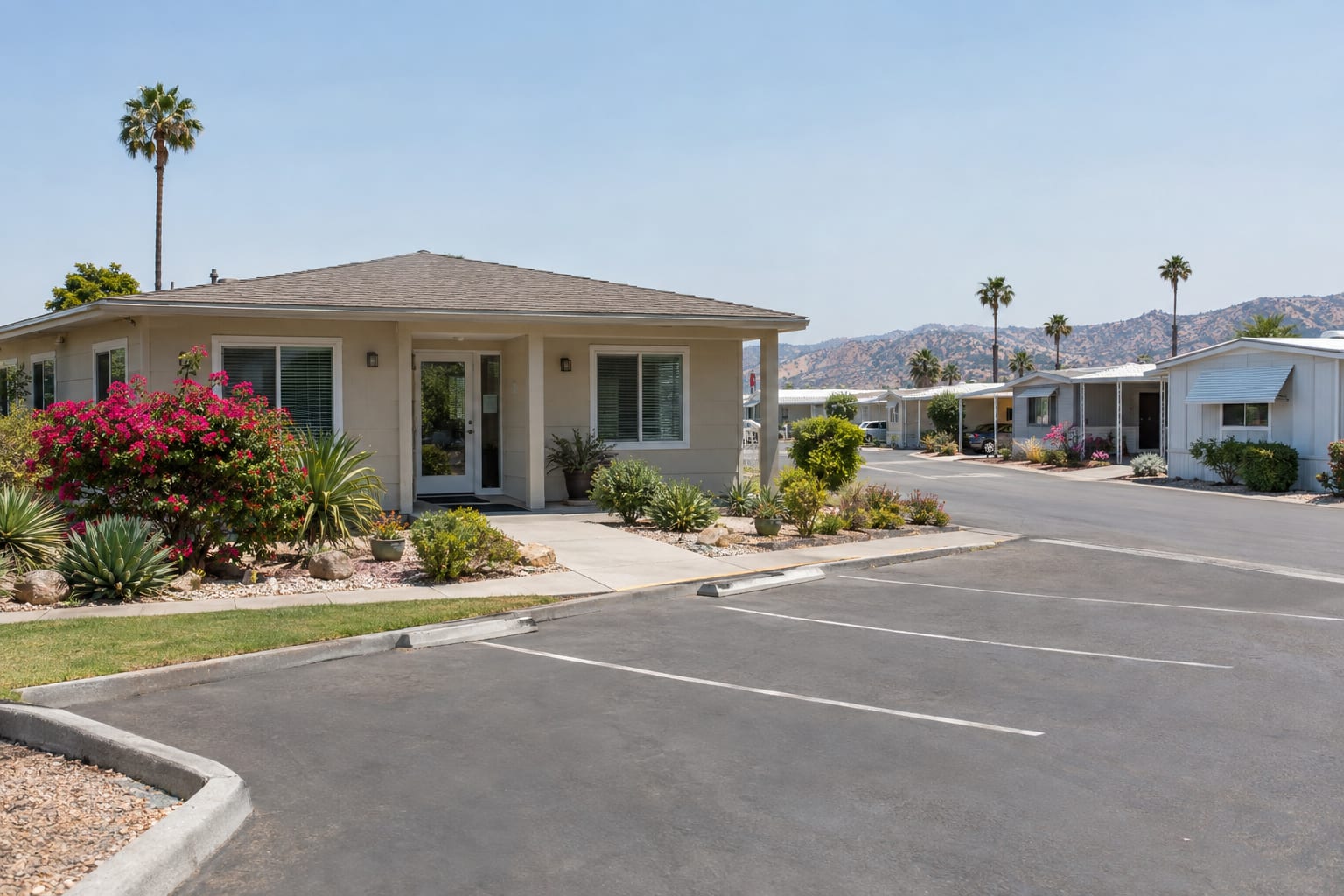
Your resident application is reviewed the same way as any buyer’s, under the community’s own criteria, and that approval is separate from the loan. The second question is the estate’s: whether rent is current, whether the lease or rental agreement allows the home to be sold in place, and whether the office requires anything of the home before a new resident moves in. Ask the office both, in writing, before your offer is firm.
How financing is coordinated
Tell your specialist at the start that the seller is an estate. The file is set up for the right signatures, the title review looks for the agency’s deceased-owner procedure, and the value review and inspection run as they would for any pre-owned home.
Financing an estate purchase
- Identify who can sign Ask for the document and confirm with escrow that the agency will accept it.
- Read the title as it stands Names, liens, serial numbers, and whether the home is personal or real property.
- Make a written offer to the authorized person, depending on a clear title by a date, financing, inspection and, in a community, your approval.
- Open escrow and pay the deposit there
- Let the estate complete the agency procedure for the deceased owner’s interest, while your loan, the value review and the community application run.
- Close through escrow, which pays any lien, collects the signed title and files the transfer to you.
The order of a private sale in general, and who does what at each step, is in buying from a private seller. Procedures at HCD, ADOT MVD and the counties change; confirm current requirements with them and with the estate’s professional. All financing is subject to credit approval, and not every home or applicant qualifies.