Are Manufactured Homes Increasing in Value? What Drives Resale Value
Some manufactured homes gain value, some hold steady, and some lose it. The old rule that they all depreciate the way vehicles do is too simple, and so is the newer claim that they all go up. What happens to one home depends mostly on five things: whether land is part of the sale, the space rent and the community if it is not, the home’s condition, its location, and whether the next buyer will be able to get a loan on it.
Each of the five is covered below, followed by a checklist for sizing up a single home. You will not find price statistics here. What the public data shows, and what it leaves out, is covered in manufactured home price trends in California and Arizona, 2015 to 2025.
Whether land is part of the sale matters most
A manufactured home is sold in one of two ways. On land the owner also owns, where the home has been permanently attached and recorded as real property, the buyer pays for the home and the land together. In a land-lease community, where you own the home and rent the space under it, the buyer pays for the home alone. That home is personal property, titled on its own the way a vehicle is.
Land is the part of a property that does not wear out, so a home sold with its land tends to follow the local market for land and housing. A home on a rented space has no land in its price. Its value rests on the home itself and on how attractive, and how affordable, that space is to the next buyer.
What moves value in each setup
| What to compare | Home on owned land | Home in a land-lease community |
|---|---|---|
| What the buyer pays for | The home and the land | The home only |
| How value is supported | An appraisal of home and land together | Sales of similar homes, usually in the same community |
| Biggest outside influence | Local land and housing prices | Space rent and how the community is run |
| Usual financing | A land-and-home loan | A home-only (chattel) loan |
| Records that must be in order | The deed, plus the 433A (California) or Affidavit of Affixture (Arizona) | The HCD or MVD title, and the community’s approval of the buyer |
The Consumer Financial Protection Bureau’s 2021 study of manufactured-home lending draws the same line: land ownership shapes how a home is titled, and that affects how it can be financed.
Neither setup makes a gain or a loss certain. If you are still choosing between them, the long-term cost comparison of a park home and a home on owned land covers the cost side of the decision.
In a community, space rent is part of the price
A buyer looking at a home in a community budgets by the total monthly cost: the loan payment, the space rent, insurance, taxes or fees, and utilities. The more of that total goes to rent, the less is left for a loan payment, and the less the buyer can pay for the home. That is why a home’s resale price can soften after a large rent increase even though nothing about the home has changed.
The community matters in other ways too. Buyers notice the condition of the streets and common areas, how long the current owner or manager has been in place, and the rules on age, pets and subletting, which decide who is allowed to buy there. Every buyer also has to pass the community’s own resident review, which is separate from loan approval. Before you buy, ask for the current rent and the history of increases in writing.
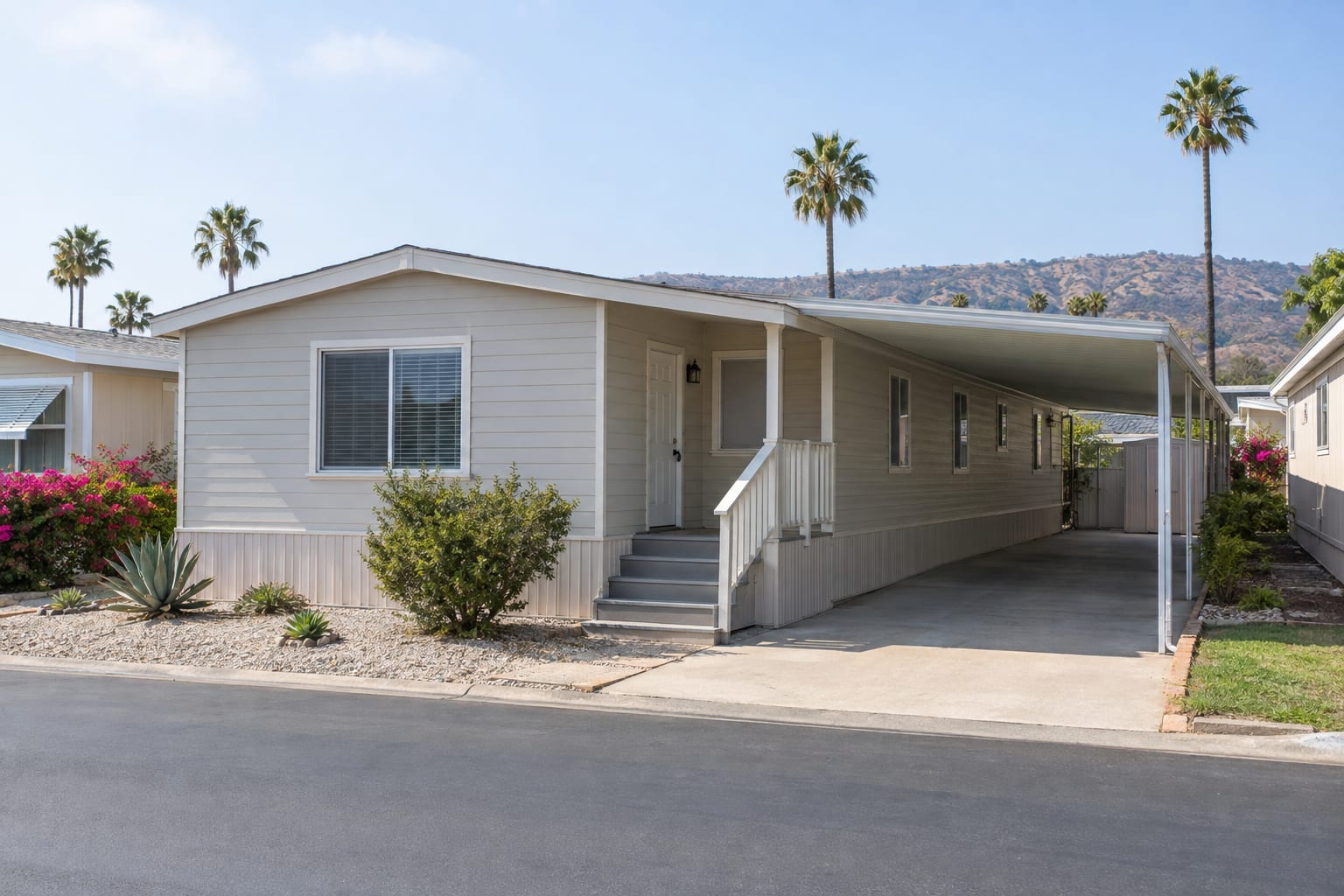
Condition counts for more than age
Age alone does not decide value. A home from the 1990s with a sound roof, solid floors and updated plumbing can be worth more than a newer one that has been neglected. These are the things a buyer’s inspector and an appraiser look at:
- the roof, and any ceiling stains that point to a past leak;
- the floors, especially soft spots near exterior doors, bathrooms and the water heater;
- plumbing, electrical, heating and cooling;
- skirting, steps, porches and awnings;
- additions, and whether they were built with the required permits.
Water does the most damage. A slow roof or plumbing leak that reaches the subfloor turns a small repair into a large one, so maintenance that is put off gets more expensive the longer it waits. If you are deciding where to spend money before selling, see which renovations matter most to buyers.

A home the next buyer can finance has more buyers
Most buyers need a loan. When a home fits lending guidelines, more people are able to bid on it. When only cash buyers can purchase it, the pool is smaller, and that tends to show in the price. Several things decide which group a home falls into:
- When it was built. A manufactured home is a factory-built home constructed on or after June 15, 1976 to the federal HUD Code. A factory-built home from before that date is, technically, a mobile home. Lenders treat the two differently, and the difference decides which programs can apply.
- Whether its identity can be shown. The HUD labels, the data plate and the serial numbers should be present and should match the title.
- Whether the title is clean. California titles and registers manufactured homes through HCD, not the DMV. Arizona titles are handled by the MVD, generally one title per section. The seller should be the owner of record, with no lien left unreleased.
- For a home on owned land, whether it was made real property correctly. That means a foundation system and a recorded 433A in California, or an Affidavit of Affixture in Arizona. Not every home on owned land has these.
- For a home in a community, whether a lender can lend there. Ask before you assume.
Guidelines differ by program and they change. If you want to know how a particular home would be reviewed, talk with a specialist before you commit to it.
Location works the way it does for any home
Two identical homes can sell for very different prices in different places. The reasons are the familiar ones: how many people want to live in the area, the jobs and services within reach, and how many comparable homes are for sale. Hazards count as well. A home in a mapped flood zone or a high fire hazard zone can cost more to insure, and buyers price that in.
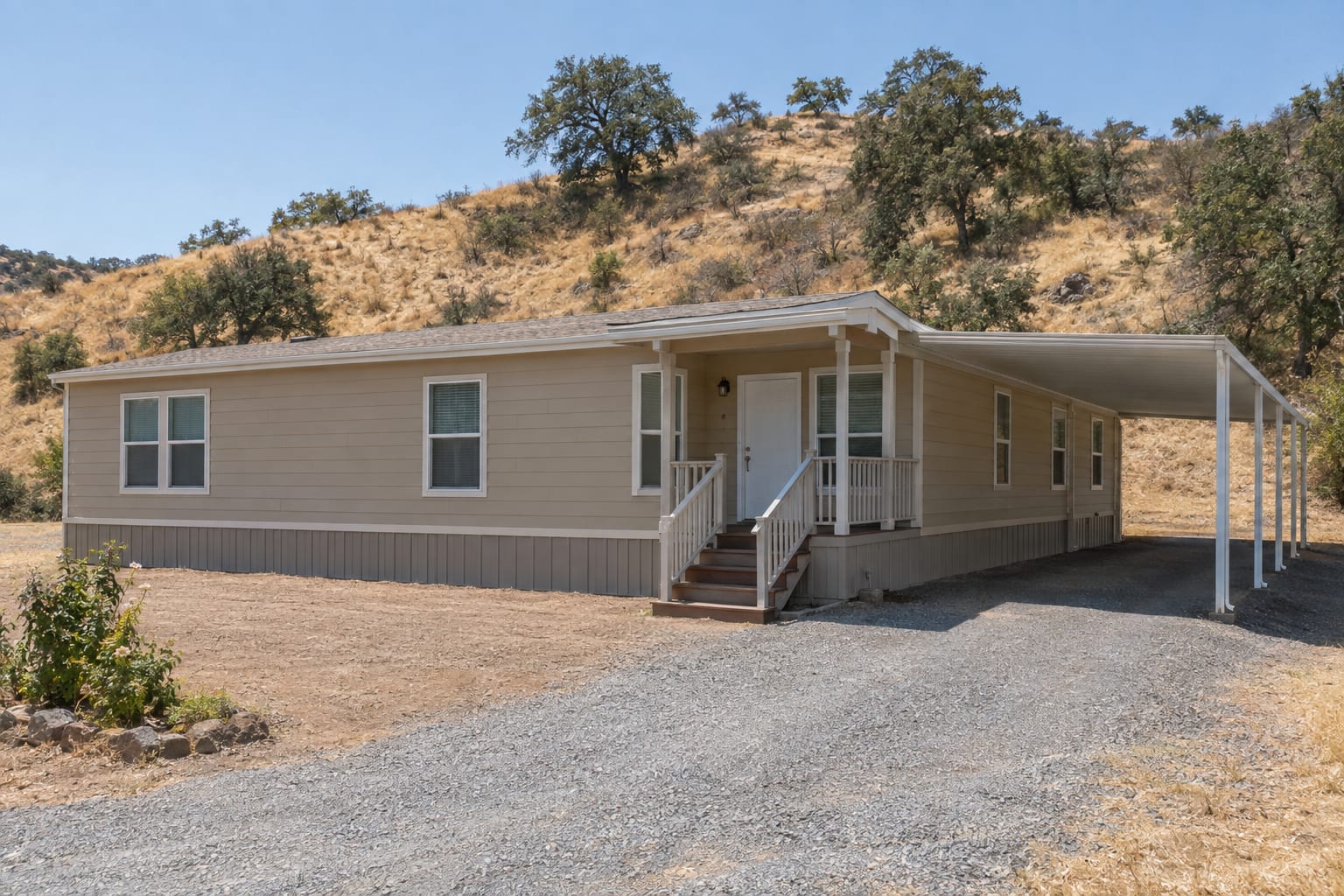
No city makes a home a sure thing, and published rankings of markets rarely show their sources. A more reliable approach is to judge a local market yourself with a few checks anyone can run.
Value is settled by sold prices, not asking prices
What a home is worth comes down to what similar homes have actually sold for. For a home in a community, the most useful comparisons are recent sales in the same community, because those buyers faced the same rent and the same rules. For a home on owned land, an appraiser compares sales of similar homes with land nearby. Asking prices and online estimates are not sales.
For California communities, Santiago Financial, Inc. offers comparable sales reports that list the reported sales in a park you choose. A report is a starting point, not an appraisal, and a loan may require its own value review.
A home that does well on most of these questions is better placed to hold its value. None of them is a prediction. This article is general information, not legal, tax or investment advice.