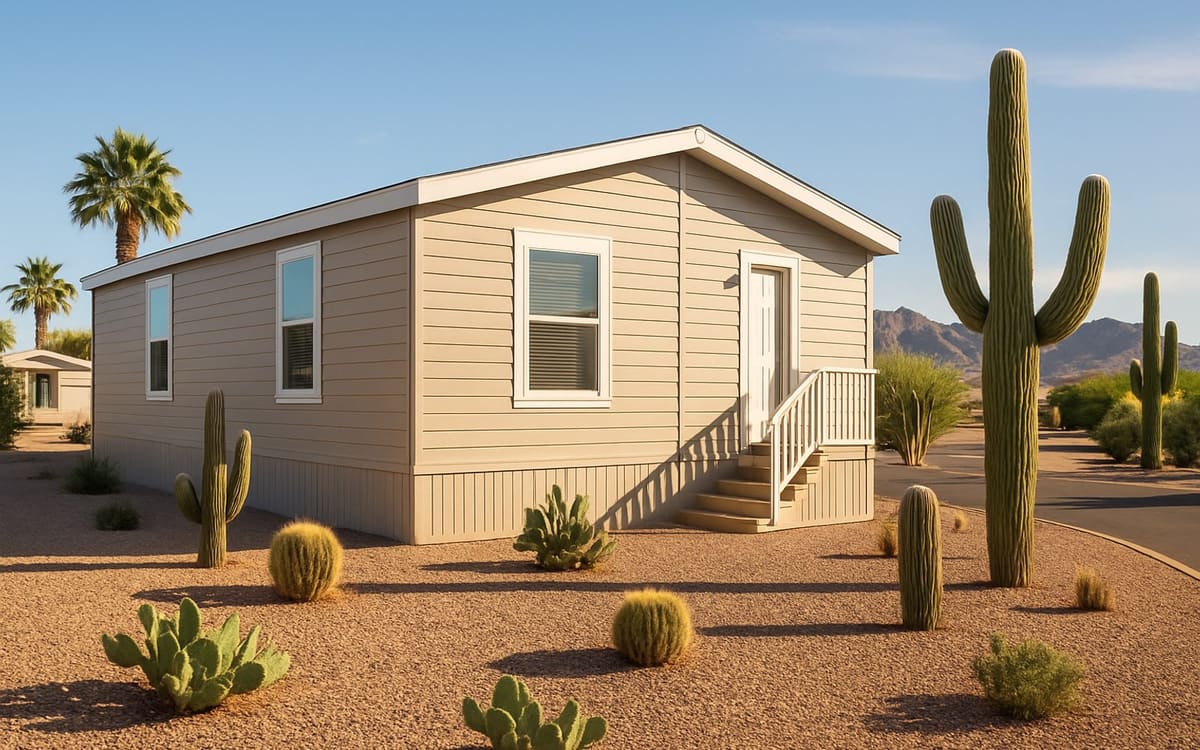
Manufactured Home Park vs. Owning Land: Long-Term Cost Comparison (What Buyers Don’t See Coming)

If you’re shopping for a manufactured or mobile home, you’ll quickly run into a decision that can affect your finances for decades:
Do you buy a manufactured home in a park and pay monthly space rent… or do you buy land and place the home on your own property?
On paper, a home in a park often looks cheaper. The home price might be lower, the down payment may feel manageable, and the community may have amenities. But over time, space rent increases, park policies, and resale dynamics can change the true cost.
On the other hand, buying land can build long-term equity — but it comes with higher upfront expenses, utilities, permitting, and ongoing maintenance you may not be expecting.
At Santiago Financial, Inc., we’ve specialized in manufactured housing financing for over 50 years, and today we help buyers across California and Arizona. This guide breaks down the real long-term cost comparison between a park and owned land — including the “hidden costs” that often surprise buyers after they close.
Quick Links:
- Learn the basics: Mobile Home Loans
- Why financing is different: Manufactured Housing Lender
- Buying a home: Manufactured Home Purchase
- Refinancing later: Manufactured Home Refinance Programs
- Estimate payments: Mobile Home Payment Calculator
- Verify pricing: Comparable Sales Reports
- Required coverage: Insurance
- Start now: Apply Now
Step 1: Understand What You Actually Own
Option A: Buying a Manufactured Home in a Park
When you buy in a park, you typically:
- Own the home (the structure)
- Do not own the land
- Pay monthly space rent
- Agree to park rules (pets, parking, age restrictions, renovations, etc.)
Financing is common in parks, but it’s not “one-size-fits-all.” That’s why many buyers work with a specialty lender like Santiago Financial. Start here: Mobile Home Financing.
Option B: Buying Land and Owning the Homesite
When you own land, you:
- Own the home + the land
- Pay property taxes on the land (and sometimes the home as real property depending on title/foundation)
- Control improvements and rules (within zoning/HOA)
- Take on infrastructure responsibilities (utilities, driveway, drainage, septic/well, etc.)
This can create stronger long-term equity — but it requires more planning and (usually) more cash.
Step 2: Compare Upfront Costs (The Part Most Buyers Notice)
Upfront cost is often the #1 reason buyers choose a park, especially in California where land is expensive.
Typical Upfront Costs in a Park
Most parks already have:
- Utility connections
- Roads and access
- Community infrastructure (water/sewer/trash)
- A defined approval process
Buyers typically pay:
- Down payment on the home
- Loan closing costs
- Park application/transfer fees (varies)
- First month’s rent + deposit (varies)
To estimate monthly payments on the home loan itself, use the Mobile Home Payment Calculator.
Typical Upfront Costs When You Buy Land
Land ownership adds costs that buyers often underestimate:
- Land purchase (often tens of thousands to hundreds of thousands)
- Grading/site prep
- Foundation or piers (depending on setup)
- Utility extensions (electric, water, sewer/septic)
- Permitting, inspections, and engineering requirements
- Driveway/culvert/drainage work
Even when the home price is similar, land ownership can require substantially more cash up front.
Bottom line: parks usually win on “getting in the door” affordability.
Step 3: Compare Monthly Costs (The Part Buyers Feel Every Month)
Park Monthly Costs
Your monthly housing cost in a park usually includes:
- Loan payment (principal + interest)
- Space rent
- Utilities (sometimes bundled, sometimes separate)
- Insurance
Insurance can affect approvals and budgets more than buyers expect. See Insurance.
Important: space rent can rise. Many parks increase rent annually. Even a modest increase compounds over time.
Land Monthly Costs
Monthly ownership costs on land often include:
- Loan payment (home + possibly land financing depending on structure)
- Property taxes
- Homeowner’s insurance
- Utilities (water, electric, propane, septic maintenance)
- Maintenance reserves (roads, fencing, drainage, well pumps, etc.)
Land owners don’t pay space rent — but they do pay for the responsibilities the park would otherwise handle.
Step 4: The 10-Year “Total Cost” Comparison (With Realistic Assumptions)
Let’s use a simplified example to compare outcomes. (Your numbers will vary by city, park, land price, and utilities — this is meant to illustrate how to think.)
Example Assumptions
- Same home purchase price in both scenarios
- Park space rent starts at $850/month
- Space rent rises over time (this example assumes 4% a year for illustration; check the community’s increase history)
- Land scenario has property taxes and higher maintenance
- Insurance required in both scenarios
Park Scenario (10 years)
- Space rent year 1: $850/month → ~$10,200/year
- With 4% annual increases, 10-year rent paid is roughly $122,000–$130,000 (depending on increases and fees)
That’s money you don’t get back — it’s similar to rent.
Land Scenario (10 years)
- Property taxes (example): $2,500–$4,500/year depending on land value
- Maintenance reserve: perhaps $150–$300/month equivalent depending on site needs
- Over 10 years, you might spend $40,000–$80,000 in taxes + maintenance
But here’s the difference:
With land, you still own an appreciating asset at the end.
Step 5: Equity and Appreciation (The Biggest Long-Term Divider)
Park Homes: You Own the Structure Only
In a park, your home’s resale value depends on:
- Home condition and upgrades
- Park desirability (location, amenities, safety, reputation)
- Space rent levels (higher rent can reduce buyer demand)
- Park rules (age limits, approvals, etc.)
Some park homes hold value well, especially in strong communities. Others depreciate more like vehicles. This is why accurate pricing matters.
Before you buy, get real pricing context with Comparable Sales Reports.
Land Ownership: You Own the Asset That Historically Appreciates
Land tends to appreciate over time in many markets — especially desirable areas of California and growing parts of Arizona. Owning land can:
- Increase resale value
- Improve financing options later
- Create equity you can borrow against (in certain structures)
Bottom line: parks can be great for affordability and lifestyle, but land ownership is often stronger for wealth building.
Step 6: Risk Factors (What Could Go Wrong?)
Risks in a Park (and How to Think About Them)
- Space rent increases: Even “small” increases add up over 10–20 years.
- Park ownership changes: If a park sells, policies can change.
- Approval constraints: Some parks require buyer approval — that can affect resale speed.
- Community rules: Pets, parking, remodeling, rentals — rules may limit flexibility.
This doesn’t mean parks are bad — it means you should evaluate rent history, rules, and stability before committing.
Risks on Land
- Permitting and zoning issues: Some land parcels can’t accept a manufactured home without specific requirements.
- Utility surprises: Extending power, installing septic, or drilling a well can be expensive.
- Maintenance responsibility: Drainage, access roads, fences, water systems — you’re the “park management.”
Land ownership gives control, but also puts you in charge of the problems.
Step 7: Lifestyle Reality Check (Not Just Money)
Why People Love Parks
- Amenities: pools, clubhouses, events
- Community and safety perception
- Less maintenance responsibility
- Often great for retirees and first-time buyers
Why People Love Land
- Privacy and space
- Fewer rules
- Room for additions: garages, workshops, RV parking (subject to zoning)
- Long-term asset ownership
Your best choice depends on what you value: simplicity and amenities (park) vs control and equity (land).
Step 8: Financing Strategy (How Buyers Do This Smart)
A common strategy is:
- Buy in a park now to enter homeownership sooner
- Build stability and equity
- Refinance later when conditions improve
- Consider land ownership in the future if it fits your goals
If you already own and want to improve terms, review Manufactured Home Refinance Programs.
And if you’re shopping now, start with Manufactured Home Purchase.
How to Decide: A Simple Checklist
A Park May Be Best If You…
- Want lower upfront cash requirements
- Prefer predictable amenities and community living
- Don’t want to manage septic/well/driveways
- Want a faster purchase timeline
Start with Mobile Home Loans.
Owning Land May Be Best If You…
- Want long-term equity and land appreciation
- Value privacy and control
- Have cash reserves for site work and utilities
- Plan to stay long-term
If you’re unsure, compare payments and affordability using the Mobile Home Payment Calculator.
Final Thoughts: The “Best” Option Is the One You Can Sustain
The right choice isn’t always the one that builds the most equity on paper — it’s the one that fits your cash flow, your lifestyle, and your long-term plans.
- Parks can be a fantastic path to affordable ownership, especially when you choose a stable community and understand rent dynamics.
- Land ownership can be a powerful wealth-building tool — if you can handle the upfront cost and ongoing responsibilities.
If you want help comparing your real scenario (your county, your budget, park rent, land options, home type), Santiago Financial can walk you through it.
Start here: Apply Now Or explore options: Mobile Home Financing Questions? Insurance, payments, comps — we can help: Contact Us
Frequently Asked Questions: Manufactured Home Park vs. Owning Land
Is it cheaper to live in a manufactured home park or on your own land?
In the short term, living in a manufactured home park is usually cheaper because you do not have to purchase land or pay for site development. However, over 10–20 years, space rent increases can exceed the cost of owning land, especially in high-demand areas of California and Arizona.
Do manufactured homes in parks lose value?
They can. Because you only own the home (not the land), resale value depends on the park’s location, rent increases, and community rules. Homes in well-managed parks often hold value better, but they typically do not appreciate the same way land does.
Does owning land make a manufactured home more valuable?
Yes. When you own the land, your home becomes part of a real estate asset. Land tends to appreciate, which can increase resale value, equity, and long-term wealth.
Can I finance a manufactured home on private land?
Yes. Homes placed on owned land often qualify for more traditional mortgage-style financing through a manufactured home purchase loan. The property must meet zoning, foundation, and utility requirements.
Can space rent go up every year?
In most parks, yes. Many communities increase rent annually, and the size of increases varies by community and local rules. Over time, this can significantly impact your total housing cost.
What happens if a park is sold?
If a park changes ownership, rent, rules, or management policies can change. Some states offer tenant protections, but buyers should always review park history and lease terms before purchasing.
Is it harder to resell a manufactured home in a park?
It can be. Some parks require buyer approval, age restrictions, or income standards. High space rent can also reduce buyer demand, making resale slower in certain communities.
What utilities are required when placing a home on land?
Most jurisdictions require:
- Electric service
- Water (city or well)
- Septic or sewer connection
- Approved access/driveway
- Foundation or pier system
These requirements vary by county and zoning district.
Which option is better for retirees?
Many retirees prefer parks for their community, security, and low maintenance. Others prefer land for privacy and long-term value. The right choice depends on budget, lifestyle, and how long you plan to stay.
How do I compare the real cost between a park and land?
The best way is to:
- Calculate your loan payment
- Add space rent or property taxes
- Add insurance and utilities
- Project 10–20 years forward
Santiago Financial can help you run this comparison using real numbers for your location.
Can I refinance later if I start in a park?
Yes. Many buyers refinance to lower their rate, reduce payments, or prepare for a future move. You can explore manufactured home refinance programs when your credit and equity improve.