Why Manufactured Homes Are Gaining Ground in California
Manufactured homes are gaining ground in California mainly in how the state treats them, not in how many are arriving. State law requires cities to allow a manufactured home on a foundation on a single-family lot, counts one as an accessory dwelling unit, and has funded the preservation of mobilehome parks. New-home shipments to California, meanwhile, were lower in 2025 than in 2019. For a buyer, that means more places a manufactured home may legally go, while the cost of land and space rent stays what it was.
The housing shortage is why the state is paying attention
California’s Statewide Housing Plan, published in 2022 by the Department of Housing and Community Development (HCD), calls for 2.5 million more homes by 2030, at least one million of them for lower-income households. The plan is listed among HCD’s plans and reports.
A manufactured home is a factory-built home constructed on or after June 15, 1976 to the federal HUD Code. The structure costs less than a site-built house. In the U.S. Census Bureau’s comparison of new manufactured and new site-built homes, the average new manufactured home in 2024 cost about half as much per square foot as the average new site-built home, with land left out of both figures.
That saving is on the structure only. The land, or the space rent in a community, is a separate cost that the comparison leaves out, so the saving does not carry straight through to what you pay each month. If you are new to the subject, manufactured homes as an affordable housing option in California explains what these homes are and how they compare with site-built houses.
What California law already allows
Three state measures treat a manufactured home as ordinary housing. None of them is brand new, and the single-family lot rule has been on the books for decades. Together they explain why these homes keep coming up in housing policy.
State measures that apply to manufactured homes
| Measure | What it does | Limits to know |
|---|---|---|
| Government Code 65852.3 | Cities and counties must allow a HUD-Code home on a foundation system on single-family lots, under the same development standards as a site-built house | Local rules on roofing, siding and roof overhang may apply; a city may exclude older homes |
| Government Code 66313 | Includes a manufactured home in the definition of an accessory dwelling unit (ADU) | The local ADU ordinance, permits and utility connections still apply |
| HCD’s MORE program | State funding to acquire, rehabilitate or replace mobilehome parks and individual homes | Mainly for resident organizations, nonprofits and local public agencies, not individual buyers; applications were closed when this article was updated |
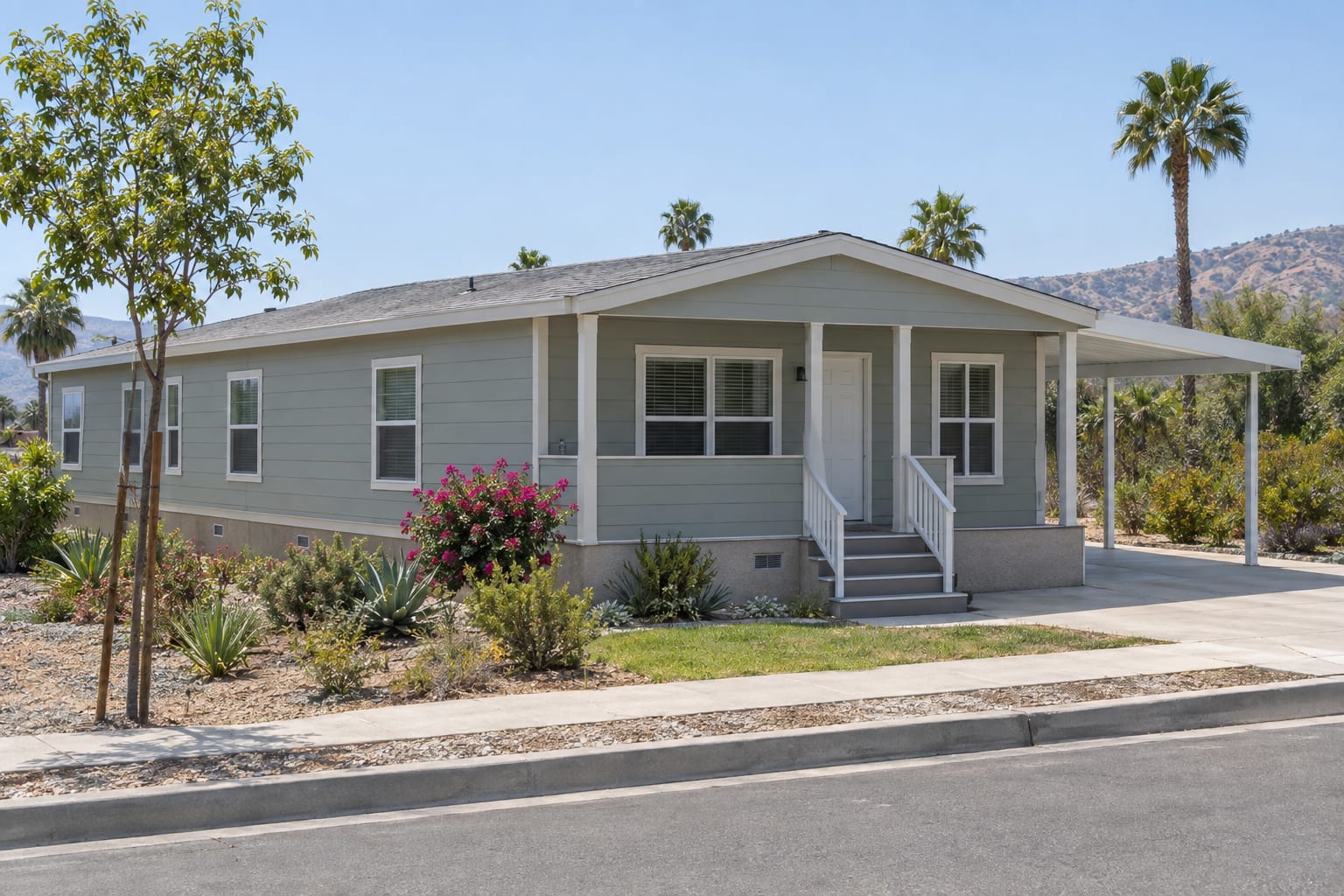
A home installed on a foundation system on land you own is generally treated as real property. In California, HCD Form 433A is used to report the installation of a manufactured home on a foundation system and is recorded with the county when applicable. It is an important property record, but it does not by itself guarantee financing. What a 433A is covers the form in detail.
This is general information, not legal advice. The city or county planning department is the one that applies these rules to a specific lot.
What the shipment numbers show
The Census Bureau publishes the number of new manufactured homes shipped to each state every year in its Manufactured Housing Survey.
New manufactured homes shipped to California
| Year | Homes shipped |
|---|---|
| 2005 | 10,783 |
| 2010 | 1,420 |
| 2015 | 2,956 |
| 2019 | 3,890 |
| 2022 | 4,022 |
| 2025 | 3,065 |
Source: U.S. Census Bureau, annual totals of shipments to states, as published in September 2026.
Shipments fell steeply after the mid-2000s, recovered part of the way, and have moved within a narrow range since. This page’s web address still carries an older headline about rapid growth. The shipment record does not support it.
The count has a blind spot, though. It covers new homes only. A buyer in an established community is usually buying an existing home from its owner, and those sales are not in it. Whether existing homes in a particular community are in demand is a local question; what a busy community means for a buyer explains how to check and how to prepare.
What this means if you are buying in California
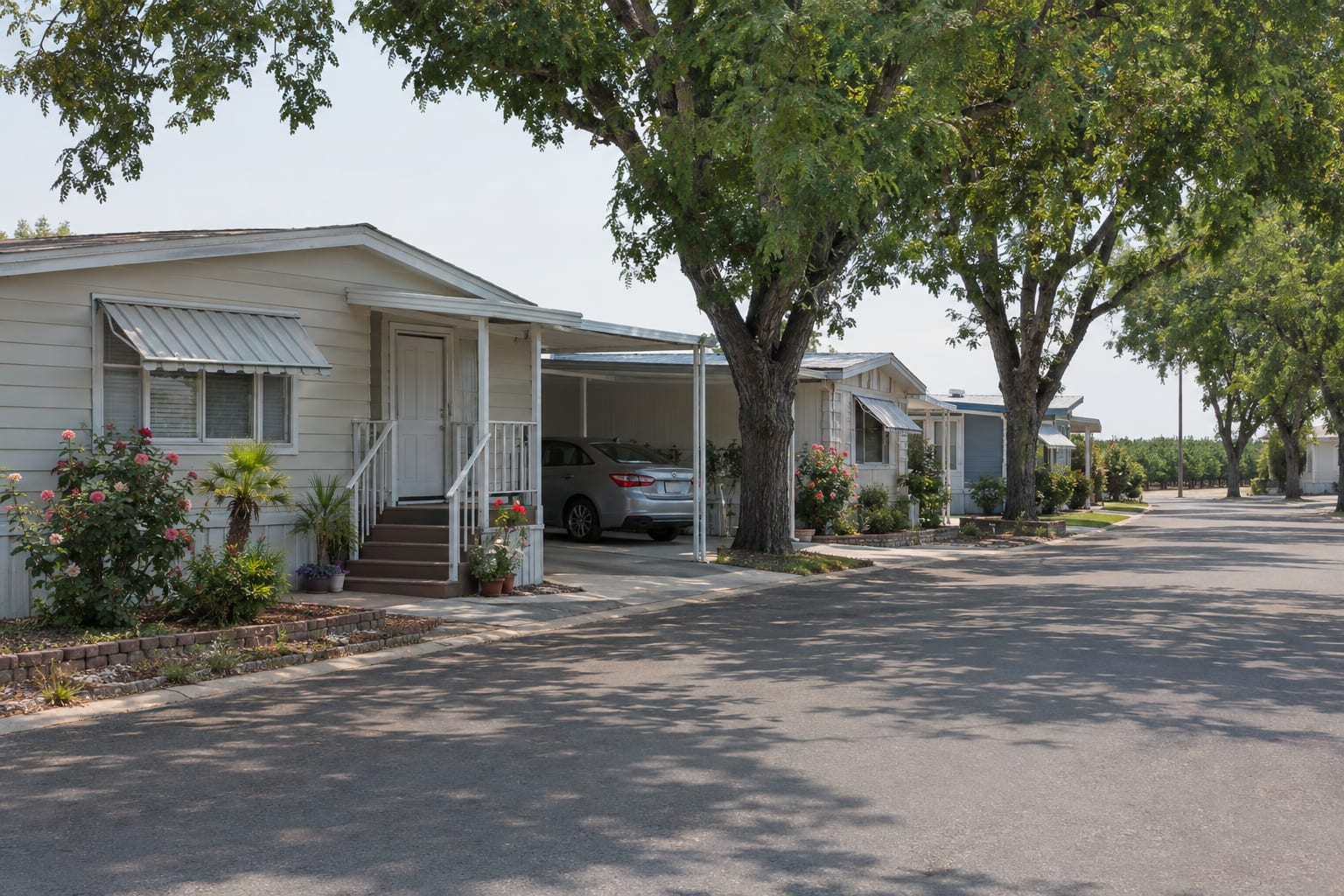
A manufactured home can sit in three different setups in California, and each one sends you to a different first question.
| Setup | What you own | What to check first |
|---|---|---|
| Existing home in a land-lease community | The home; you rent the space | Space rent, community rules and resident approval |
| Home on a foundation on your own lot | The home and the land | Zoning, permits, foundation and utility connections |
| Manufactured home as an ADU | A second unit on a lot with a main house | The local ADU ordinance, and whether financing is available for that use |
For a home in a community, the ownership record is not a deed. California titles and registers manufactured homes through HCD, not the DMV. California HCD title basics explains what that paperwork looks like and why a lender asks for it early.
The setup also decides the kind of loan. A home on a rented space is financed on its own, and a home with land you own can often be financed together with the land; land-and-home financing describes the second route. All financing is subject to credit approval, and not every home or property qualifies.
What has not changed
The law gives a manufactured home a place in California’s housing supply. Several practical limits remain:
- Land is still the expensive part. A lower-cost structure does not make a lot, or a space in a sought-after community, any cheaper.
- Age matters. Local rules may keep older homes off single-family lots, and a factory-built home from before June 15, 1976 is a mobile home, which lenders treat differently.
- Local approval takes as long as it takes. Permits, foundation inspections and utility connections run on the city or county’s schedule.
- A right to place a home is not a loan approval. The home, the land or lease, and the borrower are each reviewed, and programs change.
If you are weighing a specific home or lot, the California manufactured home loans page is the place to see how the pieces fit together.