Manufactured Homes Near Beaches? Financing Options in Huntington Beach & San Diego

Local financing details: Mobile Home Loans in Huntington Beach · Mobile Home Loans in San Diego
A manufactured home can put you near the beach for a lower purchase price than a site-built house nearby, mainly because you are usually buying the home and not the land under it. Whether you can afford to live there is a separate question, and the asking price does not answer it.
In Huntington Beach and along the coast of San Diego County, four things decide the monthly cost and the loan: the space rent, what salt air does to the home, the insurance, and the age of the home. Check all four before you make an offer.
Near the coast you usually buy the home and rent the land
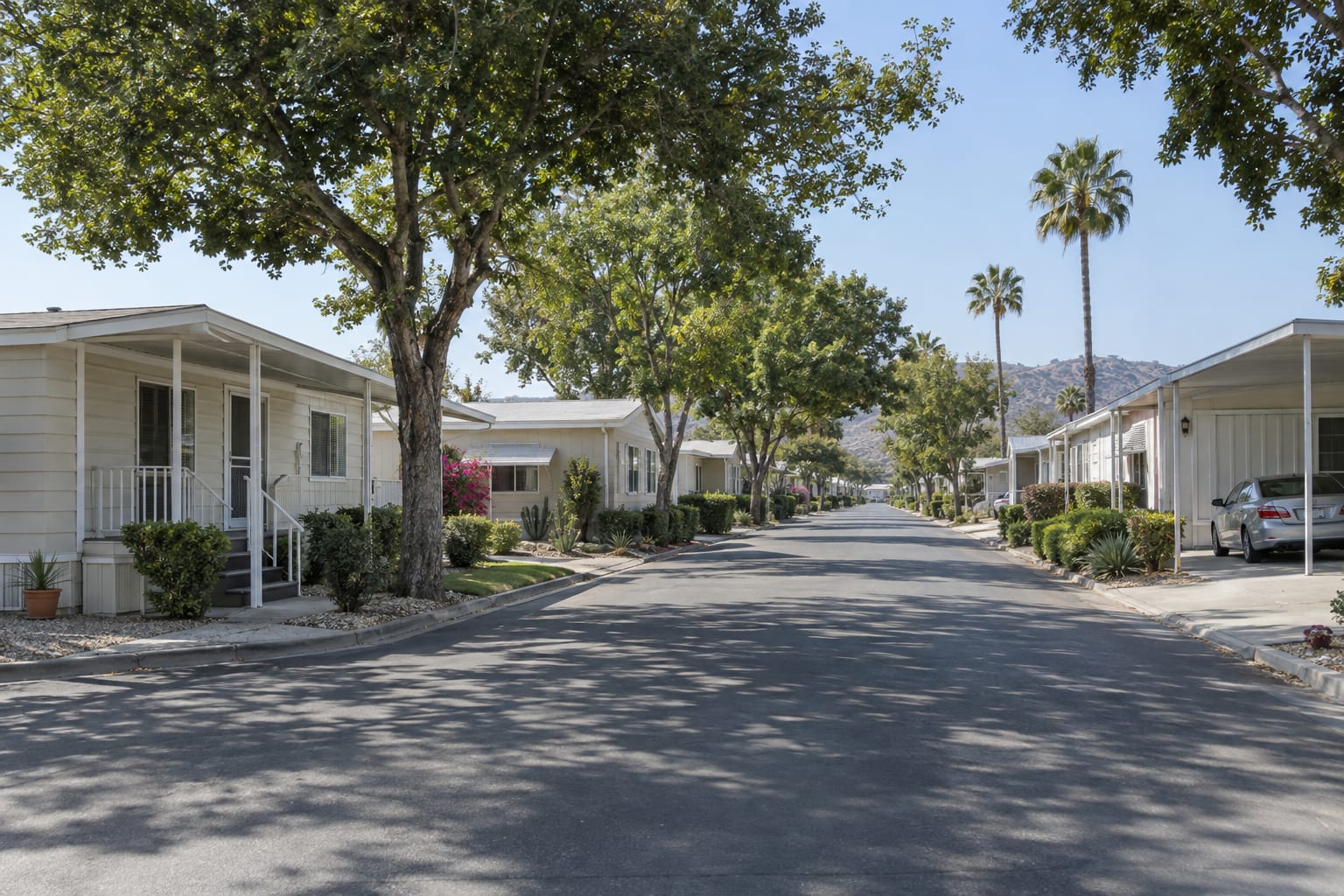
Manufactured homes close to the beach in both areas are mostly found in land-lease communities, which many people still call mobile home parks. You own the home. The community owns the land and charges space rent for the homesite every month, for as long as you live there.
That setup decides the kind of loan. A home on a rented space is financed by itself, as personal property, with a home-only loan, also called a chattel loan. The land is not part of the collateral, so the loan follows the value of the home alone. California records the home’s ownership and the lender’s lien through HCD, the state Department of Housing and Community Development, not the DMV.
A home on a lot you own is a different transaction, with the home and the land financed together. If you find one near the coast, say so at the start, because the questions about title, foundation and appraisal change.
Two parties review you as a buyer in a community. The lender decides on the loan, and the community decides whether to accept you as a resident. Passing one review does not mean you have passed the other.
Space rent is the cost to pin down first
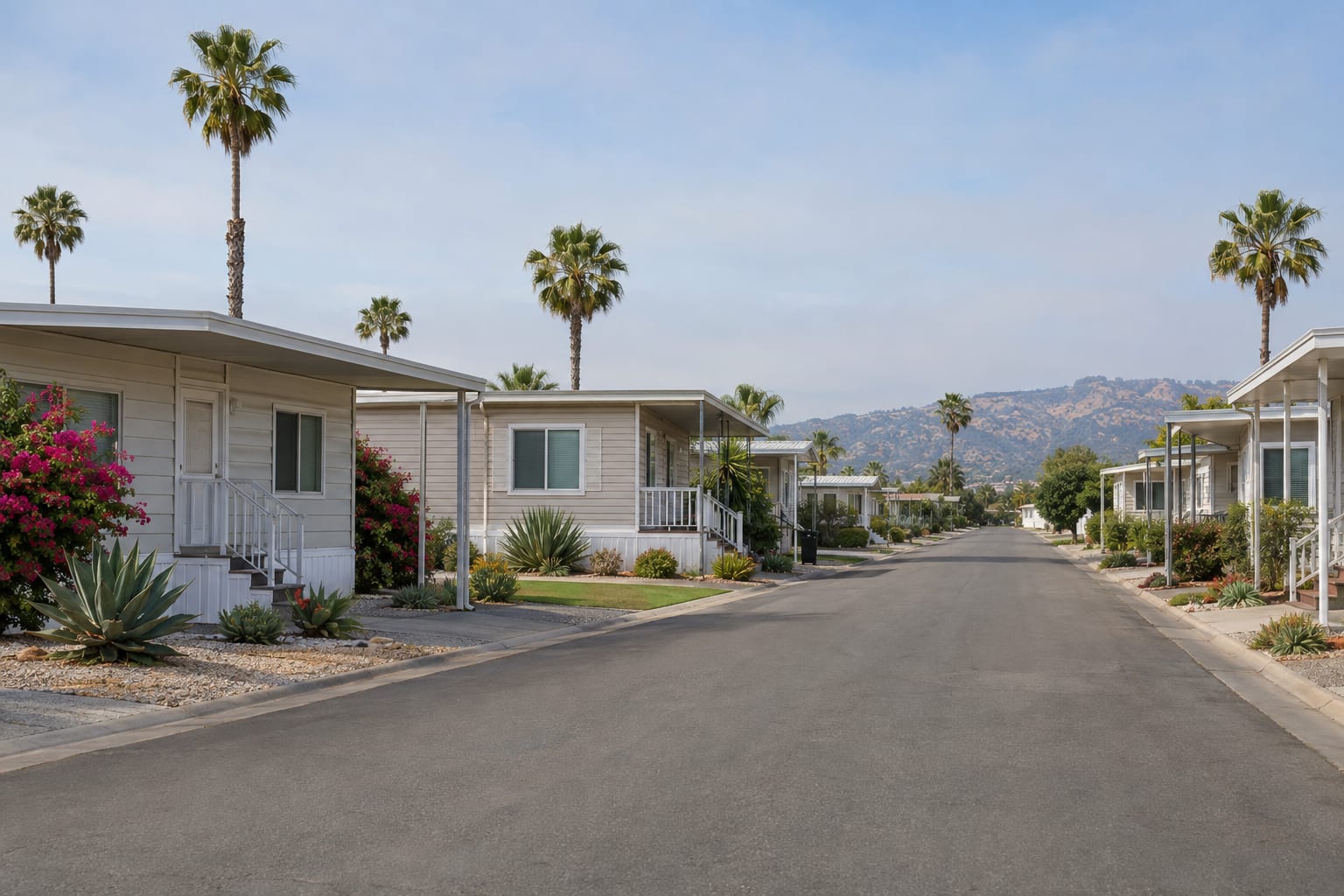
Space rent is paid on top of the loan payment, to a different party. Near the water it tends to be higher than it is inland, because the land under the community is worth more. A lower-priced home in a community with high rent can cost more each month than a more expensive home somewhere else.
Ask the community office, not the listing, for three things in writing: the rent you would pay as the new resident, what that rent includes, and the history of increases. The rent the seller pays today is not always the rent a buyer will be offered. How space rent affects what you can afford shows how to compare two communities on the full monthly cost.
Local rules differ by city. Ask the city the community sits in, Huntington Beach or one in San Diego County, whether a local ordinance covers space rent there. In San Diego County, some cities publish their own rules on space rent increases and others do not. The guide to choosing a community near San Diego links the official pages.
To put a number on the loan part, use the payment calculator alongside the rent the office confirms. Its results are educational estimates, not a loan offer.
What changes when the home is near the coast
The loan and the paperwork work the same way a few miles inland. What shifts is where the money and the attention go.
A home near the beach compared with one farther inland
| What to check | Near the coast | Farther inland |
|---|---|---|
| Space rent | Tends to be higher | Often lower; still confirm it in writing |
| Exterior metal | Salt air corrodes it sooner | Sun and heat are the harder wear |
| Cooling | Milder summers, less air conditioning | Hotter summers, more air conditioning |
| Maps to look up | Flood and tsunami hazard areas | Wildfire hazard zones, and flood |
| Insurance quote | Ask about flood cover | Ask about wildfire |
Salt air is hard on metal, so look at the hardware
Moist, salty air speeds up corrosion, and a manufactured home has a lot of exposed metal. The problem is common enough near the ocean that FEMA publishes guidance on corrosion-resistant metal connectors for buildings in coastal areas, its Technical Bulletin 8.
Surface rust on a railing is a maintenance item. Heavy corrosion on tie-downs, anchors or the frame is a structural question, and a buyer never sees it without looking under the home. If you hire a home inspector, ask before you book whether the inspection includes the underside. An appraisal or a lender’s value review is not an inspection and will not tell you this.
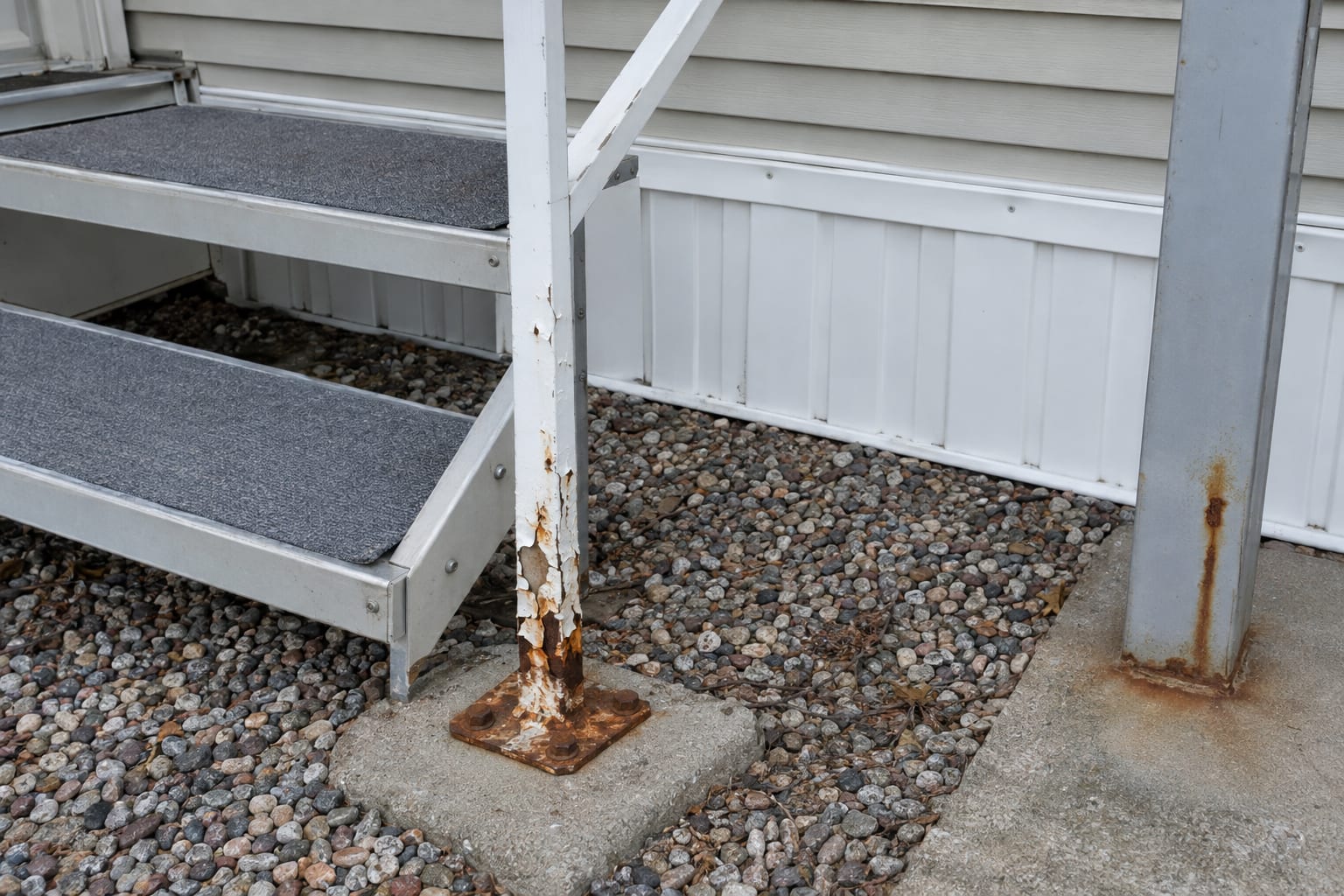
Upkeep near the beach is a routine, not a one-time repair: rinsing salt off exterior metal, touching up paint before rust spreads, and replacing worn hardware with corrosion-resistant parts. Budget for it as a regular cost of the location.
Get an insurance quote on the address before you offer
A lender requires insurance on the home before closing, and where the home sits can change what a policy costs or whether one is offered. Two lookups take a few minutes each.
- Flood. Search the address at the FEMA Flood Map Service Center. FEMA notes that most homeowners insurance does not cover flood damage; flood insurance is a separate policy.
- Tsunami. The California Geological Survey publishes tsunami hazard area maps for the coastal counties, Orange and San Diego included.
Neither map tells you a premium. They tell you which questions to put to the insurer. How insurance costs affect a manufactured home loan explains where the premium enters the loan and when to ask for the quote.
Many coastal homes are older, and age changes the questions
Communities near the beach tend to be long established, so the homes for sale in them range from recent replacements to homes that are decades old. Find out the year the home was built before anything else.
A manufactured home is a factory-built home constructed on or after June 15, 1976 to the federal HUD Code. A factory-built home from before that date is, technically, a mobile home. Loan programs treat the two differently, and not every program accepts every age of home. Ask whether financing is available for the home you are looking at before you pay for an inspection.
With an older home, ask the seller three more things: whether the HUD labels and the data plate are still on the home, whether additions such as an enclosed porch or an extra room were built with permits, and when the roof was last replaced. An insurer is likely to ask about the roof as well.
Check the community’s age rule early
Many communities near the coast are restricted to older residents and are usually described as 55+ or senior communities. Others are open to all ages. A listing does not always say which.
Ask the office for the rule in writing, including who else may live in the home and whether it can be rented out. The age rule decides whether you can live there, and it also decides who can buy the home from you later. The community checks it as part of its own resident application.
This article is general information, not legal or insurance advice. Community rules, local ordinances and insurance requirements change, so confirm them with the community, the city and the insurer.