
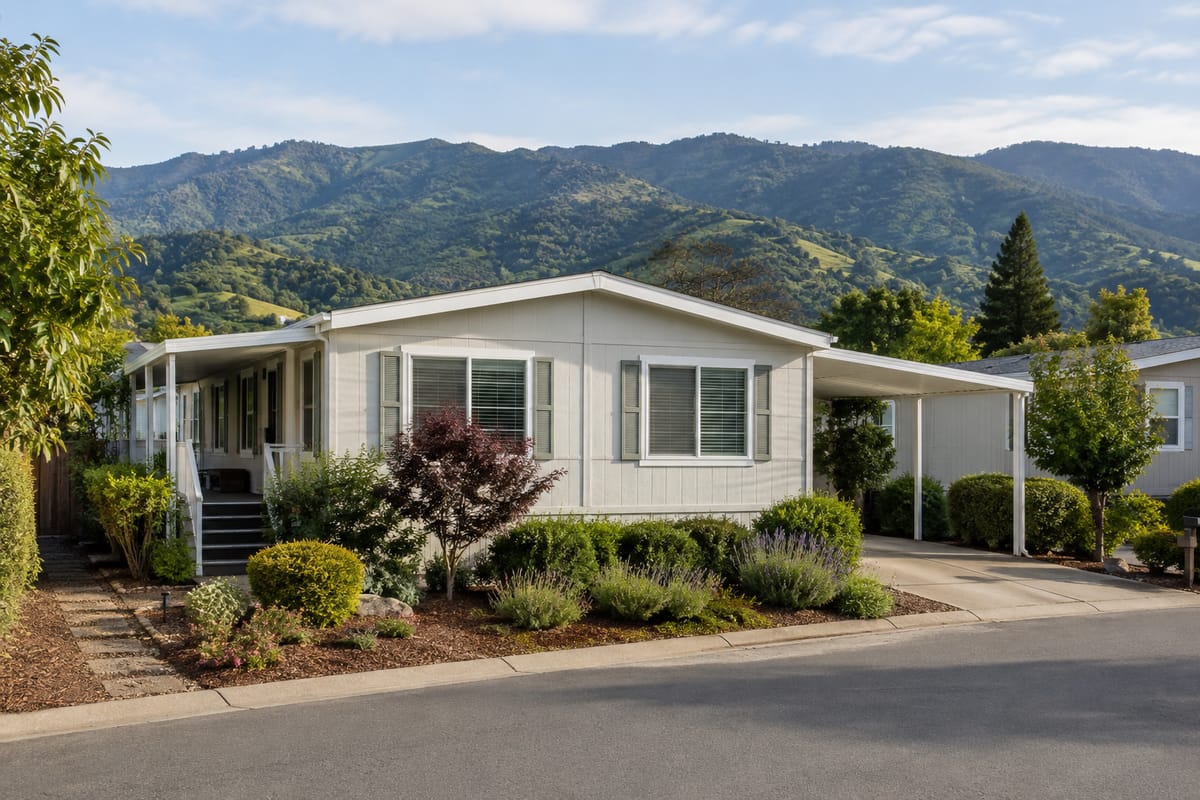
A manufactured home for sale in San Jose usually sits in a mobilehome park. The city’s planning department counts 59 parks with an estimated 10,836 homes, the largest number of mobilehome households of any city in California, and notes that these communities have historically been a more affordable way to own in Silicon Valley. You buy the home and lease the space under it, so the cost of the land reaches you as monthly space rent rather than as part of the purchase price.
For the loan, that setup means the home is financed on its own as personal property with a chattel loan, the title is handled through HCD rather than the county recorder, and the park’s resident approval is a separate review from the lender’s. The California hub covers those statewide basics.
This page covers what is particular to San Jose: a city rent ordinance and a park-preservation policy that most California cities do not have, the Coyote Creek flood of 2017, and the earthquake questions a Santa Clara Valley buyer should ask. Santiago Financial, Inc. has financed manufactured and mobile homes in California for more than 50 years and reviews every application individually.
Space rent in San Jose: the city has its own ordinance
Ask the park for the current space rent, what it includes, the increase history for recent years and the lease term on offer, all in writing. Two homes at the same price can cost very different amounts to own once space rent is counted, and how space rent affects what you can afford shows the arithmetic.
San Jose is one of the California cities with its own Mobilehome Rent Ordinance. The city’s Rent Stabilization Program says the ordinance covers spaces for which plumbing, electrical and sewer permits were issued before September 7, 1979, that some spaces are exempt, and that it publishes a map of covered parks.
Whether a particular space is covered, and what the ordinance allows, is a question for that program and the park’s management, not something to assume from the park’s age. California’s Mobilehome Residency Law applies in every park in the state. HCD summarises your rights as a mobilehome park resident and runs a Mobilehome Residency Law Protection Program for certain disputes. This is general information, not legal advice.
The park-preservation policy, and why a buyer should still ask
Because parks here sit on valuable land, buyers often ask what happens if the park is sold or redeveloped. The city’s answer is a General Plan land use designation called Mobilehome Park, adopted through text amendments in 2017 and 2018, whose stated intent is to preserve existing parks and avoid displacing long-term residents. The city’s Mobilehome Park Protection and Redesignation Project page explains that an owner would need City Council approval of a General Plan amendment before redeveloping designated land, and tracks which parks have been redesignated.
It is a protection, not a guarantee. Ask the park’s management who owns the land and whether any application is pending, and read what happens to your loan when a park is sold. The same city page notes that some San Jose parks are restricted to residents aged 55 and over and that a few are resident-owned with a homeowners association; each changes what the community asks of a buyer, so ask early.
Coyote Creek, flood maps and earthquake bracing
On February 21, 2017, Coyote Creek overtopped its banks and flooded hundreds of homes, according to Valley Water, which has since built an interim floodwall, repaired a levee beside a mobilehome park and begun a longer-term flood protection project. The lesson for a buyer is not to avoid the creek but to check the map before an offer, not during escrow.
Local factor, what it changes, and where to check
| Local factor | What it changes for a buyer | Where to check |
|---|---|---|
| Flood zones | San Jose participates in the National Flood Insurance Program; a home in a mapped Special Flood Hazard Area needs a separate flood policy, which a lender can require | The city’s Flood Hazard Zones page and FEMA’s Flood Map Service Center |
| Earthquake shaking and liquefaction | Homeowners and mobilehome policies do not cover earthquake damage; USGS maps liquefaction hazard across the northern Santa Clara Valley, including San Jose, for scenario quakes on the San Andreas, Hayward and Calaveras faults | USGS liquefaction hazard maps, the CGS EQ Zapp parcel map and the California Department of Insurance earthquake guide |
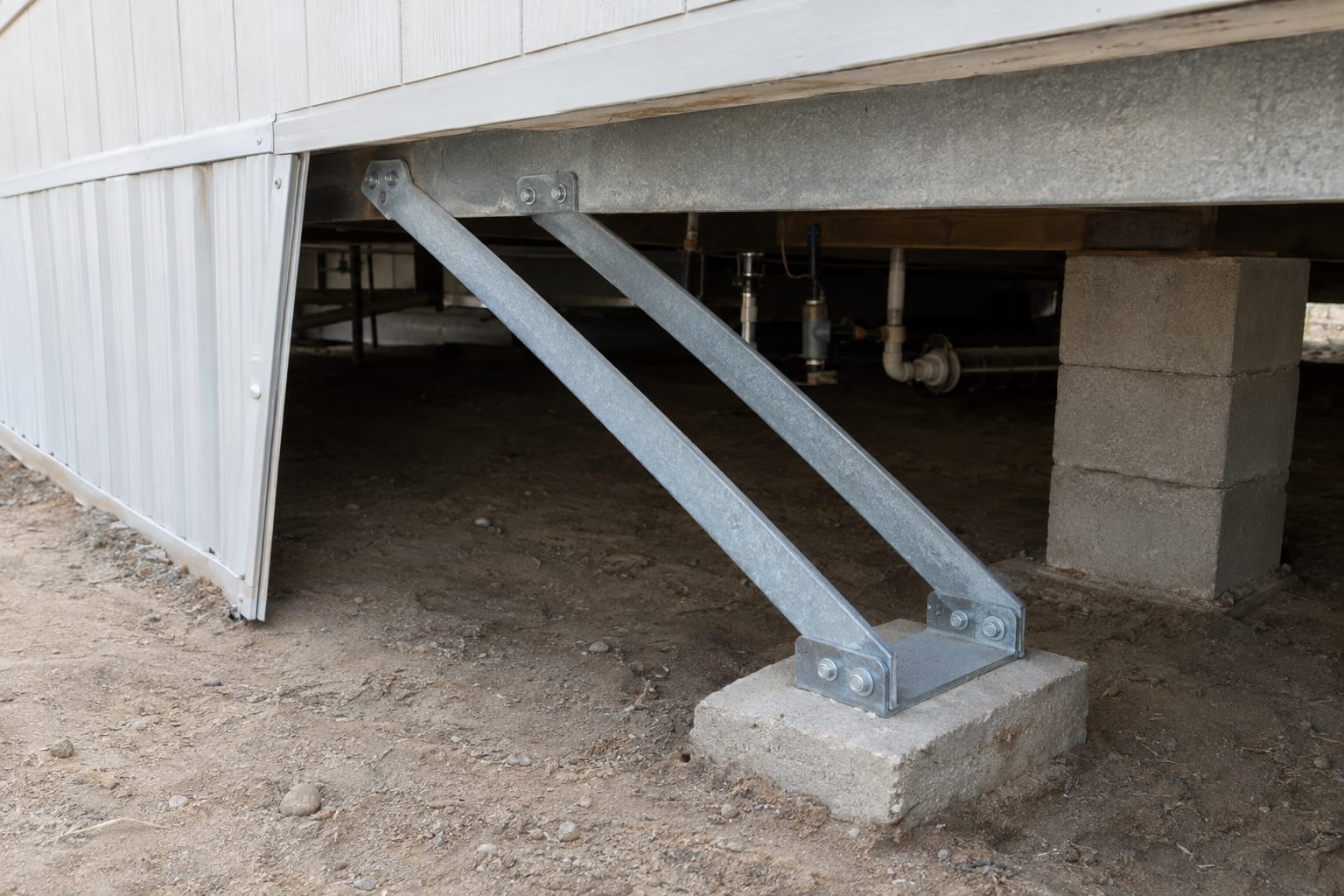
| Bracing under the home | An earthquake-resistant bracing system in a park is installed under an HCD permit, so there should be paperwork; some insurers price for it | HCD’s mobilehome park forms (form HCD MP 50 ERBS) and the CEA mobilehome earthquake insurance page |
The bracing row deserves one more sentence. Ask the seller whether an earthquake-resistant bracing system has been installed under the home, and for the permit paperwork. The California Earthquake Authority, which sells earthquake coverage for mobilehomes through participating insurers, describes a seismic retrofit as a way to strengthen the home’s support and to qualify for a premium discount. Whether a program requires earthquake coverage varies, so ask before you shop for the policy.
Older homes carry older paperwork
The Santa Clara County Assessor’s mobile home owners page explains that manufactured homes bought new after June 30, 1980, and any home on a permanent foundation, pay local property tax, while older homes may still pay HCD’s in-lieu fee. An older home can be moved onto the county roll voluntarily, but it cannot be moved back.
HCD requires a county tax clearance before it transfers title to a home on the local roll, so ask early which system the home is on and whether the title is in the seller’s name. California HCD title basics lists the records a clean transfer needs.
Nearby areas
We finance manufactured homes throughout California, so a city without its own page is still served. Guides for the wider region cover Salinas, Santa Rosa, Stockton and Modesto.
Before you write an offer on a San Jose park home, ask a specialist to look at the park’s rent-ordinance status and the home’s title with you: talk with a specialist. Pre-qualification is not final approval, and not all applicants or properties qualify.