How to Boost Your Manufactured Home’s Value Before a Loan Appraisal
In the week or two before a loan appraisal, the useful work is repairing what is broken, making every part of the home accessible, and putting the home’s records in one folder. None of that raises a home’s value above what recent sales of similar homes support. What it does is keep avoidable faults, blocked access and missing paperwork from pulling the number down.
That limit is worth accepting early. An appraisal is an independent opinion of what the home is worth, and most of what drives it is fixed: the year, the size, the location and the comparable sales. Condition and documentation are the parts you still control.
What the appraiser looks at during the visit
An appraiser is not hunting for defects the way an inspector does; the two jobs are compared in inspection vs. appraisal. The visit is about recording what the home is and what shape it is in.
What gets noted, and what you can do about it this week
| What the appraiser notes | Why it matters | What you can do |
|---|---|---|
| The home’s identity: HUD labels, data plate, serial number | Confirms what the home is and ties it to the title | Know where each one is; clear anything covering the labels |
| Size, sections, rooms and additions | The basis for comparing it with other sales | Clear a path along every exterior wall; have permits for additions |
| Condition of the roof, ceilings, floors, windows and doors | Signs of leaks or deferred repairs weigh on value | Fix the cause, then the damage |
| Skirting, steps, and the foundation or support system | Shows how the home is set up and kept | Replace missing panels; tighten steps and handrails |
| Heating, cooling, water heater and utilities | Systems are expected to work | Keep utilities on; make the equipment reachable |
| Comparable sales | The main evidence of value | Nothing, but you can share sales you know about |
If you are not sure where the labels and the data plate are, HUD label, data plate and serial number shows where to look.
Repairs worth finishing before the visit
Start with anything that suggests water or neglect, because those are the faults that make a reader of the report wonder what else is wrong.
- Leaks and stains. Fix the source first, whether it is the roof, a window or plumbing, then repair the stained ceiling panel or soft floor. A fresh stain cover over an active leak helps no one.
- Soft or uneven floors. Common near bathrooms, the water heater and exterior doors.
- Skirting. Replace missing or broken panels and re-seat any that have come loose.
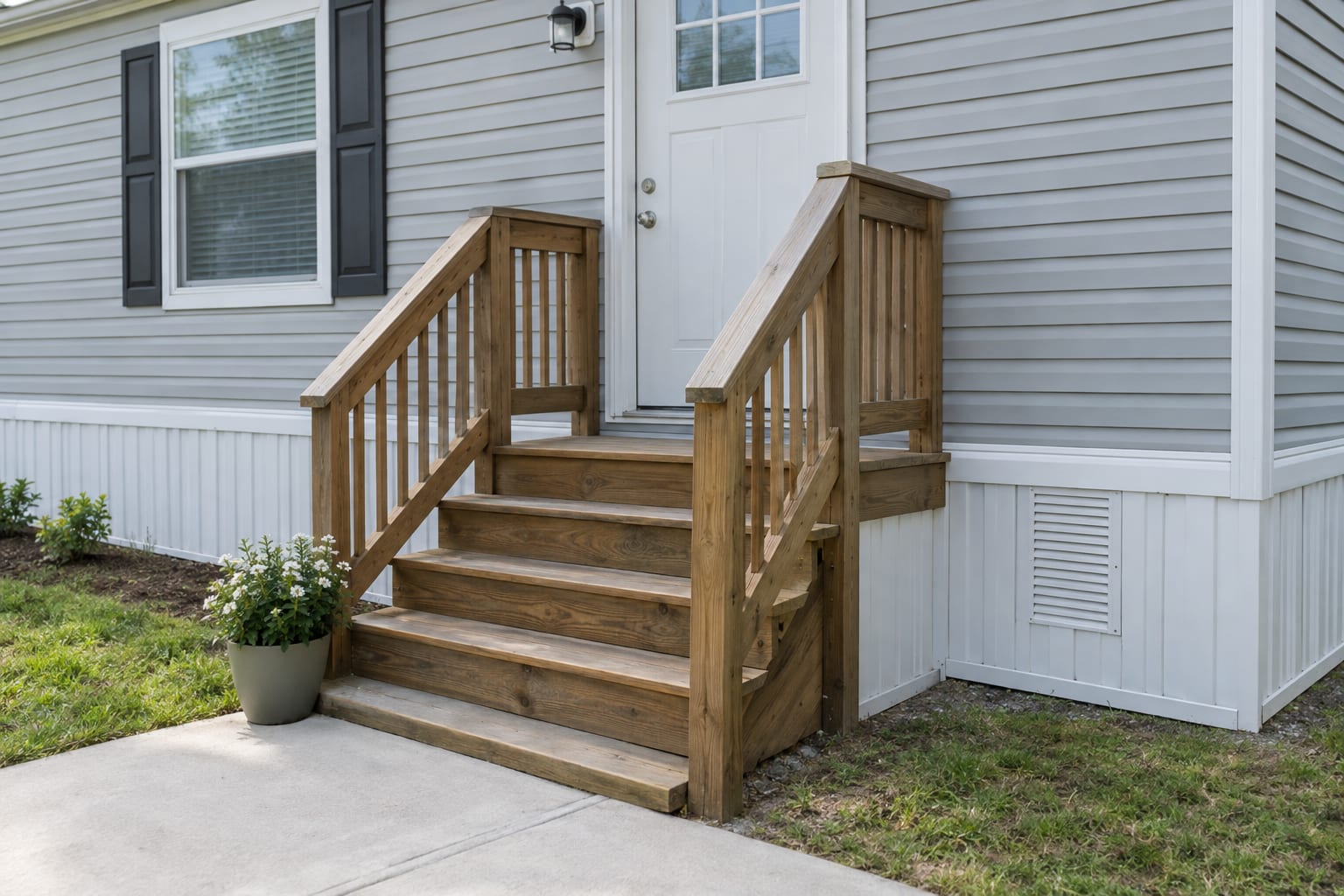
- Steps, landings and handrails. They should be solid underfoot and firmly attached.
- Windows and doors. Replace cracked panes and repair doors that do not close or latch.
- Small plumbing and electrical faults. Dripping faucets, a running toilet, missing cover plates, dead light fixtures.
Do not begin anything you cannot finish. A kitchen with the counters off or a floor with the covering pulled up reads worse than a dated room that works. New decor and smart-home gadgets will not move the number. Whether a real remodel is worth the money is a different question, covered in should I remodel before refinancing or selling.
Clear the way to every room and every wall
The appraiser has to see the home to rate it, and what cannot be seen cannot be credited.
- Keep the electricity, water and gas on so the systems can be seen working.
- Open every room, and make the water heater closet, furnace and electrical panel reachable.
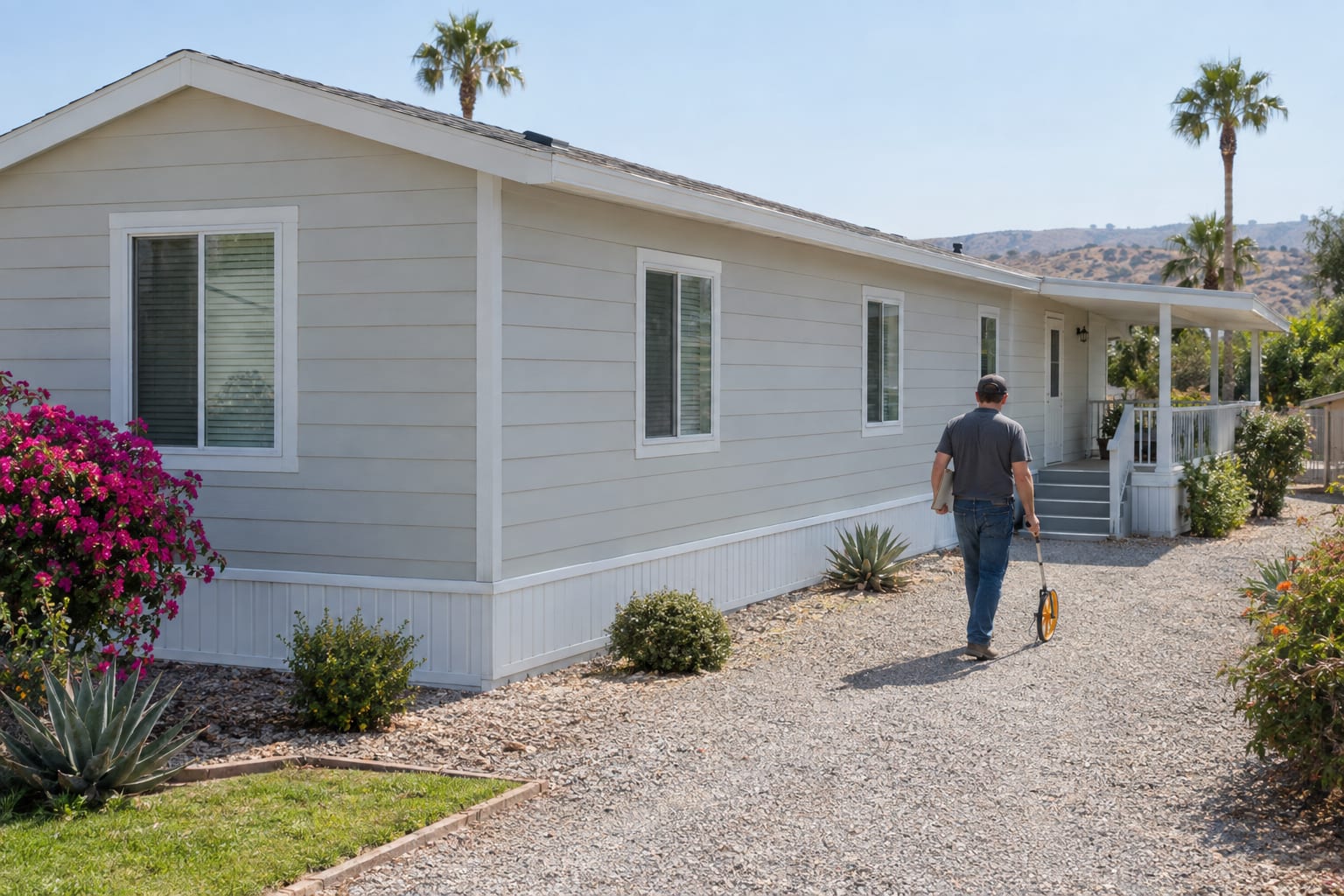
- Move stored items, bins and vehicles away from the exterior walls so each side can be measured and photographed.
- Trim plants that cover the skirting, the HUD labels or the steps.
- Clean enough that floors, walls and ceilings are visible. Clutter hides condition.
- Secure pets, and tell the community office a visitor is coming if the community asks for that.
Put the home’s records in one folder
Hand over copies, not originals. The appraiser decides what to use, but records answer questions that would otherwise be left to a guess: when the roof was replaced, whether the added room was permitted, which serial number belongs to which section.
For a home in a California community, a comparable sales report from Santiago Financial, Inc. lists the reported sales in that community. It is not an appraisal, but it tells you what evidence the appraiser is likely to be working from.
A week-by-week plan
From two weeks out to the day after
- Walk the home with a notepad About two weeks ahead, go through every room and around the outside, and list what is broken, stained, loose or blocked.
- Make the repairs Do the water-related ones first. Keep the receipts.
- Build the folder Find the title or registration, the label and serial numbers, and the permits. Order copies of anything missing now, because agencies take time.
- Clear and clean A day or two before, open up access inside and out.
- Be available on the day Let the appraiser in, hand over the folder, answer questions, and then leave room to work.
- Read the result If the report has a factual error, such as the wrong size or a missed addition, tell your loan specialist and ask how a correction can be requested. If the facts are right and the value is lower than you hoped, the usual options are a different loan amount or waiting; on a purchase, it becomes a conversation with the seller.
If the appraisal is for a refinance, the value is one of several things reviewed. When refinancing a mobile home loan makes sense covers the rest.