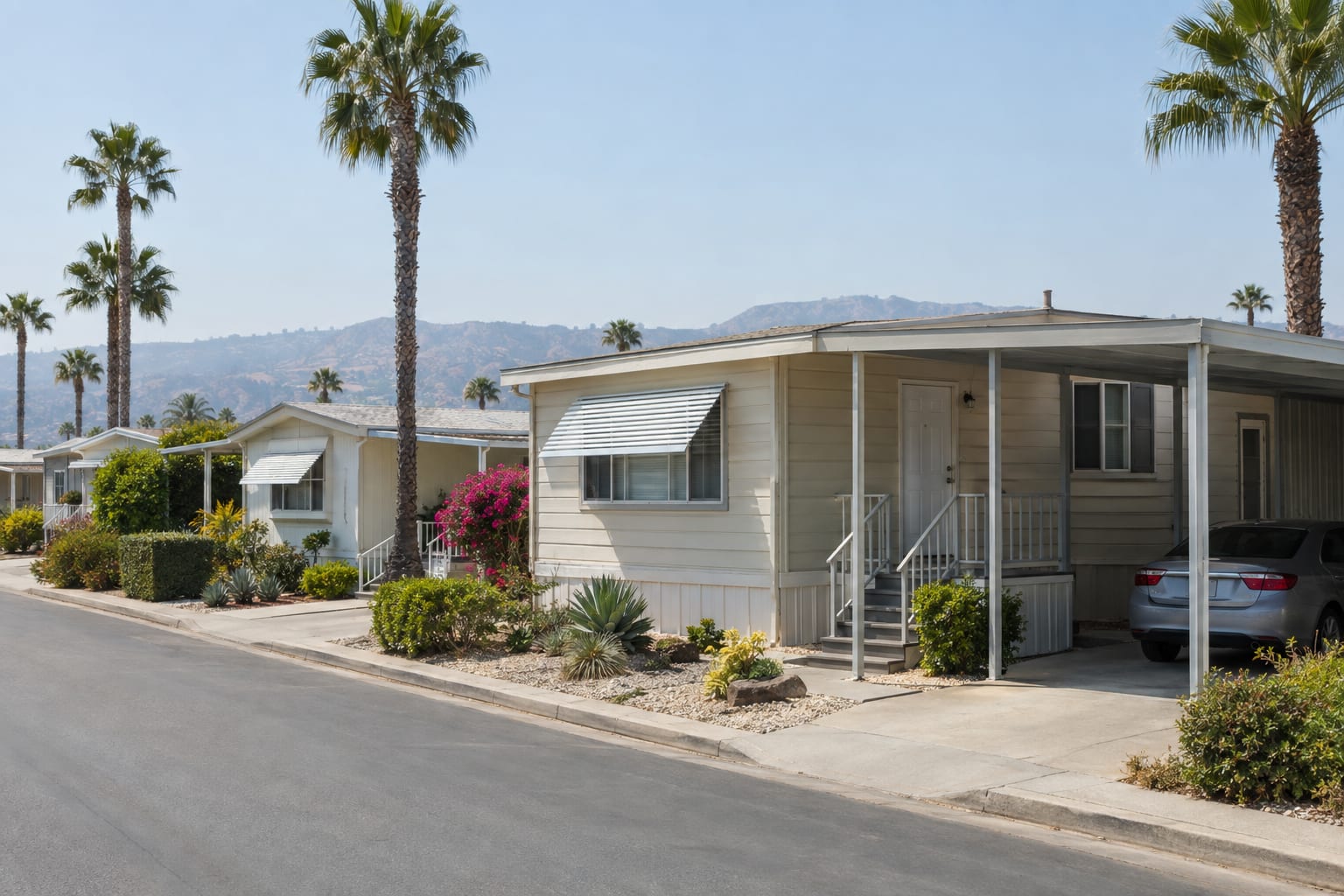
Essential Fall & Winter Maintenance Tips for Manufactured Homes in California & Arizona
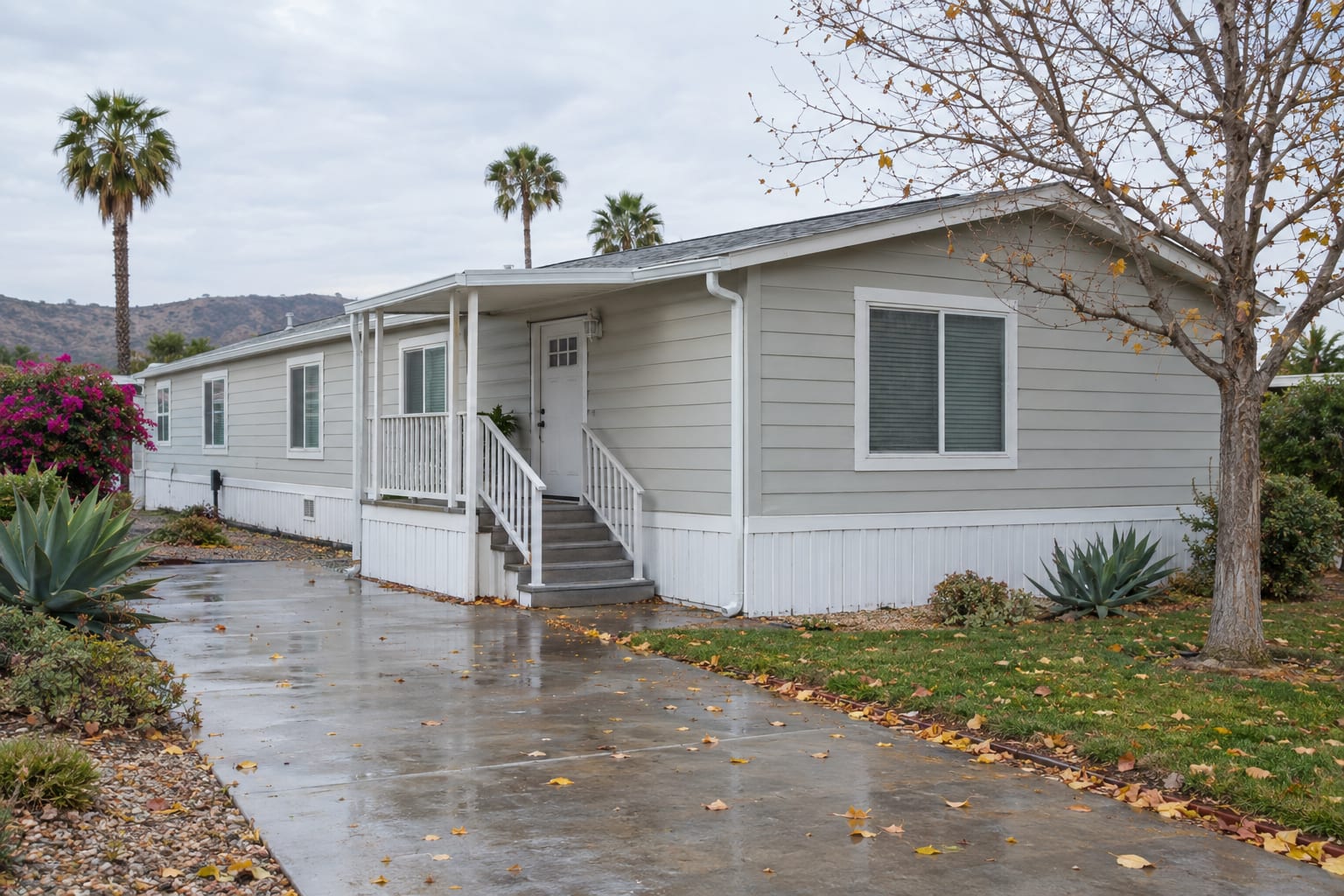
What a manufactured home needs before winter depends on where it sits. On the California coast and in the inland valleys of either state, the job is keeping rain and wind out. In the mountains it is freeze protection. In the low desert the list is short: switch from cooling to heating and repair what the summer sun wore out.
A few jobs apply everywhere, because they are about how a manufactured home is built rather than where it is. Start with those, then find your climate in the table.
The jobs every manufactured home needs before winter
A manufactured home has a low-slope roof sealed at its seams, an open space underneath closed in by skirting, and a furnace in a closet. Those three places are where winter trouble starts, whatever the climate.
Run the furnace before the first cold night so that a problem shows up while technicians still have open appointments. The U.S. Fire Administration’s advice is to have heating equipment cleaned and inspected each year by a professional (heating fire safety), and to test smoke alarms monthly and replace the whole alarm every ten years.
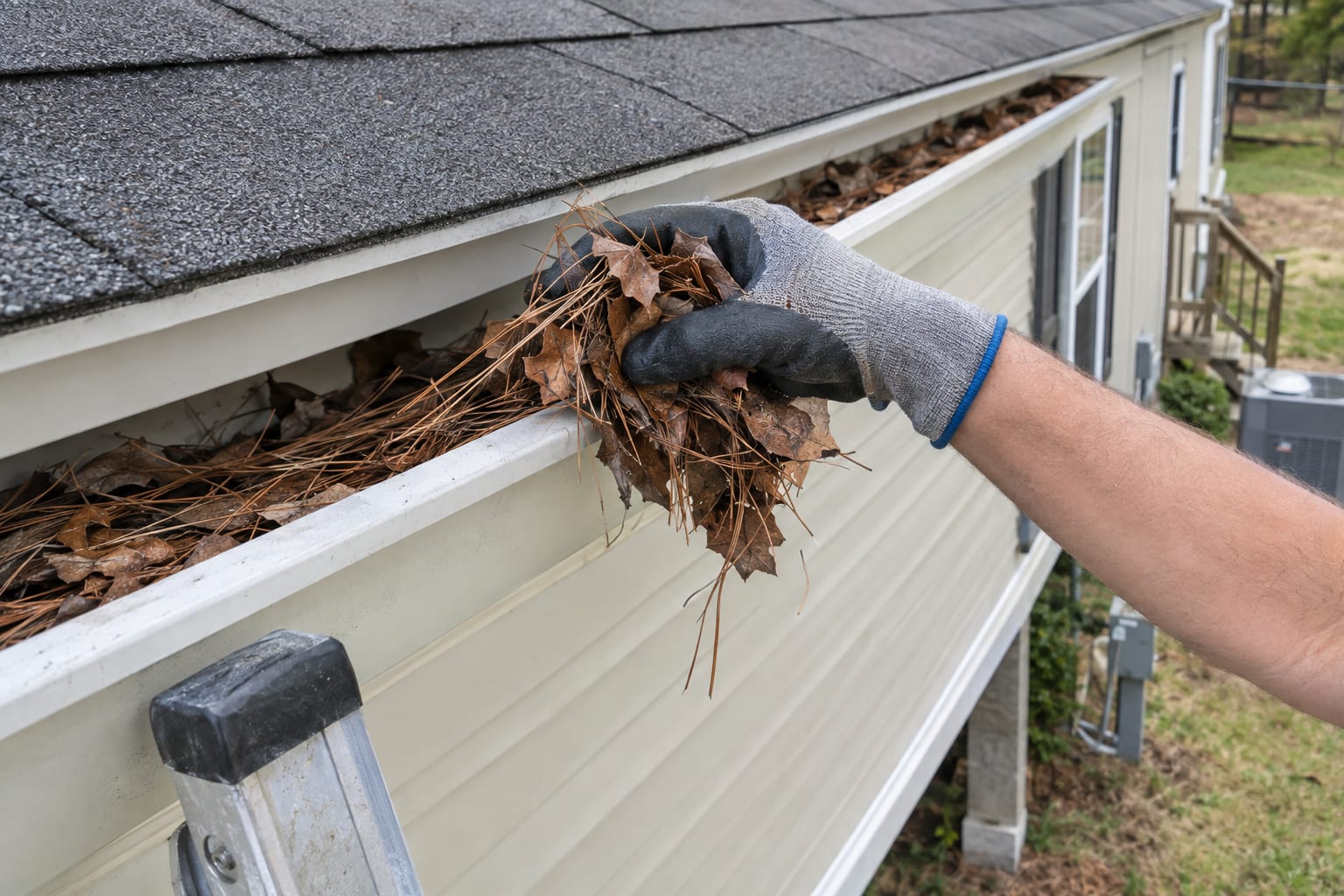
The leveling, tie-down and belly-wrap checks that a manufactured home needs once a year are covered in maintaining a manufactured home over the long term. Fall is a good time for them if you have not done them since spring.
Fall priorities by climate zone
What to do first, by where the home sits
| Where the home is | What winter brings | Do first |
|---|---|---|
| Coast and coastal valleys | Rain, wind and salt air | Roof seams and gutters; rust on awning posts, straps and fasteners |
| Inland valleys and foothills | Heavy rain after a long dry season, strong winds | Drainage away from the home; secure awnings and carports; clear dry leaves |
| Mountains and high country | Hard freezes and snow | Pipe protection under the home, heating fuel, roof and awnings |
| Low desert | Mild days, cool nights, an occasional frost | Test the heat, shut down the evaporative cooler, re-seal sun-damaged roof and window seals |
On the coast, keep the rain out and watch for rust
Winter on the coast is wet rather than cold. Leaks show up first as stains on the ceiling panels near outside walls and around vents, so look there after the first good rain, and look at the roof seams before it.
Salt air is hard on metal. Check the bases of awning and carport posts, the tie-down straps and anchors under the home, and the screws along a metal roof and the skirting track for rust. A post base that has rusted through is a wind problem waiting for a storm.
Moisture also builds up indoors when windows stay shut. Run the bathroom and kitchen fans, and check for condensation at the windows and for soft spots in the floor around the tub and the water heater.
In the inland valleys and foothills, plan for wind and the first hard rain
After a long dry season, gutters are full of leaves and the ground is baked, so the first storms run straight off. Make sure water drains away from the skirting rather than pooling under the home, and clear the downspout outlets. If your area floods, check your city or county’s storm page for sandbag locations before the rain, not during it.
Strong, dry winds can arrive before the rain does. Tie down or store anything loose, check how awnings and carports are fastened, and ask the community before trimming a limb that overhangs the roof, since park trees are usually management’s. The same dry winds carry embers, so clear the roof, the gutters and the five feet around the home while it is still fire weather. Wildfire preparedness for manufactured home communities covers that strip in detail.
In the mountains, freeze protection comes first
In the California mountains and the Arizona high country, the water line where it rises from the ground to the floor is the first thing to freeze, and the skirting is what keeps the wind off it. Insulate the line, fit heat cable that is listed for the purpose, close every gap in the skirting, and drain the outdoor faucets and irrigation before the first hard freeze.
Snow adds the roof. The data plate inside the home states the roof load it was designed for, and carports and awnings carry snow too. Winterizing a manufactured home in Arizona covers freeze protection step by step, including what to do if the home will sit empty, and the same steps apply to a home in the California mountains.
In the low desert, the list is short
Frost is occasional in the low desert, so the winter jobs are mostly about the change of season. Switch the thermostat to heat and run it before the first cool night. Shut down the evaporative cooler if the home has one: turn off and drain its water line, drain the pan, and cover it. On the few nights a frost is forecast, cover the outdoor faucets and any exposed pipe.
The bigger job is repairing what the summer did. Heat dries out the sealant around windows, doors and roof vents, and the sun breaks down a roof coating. Walk the outside with a caulk gun and look at the roof coating before the winter rain arrives.
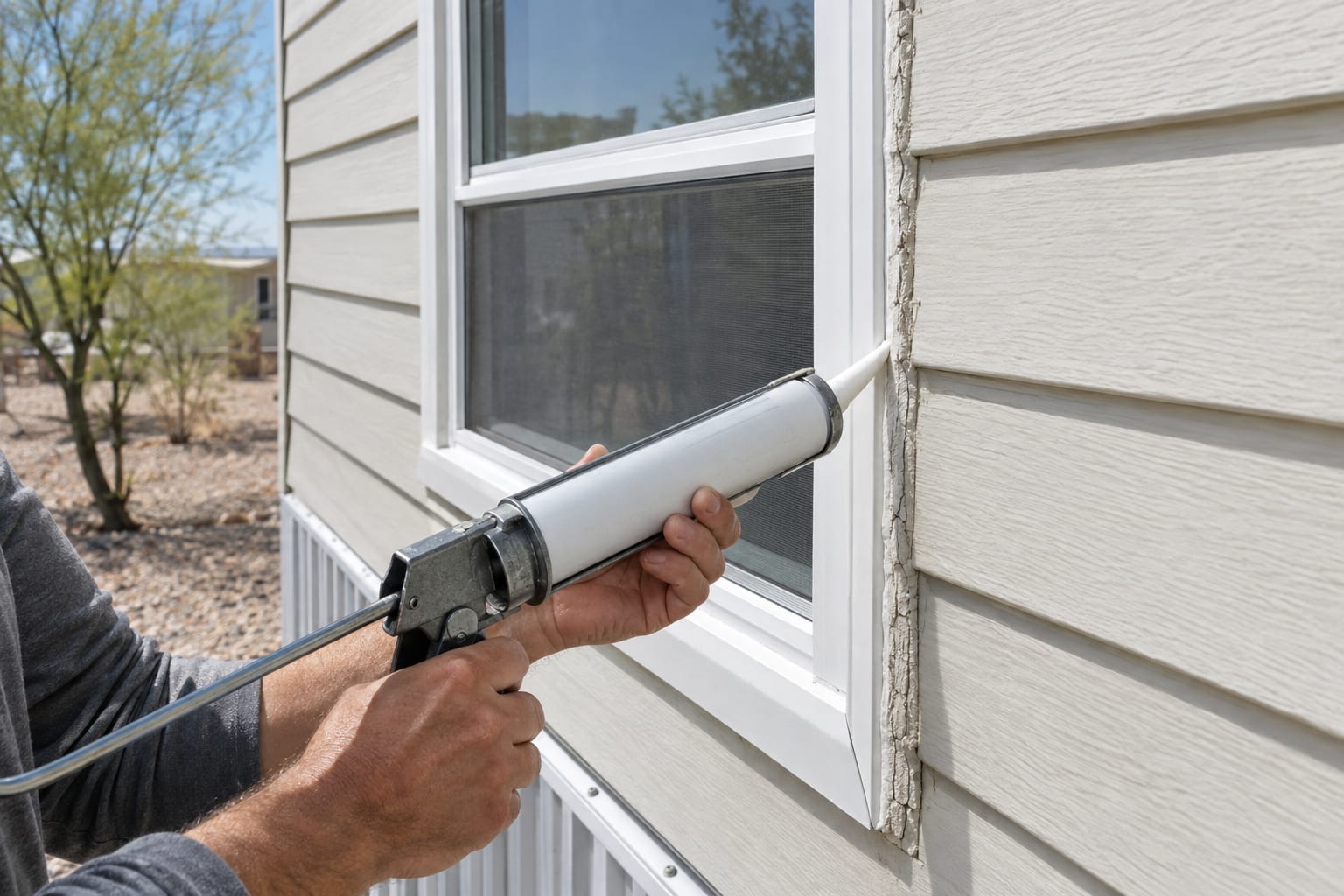
Sealing and insulation beyond weatherstripping, including the skirting and floor, are covered in energy efficiency in a manufactured home.
Before you replace anything, check the permit and the park rules
Routine maintenance generally needs no permit. Replacement and structural repairs often do. In California, HCD’s alteration guidelines list replacing a furnace or a water heater, and re-roofing, among the jobs that need a permit, while applying a liquid roof coating is not counted as a re-roof (HCD: modifications and alterations). In Arizona, take installation and permit questions to the Arizona Department of Housing. In a community, anything visible from the street generally needs written approval first. This is general information, not legal advice, and agency procedures change.
Take dated photos as you go and keep them with the receipts. They answer an insurer’s questions after a storm and a buyer’s or an appraiser’s questions later. Then repeat the walk-around when the rains end, with the spring inspection checklist, when the winter’s damage shows.