Can I Buy a Mobile Home as a First-Time Buyer? What You Need to Know

Yes. You don’t need to have owned a home before to buy a manufactured home in California or Arizona. A first-time buyer is reviewed on the same things as any other buyer: income, debts, credit history, the cash you can put in, and the home itself. Financing is subject to credit approval, and not every applicant or home qualifies.
What catches first-time buyers out is the order of events. A manufactured home may sit on rented land, it carries its own title with a state agency, and a community may have to accept you as a resident separately from the lender. Take the steps below in order and you avoid most of the surprises.
A first-time buyer’s order of events
- Decide where the home will sit A rented space in a community, or land you own. This choice sets the type of loan.
- Add up the whole monthly cost Loan payment, space rent if there is any, insurance, taxes and utilities.
- Get pre-qualified An early estimate of the range that may be realistic, before you tour seriously.
- Tour homes and write down the details Year, number of sections, serial number or HUD label, and who holds the title.
- Apply, and start the community’s application These are two separate reviews, and both have to finish.
- Clear the conditions and close Documents, value, title, insurance and escrow, then signing.
Leased space or owned land decides the kind of loan
Every later step depends on this one, so settle it before you look at listings.
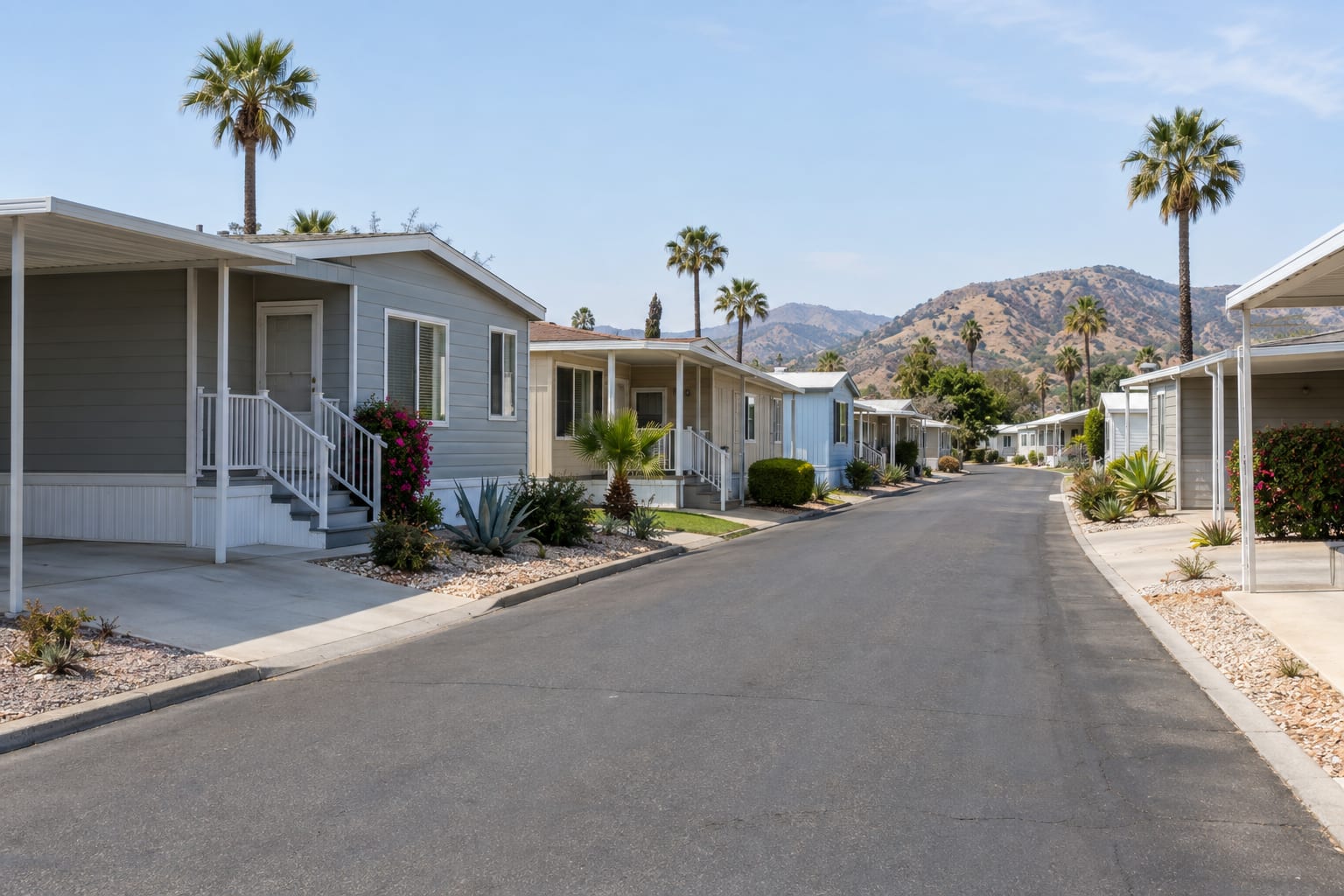
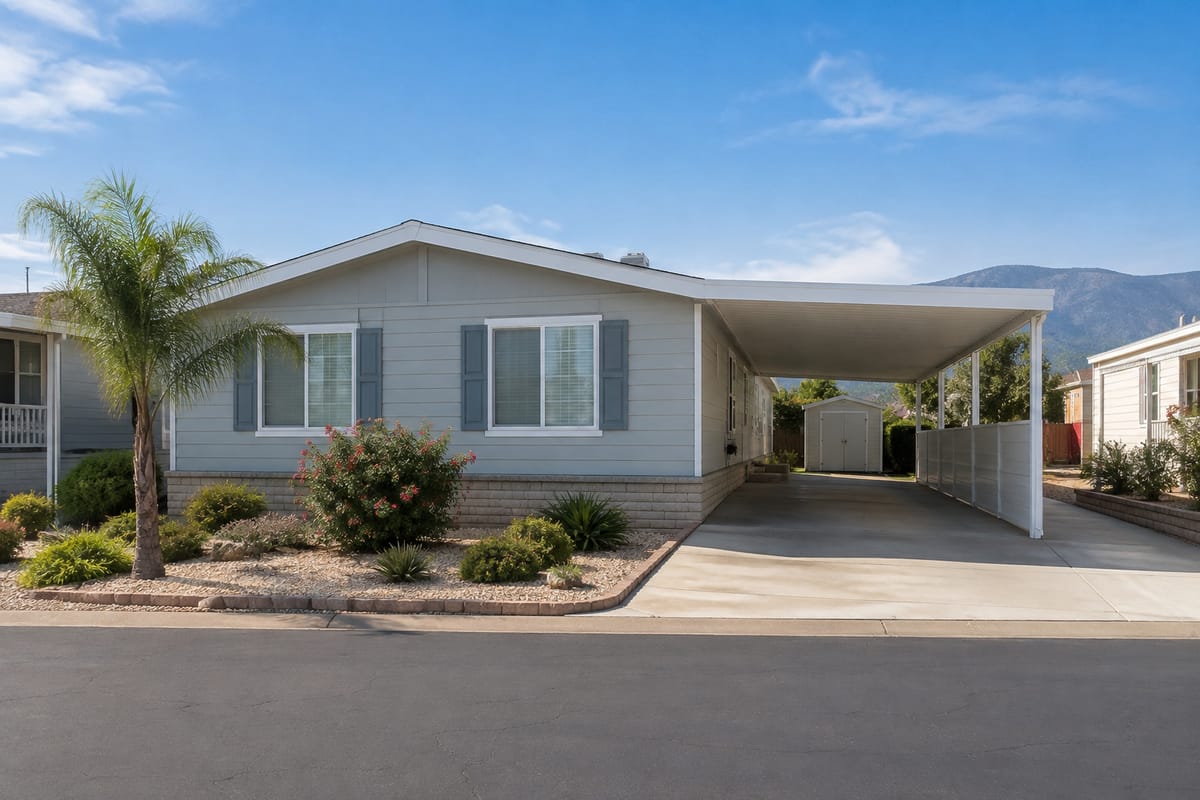
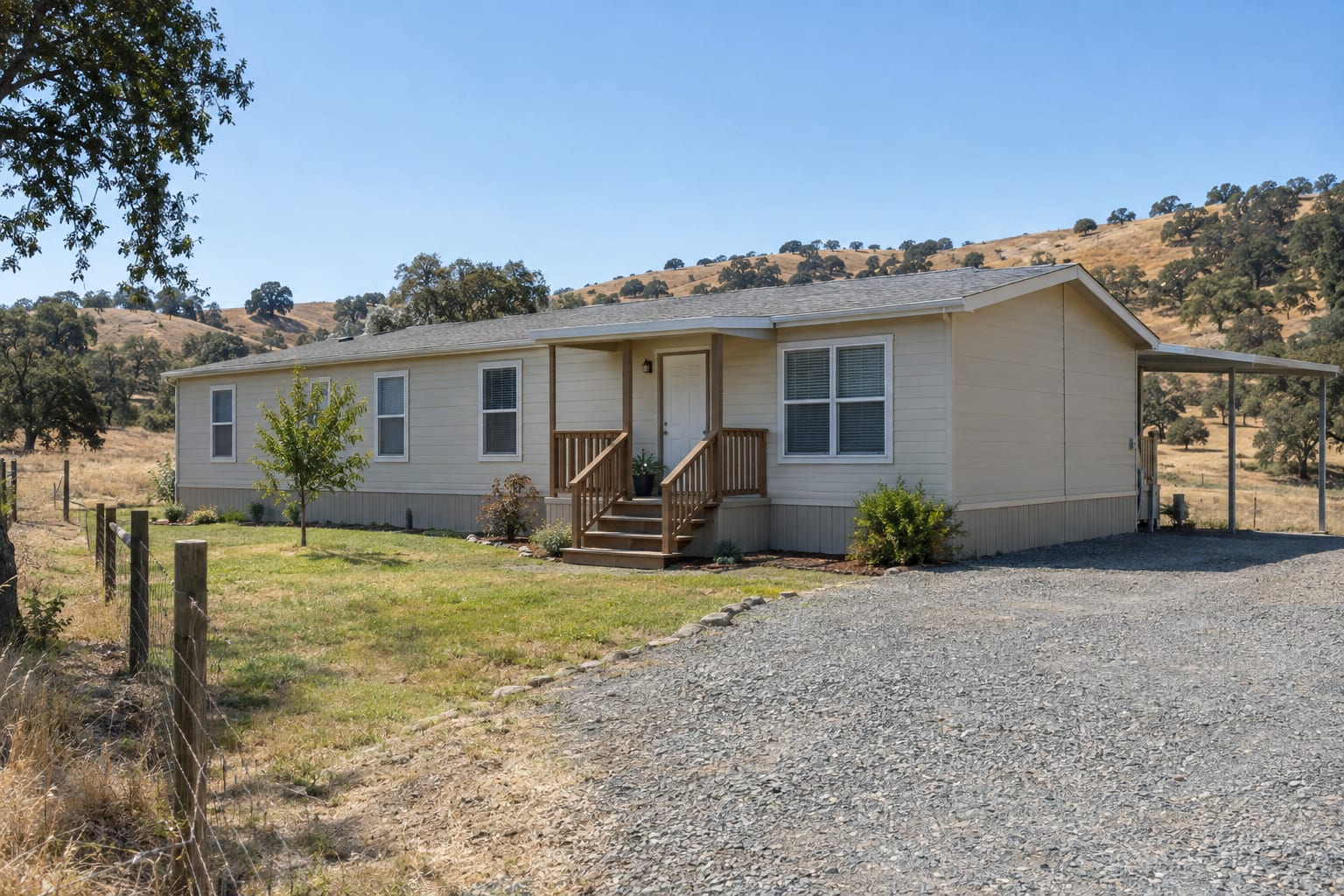
In a land-lease community, which many people call a park, you own the home and rent the space under it. The home is financed on its own as personal property with a home-only loan, also called a chattel loan. On land you own or are buying, a home that is permanently attached can often be financed together with the land as real property.
A home in a community compared with a home on owned land
| In a land-lease community | On land you own | |
|---|---|---|
| What you own | The home | The home and the land |
| Usual loan | Home-only (chattel) loan | Land-and-home loan |
| Monthly housing cost | Loan payment, space rent, insurance, and taxes or fees on the home | Loan payment, property taxes and insurance |
| Who reviews you | The lender and, separately, the community | The lender |
| Ownership record | A state title for the home | A state title, or county property records once the home is recorded as part of the land |
California titles and registers manufactured homes through HCD, not the DMV. Arizona titles are handled by the MVD, generally one title per section. That is general information, not legal or tax advice.
Not sure which setup you’re heading for? Find your financing path asks three questions (state, goal and land) and points you to the path to read up on.
Add up the whole month before you compare prices
First-time buyers tend to compare asking prices. For a home in a community, the monthly total tells you more, because space rent (the monthly rent for the homesite) is paid on top of the loan payment and differs from one community to the next.
A lender counts it as well. Your gross monthly income is compared with the full housing cost, meaning the payment, taxes, insurance and any space rent, and acceptable ratios depend on the program and your other debts.
To try your own figures, use the payment calculator. Its results are educational estimates, not a loan offer.
Get pre-qualified before you tour seriously
Pre-qualification is an early, informal estimate of the financing range that may be realistic, based on what you tell the lender about your income, debts and savings. It is not final approval. Its value to a first-time buyer is practical: you tour homes in a price range that makes sense instead of guessing. Pre-qualification compared with pre-approval explains what each one does and does not promise.
Two questions always come up at this point:
- Credit. Credit requirements vary by program and investor, so ask what applies to your scenario. Pull your free reports at annualcreditreport.com first and dispute any errors. With no past mortgage on your record, expect to be asked about your rent history.
- Down payment. There is no single down payment. It depends on the program, your credit, the home, and whether the land is leased or owned. How down payments work in California and Arizona covers what moves the figure. Keep some savings back for closing costs, the first insurance premium, moving and early repairs.
At each showing, write down what a lender will ask
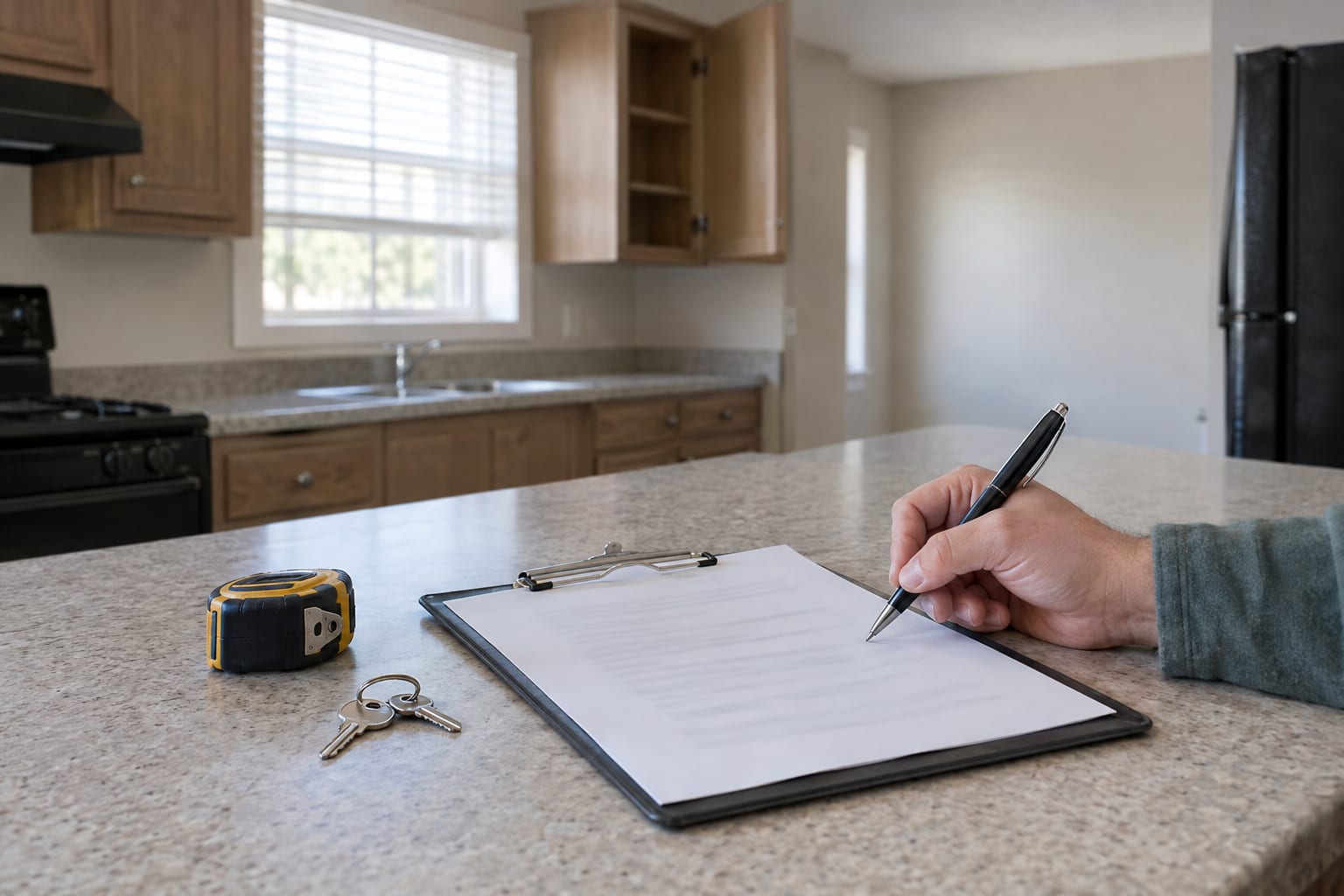
The details that decide whether a home can be financed are the ones nobody thinks to ask about on a tour. Capture them at the door.
The year matters most, because it decides which of these three the home is:
Three kinds of factory-built home
| Term | What it means |
|---|---|
| Manufactured home | Built on or after June 15, 1976 to the federal HUD Code. Each section carries a HUD label. |
| Mobile home | Built before June 15, 1976, before the HUD Code existed. Lenders treat these homes differently, so ask before you make an offer. |
| Modular home | Built to state and local building codes instead of the HUD Code, and generally financed like a site-built house. |
The date is when HUD’s manufactured home standards took effect. People say “mobile home” for all three, and that’s fine in conversation. A lender will still ask for the year.
The before-you-shop checklist includes a printable worksheet with a line for each of these items. If you’re buying in California, ten checks for first-time buyers in California adds the state-specific ones: the HCD title, the park lease, local rent rules and earthquake bracing.
Apply for the loan and the community at the same time
Once you’ve chosen a home, you complete a loan application and it is reviewed against current program guidelines. The answer can be an approval with conditions (a list of documents and steps to finish before the loan can fund), a counter-offer on different terms, or a decline.
If the home is in a community, the community runs its own resident application with its own criteria. The lender decides whether to finance the home. The community decides whether to accept you as a resident. A closing needs both.
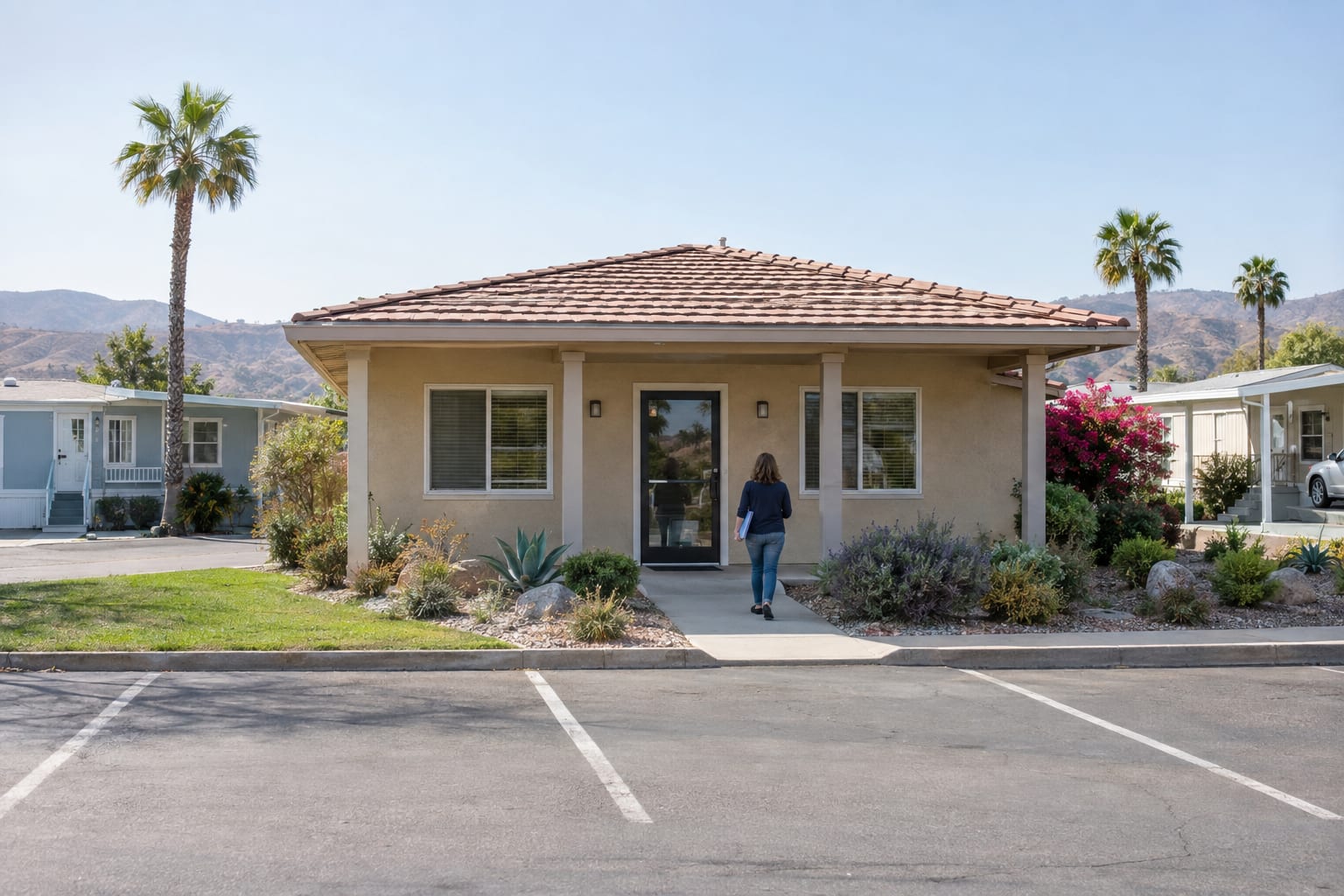
What happens between approval and getting the keys
After approval comes the part you mostly wait through. The home’s value is supported by comparable sales or an appraisal. The title is checked with HCD or the MVD, along with any existing lien to be paid off. Insurance is arranged, and escrow holds the money and documents until every condition is met. Then you sign, the loan funds, and the title transfers to you.
Timelines vary with each transaction. The usual reasons a file waits are a missing document, a community application sent in late, an appraisal visit that takes time to schedule, or a title question such as an old lien. The first two are in your hands.