When to Buy a Manufactured Home: How the Seasons Differ in California and Arizona
There is no season that is reliably the cheapest time to buy a manufactured home. What the time of year does change is practical: who is in town to buy and sell, what the weather lets you see when you tour a home, and how busy the people your purchase depends on are. Those things run on different calendars in California and Arizona. In Arizona’s low desert the busy season is winter, the reverse of most of California. Your loan application is reviewed the same way in every month.
What the calendar changes and what it leaves alone
What does and does not change with the time of year
| Changes with the season | Stays the same all year |
|---|---|
| Who is in town: seasonal residents, families between school years | How your credit, income and down payment are reviewed |
| What a showing can reveal: leaks after rain, cooling in a heat wave | The community’s own resident approval |
| How available community offices, appraisers, escrow and county counters are | The title and registration checks on the home |
| How many other buyers are touring the same homes | What supports the home’s value: its age, condition and comparable sales |
Price is not in the first column because the published figures cannot settle it. The federal Manufactured Housing Survey reports shipments and prices of new homes every month, but it does not cover resales, and a pre-owned home already set up in a community is a resale.
What a seller will accept depends on that seller: how long the home has been for sale, whether they are paying space rent (the monthly rent for the lot in a community) on an empty home, and how many similar homes are for sale nearby. You can ask about all three in any month.
California mostly follows the school year and the rain
In all-age communities, households with children often plan a move for the summer break, so late spring and summer tend to bring more people touring. Age-restricted communities, for residents 55 and older, are less tied to the school calendar.
The weather matters more for what you can see than for what you will pay. Most of California’s rain falls between late fall and early spring, and a visit during or just after a storm shows things a dry-season showing cannot: a stain on a ceiling, water standing against the skirting, a gutter that overflows at the carport.
Inland, a July afternoon tells you how well the air conditioning keeps up. An inspection looks at these in any season. The weather only puts some of them in plain view.
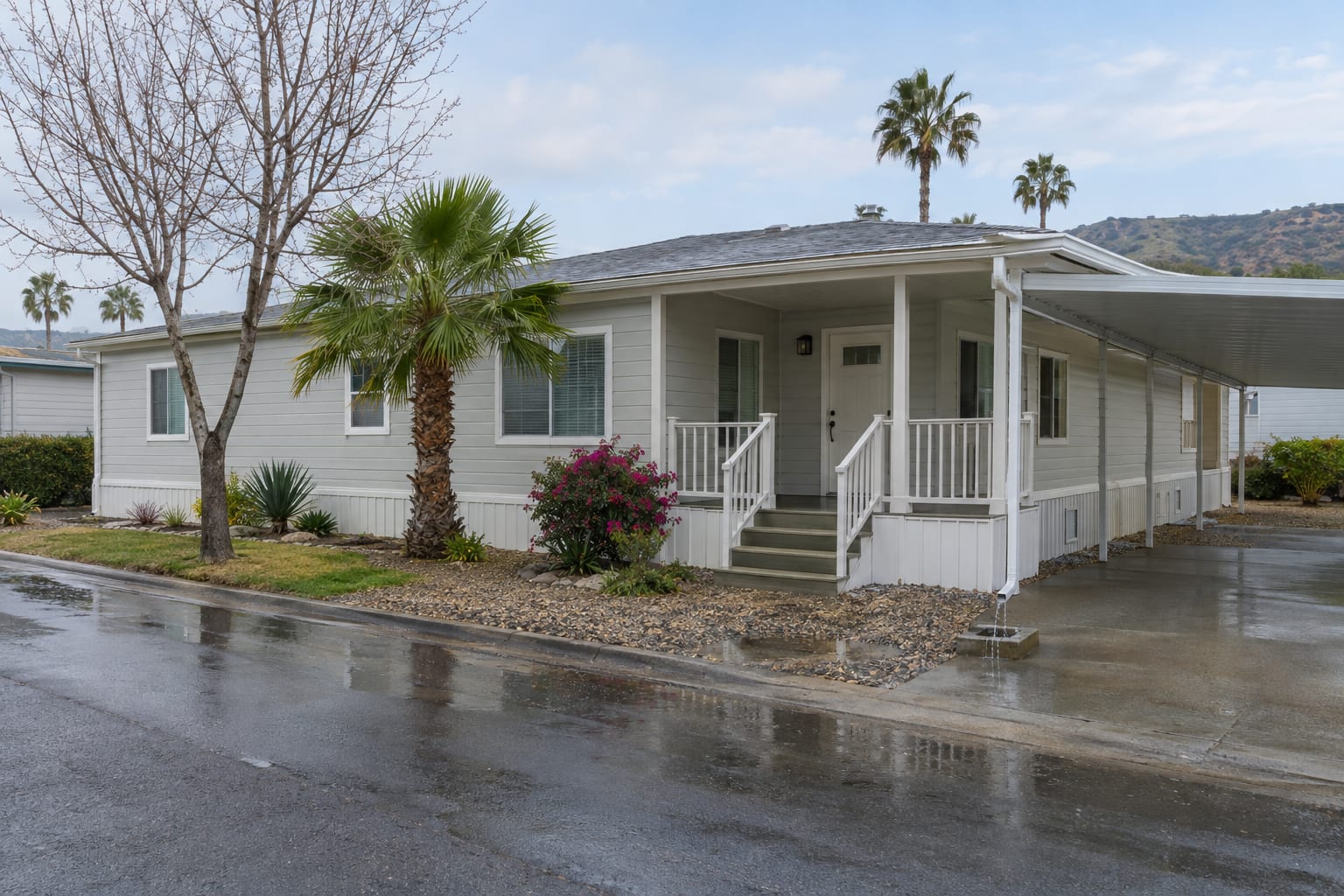
California’s low desert is the exception. Around Palm Springs and the rest of the Coachella Valley, seasonal ownership is common, and the year looks more like Arizona’s.
Arizona’s low desert runs the other way
In the Phoenix area, Tucson, Yuma and along the Colorado River, the calendar is set by heat. The National Weather Service counts an average of 111 days a year at or above 100°F in Phoenix, with the first usually arriving in early May and the last in early October (NWS Phoenix, 1991 to 2020 normals). Winter visitors arrive as that stretch ends and leave as it begins.
In communities with many seasonal residents, that makes winter the active season. Owners are in their homes, buyers are in town and can tour in person, and you can see what daily life in the community is like when it is full.
Summer is quieter. Many homes are closed up and their owners are in another state, so showings, signatures and repair decisions take more coordinating. A summer visit has one advantage: you see the cooling system working at full load, and you can ask for the summer electric bills. A buyer touring in January should ask for those bills too, because a mild winter day says nothing about August.
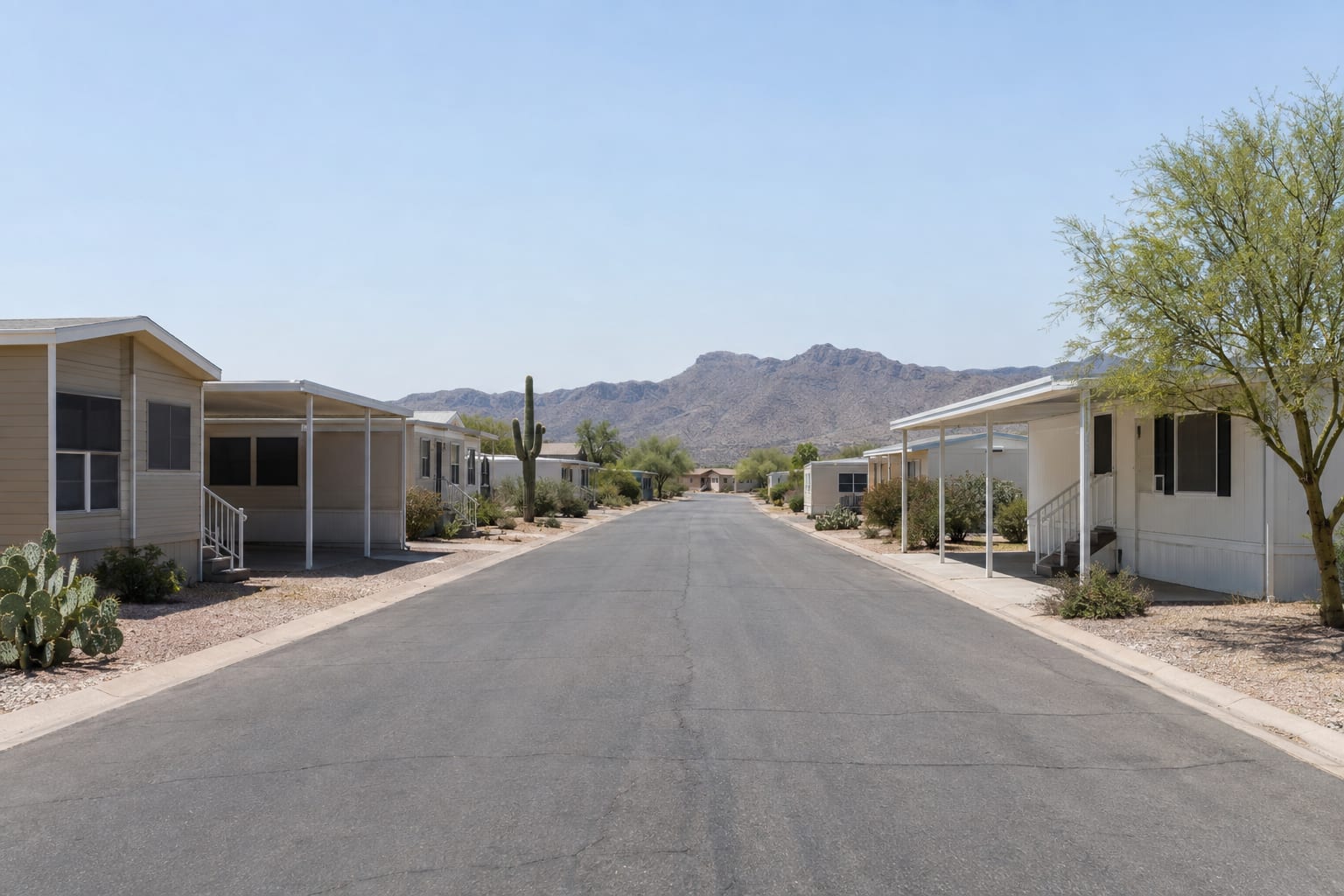
Arizona’s high country, around Flagstaff, Prescott, Payson and Show Low, flips the pattern again. Summers are mild and winters bring snow, so seasonal owners tend to be there in summer, and winter weather can limit access for inspectors and movers. A home’s data plate, the information sheet mounted inside it, lists the roof load zone the home was built for. That is worth checking where snow is routine.
If you plan to live in the home for only part of the year, say so at the start. Many programs and communities require owner-occupancy, so ask whether financing is available for your intended use before you buy. Buying a manufactured home as a snowbird in Arizona covers seasonal ownership in more detail.
The year at a glance
| Time of year | Most of California | Arizona’s low desert |
|---|---|---|
| December to February | Rainy season, when leaks and drainage problems show themselves. Offices keep shorter hours around the holidays. | Seasonal residents are in town and communities are at their fullest. Cooling cannot be judged on a mild day. |
| March to May | Drier weather. Families planning a summer move start touring. | Seasonal residents begin to leave. The first 100-degree days usually arrive in May. |
| June to September | School is out, a common time for household moves. Inland heat tests the air conditioning. | Many seasonal owners are away. Cooling runs at full load. |
| October and November | The school year is under way, and the year-end holidays are close enough to plan around. | The heat eases and seasonal residents return. |
These are tendencies, not rules. One community can be busy while the one next door is quiet.
The loan is reviewed the same way in every month
A lender looks at your credit, your income against the full monthly cost, your down payment, the home, and whether the land is leased or owned. None of that has a season. Your rate depends on the program, your credit, the home and the loan amount.
What the season does touch is the timeline, because a purchase waits on other people: the community’s resident approval, the appraiser’s or inspector’s visit, the title work and escrow. Timing depends on your transaction and the third parties involved, and they are harder to reach in late December, or in a desert community in July when the seller is out of state. How the loan process works shows where each of those steps sits.
Two guides go further into particular months. Buying at the end of the year covers holiday schedules and year-end paperwork, and preparing to buy after the holidays is a January plan for getting ready before you shop.
Ask about the home in front of you, not the season
The season is a general pattern. These questions tell you what it means for one home.
For the last question in California, comparable sales reports list recent sales in a community. They are not appraisals, but they are firmer ground than a guess about the season.