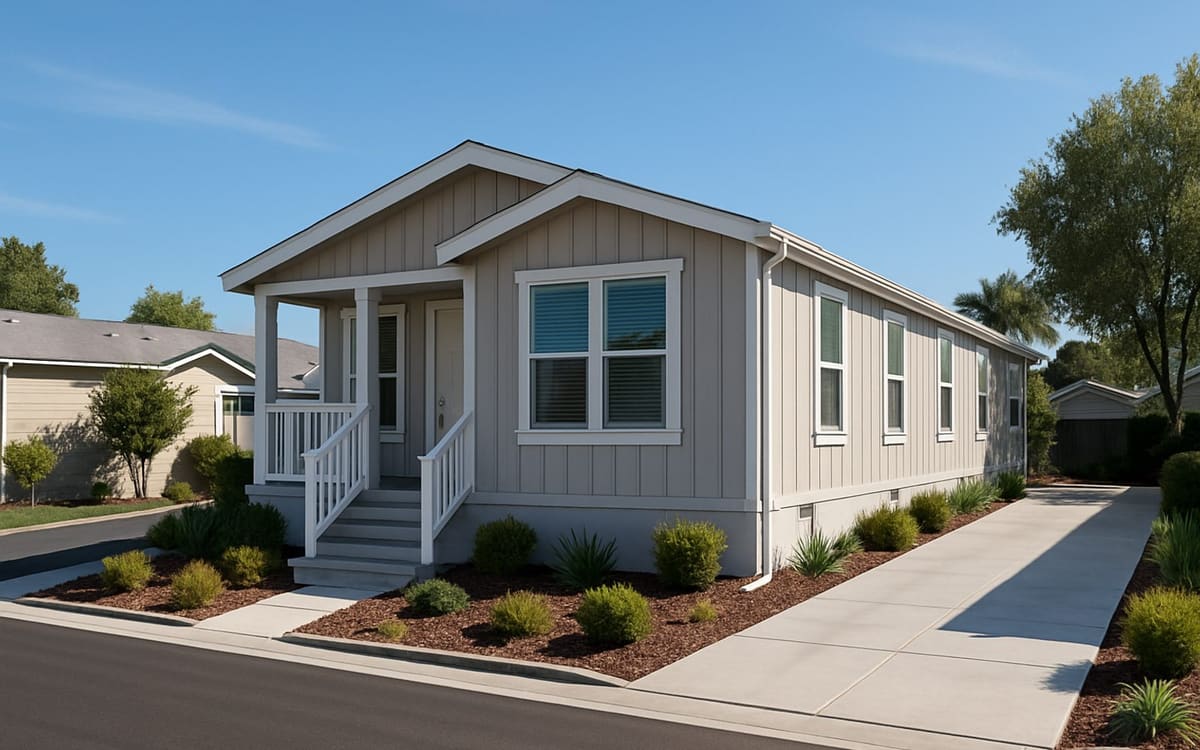
Preparing to Buy a Mobile Home After the Holidays: A Smart Buyer’s Guide

Getting ready to buy a manufactured home in the new year comes down to a handful of jobs you can do before you tour a single home. Find out what the holidays did to your budget and your credit. Settle on a monthly figure you can live with. Decide whether you want a home in a community or on land, and get pre-qualified.
January suits this work: the December statements have posted, employers have to send W-2s by January 31, and nothing is forcing a deadline. The sections below run roughly in order, from the first week of January to your first offer.
Start with what the holidays did to your budget and your credit
Open the December card and bank statements before you open a listings site. You are looking for two things: balances that grew, and payments you took on, such as a store card or a pay-over-time plan. A lender compares your monthly debts with your income, so every new monthly payment is part of that comparison.

Then check your credit reports, which are free at annualcreditreport.com. Card balances are reported about once a month, so a balance you pay down in January takes a few weeks to show. Preparing your credit for a loan application lays out a fuller timeline for corrections and paydowns.
Credit requirements vary by program and investor. What you want from this step is a report that is accurate and that you can explain.
Work out a monthly figure before you look at prices
The asking price is not what you will pay each month. In a land-lease community, where you own the home and rent the space it sits on, the monthly cost is the loan payment plus space rent, insurance, utilities and upkeep. On land you own, property tax takes the place of space rent.
Lenders look at the same total. They compare your monthly housing cost with your gross monthly income, and acceptable ratios depend on the program, your other debts and your disposable income. Decide what total you are comfortable with, then work backwards to a price. The payment calculator lets you add space rent, taxes and insurance to an estimated loan payment. Its results are educational estimates, not a loan offer.
Cash is the other half of the budget, and the down payment is not the only cash a purchase needs.
There is no single down payment. It depends on the program, your credit, the home, and whether the land is leased or owned.
Decide early whether you want a community or land
This choice shapes everything after it, including which kind of loan you apply for.
A home in a community compared with a home on land you own
| What differs | Home in a land-lease community | Home on land you own |
|---|---|---|
| What you buy | The home. You rent the space. | The home and the land |
| Cost besides the loan | Space rent, set by the community | Property tax, and upkeep of the lot, plus a well or septic system where there is one |
| Usual kind of loan | A home-only loan, also called a chattel loan | Often a land-and-home loan, if the home is permanently attached and recorded as real property |
| Who else reviews the purchase | The community approves you as a resident | No community, but the land’s title and the home’s foundation record are checked |
Neither is the better choice in general. A community home is priced without land and comes with rent that can change. Land adds to the price and brings its own upkeep. Knowing which one you are shopping for keeps you from touring homes you would have to finance in a way you had not planned.
Keep your accounts quiet while you prepare
Between now and closing, the aim is for your finances to look the same each time someone checks them.
None of these is forbidden. A tax refund or a gift toward your down payment is fine when there is a record of where it came from, so keep the letter, the transfer record or the statement that shows it.
Start a folder for documents as they arrive: your last pay stub of the year, the W-2 your employer sends in January, and your bank statements from December onward.
Get pre-qualified before you tour seriously
A pre-qualification is an early estimate of what you might borrow, based mostly on what you tell the lender. It is not final approval. The home, the community, the value and the title are all still to be reviewed.
Its use in January is practical. It gives you a price range before you start touring, and it brings problems to the surface, such as an error on a credit report, while there is still time to fix them. Pre-approval vs. pre-qualification explains what each letter does and does not check.
Line up the community application and insurance quotes
Two things catch prepared buyers late in a purchase, and you can start on both before you have chosen a home.
If you are buying in a community, the community approves you as a resident under its own criteria, separately from the loan. Ask the office of any community you are considering for its application, the documents it wants with it, and its rules on pets, vehicles and age. Passing community resident approval covers what communities usually ask for.
A lender will want a homeowners policy in place before closing. Cost and availability vary by location, especially in areas exposed to wildfire, so get a quote as soon as you have a specific home’s address, year and size. You can request one on our manufactured home insurance page.
What to expect when you shop in winter
What you find on the market in January depends on where you look. Most of California tends to be quieter in winter. Arizona’s low desert is the opposite, because winter is when seasonal residents are in town. How the seasons differ in California and Arizona explains the pattern.

Winter showings have one practical advantage in California. A visit after rain shows how the roof, the gutters and the ground around a home handle water, which a dry afternoon in June cannot.
A plan from January to your first offer
What to do, and roughly when
- First half of January: reset Read the December statements, check your credit reports and set a monthly figure.
- Second half of January: decide and gather Choose community or land, start the document folder, and add your W-2 when it arrives.
- February: get pre-qualified and do the homework Ask for a pre-qualification, collect resident applications from the communities you like, and price insurance on a home or two.
- When the right home appears: make the offer Apply for the loan, hand in the community’s application at the same time, and schedule the inspection.
If you find the right home sooner, nothing in the plan has to wait for spring. The order matters more than the dates.