Buying a Mobile Home With Land vs. in a Park: Pros & Cons

Choosing between a mobile home with land and one in a park is mostly a choice about who makes the decisions. In a park, the community owns the ground, keeps up the streets and shared areas, and sets rules that apply to everyone. On your own land, you decide, and you do the upkeep.
Neither is better. They suit different people, and sometimes the same person at different stages of life. What follows is the day-to-day side of that choice. For the money side, see the ten-year cost comparison of a park and owned land.
Daily life in a park and on your own land
Park living compared with owning the land
| Day to day | In a park | On your own land |
|---|---|---|
| Neighbors | Close by on both sides | As near or as far as the parcel allows |
| Who sets the rules | The community: pets, parking, guests, exterior changes, sometimes age | Zoning, plus any deed restrictions or homeowners association |
| Upkeep outside the home | Your own space; the community handles streets and shared areas | Everything inside the property line |
| Amenities | Whatever the community offers, such as a pool, clubhouse or laundry | What you build, or what is nearby |
| Changing the home | Usually needs management’s approval | Your call, with permits where required |
| Moving on | You sell the home to a buyer the community approves | You sell the home and the land together |
What a park gives you, and what it asks in return
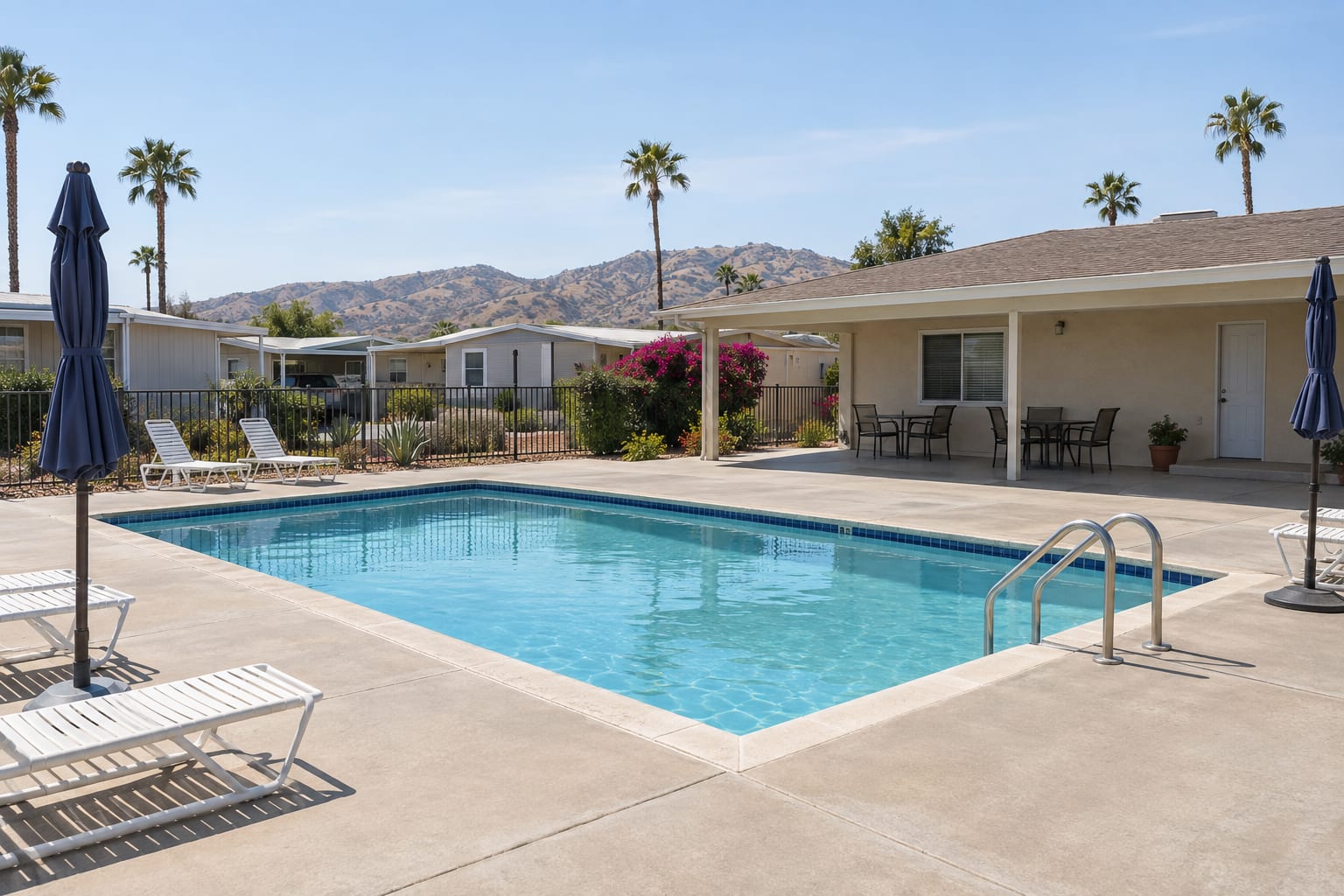
A park takes work off your plate. Someone else maintains the streets, the lighting and the shared areas, and many communities offer things few single lots have: a pool, a clubhouse, organized activities. Neighbors are close, which many residents count as a benefit, particularly in age-restricted (55+) communities.
In return you live by the community’s rules and pay space rent, the monthly charge for the ground under your home. Rules commonly cover pets, vehicles, guests, who may live in the home, and what you can change outside. A shed, a fence, a new deck or even a paint color may need written approval. Read the rules before you get attached to a home, because park rules can affect the purchase itself.
You also need the community’s approval to move in. That review is separate from loan approval, and passing one does not guarantee the other.
What your own land gives you, and what it asks in return
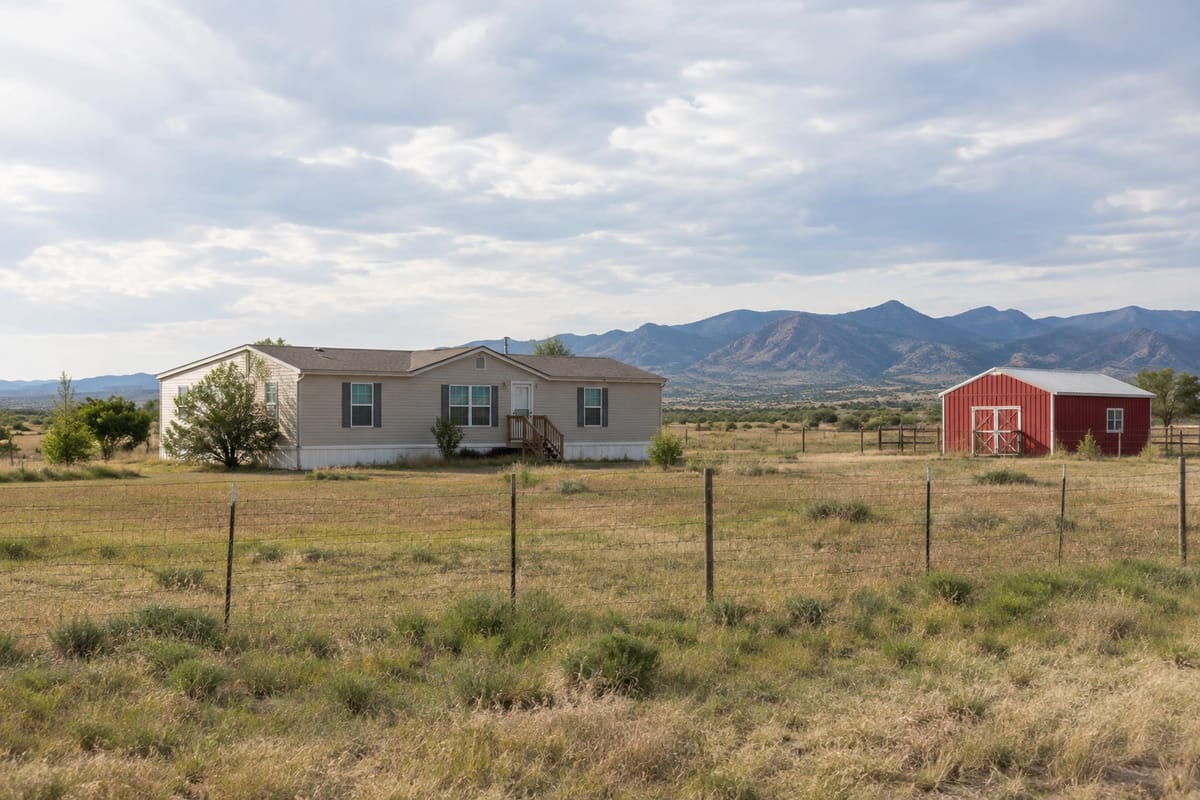
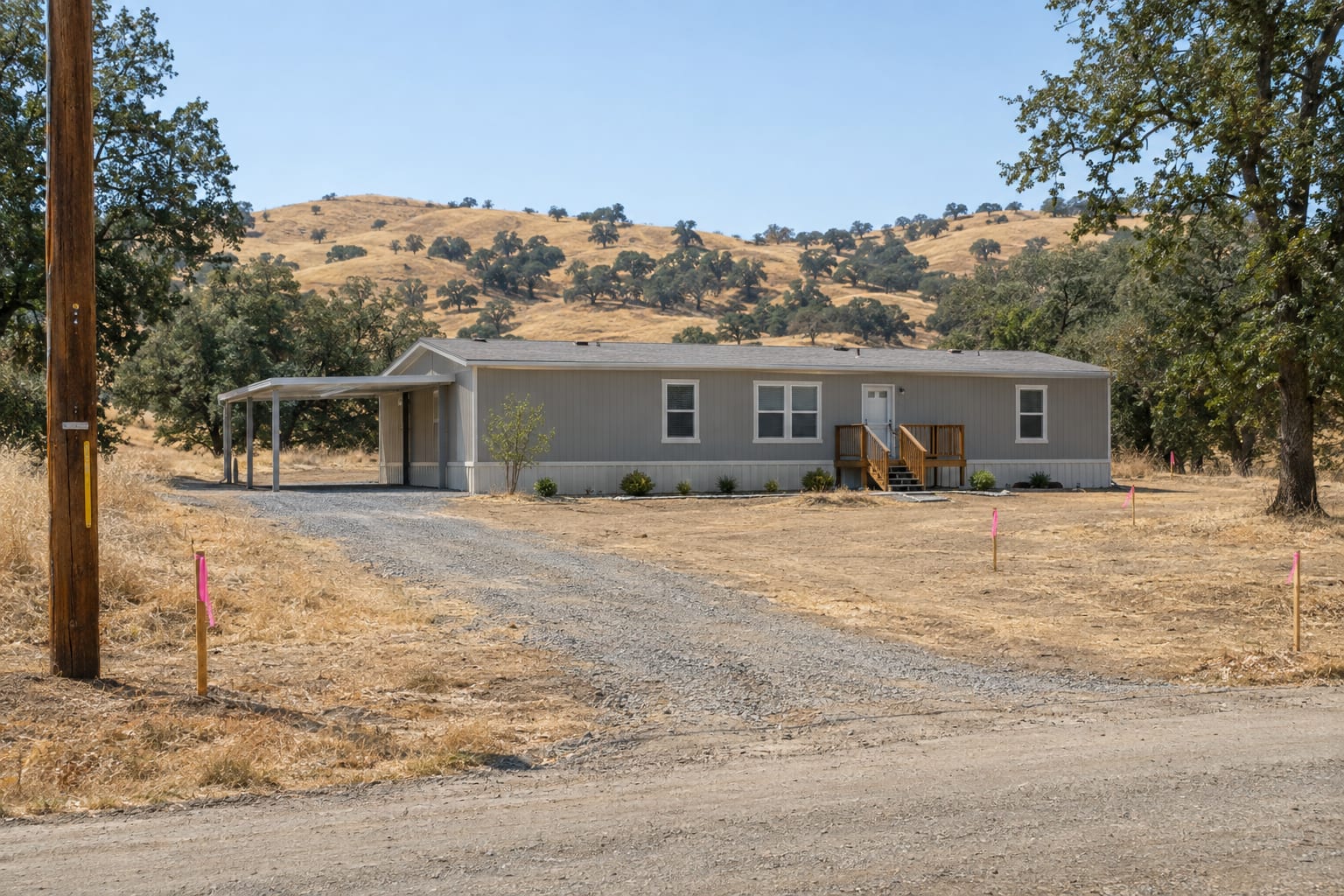
Land gives you room and the final say. You can park a work truck or an RV, keep more animals, build a workshop or plant an orchard, as far as zoning and any deed restrictions allow. Nobody approves your buyer when you sell, and there is no space rent.
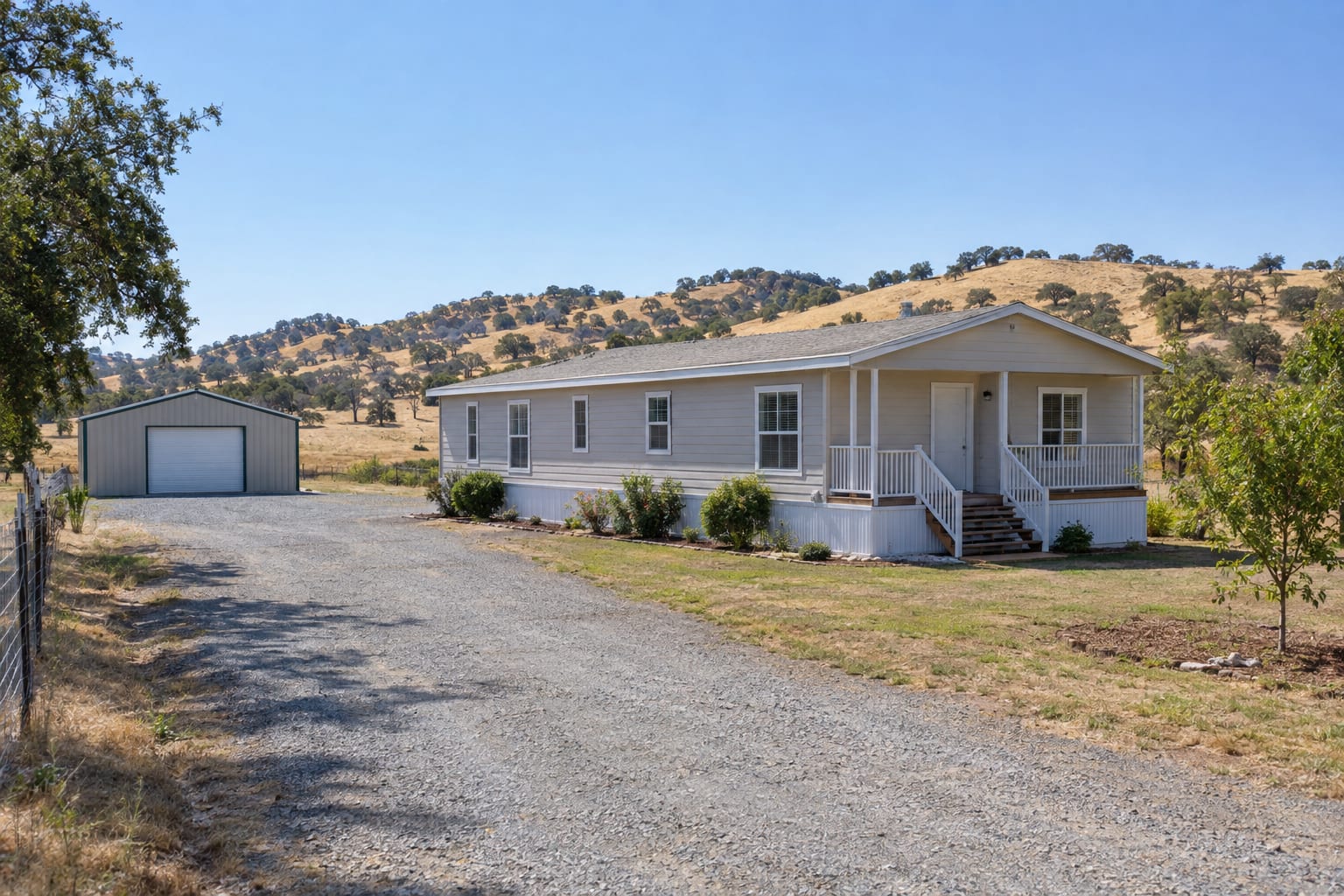
What it asks for is time and attention. The driveway, the fence, the drainage, the weeds and the trees are yours, and in fire-prone areas so is keeping brush cleared around the home. On a rural parcel you may also be running a well, a septic system or a propane tank, with no manager to call when one of them fails. Shops, medical care and the fire station can be farther away too.
Plan on the home staying where it is
Despite the name, a mobile home is not something you casually relocate if the first choice does not work out. Moving one takes transport permits, a specialized mover and a new installation with permits of its own, and the destination, whether a park or a parcel, has to accept a home of that age and size.
The loan is different too
A home in a park is financed by itself as personal property, with a home-only loan that lenders call a chattel loan. A home permanently attached to land you own can often be financed together with the land as real property. The two are reviewed under different programs, so settle which one you are buying before you compare loans. Find your financing path sorts out which applies to you. All financing is subject to credit approval.
Questions that usually settle it
If your answers lean toward a park, take these questions to the park office before you apply. If they lean toward land, start with what to check on the parcel itself.