10 Tips for First-Time Mobile Home Buyers in California
Before you commit to a manufactured home in California, check ten things that work differently than they do for a site-built house: who holds the title, how the home is taxed, what the park’s lease says, whether the city has a rent ordinance, and how the home is braced, permitted and insured. Most take a phone call or a document request, and each costs far less to settle before an offer than after.
These are the California-specific checks. For the order of the whole purchase, from pre-qualification to closing, start with buying a manufactured home as a first-time buyer.
Who handles what in California
| Who | What they handle |
|---|---|
| HCD (Department of Housing and Community Development) | Title and registration, permits to alter a home, dealer licenses |
| The community (park) | The lease, the park rules, resident approval and the space rent |
| The city or county | Any local mobilehome rent ordinance, and zoning for homes on private land |
| The county assessor | Property tax, for homes on the local tax roll |
| Your lender and your insurer | Loan approval, and the coverage the loan requires |
Paperwork the state keeps
Three records decide what you are buying on paper. All three can be checked before you make an offer. What follows is general information, not legal or tax advice.
Confirm the title and registration with HCD
California titles and registers manufactured homes through HCD, not the DMV. Ask the seller for a copy of the current registration and compare it with the home. The registered owner should be the person selling, the serial numbers should match the home, and any lienholder listed has to be paid off at closing.
A title still in a previous owner’s name, or a lien nobody mentioned, can be fixed. It takes time, so find it now. California HCD title basics shows what to look for.
Ask how the home is taxed
California taxes manufactured homes in one of two ways. According to the State Board of Equalization, a home first sold new on or after July 1, 1980 is subject to local property tax. An older home generally pays an annual license fee to HCD instead, unless an owner converted it to local property tax, and a conversion cannot be reversed.
Ask the seller which applies, and ask for the latest bill or renewal showing it is paid. The answer changes your yearly cost.
On owned land, ask whether a 433A was recorded
If you’re buying a home together with its land, one more record matters. In California, HCD Form 433A is used to report the installation of a manufactured home on a foundation system and is recorded with the county when applicable. It is an important property record, but it does not by itself guarantee financing.
Whether one was recorded tells you if the home is treated as part of the real estate or still carries its own HCD title. If you’re buying bare land to put a home on, ask the city or county planning department what the zoning allows before you buy the parcel.
The park, its lease and the rent
If the home is in a land-lease community, you own the home and rent the space under it. That makes the park’s paperwork as important as the home’s.
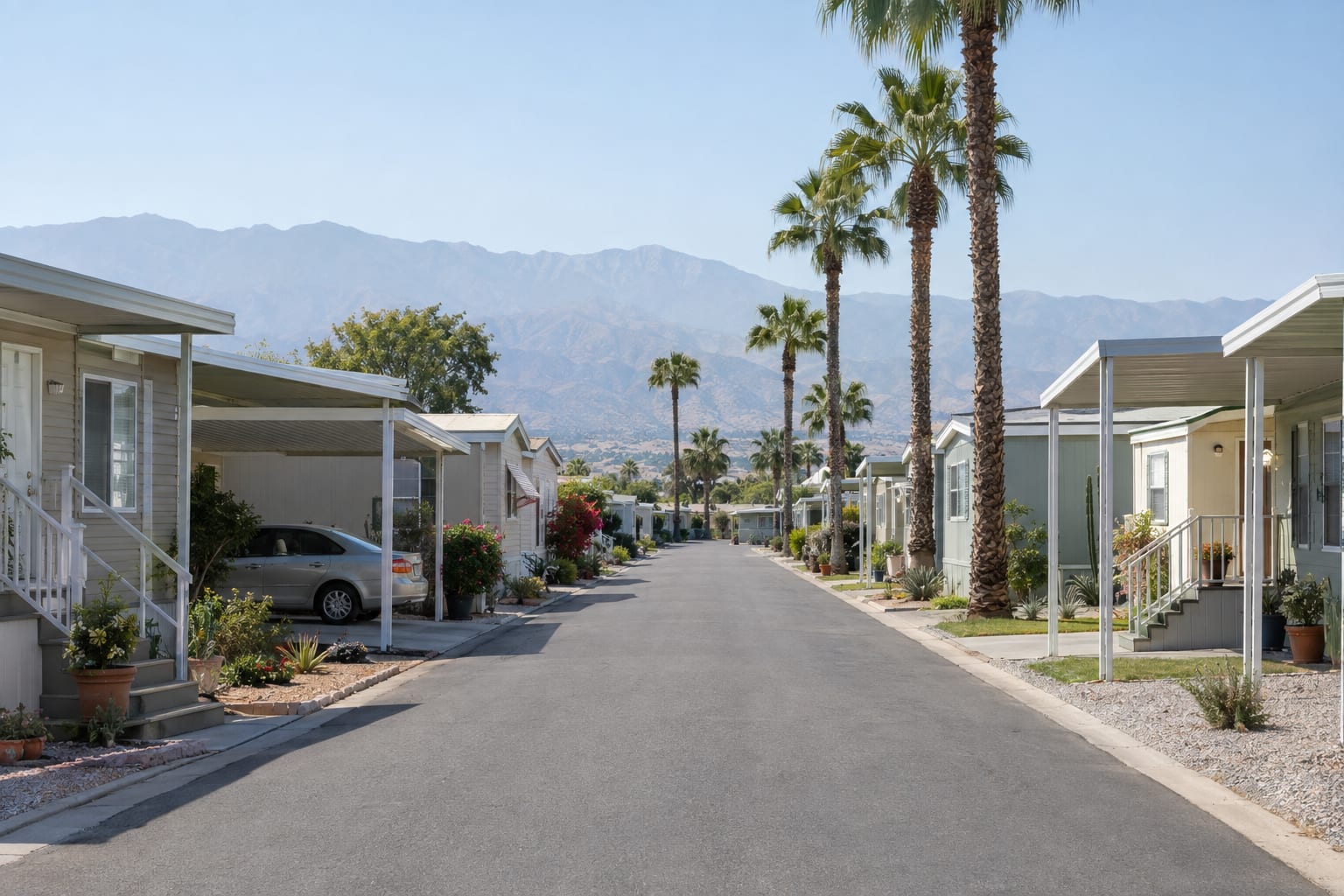
Read the lease and the park rules before you make an offer
Ask the park office for the rental agreement, the park rules, and the current space rent with what it includes, all in writing. Rules about the home’s age and exterior, pets, parking, and who may live in the home can decide whether a home works for you. So can an age restriction. How park rules can affect your purchase covers the ones buyers trip over.
Park tenancies in California come under the Mobilehome Residency Law. HCD publishes a guide to your rights as a park resident, and notes there that the law is enforced through the courts, not by HCD.
Ask the city or county about a rent ordinance
Rules on space rent increases are mostly local in California. Some cities and counties have a mobilehome rent ordinance and others have none. San José and Santa Rosa, for example, each publish theirs.
Call the housing department where the park sits and ask whether that park is covered. To see what we note about a particular area, find your city under California manufactured home loans.
Compare the price with recent sales in the same park
A home in a park is usually valued against sales of similar homes in that park and nearby communities, not against houses in the surrounding neighborhood. The same model can sell for quite different prices in two parks, because space rent, age rules and upkeep differ.
For California communities, Santiago Financial, Inc. offers comparable sales reports that list reported sales in a selected park. A report is sales data, not an appraisal, but it gives you recent sale prices to set the asking price against before you negotiate.
The home’s condition
An appraisal or value review supports the price for the lender. It is not an inspection, and nobody will order an inspection unless you do.
Get an inspection and ask for the permits
Hire an inspector who works on manufactured homes and ask for a look under the home as well as inside it: the piers and tie-downs, the underside of the floor, the plumbing, and any sign of water.
California also requires a permit from HCD before a manufactured home is altered. Ask the seller for the permits behind any major change to the home, such as structural, electrical or plumbing work. Work done without one can become your problem after closing.
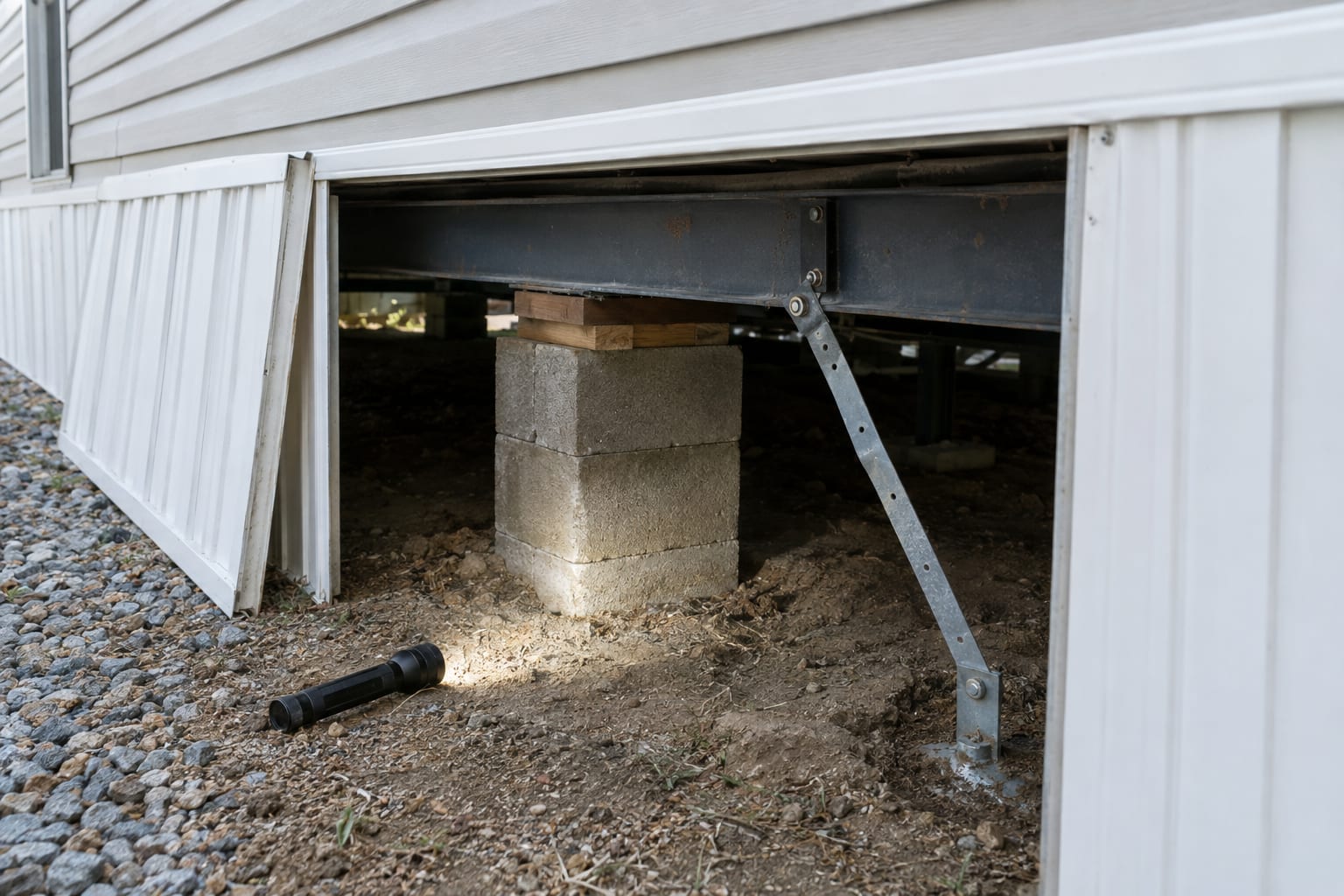
Ask how the home is braced for earthquakes
HCD certifies earthquake-resistant bracing systems, which are installed under a manufactured home to reduce damage in an earthquake. Ask the seller whether the home has one, and for the permit or final inspection record if it does.
Keep that paperwork. The California Earthquake Authority lists a premium discount on its mobilehome policies for homes reinforced with an HCD-certified system.
The location and the seller
Two last checks have nothing to do with the home’s paperwork or its condition, and both can be done from a phone.
Look up fire and flood zones, then get an insurance quote
Enter the address in the state’s Fire Hazard Severity Zone maps and in FEMA’s Flood Map Service Center. Neither result stops a purchase by itself. Both can affect which insurers will write a policy and what it costs.
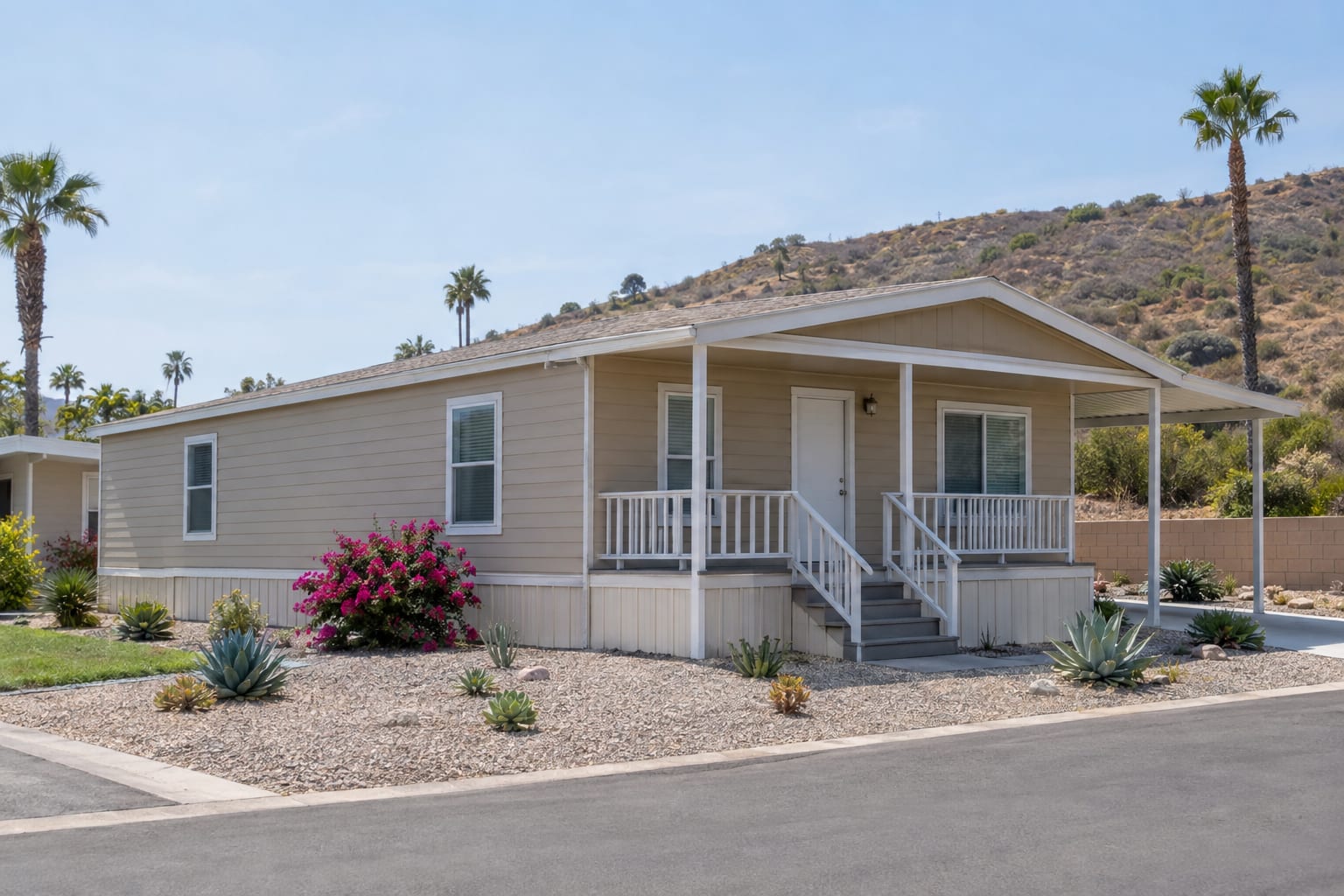
A lender will generally require acceptable insurance on the home before closing, so ask for a manufactured home insurance quote while you can still walk away. Don’t assume earthquake or flood is included in a base policy. Ask about each one by name.
Check a dealer’s license with HCD
Dealers and salespeople who sell manufactured homes in California must hold an occupational license from HCD, and HCD has a public license search. Look the dealer up before you sign anything.
If you’re buying directly from the owner, the paperwork is less standardized, which makes the title check at the top of this list matter even more.
What to have in hand before you make an offer
Most of the ten checks end in a document. If the seller or the park can’t produce one, treat that as an answer too.