California HCD Title Basics for Manufactured Home Buyers
California titles and registers manufactured homes through HCD (the Department of Housing and Community Development), not the DMV. If the home you’re buying has not been recorded as real property, the HCD title record is how ownership moves from the seller to you.
Before you commit, that record answers three questions: who owns the home, who else has a claim on it, and whether the home on paper is the home you toured. This is general information, not legal advice. For a specific home, HCD’s registration and titling program is the official source.
What the HCD record shows
HCD issues a certificate of title and a registration card for a home. Between those two documents and HCD’s own records, these are the entries that matter to a buyer.
What an HCD title record shows and what to check
| On the record | What it means | What to check |
|---|---|---|
| Registered owner | The person or people who own the home | The seller’s name matches, and every registered owner will sign |
| Legal owner | A lender or other party holding a lien | It will be paid off and will sign a release |
| Junior lienholder | A party with a second, later lien | The same: payoff and release |
| Decal number | HCD’s registration number for the home | It is the same on the title and the registration card |
| Serial and HUD label numbers | The identifiers for each section | They match the data plate inside the home |
If no legal owner is shown, nobody has a lien on record against the home. If one is shown and the seller says that loan was paid off years ago, the lien is still on the record until the lender signs it off.
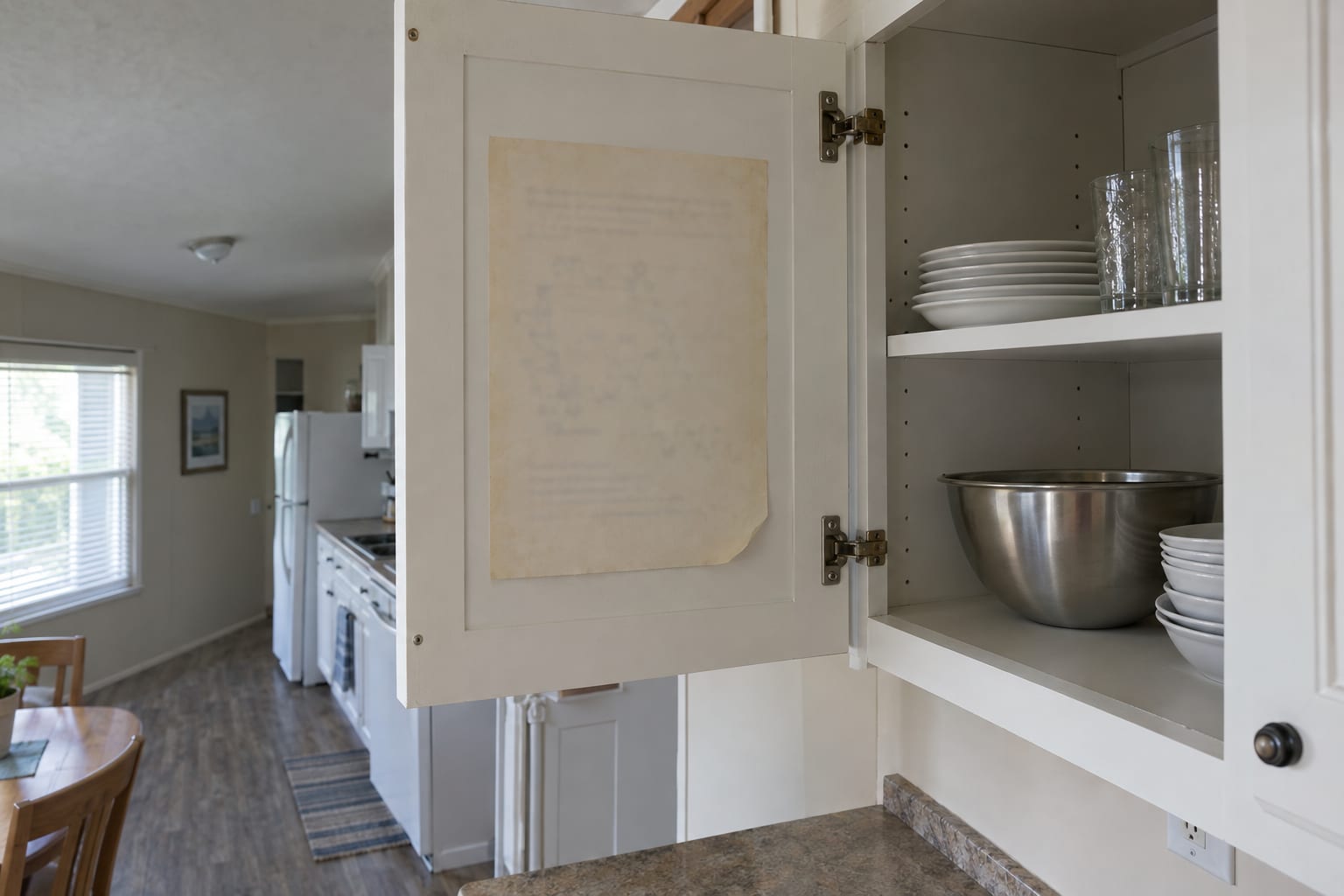
The serial numbers deserve a minute of your time. They are printed on a paper sheet inside the home and stamped into its steel frame, and where to find the HUD label, data plate and serial number shows where to look.
Annual fee or county property tax
California manufactured homes are taxed in one of two ways, and the difference changes what a transfer needs. Homes first sold new on or after July 1, 1980 are on local property tax, billed by the county. Older homes generally pay an annual in-lieu license fee to HCD instead, unless an owner moved the home to local property tax. The State Board of Equalization explains both in its manufactured homes FAQ.
For a home on local property tax, HCD’s transfer instructions call for a tax clearance certificate from the county tax collector, so unpaid tax on the home has to be settled before the title moves. For a home on the in-lieu fee, ask whether the registration is current. HCD lists the transfer requirements with its registration and titling forms.
What to check before you sign
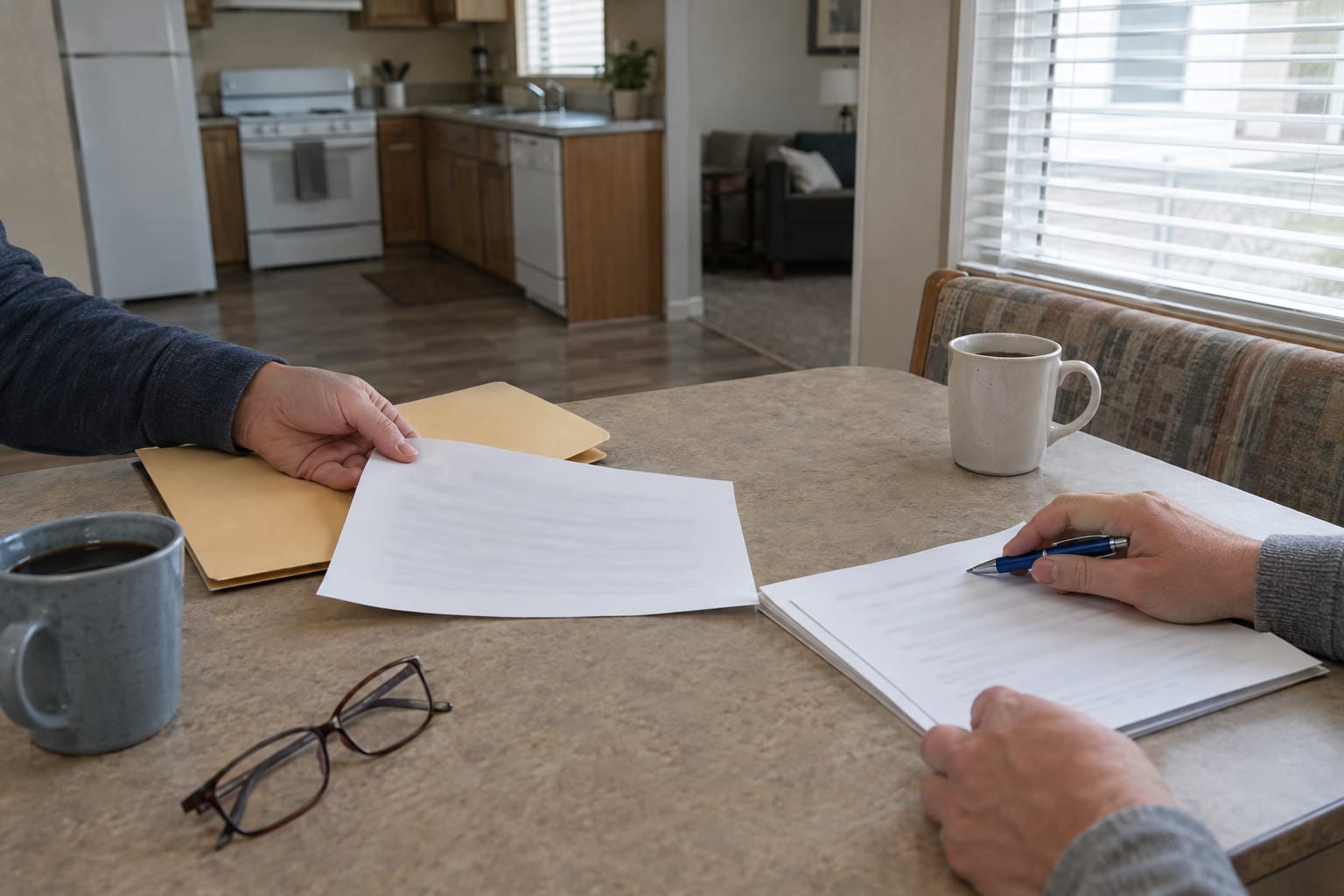
You do not have to rely on the seller’s copies. HCD provides title searches on request, showing the registered owner, legal owner and lienholders as its records have them, and an escrow company can order one for the sale.
What stalls a transfer and who fixes it
Common HCD title snags
| Snag | Who generally resolves it |
|---|---|
| The seller bought the home but never put the title in their own name | The seller, by completing that earlier transfer with HCD |
| A registered owner has died | The surviving co-owner or the heirs, using HCD’s forms for that situation |
| The certificate of title is lost | The registered owner applies for a duplicate. If a legal owner is on the title, the legal owner must apply. |
| A paid-off loan still shows as a lien | The lender signs HCD’s lien satisfaction form with an original signature |
| Property tax on the home is unpaid | The seller pays it and the county tax collector issues the clearance |
| A serial number is wrong on the paperwork | The owner corrects the record with HCD |
None of these ends a sale. Each one takes time to clear, though, and the wait is in someone else’s hands: a former lender, a county office, or HCD. That is the reason to find them before you set a closing date.
Where escrow fits
Escrow is the neutral third party that holds the money and documents until every condition of the sale is met. California law requires one for sales made through a dealer. That rule does not cover a sale between two private parties, but a financed private sale generally goes through escrow too, because the buyer’s lender has to be added to the title as the seller’s lender is removed.
Escrow gathers the signed title, the lien release and any tax clearance, pays off the seller’s lender, and files the transfer with HCD. If the home is in a community, the park’s approval of you as a resident is a separate review that runs alongside. The order of events in a private sale is laid out in buying a manufactured home from a private seller.
If the home has no HCD title
Not every California manufactured home has one. A home installed on a foundation system with a recorded Form 433A is real property: HCD cancels its title record and the home changes hands with the land, by deed. What a 433A is and how to confirm one covers that case.
Buying in Arizona instead? Titles there come from the MVD, one per section, and the paperwork is different. See Arizona manufactured home title basics.
If a seller cannot produce the title, or the record raises a question you can’t answer, talk with a specialist before you make an offer.