Is It Better to Buy a Manufactured Home in Los Angeles or a Nearby Suburb?
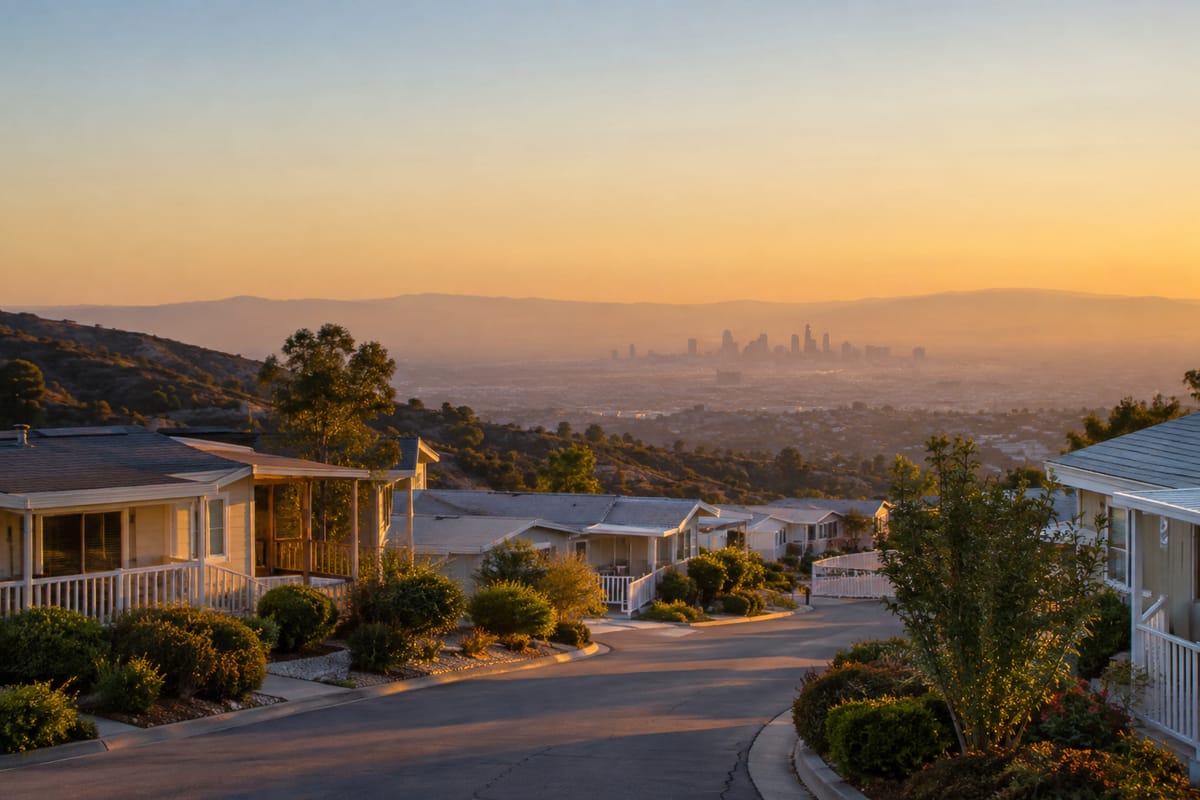
Neither is better across the board. Inside the City of Los Angeles you are usually buying a home on a rented space in a long-established park, close to work and family. Farther out, in the Santa Clarita Valley, the Antelope Valley or the Inland Empire, you are more likely to find a home on land you can own, at the price of a longer drive.
The choice comes down to three things: the full monthly cost in each place, whether you want to own the land, and how much commuting you will accept.
Los Angeles is several different places for a buyer
“Los Angeles” on a listing can mean the city, another city in the county, or an unincorporated area, and each has its own offices and its own rules. These are the areas buyers usually weigh against each other.
Where buyers look in and around Los Angeles
| Area | Includes | What to expect |
|---|---|---|
| City of Los Angeles | Sylmar and other San Fernando Valley neighborhoods; the harbor area | Rented spaces in established parks; the city’s rent rules can apply |
| South Bay and Long Beach | Torrance, Gardena, Long Beach | Rented spaces; each is its own city with its own rules |
| Santa Clarita Valley | Santa Clarita | Rented spaces; the city has its own procedure for park rents |
| Antelope Valley | Lancaster, Palmdale | Parks and homes on owned lots; high-desert heat and wind |
| Inland Empire | Riverside and San Bernardino counties | Parks and homes on owned land; a different county’s offices |
For the Inland Empire, our guide to manufactured home cities in Riverside County goes city by city.
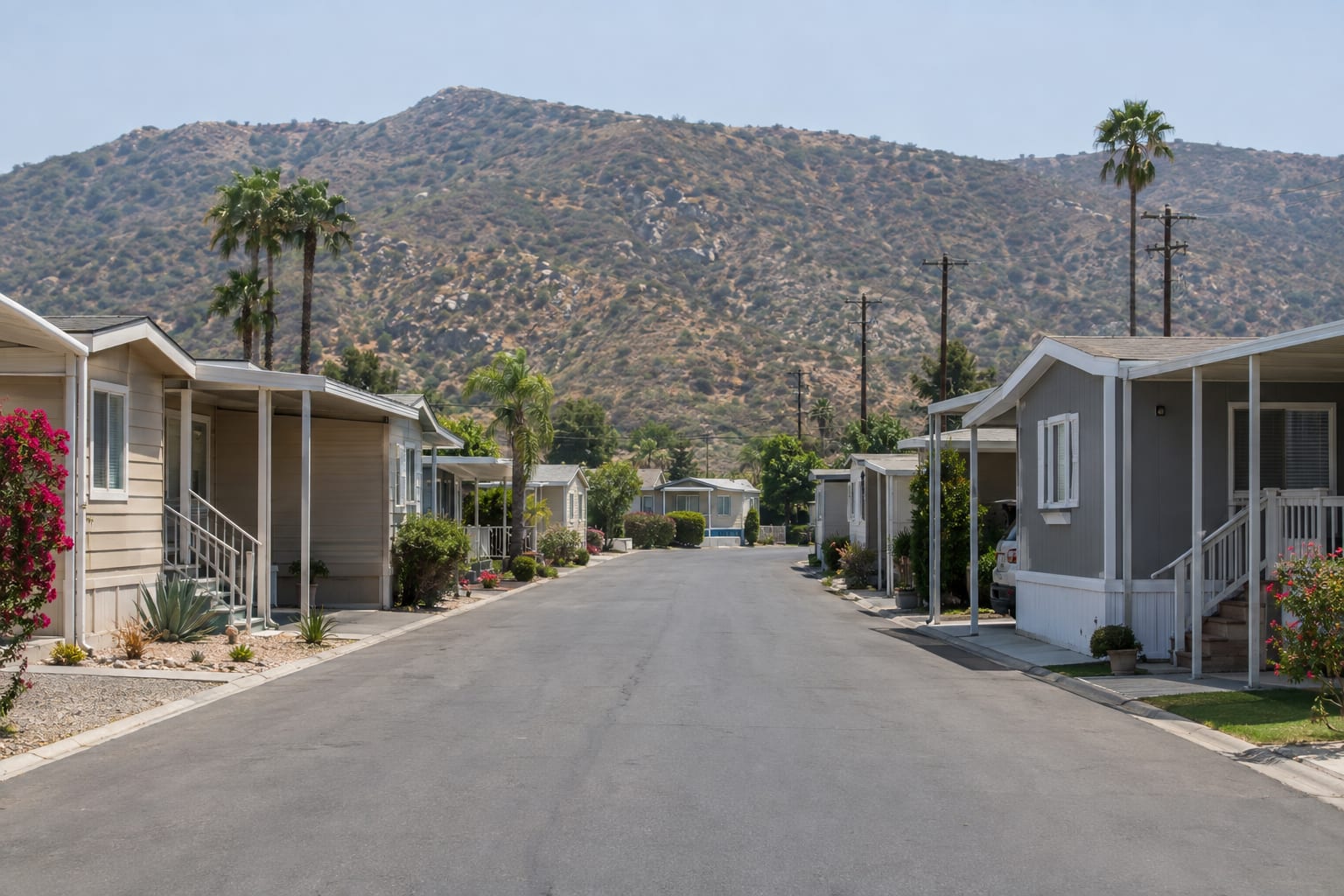
Geography changes the risks as well as the drive. Parks along the foothills can sit in a state-mapped Fire Hazard Severity Zone, and CAL FIRE publishes the zone maps. Insurers use their own wildfire models rather than these maps, but a home in a mapped zone is a reason to get an insurance quote early. The Antelope Valley brings desert heat and wind. A home’s data plate lists the wind and thermal zones it was built for, so check it against where the home sits.
You are choosing a setup as much as a location
Most of the difference between the city and the outlying areas comes from who owns the ground. In a park you own the home and rent the space, and the home is financed on its own with a home-only loan, also called a chattel loan. On land you own, the home and land can often be financed together.
Three common choices side by side
| Park in the city | Park farther out | Home on owned land farther out | |
|---|---|---|---|
| What you buy | The home | The home | The home and the land |
| Kind of loan | Home-only (chattel) | Home-only (chattel) | Land-and-home |
| Monthly housing cost | Loan payment, space rent, insurance, taxes or fees | The same items, with a different space rent | Loan payment, property tax, insurance |
| What can change later | Space rent | Space rent | Property tax and insurance |
| The drive | Shorter | Longer | Longer |
Space rent is paid on top of the loan payment, and a lender counts it when it reviews your application. That is why the comparison has to be made on the full monthly cost and not on the price of the home.
Get each community’s real figure in writing. How space rent affects what you can afford lists what to ask. Then enter both sets of numbers in the payment calculator. The results are educational estimates, not a loan offer.
Rent rules depend on the jurisdiction, not the mailing address
California’s Mobilehome Residency Law applies statewide. Local rent rules are a separate layer, and they differ in the three situations a Los Angeles buyer runs into.
- City of Los Angeles. The city applies its Rent Stabilization Ordinance to mobilehome parks. The housing department’s mobile home parks page explains which parks are covered.
- Unincorporated Los Angeles County. The county has a Mobilehome Rent Stabilization and Mobilehome Owner Protections Ordinance, described by its Rent Stabilization Program.
- Other cities. Each sets its own rules, and some have none. Santa Clarita, for example, has a chapter of its municipal code on park rent adjustments, outlined on the city’s manufactured home parks page.
This is general information, not legal advice, and local ordinances change.
Owning the land changes the loan as well as the address
Inside the city, a manufactured home is rarely sold with the land under it. Farther out, lots and small acreage are more common, and a home permanently attached to land you own can be treated as real property. In California, HCD Form 433A is used to report the installation of a manufactured home on a foundation system and is recorded with the county when applicable. It is an important property record, but it does not by itself guarantee financing.
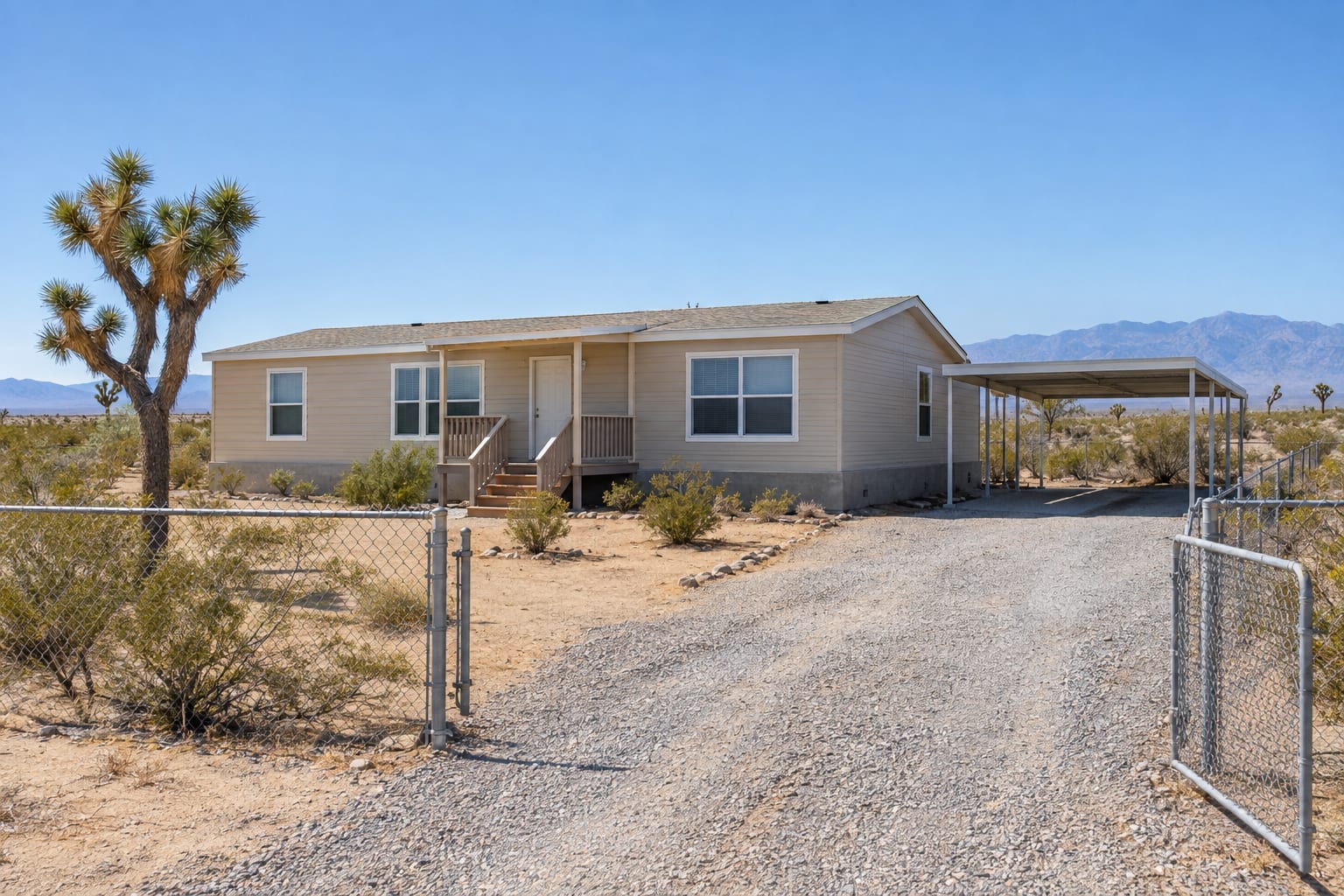
Owning the land removes space rent from the budget. In exchange you take on property tax, the upkeep of the lot, and on rural parcels sometimes a well, a septic system, propane and a private road. The loan is different too: land-and-home financing covers the home and the land in one transaction, and the appraisal covers both.
What a home is worth later depends on land ownership, space rent, condition, location and title status. Nobody can promise an outcome in the city or outside it.
Questions that settle it
If the answers point to a park inside the county, why Los Angeles works for manufactured home buyers describes what living in one is like.