
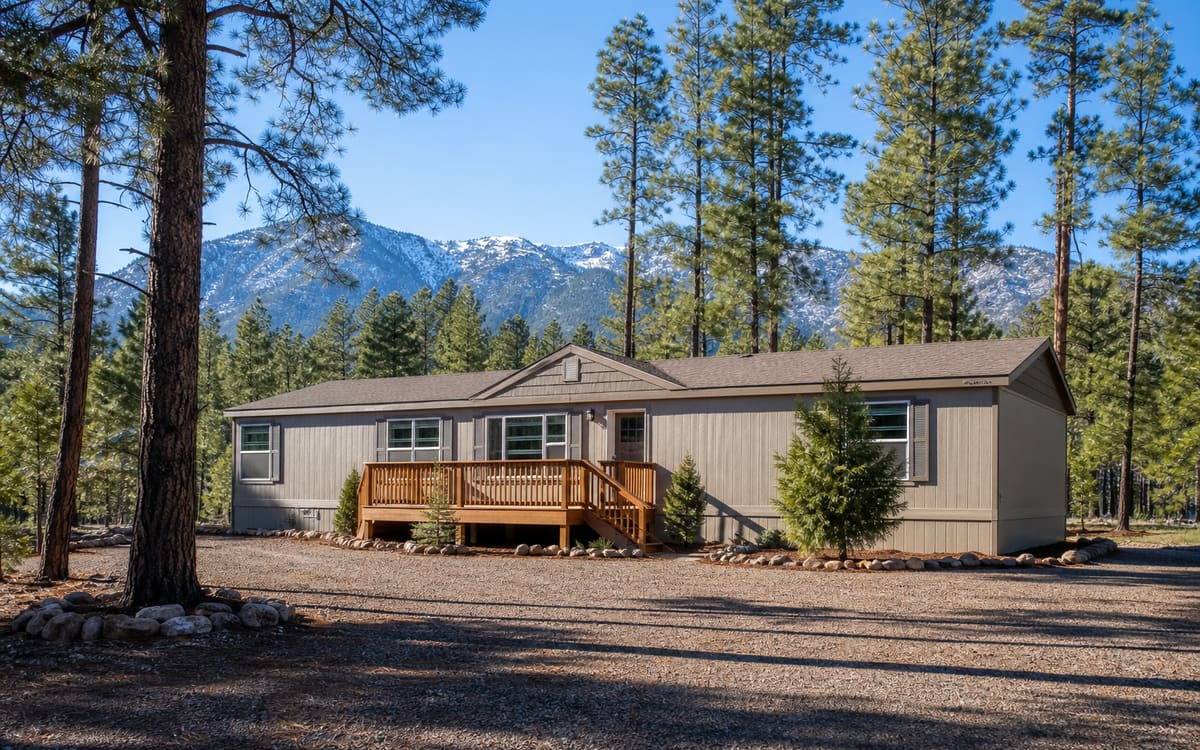
Financing a manufactured home in Flagstaff works the way it does anywhere in Arizona, with one difference that matters more here than in any other city on this site: the home has to be built and set for a place where the airport averages about 90 inches of snow a year. The lender, the appraiser and the insurer all care whether it was, and the proof is a metal data plate inside the home.
The second difference is the setting. In town, homes sit in land-lease communities and are financed as personal property, with space rent paid separately. Outside city limits, toward Kachina Village, Bellemont, Parks and Williams, homes sit on Coconino County parcels that often come with a well, a septic system, propane heat and sometimes a road the county does not plow. Santiago Financial, Inc. finances both; this page covers what to check in Flagstaff before you make an offer.
Read the roof-load zone on the data plate first
Every manufactured home built on or after June 15, 1976 carries a data plate stating the wind, thermal and roof-load zones it was built for. The federal standard (24 CFR 3280.305) sets three roof-load zones, and a home designed for a heavier site-specific snow load has that figure printed on the plate instead. HUD’s homeowner guidance is direct: a home should never be placed in a more restrictive roof-load zone than the one it was built for.
HUD roof-load zones and what to ask in Flagstaff
| Zone on the data plate | Design roof load | What to ask |
|---|---|---|
| South | 20 pounds per square foot | Whether the installer and the permitting office accepted this home for this site |
| Middle | 30 pounds per square foot | The same question; the answer depends on the site and the installation design |
| North, or a printed higher load | 40 pounds per square foot, or the stated figure | That the installation records match the home and the lot |
For installation and permit questions, start with the Arizona Department of Housing and the city or county building office for the site. If the plate is missing or unreadable, say so at the start, because it affects the appraisal and the insurance quote as well as the loan.
Snow changes the schedule, not the rules
NOAA’s 1991–2020 climate normals for Flagstaff Pulliam Airport, at about 7,000 feet, show about 90 inches of snow a year and a January average low near 18°F. Between November and April that reaches the file in practical ways:
- The appraiser or inspector has to reach the home. On a privately maintained forest road, find out who plows it and get the arrangement in writing.
- Roof, skirting and drainage are hard to assess under snow. Ask the seller for photos and maintenance records from the warmer months.
- A winter visit is the right time to confirm the heat source works as described, and to ask what a winter of propane or electric heat cost.
- Storm weeks move appointments. Timing depends on your transaction and the third parties involved, so leave room in any date you agree with a seller.
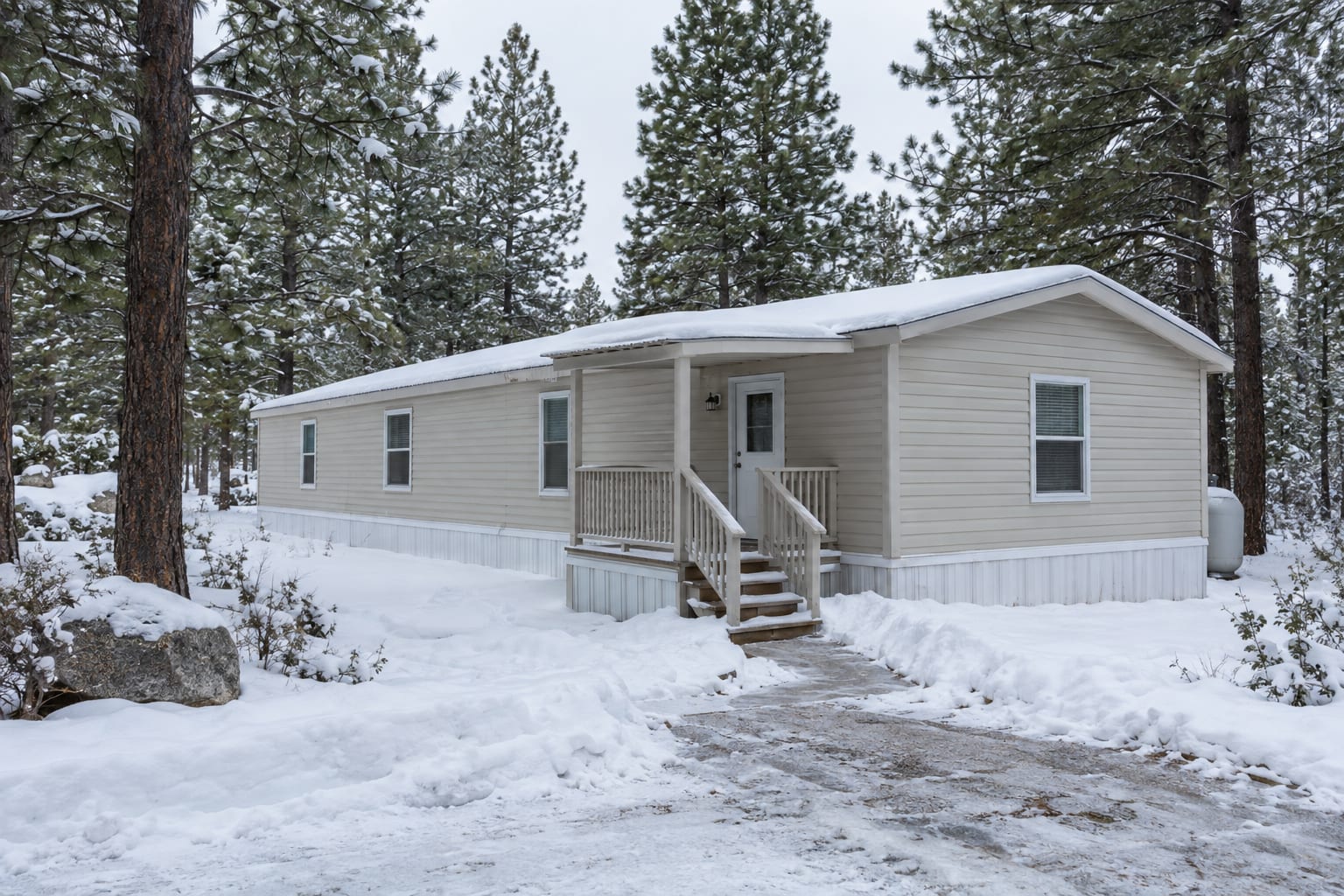
Heating replaces cooling in a Flagstaff budget. Put the fuel cost next to the loan payment, space rent or land taxes, and insurance before you decide what you can afford; the payment calculator gives educational estimates of the loan part, not an offer.
Parcels outside city limits bring wells, propane and burn scars
Coconino County parcels around Flagstaff commonly run on a private well, a septic system and propane, sometimes reached by roads the county does not maintain. Ask whether financing is available for the setup, and expect each item to need a record: the well’s registration in the Arizona Department of Water Resources registry, the county’s septic permit, a road-maintenance agreement if the road is private, and the propane supplier’s account.
A home bought with its land may fit a land-and-home structure. A home a past owner permanently attached to land they held will have an Affidavit of Affixture on file with the Coconino County Recorder in place of its MVD titles; the Arizona manufactured home loans hub explains both.
Fire and water go together here. The National Weather Service office in Flagstaff publishes a daily flash-flood risk rating for the burn scars in its area. If a home sits below a burn scar or near a wash, check FEMA’s flood map for the parcel and ask the insurer how it rates the address. Inside a mapped Special Flood Hazard Area, expect flood insurance to be a loan condition.
Nearby areas with their own pages
Prescott and Cottonwood sit lower and warmer in Yavapai County. Show Low shares Flagstaff’s snow-load questions in the White Mountains, and Payson covers Rim Country. Williams, Bellemont, Parks and Kachina Village do not have their own pages; they follow the Coconino County steps above, and every area we serve is on the Arizona hub.
All financing is subject to credit approval, and some homes and parcels will not qualify. This page is general information about buying in Flagstaff, not legal or tax advice.