Who Does What in a Manufactured Home Closing? Buyer, Seller, Lender and Escrow

Five parties take part in a manufactured home closing: you, the seller, the lender, escrow and the state agency that keeps the title record, with the community office as a sixth when the home sits on leased land. Each has a job, and each job has a boundary.
Buyers lose the most time by taking a question to the wrong party, most often by asking escrow about the loan or the lender about the title. This article assigns each task to its owner so you know where to take a question.
The order of events in a private sale is covered in buying from a private seller. This article is about roles and handoffs rather than sequence.
Five parties, five jobs
Who does what in a manufactured home closing
| Party | Does | Does not |
|---|---|---|
| You, the buyer | Apply, supply documents, deposit funds, choose insurance, sign loan documents | Transfer the title or pay the seller directly |
| The seller | Prove ownership, sign the title and the agreement, disclose any loan on the home, give access | Decide whether your loan is approved |
| The lender | Review you and the home, approve the loan with conditions, send the funds | Hold your deposit, pay the seller, or file the title transfer |
| Escrow | Hold funds and documents, request the payoff, collect the lien release, disburse, file the transfer | Approve your loan or negotiate the price |
| The state agency | Record the new owner and the lender’s lien on the title | Take part in the sale itself |
| The community office | Review your resident application, confirm space rent and lease terms | Approve the loan or hold funds |
The lender and escrow are the two most often confused, and the next section is about the line between them.
Escrow is not the lender
The lender’s job is a decision: whether to make the loan, on what conditions, and when the conditions are met. The lender reviews your income, your credit, the home, its value, its title and your insurance, and when every condition is cleared it sends the funds to escrow.
Escrow is the neutral third party that holds the money and documents until every condition of the sale is met. It does not take sides and it does not decide anything about your loan.
It holds your deposit, receives your down payment and the lender’s funds, requests the payoff figure on the seller’s old loan, collects the signed title and the lien release, pays each party according to the written instructions, and sends the transfer documents to the state.
The state agency and the community sit outside the deal
Two more parties affect the closing without being part of the sale.
The state title agency, HCD in California or ADOT MVD in Arizona, records who owns the home and who holds a lien on it. Escrow sends it the signed title, the lien release and, in California for a home on local property tax, the county tax clearance; the agency issues the new record showing you as owner and the lender as lienholder. In Arizona each section generally has its own title, so a double-wide needs both.
The agency works on its own schedule, and the new record often arrives after closing. California HCD title basics and Arizona title basics cover what each record shows.
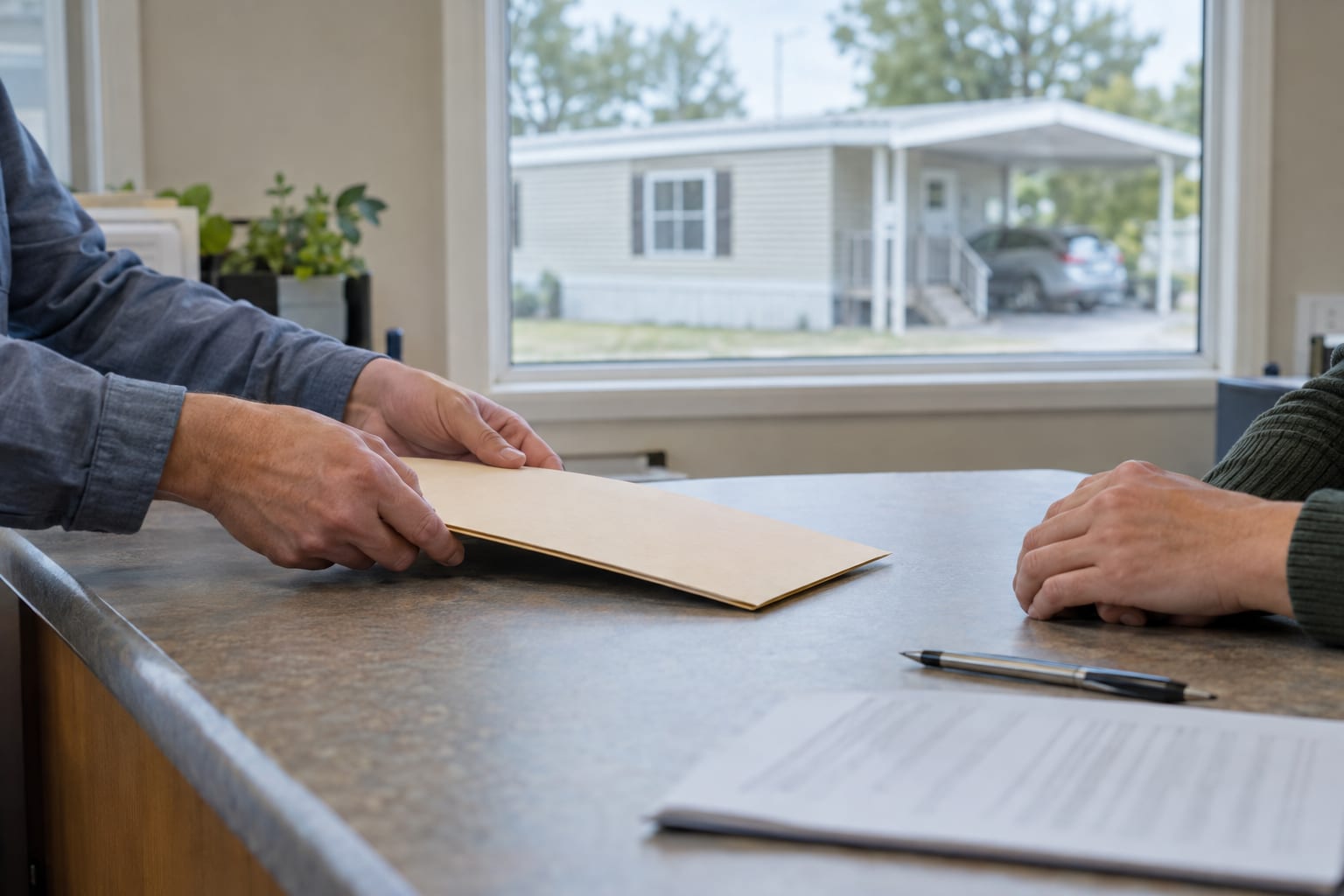
The community office, when the home is on leased land, runs its own resident application under its own criteria. Its approval is a condition of closing, and the lender and escrow both wait for it, but neither has any say in it. Community approval and lender approval are separate reviews, and closing needs both.
The handoffs, in order
How the pieces pass from one party to the next
- You and the seller sign the purchase agreement It goes to escrow, which opens the file, and to the lender, which starts the home review.
- You deposit into escrow Never to the seller.
- The seller delivers the title and names any lender owed Escrow requests the payoff figure from that lender.
- You apply to the community, if the home is on leased land The office reports its decision to you and escrow.
- The lender clears its conditions Value, title, insurance and your file are reviewed; escrow prepares the settlement statement from the lender’s figures.
- You sign Loan documents from the lender and escrow instructions from escrow, usually at the same sitting.
- The lender funds escrow Escrow pays off the old loan, pays the seller and the fees, and releases the keys as the instructions say.
- Escrow files the transfer The state agency issues the new title record showing you and the lender.
Timing depends on your transaction and the third parties involved: the community office, the seller’s old lender and the state agency each work to their own schedule.
Where to take each question
Common closing questions and who answers them
| Your question | Ask |
|---|---|
| Is my loan approved, and what is still outstanding? | Your loan specialist |
| What are my final closing figures? | Escrow, which builds the statement from the lender’s figures |
| When will the seller’s old loan be paid off? | Escrow |
| Has the community approved me? | The community office |
| When will the new title arrive? | Escrow, which filed it; the state agency issues it |
| When do I get the keys? | Escrow, per the instructions both sides signed |
| Can I move in before funding? | The seller and escrow together, in writing |
Where these roles fall across the loan itself, from application to funding, is laid out in how the loan process works. All financing is subject to credit approval, and not every home or applicant qualifies.