Buying a Manufactured Home in Monterey, California: What Coastal Buyers Should Check
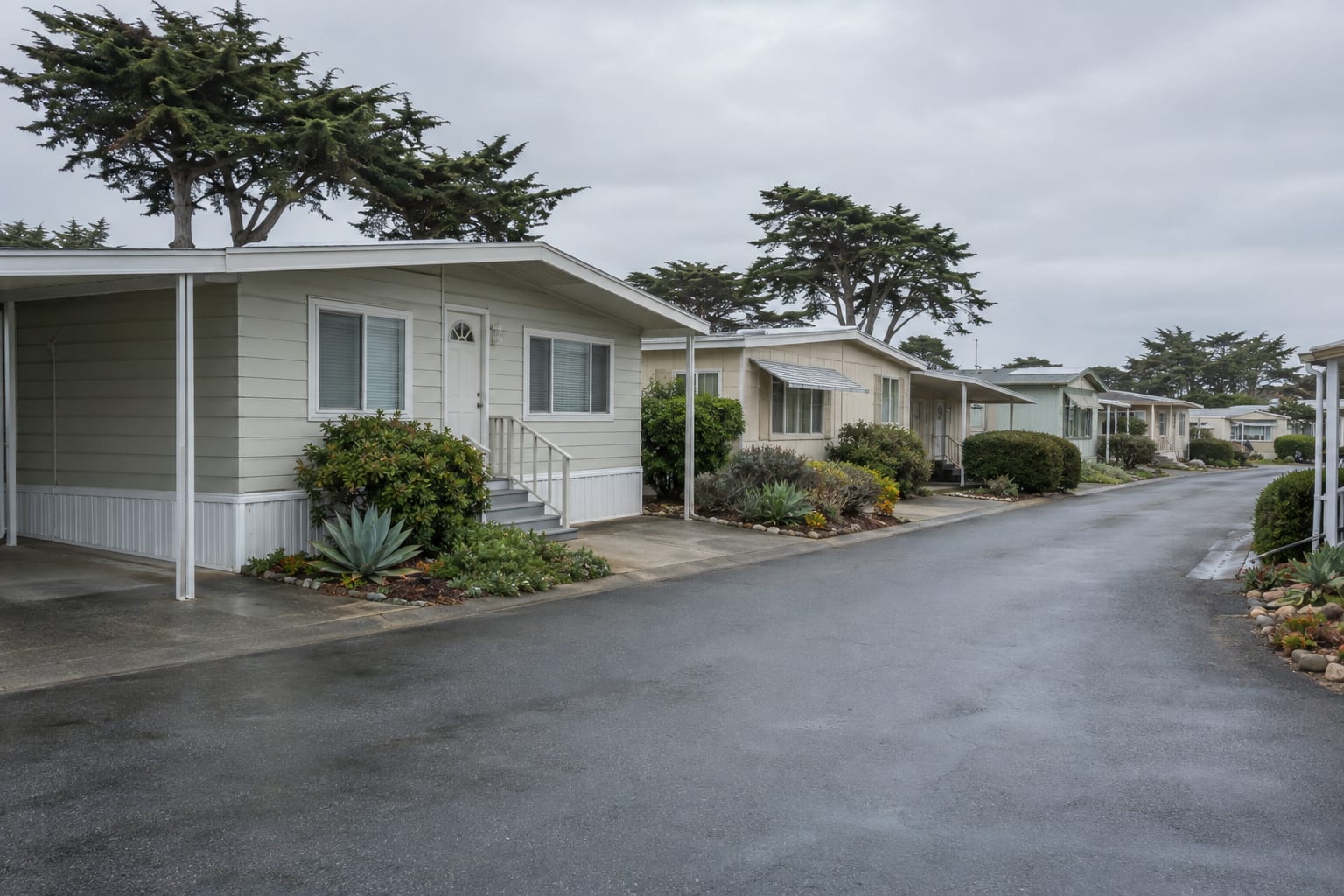
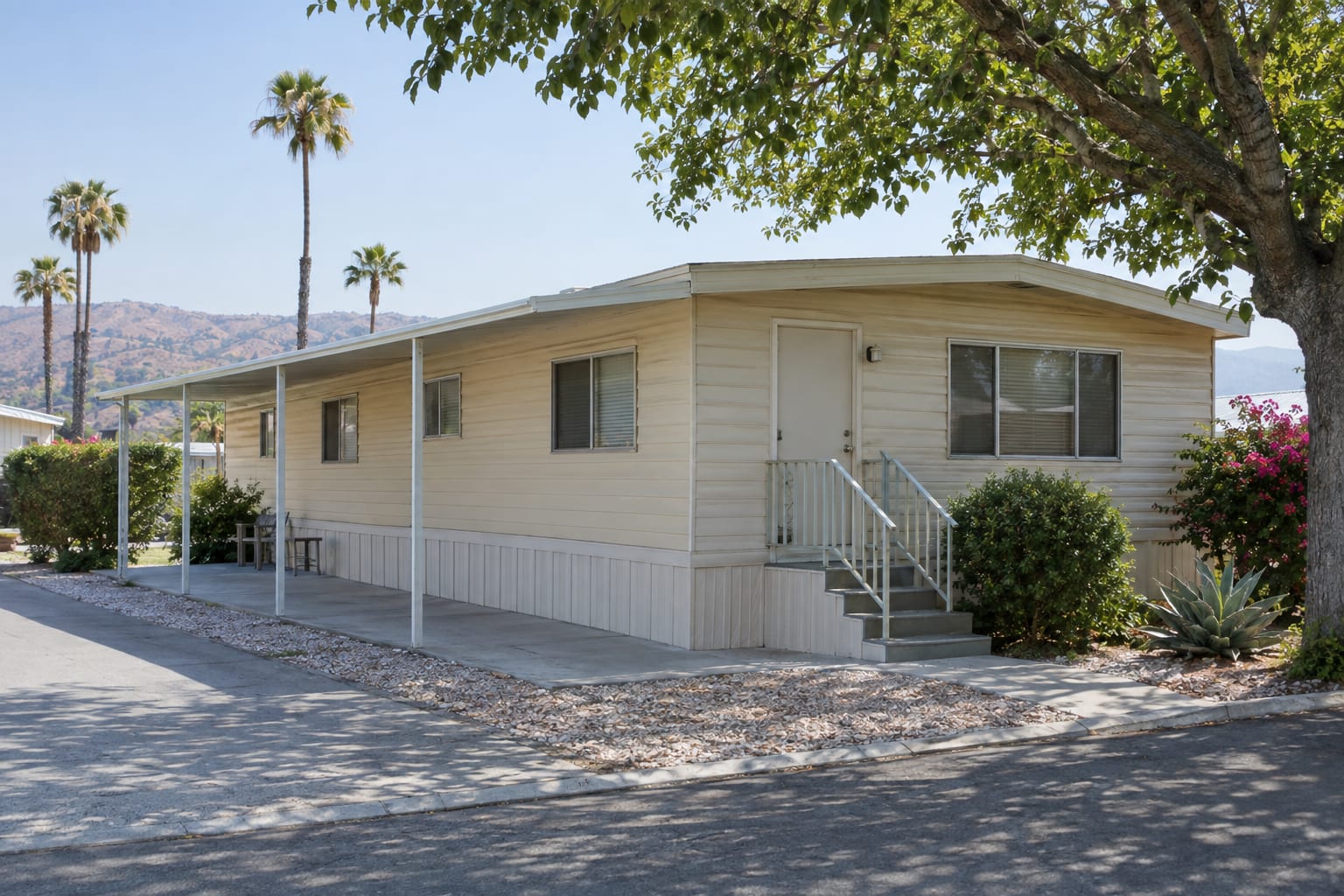
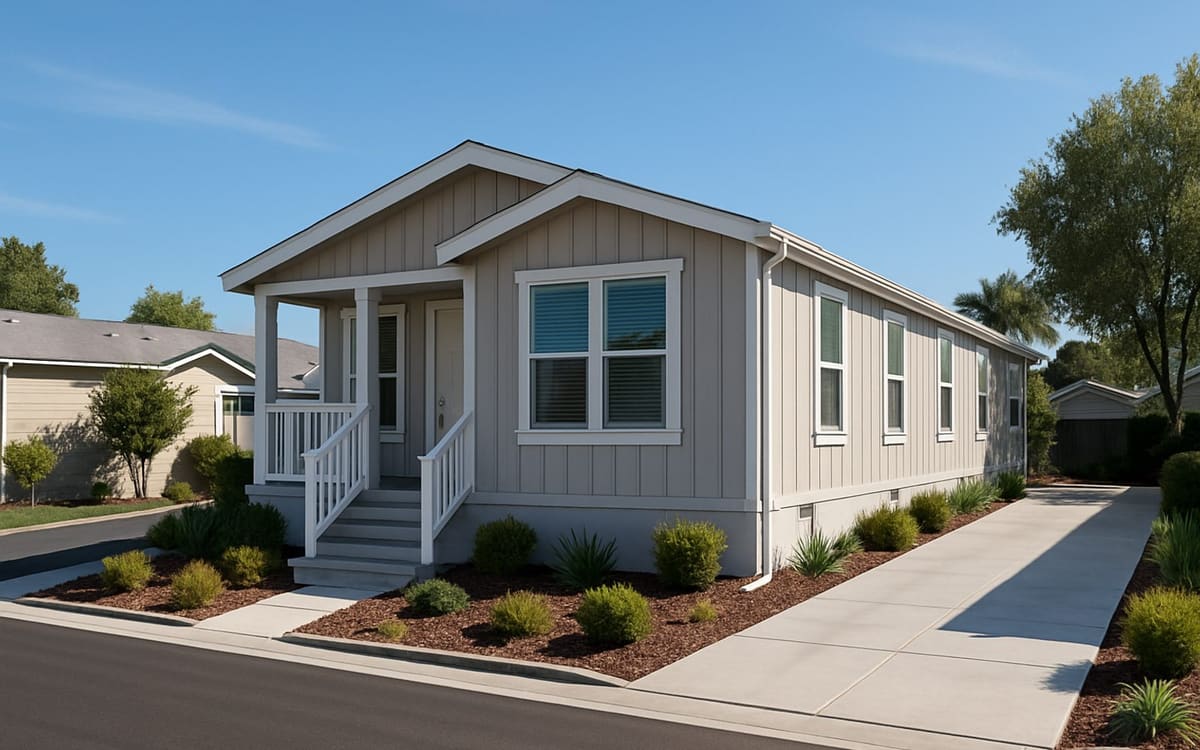
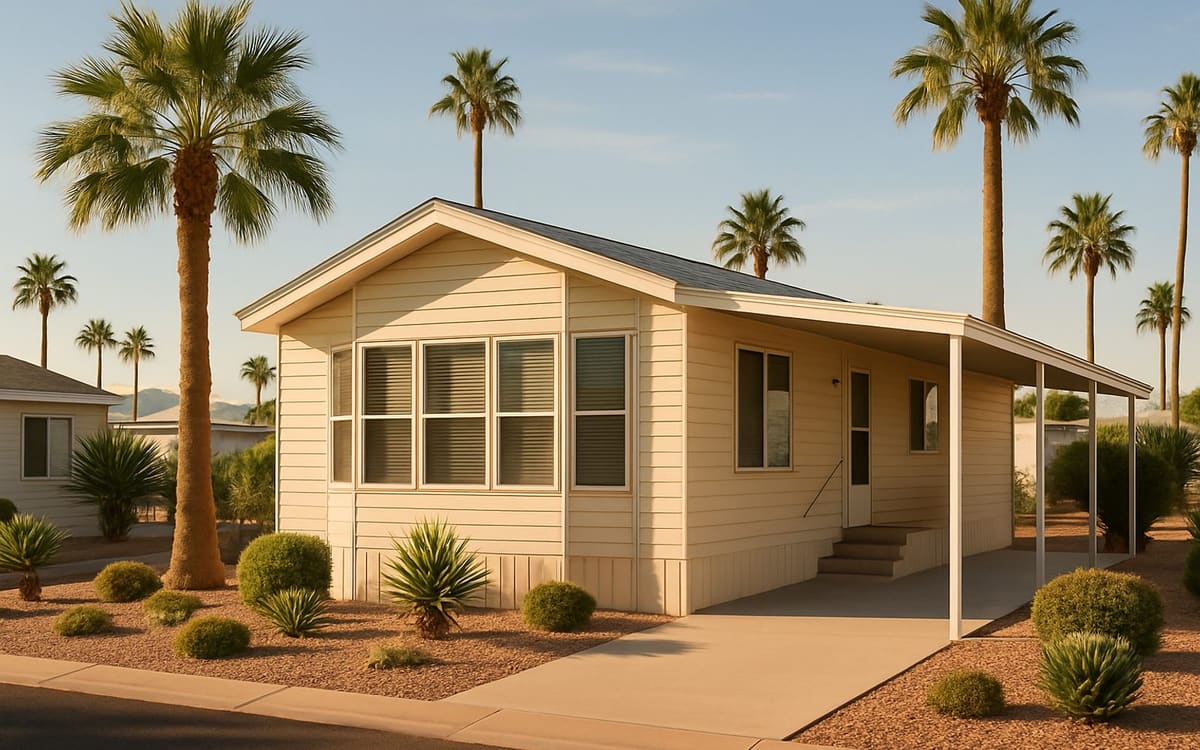
Buying a manufactured home near Monterey Bay usually means choosing among established communities, where you own the home and rent the space under it. The loan works the way it does anywhere in California. What the coast changes is the home itself: there is little open land between the bay and the hills, many of the homes for sale have stood in salt air for years, and the address may sit on a flood or tsunami map.
Those things shape the inspection, the insurance quote and the loan more than the city name does, and they apply just as much in Marina, Seaside and the Salinas Valley as in Monterey itself.
Where the homes are on the Peninsula and nearby
Most manufactured homes for sale near the bay are in land-lease communities: you buy the home, and you pay the community a monthly space rent for the homesite. These are existing communities, so you are choosing among the homes already standing in them, not new developments.
If nothing fits in Monterey itself, the same search usually takes in Marina and Seaside, then moves inland to Salinas and the Salinas Valley, where some manufactured homes sit on land their owners also own. Santiago Financial, Inc. finances homes in both situations throughout Monterey County.
To confirm that a community in a listing is a permitted park, use the “Find a Park” search on the mobilehome parks page of HCD, the California Department of Housing and Community Development. HCD is also the agency that titles and registers manufactured homes in California.
What salt air and fog do to a manufactured home
Marine air carries salt and moisture, and a manufactured home has a lot of exposed metal: a steel frame, straps and anchors underneath, and often a metal roof, awning and carport. Wear near the ocean is normal. What matters to a purchase is whether the home has been kept up.
Where coastal wear shows up
| Part of the home | What to look for | Why it matters |
|---|---|---|
| Steel frame, piers and tie-downs | Flaking rust, corroded straps or anchors | They hold the home up and in place |
| Metal roof, siding and fasteners | Rust at seams and screw heads, lifted panels | Leaks start at failed seams |
| Carport and awning posts, steps, railings | Rust at the base, loose connections | Safety items an inspector will note |
| Windows, doors and exterior trim | Soft or swollen wood, failed seals | Moisture is getting in |
| Floors by exterior doors and plumbing | Soft or spongy spots | The subfloor may need repair |
| Skirting and the space under the home | Blocked vents, standing damp, a musty smell | Trapped moisture speeds up the rest |
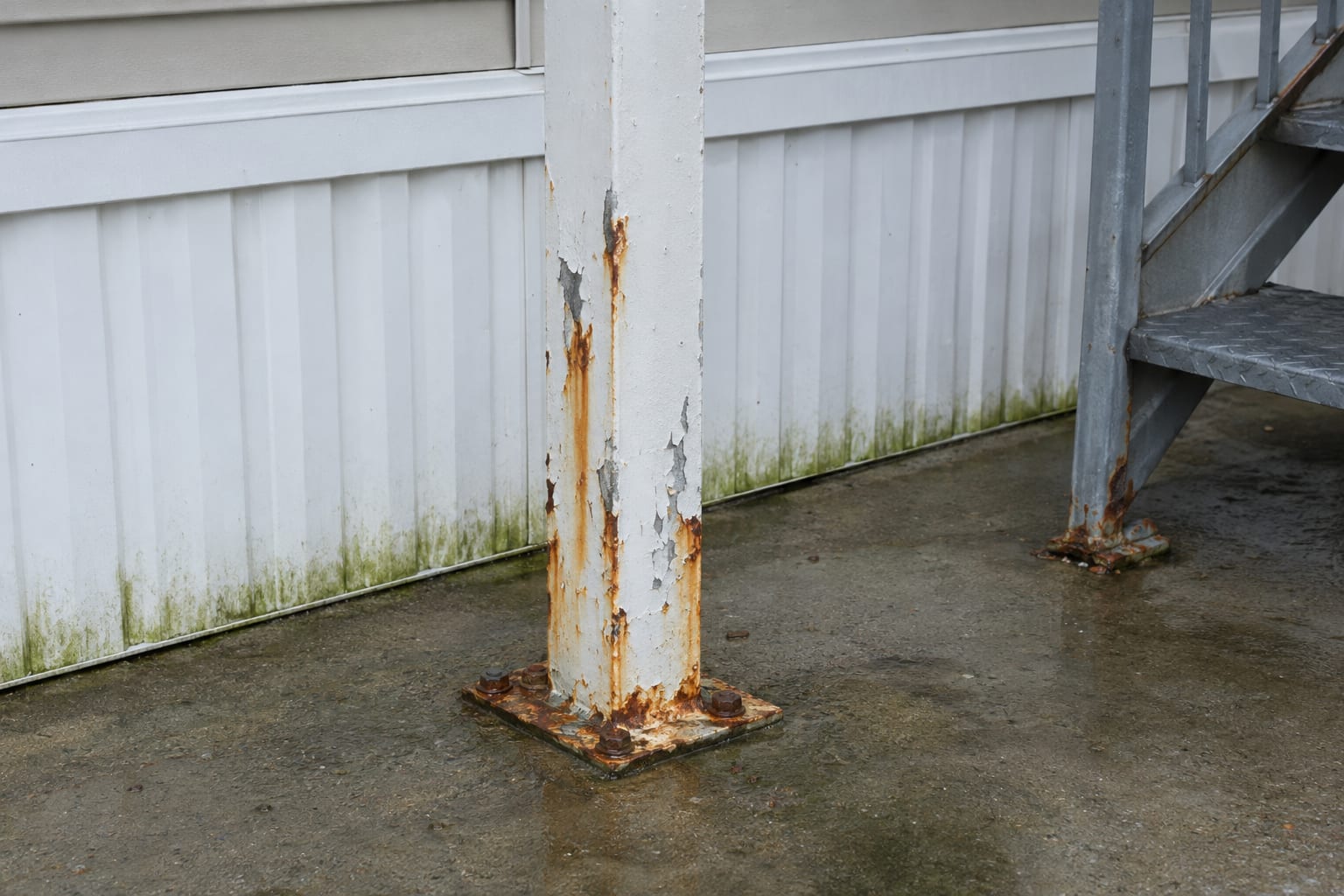
Ask for an inspection that includes the underside of the home, not only the rooms. An inspection reports on condition and an appraisal supports value, and they are separate jobs, as inspection versus appraisal explains. Condition feeds into both the value a lender relies on and an insurer’s decision to write a policy.
Many coastal homes are older, and age changes the loan
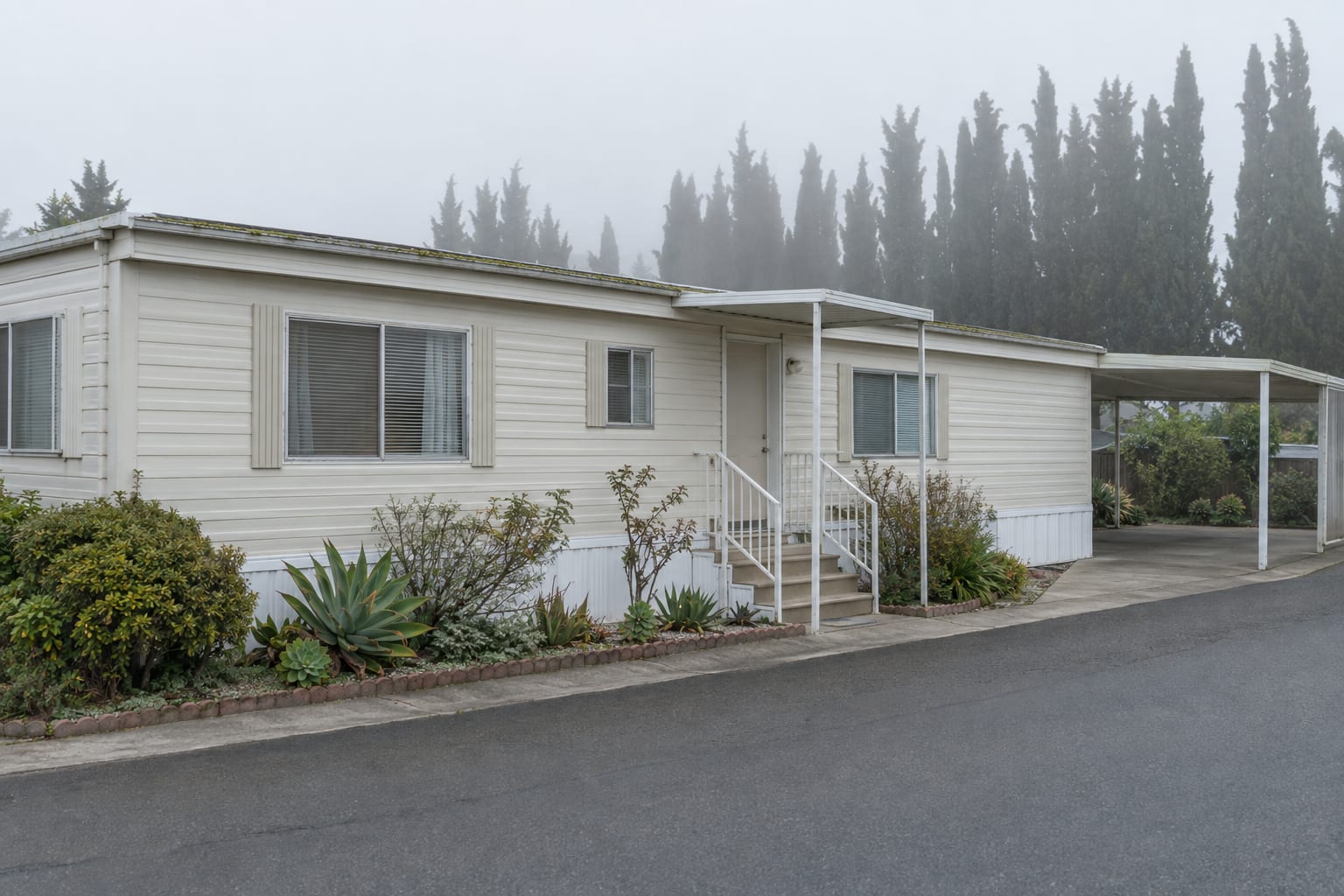
In a long-established community you will see homes from several decades side by side. The date that matters most is June 15, 1976. A manufactured home is a factory-built home constructed on or after that date to the federal HUD Code. A factory-built home from before that date is, technically, a mobile home, and lenders treat the two differently.
Available terms depend on the program, the home’s age and type, the loan amount, and whether the land is owned. So establish early what the home is:
- The HUD label and data plate. The label is a small metal plate outside each section; the data plate is a paper sheet inside that lists the build date and the wind and roof-load zones the home was designed for. Where to find the HUD label and data plate shows both.
- The HCD registration. California titles and registers manufactured homes through HCD, not the DMV. Ask the seller for the current registration showing the owner and any lienholder.
Check the hazard maps before you ask for an insurance quote
A lender needs proof of an acceptable insurance policy on the home before a loan can close, and the premium counts toward your monthly housing cost. Near the bay, look up the address on three maps first:
- Flood. FEMA’s Flood Map Service Center is searchable by address. If the home is in a mapped special flood hazard area, a separate flood policy may be required.
- Tsunami. The California Geological Survey publishes tsunami hazard area maps for Monterey County.
- Earthquake. Earthquake damage is generally not covered by a standard homeowners policy and is insured separately. Ask whether the home has an earthquake-resistant bracing system, a set of braces under the home that HCD certifies.
Then get a quote on the specific home before you make an offer. How insurance costs affect a manufactured home loan explains where the premium enters the loan review.
Space rent rules depend on which city the community is in
Space rent is paid on top of the loan payment, and a lender counts it when comparing your housing cost with your income. In a high-cost coastal county it deserves as much attention as the price of the home, so compare communities on the full monthly cost. How space rent affects what you can afford shows how to do that.
How rent can rise is a local matter. Marina has a Mobile Home Rent Stabilization chapter in its municipal code, and Salinas publishes its mobile home rent rules through its Housing Division. Other cities and the unincorporated county differ, and these rules change. Ask the community office which jurisdiction it is in, then confirm with that city or the county.
What to have in hand before you make an offer
With those in hand, talk with a specialist about the home and the community before you write the offer. Financing is subject to credit approval, and not all applicants or homes qualify.
This article is general information, not legal or insurance advice. Confirm local rules with the city or county.