Is It Better to Buy a Manufactured Home in Phoenix or a Nearby Suburb?
Local financing details: Mobile Home Loans in Phoenix
Neither Phoenix nor its suburbs is the better place to buy a manufactured home in general. The loan follows the property, not the city: a home on a rented space is financed one way and a home on its own land another, wherever in the Valley it sits. What changes from city to city is the kind of property for sale, the offices you deal with, and how far you drive.
So the useful question is which of those matters most to you. This article goes through what changes when you cross a city line and how to weigh it. For the financing itself, see manufactured home loans in Phoenix.
The loan follows the property, not the city
A lender does not keep one set of rules for Phoenix and another for Mesa or Surprise. It looks at three things about the property: whether the land is leased or owned, the home’s age, type and condition, and what the title and county records show.
A home in a land-lease community, where you own the home and rent the space, is personal property. It is financed with a home-only loan, also called a chattel loan. A home permanently attached to land you own can often be financed together with the land. Both setups exist in Phoenix and in the suburbs, and park or land in Phoenix covers that choice.
What changes from one part of the Valley to another
What varies by location, and how to check it
| What varies | Why it matters | How to check |
|---|---|---|
| The mix of communities and owned lots | It decides which type of loan you are likely to use | Read each listing for space rent or land included |
| Space rent and what it covers | It is paid on top of the loan and counted by the lender | Ask each community office, in writing |
| Age rules | A 55+ rule limits who can live in the home and who can buy it from you | Ask for the community’s written rule |
| The age of the homes | Older homes face more questions about condition, insurance and programs | Ask the year and look at the data plate |
| City or unincorporated county | Zoning and permits come from different offices | Look up the parcel with the county assessor |
| The drive | Fuel and time are a monthly cost | Drive it at the hour you would commute |
None of these can be read off a map. Space rent is set community by community, and two parks a mile apart can differ more than two cities do. Comparing space rent near Phoenix explains how to get figures you can rely on.
Close in, communities and homes tend to be older
The central parts of the Valley were built out first, so communities there have generally been operating longer, and many of the homes in them are older. Close in also means a shorter drive to central Phoenix jobs, hospitals and transit.
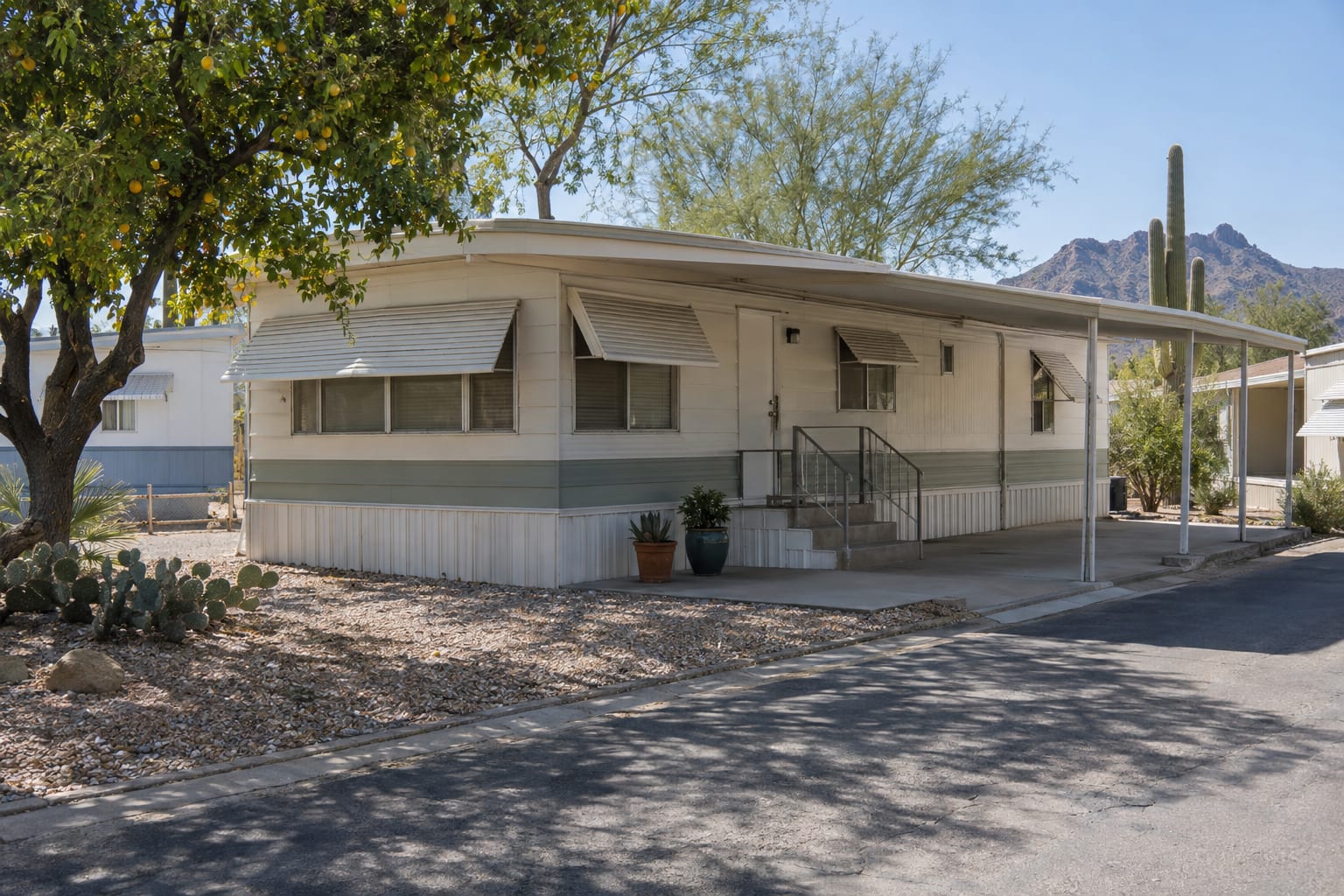
An older home is not a problem in itself. It does raise questions to settle early:
- Was it built before June 15, 1976? A factory-built home from before that date is a mobile home, not a HUD-Code manufactured home, and fewer loan programs may apply.
- What condition is it in? The roof, the floor, the cooling system and the skirting all matter to an appraiser and an insurer.
- Is a sale or a change of use planned for the community? A community sits on land someone else owns. Arizona’s Mobile Home Parks Residential Landlord and Tenant Act (Title 33, Chapter 11) covers what applies when a park changes use, and the Arizona Department of Housing administers a Mobile Home Relocation Fund for certain cases.
Read the official pages for the details. This is general information, not legal advice.
The surrounding cities have the same loan types and different offices
Cross into a neighbouring city and the financing does not change. The city hall, the zoning rules and sometimes the county do. These are the Valley cities we have a page for, grouped by direction from Phoenix:
- East Valley: Mesa and Apache Junction. Most of Apache Junction is in Pinal County, so recorded documents and property tax there run through Pinal County offices, not Maricopa County’s.
- West Valley: Glendale, Peoria, Avondale and Goodyear.
- Northwest Valley: Surprise.
In any of them, ask what you would ask in Phoenix: whether the land is leased or owned, the rent in writing, and the year of the home. Some communities in these cities are age-restricted or geared to winter residents, so ask about the age rule before you tour.
Toward the edges there is more land and more to check
Homes on their own lots are found more often toward the outer edges of the Valley and in unincorporated county areas, where parcels are larger. That is a pattern to test against current listings, not a rule.
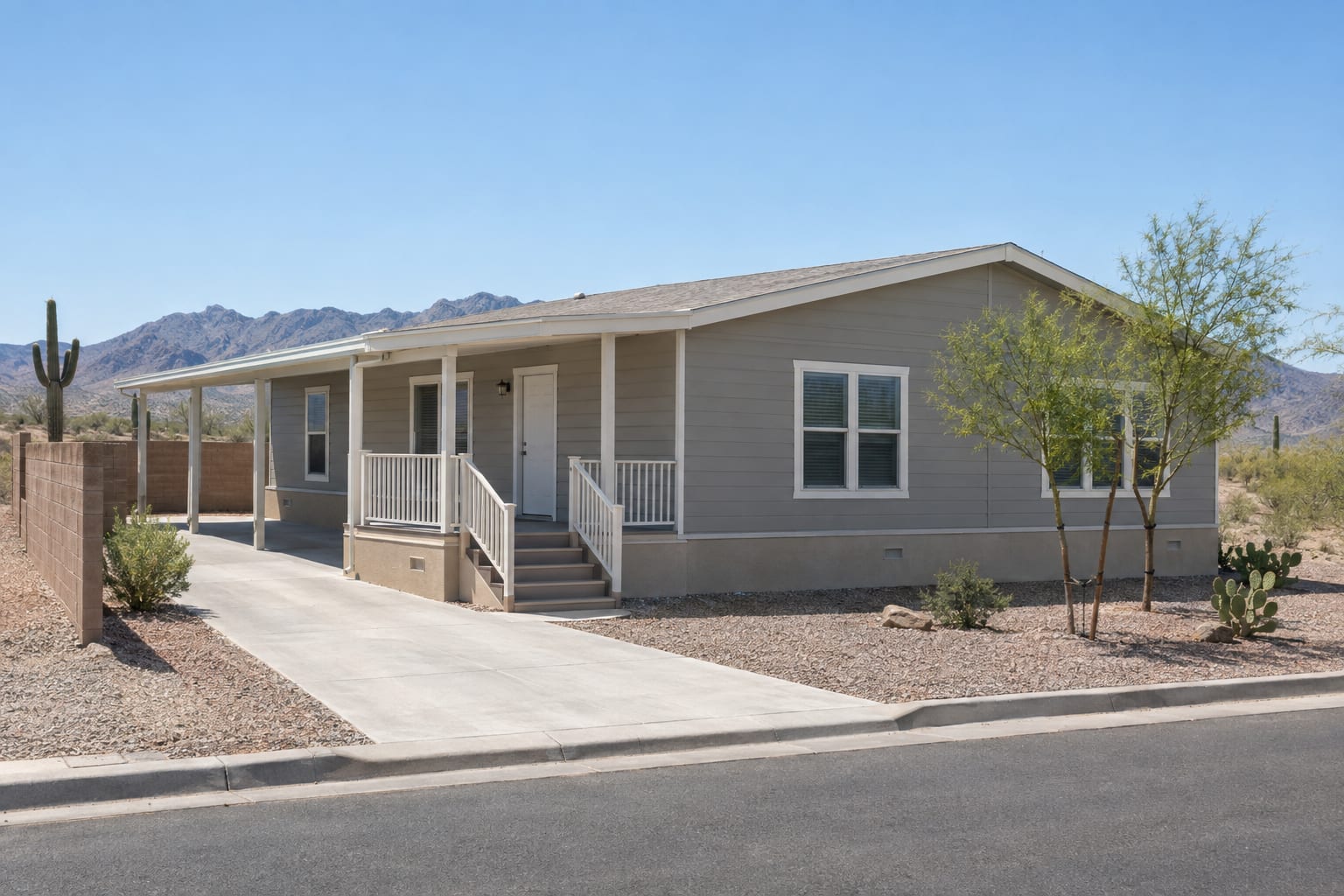
Outside city limits, the county handles zoning and permits. A lot may rely on a well or hauled water, a septic system and a private road, and a desert wash can put part of a parcel in a mapped floodplain. Each of those adds a document that a lender or an appraiser will ask for, so find out early what the seller can show you.
Count the drive as a monthly cost
Buyers often look farther out for a lower space rent or a larger lot, and that can work. Compare the whole monthly picture, though, not the housing figure alone.
A lender counts the housing side of that comparison: the payment, taxes, insurance and any space rent, set against your gross monthly income. Acceptable ratios depend on the program, your other debts and disposable income. The cost of the drive is not part of that review, so it is yours to count.
Summer cooling is the other cost that follows you everywhere in the Valley. Whichever city you choose, ask the seller for last summer’s electric bills.
How to narrow the search
From the whole Valley to two or three homes
- Fix the points you cannot move Work, family, medical care. Decide how far you are willing to drive to each.
- Choose the kind of property A home in a community, or a home with land.
- Pick two or three areas and visit them Go at the hour you would commute, and on a summer afternoon if you can.
- Get the monthly figures in writing The space rent for a new resident, what it includes, and recent utility bills.
- Talk with a lender before you make an offer A pre-qualification gives you an early read on a realistic range. It is not final approval, and all financing is subject to credit approval.