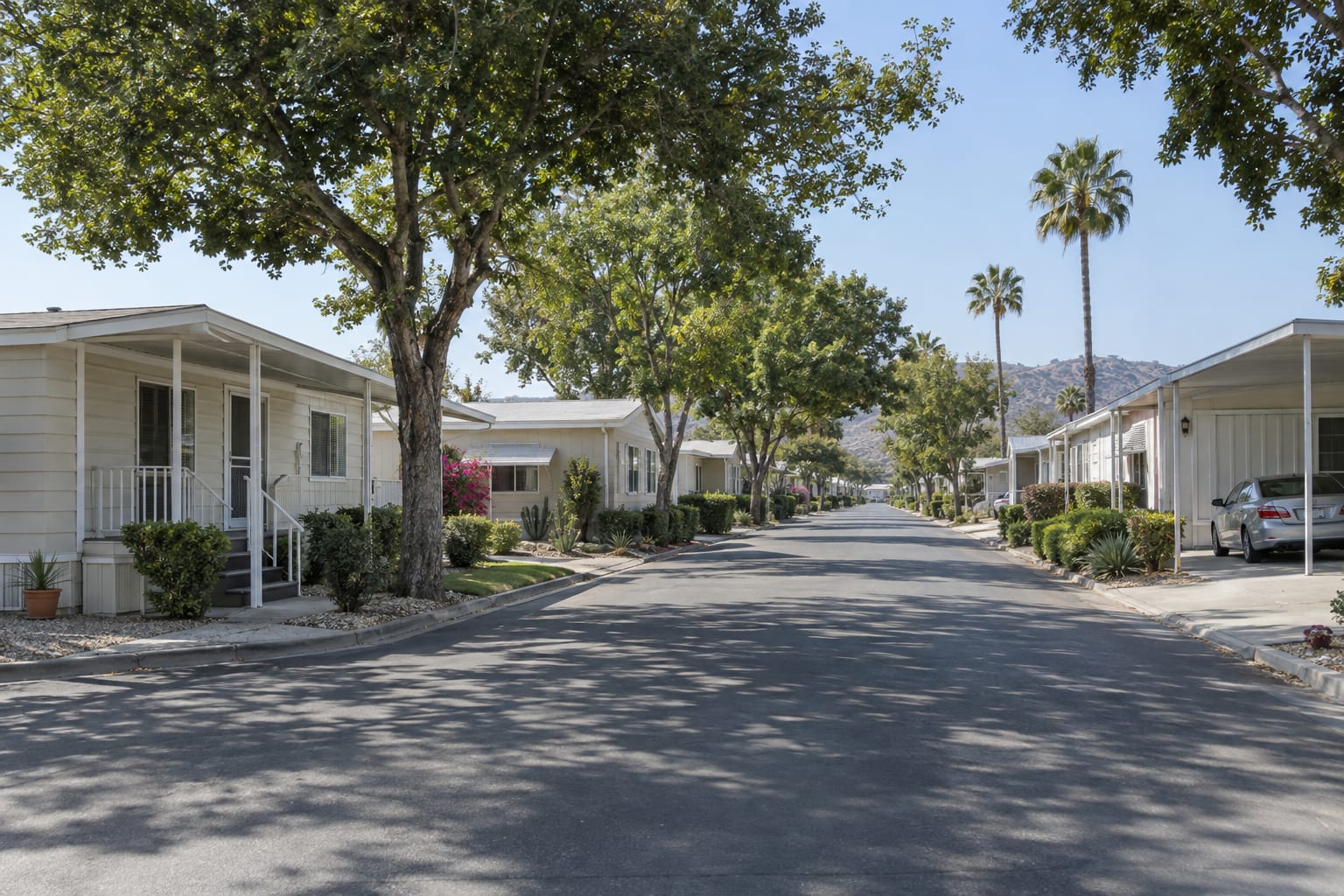
Mobile & Manufactured Home Loans in Palm Springs, CA and the Coachella Valley
Local financing details: Mobile & Manufactured Home Loans in Palm Springs, California
Before you compare prices on a manufactured home in Palm Springs or anywhere else in the Coachella Valley, find out what kind of land it sits on. Here that question has more possible answers than in most of California: a rented space in a community, a lot you would own, or land held under a long-term lease, including Indian lease land. The answer decides which loans can apply, what you pay each month, and what you can sell later.
Three other local facts shape a purchase: many communities are limited to residents 55 and over, many owners live in the valley for only part of the year, and summer heat is a real line in the budget. For the financing side, see Santiago Financial, Inc.’s page on manufactured home loans in Palm Springs. What follows is what to check on the ground before you make an offer.
Find out what kind of land the home sits on
Land setups in the Coachella Valley
| Setup | What you own | Paid besides the loan | Ask first |
|---|---|---|---|
| Rented space in a community | The home | Space rent | The current rent, its recent increases, and which rent rules apply |
| Lot you own (fee land) | The home and the lot | Property tax; often association dues | What the dues cover and what the association’s rules allow |
| Leased land | The home and a lease on the lot | Ground rent; sometimes dues as well | Who the lessor is, when the lease ends, and how the rent can change |
A home on a rented space is financed by itself as personal property, with a home-only (chattel) loan. Where you own the lot and the home is permanently attached to it, the home and land can often be financed together. Leased land is its own case: what is possible depends on the lease itself.
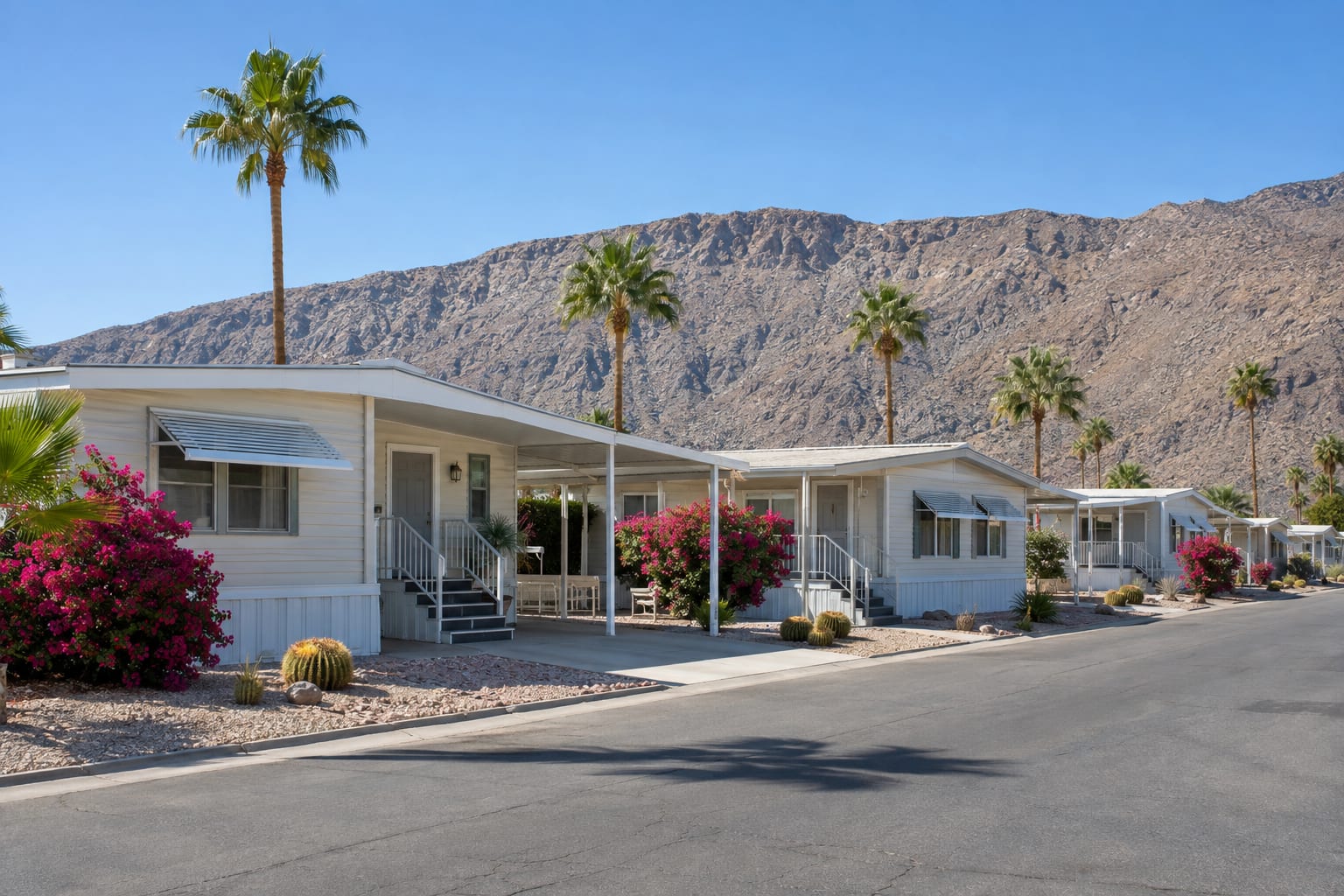
Listings do not always say which setup applies. Ask the seller or the community directly, and ask for the document that shows it. Questions to ask before buying on leased land has the full list.
On Indian lease land, read the lease before you look at the price
The Agua Caliente Indian Reservation covers part of the western Coachella Valley, including portions of Palm Springs, Cathedral City, Rancho Mirage and unincorporated Riverside County. The City of Palm Springs describes it as a “checkerboard” of square miles running through the city, so reservation land and ordinary private land sit side by side.
Homesites on reservation land held in trust are leased, not sold. A homeowner there holds a lease or sublease with an end date and pays rent to the lessor. The Bureau of Indian Affairs approves leases of trust land, and its Palm Springs Agency answers common questions about them. The agency also points out that a leased lot is not always Indian land: some developers bought land outright and then leased the lots to homeowners.
Three things about any lease matter to a buyer:
- The time remaining. A lease with many decades left and one near its end are very different purchases. The remaining term affects which financing may be available, and who will be able to buy the home from you later.
- How the rent changes. Find out when the ground rent can be adjusted and how the new amount is set.
- Whether an extension is possible. The BIA notes that landowners decide whether to extend a lease. Nobody can promise one on their behalf.
Rent rules depend on the city and on the land
The City of Palm Springs has a rent control ordinance that covers mobilehome parks. The city lists exemptions from it, including rents on certain Indian lands, so do not assume it applies to every community inside the city limits.
Outside the cities, Riverside County has a mobile home park rent stabilization ordinance for certain parks in unincorporated areas, which in the valley include Thousand Palms, Bermuda Dunes and Sky Valley. Other valley cities set their own policies. Ask the city or the county which rules, if any, cover the community you are considering.
Whatever the answer, space rent is paid on top of the loan payment and continues after the loan is paid off. How space rent affects what you can afford shows how to compare two communities fairly.
Age rules and part-year living
Many valley communities are age-qualified, generally for residents 55 and over, and some are open to all ages. The age rule decides who may live in the home: a younger spouse, a caregiver, an adult child who moves in later. It also narrows who you can sell to. Ask for the written policy.
Plenty of owners spend only the cooler months here, and that is not a detail to leave out. Many programs and communities require owner-occupancy. Ask whether financing is available for your intended use before you buy, and tell the lender plainly whether the home will be lived in year-round, for part of the year, or later in retirement.
Tell the insurer as well. A home that stands empty for months can be treated differently under a policy, so ask about it when you get a manufactured home insurance quote. The community has a say too: it approves its residents under its own criteria, separately from the lender, and its rules may limit renting the home out while you are away.
Budget for the heat
NOAA’s 1991 to 2020 climate normals put the average daily high in Palm Springs above 100°F from June through September, and at about 108°F in July. For a homeowner that means months of heavy air-conditioner use, and electricity can be one of the larger monthly costs after the loan and the rent.
Before you make an offer:
- Ask the seller for twelve months of electric bills, so you see a full summer.
- Find out how old the air conditioner is and when it was last serviced.
- Look at the roof and any reflective coating, the window awnings and shade covers, and the ducts under the home.
- Ask which utilities the community bills and which you pay to the utility directly.
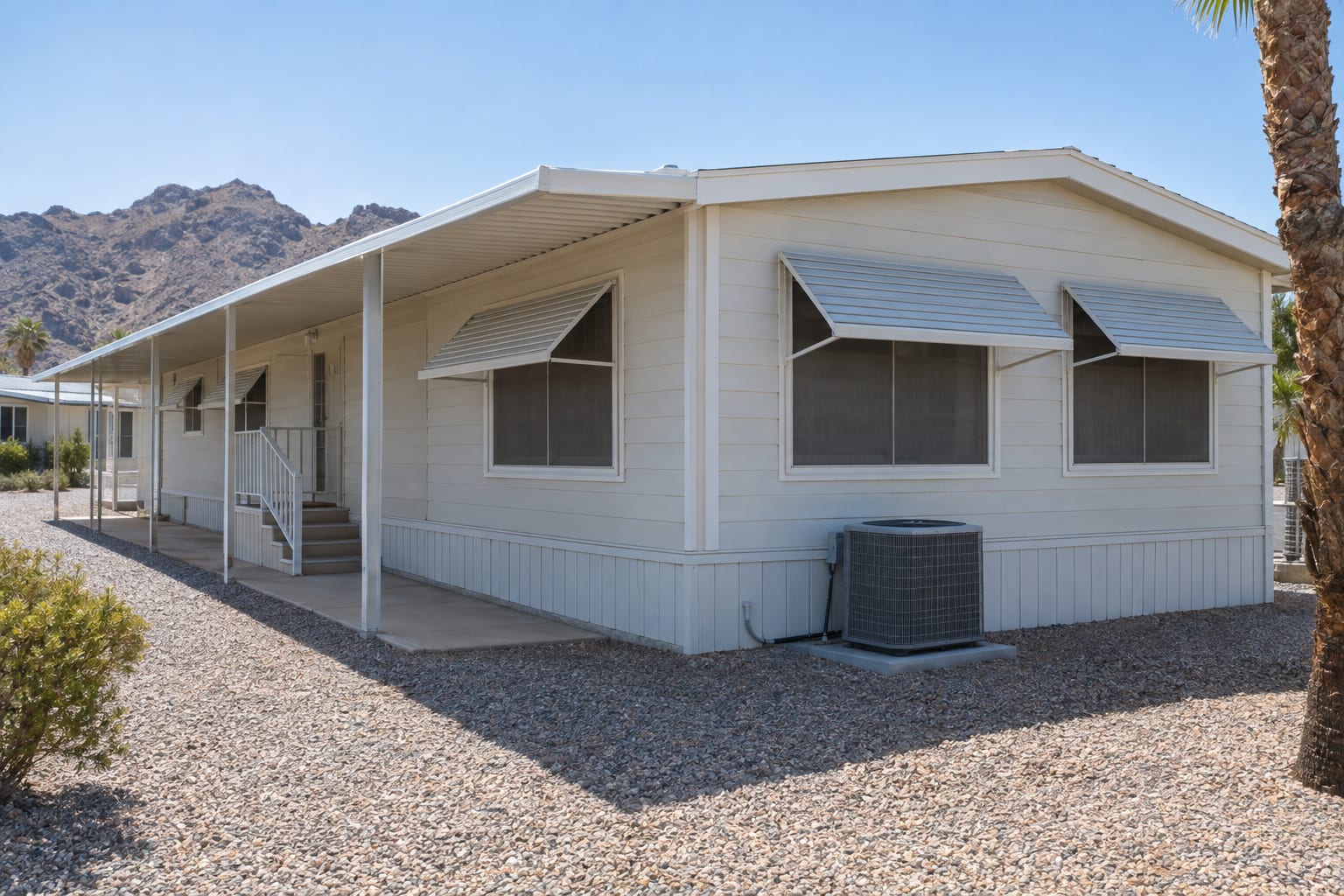
Years of sun are also hard on roofs, siding, skirting and seals, and condition is part of what an appraiser and an insurer look at. The summer heat checklist for HVAC and insulation covers upkeep once you own the home.
Questions to settle before you make an offer
Bring the answers, and the lease if there is one, to a first conversation: talk with a specialist. All financing is subject to credit approval.
This article is general information, not legal advice. Lease terms, rent rules and questions about tribal land should be confirmed with the lessor, the city, the county or the Bureau of Indian Affairs.