
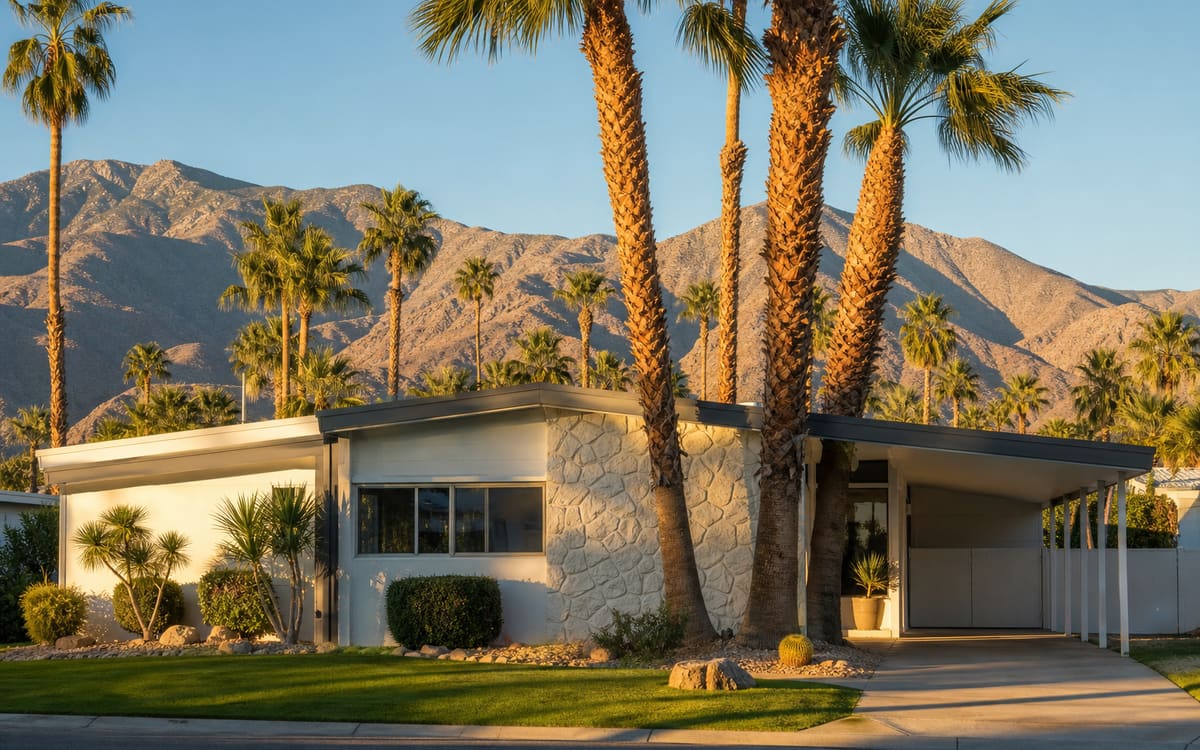
Buying or refinancing a manufactured home in Palm Springs starts with a question that has more answers here than in most of California: what kind of land is the home on? A rented space in a community, a lot you would own, or a long-term ground lease, including Indian lease land, each produce a different loan file, and a lease with an end date changes what a lender can do before the home or your credit comes into it.
Santiago Financial, Inc. finances homes in communities and on owned land throughout the Coachella Valley, and the California hub page explains the general difference between the two. This page covers the financing side of what is specific to Palm Springs: the three land setups, what a lease means for the loan, the city’s rent control, and the heat and occupancy questions that shape the monthly cost.
For what to check on the ground before you make an offer, read the Palm Springs and Coachella Valley buyer’s guide.
Three kinds of land, three different loan files
How the land changes a Palm Springs loan file
| The home sits on | How it is financed | What the lender will ask for |
|---|---|---|
| A rented space in a community | On its own, as personal property, with a home-only loan | HCD title or registration, the space-rent terms, the community’s resident approval |
| A lot you own | Often together with the land, as real property | Land title, the recorded 433A if the home is on a permanent foundation, an appraisal of home and land together |
| Leased land, including Indian lease land | Depends on the lease itself and on the program | The lease or sublease, its expiration date, how the rent adjusts, and who the lessor is |
Listings do not always say which setup applies. Ask the seller or the community directly, and ask for the document that shows it.
On Indian lease land, the lease is part of the collateral question
The Bureau of Indian Affairs’ Palm Springs Agency explains that the Agua Caliente Indian Reservation covers about 28,000 acres of the western Coachella Valley, including portions of Palm Springs, Cathedral City, Rancho Mirage and unincorporated Riverside County.
Homesites on reservation land held in trust are leased, not sold: the lease is a contract between the Indian landowner and the lessee, it may run for any period up to 99 years, and the BIA approves leases of trust land. The agency also notes that a leased lot is not always Indian land, because some developers bought land outright and then leased the lots to homeowners.
For financing, three facts about the lease matter more than anything else about the home:
- The remaining term. A lease with decades left and one near its end are different purchases and different files.
- How and when the ground rent adjusts. That rent is part of the monthly cost a lender compares with your income.
- Whether an extension is possible. The BIA says that is at the landowner’s discretion, so nobody else can promise one.
For a copy of a lease, the agency refers you to the Agua Caliente Band’s Land, Titles and Records office, which asks for evidence of your interest in the lease first.
City rent control, and the valley’s other cities
The City of Palm Springs has a voter-approved rent control ordinance that includes mobile home parks, with exemptions the city lists (one covers rents on certain Indian lands), so ask the city whether a specific community is covered.
Parks in unincorporated Riverside County may come under the county’s Ordinance 760 instead (it applies to parks built before 1990, with exemptions), and Cathedral City, Desert Hot Springs and the other valley cities set their own policies. None of these tells you what a space costs; get the current rent and its recent increases in writing. HCD’s Mobilehome Residency Law Protection Program handles certain disputes between homeowners and park management statewide.
Heat, occupancy and age rules all land in the monthly cost
Summer here is severe. In NOAA’s 1991 to 2020 climate normals, the average daily high at the Palm Springs airport station is 109°F in July and 108°F in August, so cooling is a real line in the budget beside the loan payment and the space or ground rent. Ask the seller for a year of electricity bills, and have the air conditioning, ducts, insulation and roof inspected.
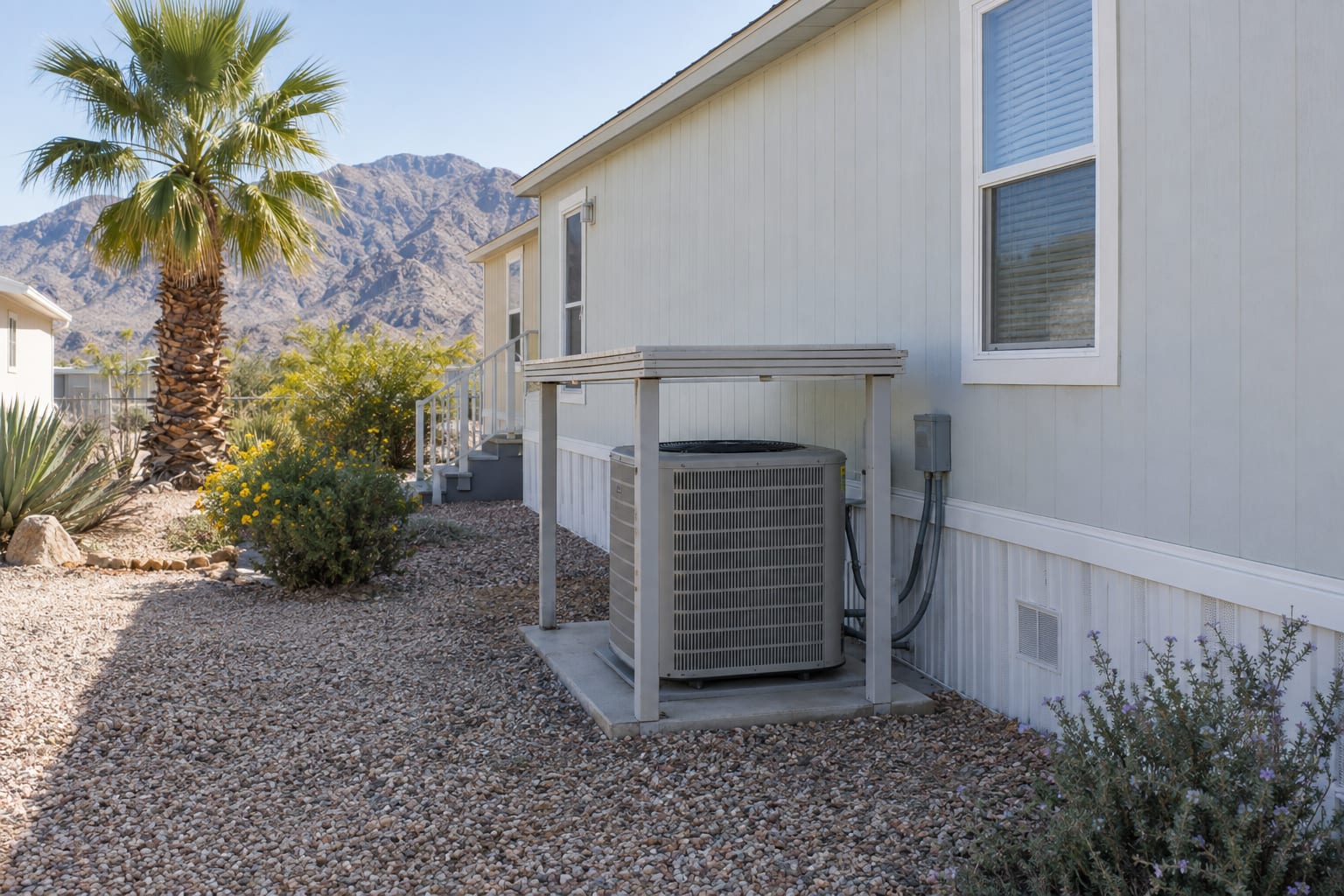
Many owners live in the valley for only part of the year. Say how you plan to use the home at the start, because occupancy is one of the first things a lender and an insurer ask about. Many programs and communities require owner-occupancy, so ask whether financing is available for your intended use before you buy.
Many communities are also age-qualified, generally for residents 55 and over. The age rule decides who may live in the home, including a younger spouse or a caregiver, and who you can sell to later, so get the written policy early. Community approval and lender approval are separate reviews.
Nearby areas
Cathedral City, Desert Hot Springs, Palm Desert and Indio have no page of their own, but Santiago Financial finances manufactured homes throughout California, so the city does not limit the loan. Over the Pass, Calimesa and Beaumont, Hemet and Riverside have pages, and the guide to the manufactured home areas of Riverside County shows how the desert compares with the rest of the county.
Every application is reviewed individually, and all financing is subject to credit approval. Local rules change, so confirm them with the city or county; this page is general information, not legal or tax advice.